Knives that handle real work without complaint
A knife that sees real use tells the truth fast. Skin a couple animals, split kindling in bad weather, or spend a long day cutting rope, hide, and food, and weak designs get exposed. The knives that earn a place on your belt aren’t flashy or fragile. They’re built for steady pressure, awkward angles, and hands that are cold, wet, or tired. Good steel matters, but heat treat, handle shape, and edge geometry matter more. These are knives you stop thinking about once the work starts. They stay sharp longer than expected, feel predictable in use, and don’t ask for special treatment. Here are knives that keep working when the job drags on.
ESEE-4
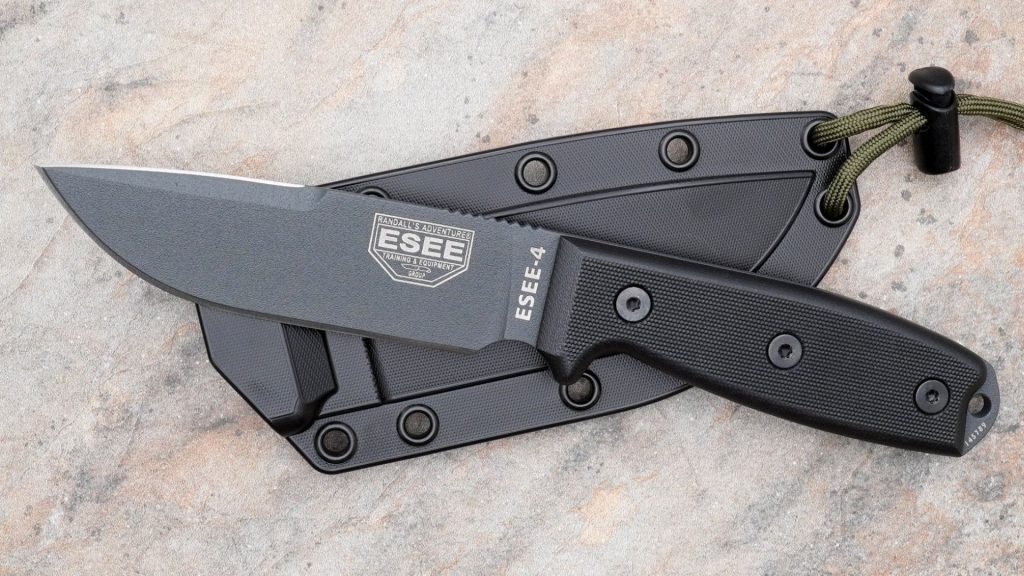
The ESEE-4 is sized right for real camp and field work. It’s thick enough to split kindling and strong enough to pry without feeling reckless, yet short enough to control when you’re working close. The blade shape keeps the edge useful across the whole length, not just the belly.
Where it earns respect is how it feels during long tasks. The handle fills your hand without forcing a grip, and hot spots don’t show up even after extended cutting. The 1095 steel needs basic care, but it sharpens fast and takes abuse without chipping. It’s a knife you stop babying after the first hard job.
Benchmade Puukko
Benchmade’s Puukko sticks close to the traditional pattern for a reason. The narrow blade tracks straight through wood, meat, and cordage without fighting you. There’s no wasted steel, and the edge geometry favors control over brute force.
In use, it feels calm and predictable. The handle locks into your palm naturally, which matters when your hands are slick or cold. It excels at food prep, light carving, and processing game without fatigue. This is the kind of knife you reach for when the work is steady and precise, not rushed, and you want clean results without thinking about your grip.
KA-BAR Becker BK2
The BK2 has a reputation for toughness, and it earns it the hard way. This knife shrugs off batoning, prying, and rough camp chores that would worry thinner blades. The weight works in your favor when splitting wood or breaking down tough material.
What surprises people is how manageable it feels once you’re used to it. The handle shape keeps the blade stable, and the edge holds up better than expected under repeated abuse. It’s not a fine slicer, but when conditions are rough and tools are limited, this knife keeps doing jobs that others shouldn’t attempt.
Morakniv Garberg
The Garberg proves that clean design still wins. Full tang construction and a sensible blade shape give it strength without excess weight. The edge geometry cuts efficiently through wood and meat with very little effort.
In extended use, the handle stays comfortable even when pressure builds. The stainless option handles weather and neglect well, while the carbon version sharpens quickly in the field. It doesn’t ask you to adjust your technique or slow down. You work, it cuts, and the relationship stays straightforward. That reliability is why it keeps showing up in camps far from trailheads.
Bark River Bravo 1
The Bravo 1 feels like it was designed by someone who actually spends days outside. The blade thickness and grind balance strength with slicing ability, making it capable across a wide range of tasks.
What stands out is comfort over time. The handle fills your hand in a way that reduces strain during long cutting sessions. The convex edge holds up under heavy use and can be refreshed easily. It’s a knife that works equally well processing game, shaping wood, or handling camp chores, and it never feels out of place doing any of them.
Ontario RAT-7
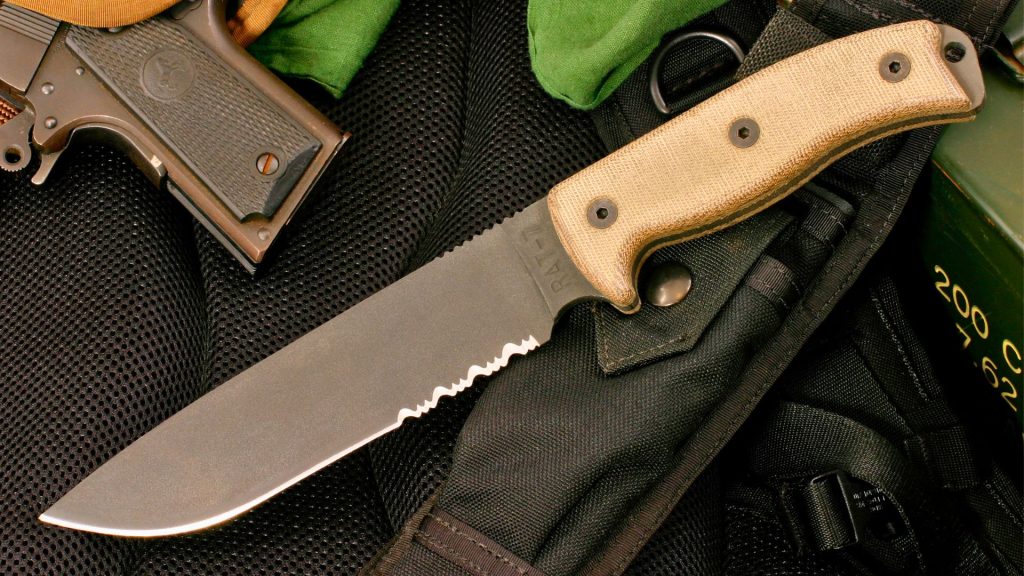
The RAT-7 sits in a useful middle ground between compact and heavy-duty. It’s long enough for batoning and clearing brush, but still manageable for closer work. The blade profile keeps the edge engaged without forcing awkward angles.
During long days, the handle earns its keep. It stays secure without digging into your hand, even when you’re bearing down. The steel isn’t flashy, but it holds an edge through repeated use and sharpens without fuss. This is a knife that takes steady abuse and keeps its manners, which is exactly what real work demands.
Fallkniven F1
The F1 gained its reputation through use, not marketing. The laminated steel combines edge retention with toughness, making it dependable in unpredictable conditions. The blade shape favors control and strength over exaggerated slicing.
In hand, the knife feels compact but capable. The handle stays secure even when wet, and the edge geometry handles wood, food, and game without complaint. It’s a knife that doesn’t push you toward any single task. Instead, it adapts quietly, which makes it a solid choice when you don’t know exactly what the day will require.
TOPS BOB Fieldcraft
The BOB Fieldcraft was designed around survival skills that rely on control rather than force. The blade shape excels at carving, notching, and food prep while still handling light batoning.
What makes it shine is balance. It doesn’t feel tip-heavy or awkward during fine work. The handle allows multiple grips without pressure points, which matters when tasks change constantly. The steel holds up under extended use and responds well to field sharpening. It’s a thinking person’s work knife that rewards good technique and steady hands.
Cold Steel SRK
The SRK has been carried and used worldwide for a reason. The blade shape favors strength, and the point stays durable even under hard use. It’s a knife meant to work in less-than-ideal situations.
The handle isn’t fancy, but it stays put when things get slippery. The edge holds well under repeated cutting and impact. It’s not refined, but it doesn’t need to be. When conditions are rough and tools are limited, the SRK keeps performing without asking you to slow down or adjust your approach.
Spyderco Waterway
The Waterway is proof that corrosion resistance and real performance can coexist. Designed with input from working users, the blade slices cleanly through fish, rope, and food without dragging.
The handle shape keeps your grip stable even when everything is wet. The steel shrugs off salt and neglect, which matters if your knife lives near water. It’s not meant for prying or splitting wood, but within its lane, it performs consistently. For anglers and coastal users, it’s a work knife that stays trustworthy day after day.
Buck 119 Special
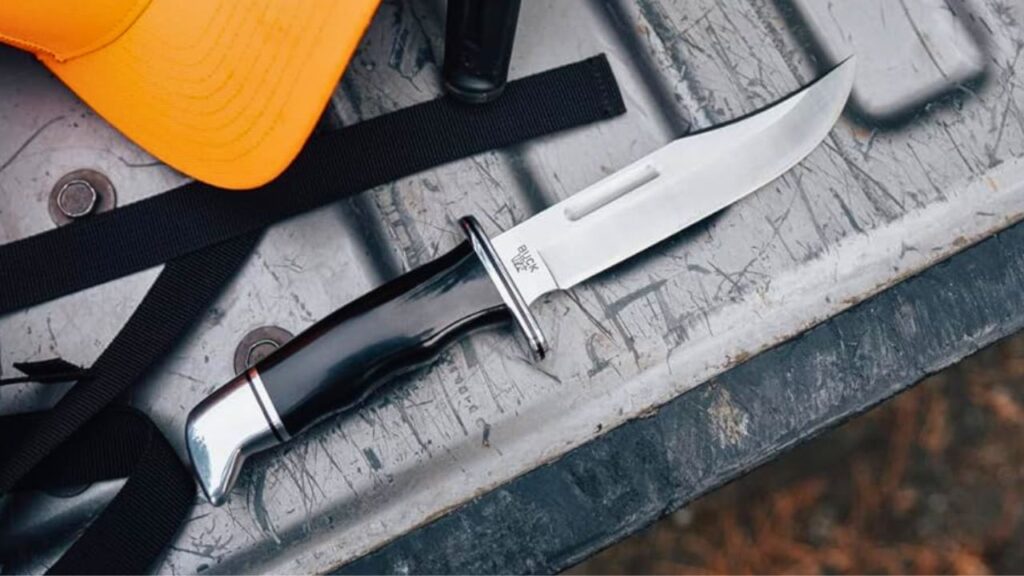
The Buck 119 has dressed more game than most knives ever will. The blade length and shape make skinning and processing efficient without forcing awkward angles.
The heat-treated steel holds an edge longer than people expect and sharpens cleanly when needed. The handle stays comfortable through long processing sessions, which matters when the work doesn’t stop at the first animal. It’s a purpose-driven knife that hasn’t drifted away from what made it useful in the first place.
Condor Bushlore
The Bushlore sticks to proven patterns and benefits from it. The wide blade and consistent grind make it effective for carving, splitting, and camp chores.
The handle fits naturally in the hand, which helps during long stretches of wood work. The steel isn’t fancy, but it takes a keen edge and holds it through steady use. It’s a knife that rewards time spent using it, not polishing it. When the workday runs long, the Bushlore keeps pace without becoming a distraction.

Asher was raised in the woods and on the water, and it shows. He’s logged more hours behind a rifle and under a heavy pack than most men twice his age.