7 reasons some guns age better than others
Some guns keep running for generations while others feel tired after a decade. The difference usually comes down to how they are built, finished, and engineered to handle abuse. Here are seven concrete reasons certain designs age better than others, drawn from classic rifles, shotguns, and handguns that have proven they can outlast their owners.
1. Robust Bolt-Action Designs Ensure Longevity
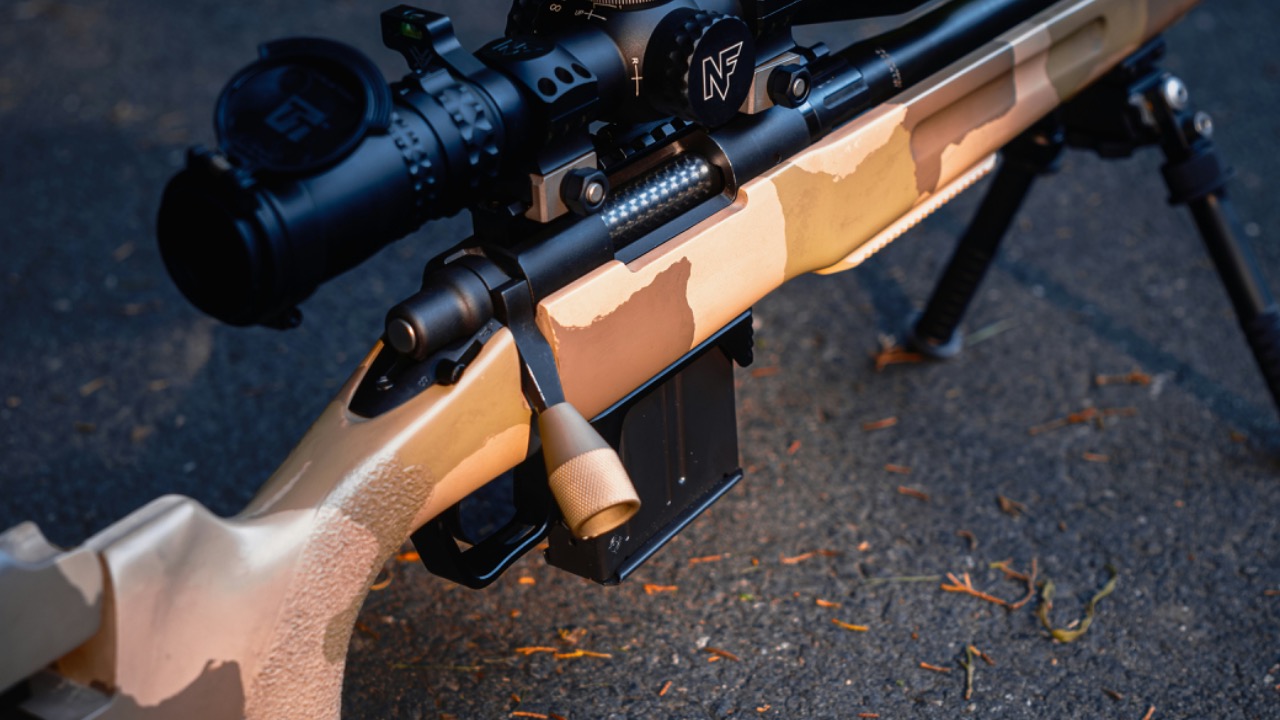
The Mauser Model 98 action, introduced in 1898, is the textbook example of a rifle that ages well because of how it is built. Its controlled-feed bolt grabs the cartridge rim with a massive claw extractor as the round leaves the magazine, guiding it into the chamber instead of letting it rattle around. Reporting on the Model 98 action notes that this design prevents malfunctions under extreme conditions and has been used in millions of rifles worldwide.
That controlled-feed system, combined with generous lug surface and a strong receiver ring, means the action shrugs off grit, rough handling, and high-pressure loads. It is still in production today because hunters, guides, and custom builders know it will keep cycling when a lesser action might seize up. When a rifle can be rebarreled, restocked, and kept in service for decades, the original engineering decision to prioritize reliability over cost pays off in real-world longevity.
2. Loose Tolerances Handle Harsh Environments
The AK-47, designed by Mikhail Kalashnikov in 1947, takes the opposite path from a tight target rifle and survives because of it. Reports on AK-47 durability describe rifles that keep functioning after being buried in sand or submerged in mud, thanks to loose internal clearances that let debris move through the system instead of locking it up. The long-stroke gas piston and generous bolt carrier rails give fouling somewhere to go.
Those loose tolerances mean an AK will rattle a bit and rarely print tiny groups, but the tradeoff is a gun that still runs when fine sand, frozen slush, or unburned powder would choke a more precise design. For soldiers, irregular forces, or anyone who cannot baby their gear, that kind of reliability directly translates into a rifle that stays in service for decades with minimal maintenance, even when storage and cleaning are afterthoughts.
3. All-Steel Construction Resists Corrosion
The Colt Single Action Army revolver, patented by William Mason and Charles Brinckerhoff Richards in 1873, shows how old-school materials can age gracefully. Historical coverage of the Colt Single Action Army points out that its all-steel construction resists corrosion and wear, with original examples from the 1880s still operational after roughly 150 years. There is no aluminum frame or polymer grip module to crack, warp, or turn brittle.
Because the frame, cylinder, and barrel are all machined steel, a Colt that has been carried in leather, ridden in saddle holsters, and stored in less-than-ideal barns can usually be cleaned up, fitted with fresh springs, and put back to work. For collectors and working cowboys alike, that means a revolver can be handed down through several generations and still lock up tight enough to shoot safely, which is the definition of aging well.
4. Protective Blued Finishes Slow Rust
Finish plays a huge role in how a gun looks and functions after decades in the field. Pre-1960s Winchester Model 70 rifles used high-quality blued steel that formed a dense oxide layer, and coverage of these rifles notes that this blued finish slows rust formation better than the parkerized or phosphate coatings used on many World War II M1 Garands. The deeper polish and controlled bluing process left fewer microscopic pits for moisture to grab.
By contrast, wartime parkerizing on M1 Garands was chosen for speed and cost, not long-term cosmetics. It protects well enough in the short term, but it can wear to bare metal faster on sharp edges and sling points. For hunters who carry a rifle through rain and snow year after year, a high-grade blued finish on a Model 70 can mean less pitting, easier cleaning, and a gun that still looks sharp after half a century of hard seasons.
5. Simple Mechanisms Reduce Failure Points
The Remington 870 shotgun, introduced in 1950, is a case study in how a straightforward mechanism can outlast more complex designs. Technical comparisons of pump guns highlight that the Remington 870 uses only 7 major internal parts in its pump-action system, while a semi-automatic like the Benelli M4 relies on more than 20 moving components. Fewer parts mean fewer things to crack, bend, or lose.
Over decades of bird seasons, duck blinds, and patrol car duty, that simplicity shows up as fewer broken springs and less sensitivity to ammo changes. An 870 that has been ridden hard can usually be brought back with a new extractor and a couple of springs, while a complex gas or inertia system may need specialized parts and fitting. For departments and families that keep guns in service for generations, that low parts count is a big reason the 870 ages so well.
6. Chrome-Lined Barrels Extend Round Counts

On the AR-15 platform, barrel technology is a major dividing line between rifles that wear out early and those that keep shooting. Technical breakdowns of AR evolution explain that chrome-lined barrels in post-1980s Colt AR-15 variants prevent bore erosion from hot gases, stretching service life to more than 20,000 rounds, while earlier unlined barrels from the 1960s often showed serious wear after 5,000 to 10,000 rounds. That hard chrome layer shields the steel from heat and fouling.
Experienced shooters echo this, with discussions on chrome-lined barrel longevity noting that most consider chrome the way to go for maximum life and better protection from the elements. For anyone who trains heavily or runs high round counts in classes, a chrome-lined bore can mean the difference between rebarreling every few years and running the same upper for decades while still holding acceptable accuracy.
7. Overbuilt Frames Absorb Recoil Over Time
The 1911 pistol, designed by John Browning in 1911, shows how a heavy, overbuilt frame can help a handgun age gracefully. Coverage of the 1911 legacy notes that its steel frame distributes recoil forces evenly, which is why World War I era pistols can still cycle ammunition accurately after more than 100 years. The slide rails, barrel lugs, and locking surfaces were sized with a big safety margin.
Lighter modern polymer-framed pistols carry easier, but they concentrate stress in smaller steel inserts and locking blocks. Over very high round counts, that can lead to peening, cracks, or loose lockup that are harder to repair. A full-size 1911, by contrast, can be rebuilt with new springs, barrels, and small parts while the original frame and slide keep going, making it one of the clearest examples of a sidearm that truly ages better than most of its successors.

Asher was raised in the woods and on the water, and it shows. He’s logged more hours behind a rifle and under a heavy pack than most men twice his age.