
The bullet myth that refuses to disappear online
The internet loves a simple story about survival, and few are as persistent as the idea that a thick layer of body fat can stop a bullet. It resurfaces in comment threads, true crime debates, and survival forums, usually framed as a darkly comic upside to weight gain. Yet the same platforms that keep this myth alive also reveal how fragile digital “truths” really are, as posts vanish, links rot and context dissolves.
When I trace this bullet myth across platforms, what stands out is not just the bad physics but the way it fuses with another stubborn belief: that everything online is permanent and that one viral claim can never really die. In reality, both assumptions are wrong in complicated ways, and the gap between what people think bullets and data do, and what they actually do, is where a lot of online misinformation thrives.
Why the “fat stops bullets” story is so sticky
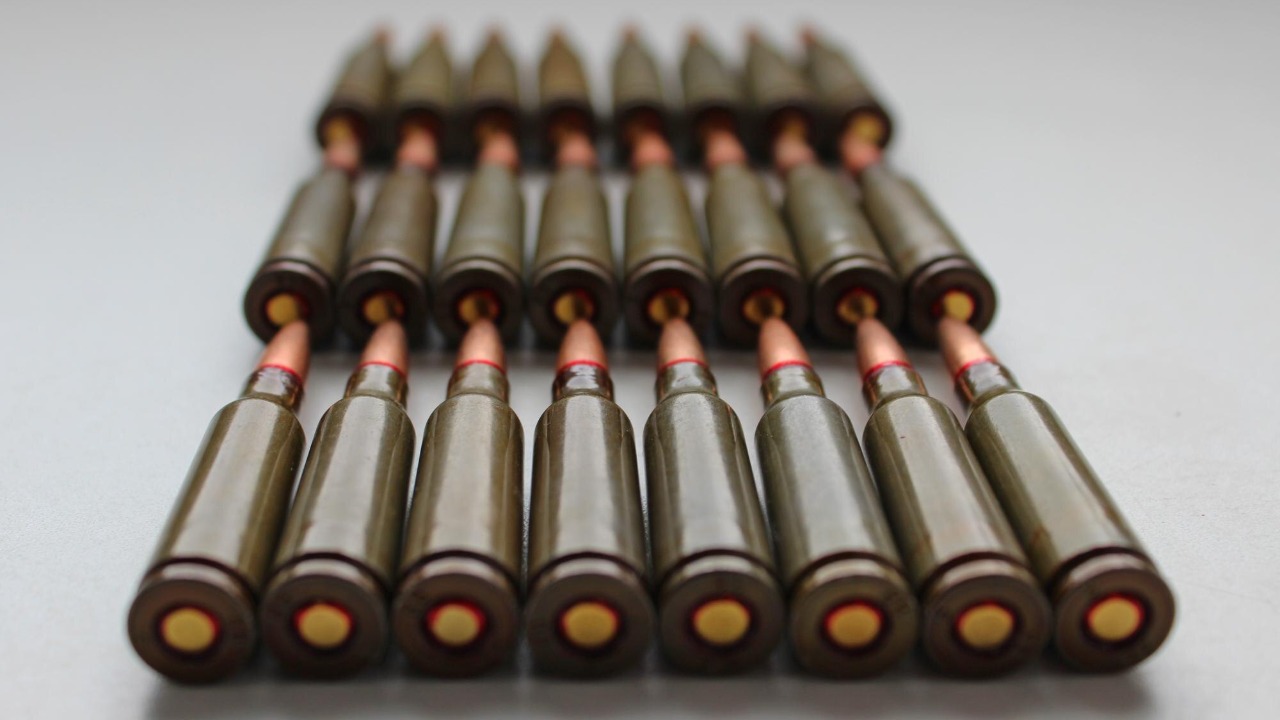
The core appeal of the bullet myth is emotional, not scientific. It offers a grim kind of reassurance that the body might secretly be armored, that sheer mass could turn a lethal threat into a survivable bruise. In online discussions, people often talk about it as if it were a folk fact, passed along with the same confidence as advice about seat belts or smoke alarms, even when no one can point to a real case that proves it.
On one popular thread, a user posting under the name That‑Makes–Sense tries to drag the conversation back to reality, arguing that what actually matters is whether a bullet hits a vital organ like the heart, brain or nervous system, not how much fat it passes through on the way. That comment, which treats the question as a physics and anatomy problem rather than a meme, is the exception. Most replies lean on movie logic, half‑remembered anecdotes and the comforting idea that the body can absorb almost anything if there is enough of it.
What physics and “stopping power” really say
Once you step away from internet folklore and into ballistics, the myth starts to fall apart. Bullets are designed to carry concentrated energy through tissue, and even relatively low‑velocity rounds can travel far deeper than a few inches of fat. In the language of firearms, the key concept is not whether a bullet is magically halted by soft tissue but how much a given round disrupts a target’s ability to keep moving or fighting.
Specialists describe this as Stopping power, which contrasts with lethality by focusing on how quickly a weapon can make a person cease action, regardless of whether they eventually die. That distinction matters, because it shows why a bullet that passes through fat and muscle without hitting a critical structure can still drop someone instantly, while another that is technically survivable might not stop them at all. The debate over which calibers and designs have the greatest stopping power is intense, but none of it supports the idea that subcutaneous fat is a reliable shield. At best, extra tissue might slightly slow or deform a projectile, yet the energy involved is so high that the difference between “enough fat” and “not enough” is largely imaginary.
How Reddit turns lethal physics into casual content
Platforms like Reddit are where this myth mutates from bar‑stool speculation into something that looks, at a glance, like crowdsourced expertise. Threads in communities that pride themselves on math or science often start with a serious‑sounding question about how many centimeters of tissue it would take to stop a specific round, then slide quickly into jokes and one‑liners. The veneer of calculation can make the underlying claim feel more credible than it is.
In the thread where That‑Makes‑Sense weighs in, the conversation is framed as a request for someone to “do the math” on human fat and bullets, but the most grounded responses keep circling back to the same point: if a projectile reaches the heart, brain or central nervous system, the outcome is catastrophic regardless of how much adipose tissue it passed on the way. That tension between the desire for a neat numerical answer and the messy reality of trauma medicine is exactly how a myth like this survives. It is easier to believe in a specific thickness of protective fat than to accept that survival often comes down to chaotic variables no one can control.
The internet’s other myth: that nothing ever disappears
The bullet story thrives in part because people assume that once a claim lands online, it will be there forever, ready to be rediscovered and repeated. The phrase “the internet is forever” is treated as a warning and a promise, a way to explain why old posts, photos and arguments keep resurfacing years after anyone meant to share them. That belief gives every viral myth a kind of immortality in the public imagination.
Anthropology‑minded users have pushed back on that idea, pointing out that Information on the internet only lasts as long as the servers that host it and the companies that pay to keep those servers running. There have already been many lost websites and forums, entire communities that vanished when a host shut down or a database failed. The comforting or terrifying idea that every post is permanent is itself a myth, yet it persists because people see screenshots of decade‑old arguments and assume that everything else must still be out there too.
Digital decay, October 7 and the illusion of permanence
The fragility of online information became painfully clear during the October 2023 war in Israel and Gaza, when videos, posts and eyewitness accounts appeared and disappeared in real time. The conflict did not just reshape political and military realities, it exposed how hard it is to preserve a coherent record when platforms are constantly deleting, throttling or burying content. For anyone trying to understand what happened, the gaps were as striking as the flood of footage.
One detailed analysis of that period describes how The October war revealed a collapse of digital permanence, with vast amounts of data appearing and vanishing every moment. That pattern fits a broader trend sometimes called link rot, where older posts point to pages that no longer exist. Commentators have noted that in theory, as we like to tell Zoomers who are putting it all out there, the internet is forever, but in practice, employers and enemies are more likely to find partial archives and screenshots of half‑forgotten forums than a complete, unbroken record. The result is a patchwork memory that can keep a myth alive while erasing the context that might debunk it.
Ghost accounts and the half‑life of a bad idea
Even when platforms do not fully erase content, they often leave behind what privacy experts call ghost accounts. These are the remnants of profiles and services that users think they have deleted, but which still exist in some form on company servers. The visible posts may be gone, yet the underlying data, and sometimes the connections between accounts, remain intact.
Privacy researchers have documented how, Even when you delete an account, companies rarely erase your data completely. Instead, it lingers on their servers, accessible to internal tools and sometimes to law enforcement, long after you think you have erased it. That lingering presence mirrors the way a myth like “fat stops bullets” can survive in screenshots, reposts and quote‑tweets even after the original thread is gone. The public surface of the conversation may look clean, but the underlying idea keeps circulating in ways that are hard to track or challenge.
Why disappearing from the web is harder than debunking a meme
For individuals who try to escape this ecosystem, the experience can be sobering. Privacy advocates often describe the process of deleting old accounts, changing usernames and scrubbing search results as a full‑time job with limited payoff. The more active someone has been online, the more likely it is that fragments of their digital life will remain scattered across platforms they no longer control.
One detailed personal account by Max Eddy describes how, even with professional knowledge of privacy and security, the attempt to disappear from the internet ran into hard limits. Old forum posts, cached pages and data brokers kept resurfacing information that was supposed to be gone. On Reddit, users in a digital privacy community echo that experience, noting that as you said, re‑using usernames or appearing in pictures is one way to tie accounts and individuals together, and that it takes constant effort to minimize their digital footprint. Compared with that, debunking a single meme about bullets and body fat looks simple, yet the same structural forces that keep personal data alive also keep bad ideas in circulation.
The danger of “silver bullet” thinking about bullets and data
Underneath both the ballistic myth and the permanence myth is a craving for simple, decisive solutions. People want to believe that there is a single trick that can neutralize a gunshot, just as they want to believe there is a single setting or app that can lock down their privacy. That mindset makes it easier for misinformation to spread, because it rewards confident, absolute claims over nuanced, conditional ones.
Security specialists have warned for years that there are no Cyber silver bullet solutions, noting that threats have mutated and evolved in ways that make any one‑size‑fits‑all fix unrealistic. The same logic applies to both physical safety and online reputation. No single layer of fat can guarantee survival, and no single privacy tool can guarantee invisibility. What people actually need is a layered approach: understanding how bullets and bodies interact, how data is stored and shared, and how to reduce risk rather than chase impossible certainty.
Living with myths in a decaying archive
The persistence of the “fat stops bullets” story shows how myths can outlast the evidence that might disprove them, especially in an environment where posts vanish and archives crumble. As older discussions fall victim to link rot, newer users encounter the claim stripped of context, without the skeptical replies or expert explanations that once surrounded it. The result is a kind of informational telephone game, where each retelling drifts a little further from reality.
At the same time, the partial nature of online memory means that no one can ever be sure which version of a story will survive. Some threads will be preserved in screenshots of half‑forgotten forums, others will disappear when a host shuts down or a database is wiped. That uncertainty is uncomfortable, but it can also be a prompt to treat viral “facts” with more skepticism. Instead of assuming that the internet will always remember the truth, or that the body will always absorb the worst, it may be wiser to accept that both bullets and data behave in ways that are more complex, and less forgiving, than the myths suggest.

Leo’s been tracking game and tuning gear since he could stand upright. He’s sharp, driven, and knows how to keep things running when conditions turn.