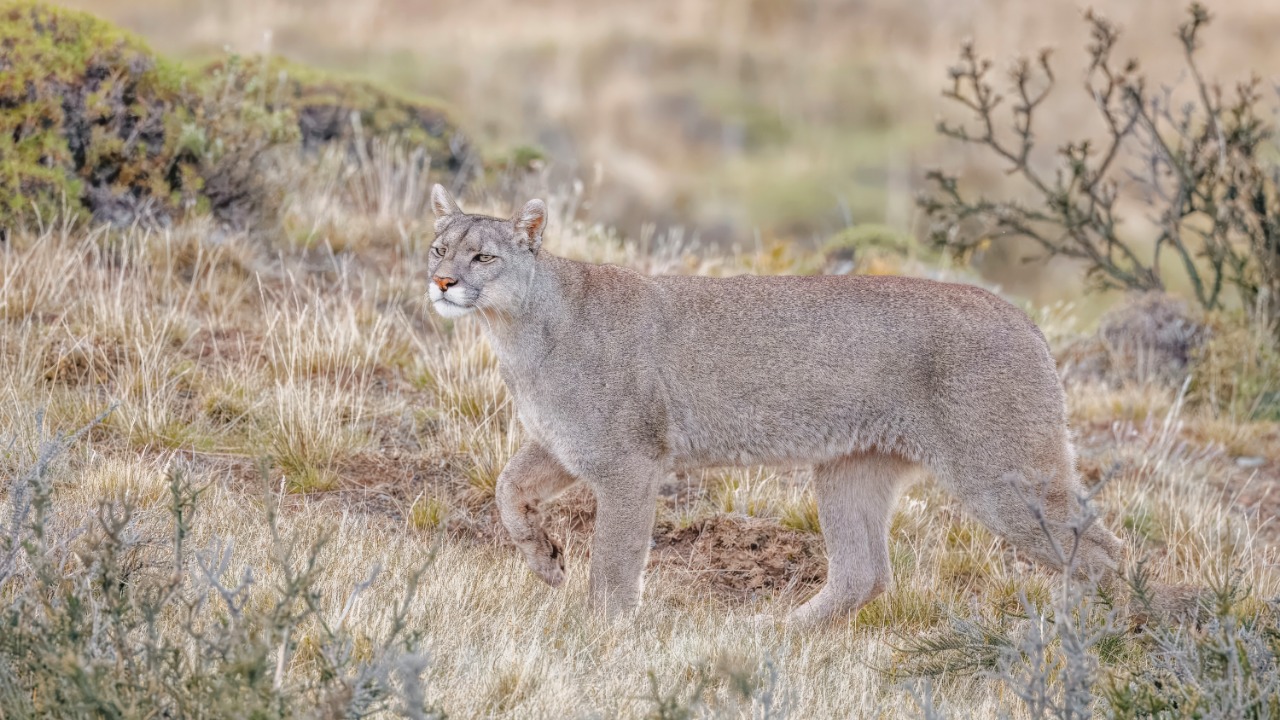
Where mountain lions still thrive in North America
Mountain lions still haunt a surprising amount of wild country in North America, slipping through timber and canyon shadows where most people never see them. If you care about big predators and wild places, knowing where these cats are doing well tells you a lot about which landscapes are still functioning and which ones are hanging on by a thread.
Across the continent, the picture is uneven: some regions hold strong, stable populations, while others are seeing scattered wanderers testing old migration routes. I want to walk through where these cats are truly thriving, where they are edging back in, and what that means for anyone who spends time in lion country.
From coast to coast: a cat built for the continent
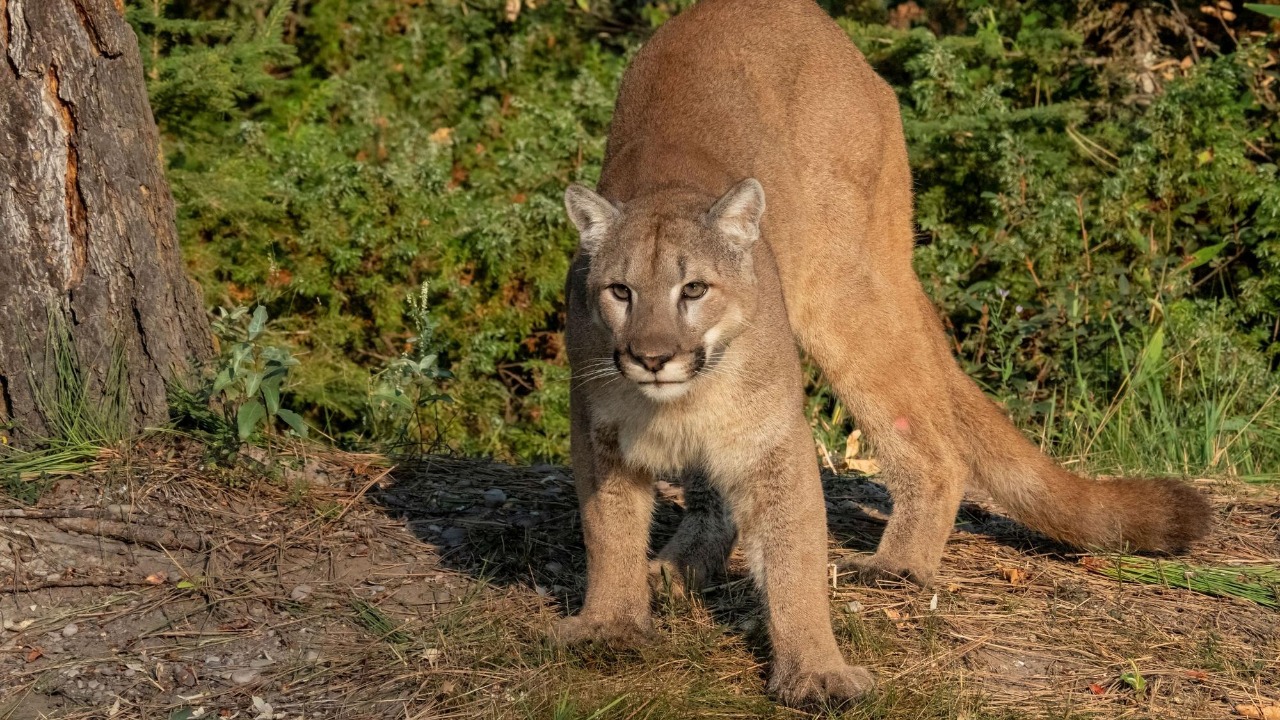
The animal most of us call a mountain lion is the same species as the cougar and puma, a wide ranging predator that scientists know as Puma concolor. It is one of the most adaptable large cats on the planet, able to live anywhere it can find cover and prey, from desert canyons to thick coastal rainforests. That flexibility is why, historically, it occupied the largest range of any wild land mammal in the Western Hemisphere, and why it still manages to hang on in pockets of heavily settled country.
Biologists usually treat the North American cougar as a subspecies within that broader family, spread across a huge sweep of habitat that once ran from the Canadian north down into South America. Modern range maps show that the core strongholds are now in the western half of the continent, but the animal’s basic playbook has not changed: it keys in on deer sized prey, uses broken terrain and vegetation for stalking cover, and avoids people whenever it can.
Where the numbers are strongest in the United States
When people talk about where mountain lions are thriving, they are usually talking about the western half of the United States. That is where you still find big blocks of public land, healthy deer and elk herds, and enough rough country for a secretive cat to make a living. An Aug breakdown of state populations points to western states as the backbone of the continental population, with some of them holding several thousand lions spread across mountain ranges and canyon systems.
Another Aug analysis of where lions occur lists fifteen states with established populations, again concentrated in the West. That same work notes that Arizona alone is estimated to hold between 2,000 and 3,000 animals, a reminder of how much habitat still exists in the canyon and plateau country of the Southwest. When you add in neighboring strongholds, you start to see why western managers talk about a continental population on the order of tens of thousands of cats.
Thriving western strongholds and hunting country
Some western states are not just hanging on to lions, they are managing them as a regular part of the wildlife landscape. A Jun map of breeding populations lines up closely with what hunters and houndsmen already know: the best lion country is still in the Rockies, the Great Basin, and the canyonlands of the interior West. Those are the places where deer and elk numbers support predators, and where rugged topography gives cats room to avoid people.
Hunting regulations tell the same story. A Dec rundown of top lion hunting destinations points to states that have enough animals to support regular seasons and, in some units, multiple tags per hunter. When wildlife agencies are comfortable offering that kind of opportunity, it is a clear sign that the underlying population is not on the ropes.
Urban edge lions: California and Los Angeles
One of the strangest twists in the mountain lion story is how well they can adapt to the edges of big cities when there is still wild ground nearby. In California, lions prowl coastal ranges and foothills that back right up against subdivisions and freeways. The state’s mix of steep chaparral, oak woodland, and protected open space gives them cover, while abundant deer and smaller prey keep them fed.
Nowhere is that more visible than around Los Angeles, where lions have become symbols of both urban wildlife and the challenges of fragmentation. A widely shared Apr video about local cats points out that these animals go by many names, including pumas, cougars, and even Florida panthers, and that their ranges increasingly overlap with highways and neighborhoods. That overlap is why biologists and planners have pushed for wildlife crossings and better connectivity between the Santa Monica Mountains and larger inland ranges.
The last stronghold in the East: Florida panthers
In the eastern half of the continent, the story is very different. According to a detailed overview of Pumas, the species was wiped out across the entire eastern half of North America, with one exception: a small, isolated population in the southern tip of one state. Those cats are the animals we now call Florida panthers, a local name for the same species that reflects how cut off they became from the rest of the range.
That remnant hangs on in the swamps and flatwoods of Florida, where development pressure and roadkill remain constant threats. A separate Florida focused search underscores how much of the state is now urban or agricultural, which makes the survival of that tiny population even more remarkable. Conservation groups describe the Florida panther as endangered but recovering, a rare good news story in the broader history of big predators in the East.
Western Canada: big country, secretive cats
North of the border, the picture shifts again. In Canada, mountain lions occupy a long arc of wild country that stretches along the spine of the Rockies and into coastal mountains. A broader look at Canada as a whole shows a nation with vast forests, mountain ranges, and low human density in many western regions, all of which favor a shy, wide ranging predator.
Provinces like British Columbia and Alberta hold some of the best lion habitat on the continent, with deep river valleys, foothills, and mountain parks that still support healthy ungulate herds. Farther north, territories like the Yukon are mostly too cold and sparse in deer for dense lion populations, but they illustrate how much wild ground still exists in the northern part of the species’ range.
Edge of the range: Ontario, New Brunswick, and the Midwest
On the eastern edge of the northern range, the story is more fragmented. A detailed entry on the The North American cougar notes that there are cougars in parts of central Canada, including a figure of 850 cougars in Ontario. That number suggests more than a handful of wanderers, even if the animals are rarely seen and spend most of their time in remote forest and shield country.
Farther east, provinces like New Brunswick sit in the zone where historical range and modern reality do not quite line up. There are long running debates over whether any small breeding pockets remain in the Northeast or whether all sightings are dispersing animals and misidentifications. A Apr feature on possible recolonization in one Midwestern state captures that uncertainty, describing confirmed sightings in Michigan but stopping short of declaring a fully re established population.
Dispersers and debates in the central states
In the central part of the country, most of the lion story revolves around young males pushing out from core western populations. States like Kansas, Missouri, and Arkansas have all logged occasional confirmed sightings, usually single animals caught on trail cameras or hit by vehicles. Those records show that the species can still move long distances across farm and prairie country, but they do not, by themselves, prove that breeding populations are established.
The same tension shows up in the upper Midwest. The Feature on recolonization in Michigan describes a string of verified cats but notes that biologists still debate whether females are present in numbers high enough to count as a resident population. A Sep video rundown of states with lions reflects that same gray area, listing central and Midwestern states where animals appear from time to time but where long term survival is still an open question.
Management, advocacy, and what “thriving” really means
When I talk about where mountain lions are thriving, I am not only thinking about head counts. I am looking at whether a state or province has a confirmed breeding population, whether the animals are recognized in law, and how people on the ground respond to them. A detailed States by state rundown of management shows that some jurisdictions treat lions as game animals with regulated seasons, others as protected wildlife, and a few as rare visitors that trigger case by case responses when conflicts arise.
Advocacy groups track those policies closely. One All focused summary notes that viable, breeding cougar populations survive in a cluster of western states, along with Texas and Florida, while large parts of the historical range remain empty. Another conservation minded overview of Fun Factoid material points out that The Mountain Lion once occupied far more of the continent than it does today, and that modern distribution is a fraction of what it used to be.
How many lions, and where they cluster
Trying to put a hard number on how many lions live in the country is tricky, but some recent syntheses give a ballpark. A Mar Quick Overview of the national picture pegs the U.S. total at around 30,000 animals, spread unevenly across western states and a few pockets elsewhere. That same work emphasizes that these are estimates built from state level data, not exact counts, and that local conditions can change quickly with disease, prey swings, and management decisions.
Another Jul look at where Mountain Lions Are Thriving highlights specific states where populations appear stable or growing, based on harvest data, sightings, and agency reports. A separate analysis of state data maps out those clusters, showing how western strongholds connect to smaller outposts and dispersal corridors. Taken together, they paint a picture of a species that is doing well in its core range, struggling in the East, and probing the edges wherever habitat and tolerance allow.
Living with a comeback predator
For anyone who hunts, hikes, or ranches in lion country, the practical question is how to live alongside a big predator that most of us will never see. A broad overview of Mountain Lions notes that they are not considered part of the “big cat” family in the strict scientific sense, but that does not make them any less capable hunters. They are ambush predators that rely on stealth, which is why most encounters are over in a flash and why attacks on people remain rare compared with the amount of time we now spend in their habitat.
At the same time, the return of lions to more of their historical range raises real questions for communities that have not lived with them in generations. A Florida focused segment on urban pumas points out that as our suburbs push deeper into wild ground, the overlap between human and lion ranges will only grow. That is the tradeoff that comes with a thriving predator: more wildness on the landscape, and more responsibility on our end to understand the animal, respect its space, and manage conflicts with clear eyes instead of fear.

Asher was raised in the woods and on the water, and it shows. He’s logged more hours behind a rifle and under a heavy pack than most men twice his age.