
How many people store a handgun in their vehicle — and why it now risks felony charges
More Americans are keeping handguns in their trucks and cars, treating the center console or glove box as an extension of the nightstand. At the same time, lawmakers and prosecutors are starting to treat sloppy vehicle storage not as a bad habit but as a criminal offense that can land a gun owner in felony territory. The collision between those two trends is reshaping what it really means to carry a pistol for protection once you turn off the ignition.
I have carried guns in vehicles for decades, from work trucks to hunting rigs, and I have watched the culture shift from “toss it in the console” to “lock it up like a bank vault.” The stakes are no longer just about personal safety or theft, they now include whether a forgotten handgun under the seat could be the basis for a prison sentence if a kid, a thief, or a prohibited person gets to it.
How common vehicle handgun storage has become
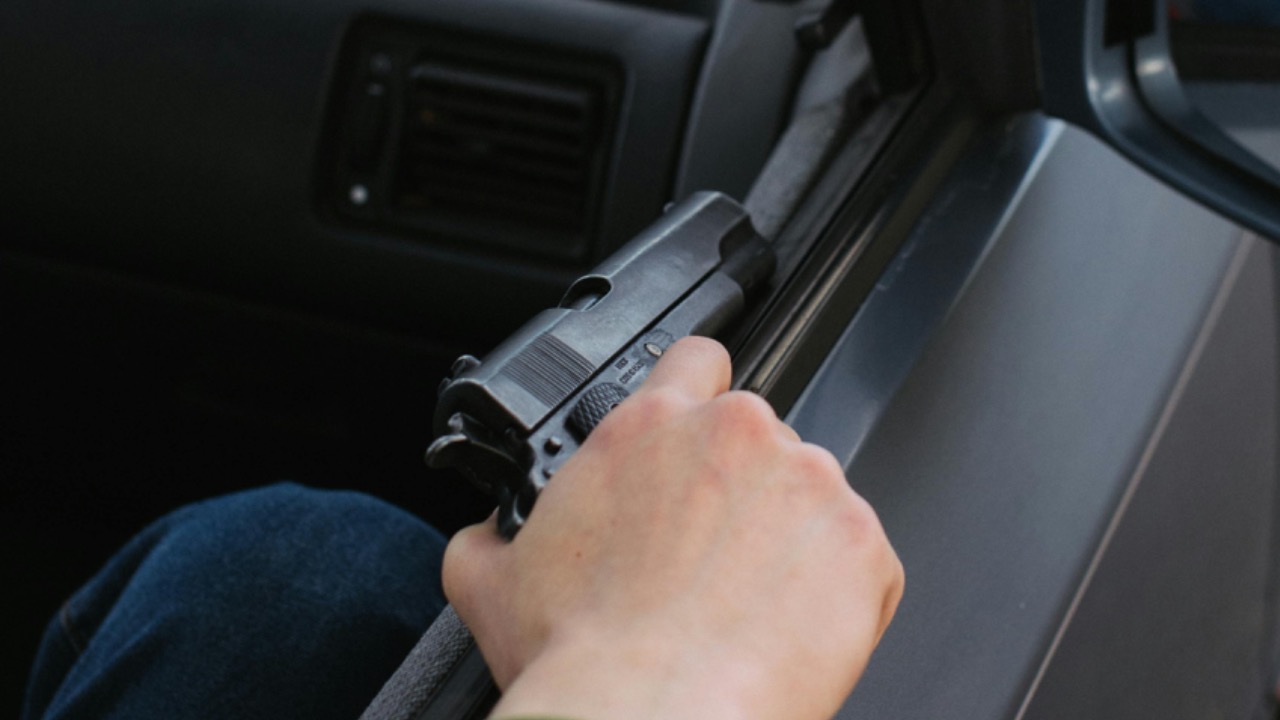
To understand how we got here, you have to start with the sheer number of firearms in private hands and how that has changed daily habits. In Sep, researchers estimated that The United States had about 378 m firearms in civilian circulation, a figure that helps explain why guns are no longer confined to safes and bedside tables. When that many guns are in play, it is inevitable that a significant share will end up stored in vehicles for at least part of the day.
One detailed study of firearm owners across nine states found that storing a gun in a vehicle is not some fringe behavior but a routine practice. In the weighted Results from that work, about 73% of surveyed owners reported at least occasional vehicle storage, a number that should make any gun owner rethink how common this really is. Those figures, drawn from analyses run in Stata and summarized in Table form, tell me that if you park in a lot outside a big-box store or trailhead, the odds are good that several nearby vehicles have a handgun tucked somewhere inside.
Why more owners are leaving guns in their cars and trucks
The rise in vehicle storage is not happening in a vacuum, it tracks closely with a broader surge in gun buying and new carry laws. Researchers writing in Sep have tied a recent spike in firearm purchases to changing perceptions of personal safety and civil unrest, and they note that this surge has raised fresh questions about how those guns are stored day to day. That same work points out that as more people buy guns for self-defense, many of them end up keeping those firearms in vehicles during work hours or errands, a pattern that shows up clearly in the Introduction to the research.
On the ground, the reasons are familiar to anyone who carries. A contractor who moves between job sites may not be allowed to bring a handgun into certain buildings, so the pistol rides in the truck. A parent dropping kids at school might have to leave the gun in the SUV because campus rules prohibit firearms. As more states have expanded carry rights, the practical reality is that people are armed more often, and that means more time when the gun is in a parked vehicle instead of on a belt. The study authors in Sep, looking across nine states, found that these everyday constraints significantly increase the likelihood of vehicle storage, a link they spell out in their analysis of owner behavior.
What the research actually says about vehicle storage habits
When you drill into the data, the picture that emerges is not only that vehicle storage is common, but that it often happens in ways that leave guns vulnerable. In the Stata-based work that produced the 73% figure, the authors did not simply ask whether people ever stored guns in cars, they also looked at how those guns were secured. Their weighted descriptive statistics in Table form show that a large share of owners who use vehicles for storage do so without dedicated lockboxes or hardened containers, relying instead on glove compartments, center consoles, or under-seat spots that offer little resistance to a determined thief, as laid out in the Results.
Another key finding from that same Sep research is that vehicle storage is not evenly distributed across all gun owners. People who carry for self-defense, who own multiple firearms, or who live in areas with longer commutes are more likely to leave guns in vehicles at least occasionally. The authors note that All of their analyses point to a pattern where lifestyle and routine, more than ideology, drive storage choices, and they highlight that this behavior is especially common among those who see their handgun as an everyday tool rather than a range-only item. That nuance matters, because it means any policy or safety push that ignores how people actually live is likely to miss the mark.
Parked cars as a leading source of stolen guns
Once you accept that a lot of guns are sitting in parked vehicles, the next hard truth is that thieves have figured this out. By 2022, about 40% of all reported gun thefts involved a vehicle, and the numbers are still climbing. That means nearly half of the guns that disappear into the black market pipeline are being taken not from safes or homes, but from cars and trucks parked in driveways, apartment lots, and curbside spaces.
Some cities illustrate the problem in stark numbers. In Jul, data showed that Kansas City, Missouri, had a rate of 234 gun thefts from vehicles per 100,000 residents, while Milwaukee recorded 219 per 100,000, with Nashville also high on the list. Those are not abstract statistics, they represent thousands of individual guns that started the day in a lawful owner’s vehicle and ended up in the hands of criminals. When you talk to detectives in those cities, they will tell you that a smashed window and a rummaged console are now one of the most common ways crime guns enter circulation.
How new storage laws turn bad habits into potential felonies
As theft numbers climb and high-profile tragedies make headlines, lawmakers are responding with tougher storage rules that reach directly into how you keep a gun in your vehicle. In Illinois, Gov JB Pritzker signed Senate Bill 8, known as the Safe Gun Storage Act, which among other things prohibits gun owners from storing their firearms in ways that leave them accessible to children when children are present. While the law is often discussed in the context of homes, its language reaches any place a firearm is stored, and that includes vehicles parked where kids might climb inside, a point that is spelled out in the Safe Gun Storage summary.
Michigan has taken a similar tack, but with very explicit criminal penalties tied to storage failures. Under new firearm safety provisions, a gun owner who fails to secure a firearm and allows a minor or prohibited person to access it can face charges that stack on top of any underlying offense. State guidance makes clear that a criminal penalty under this law may be imposed in addition to any penalty for any other criminal offense that arises from the same incident, and that includes scenarios where a gun left in a vehicle is used in a crime, as detailed in the official penalties document.
When storage mistakes cross the line into felony territory
The shift that should get every gun owner’s attention is how prosecutors and legislatures are starting to treat certain storage failures as felonies rather than misdemeanors. In Michigan, for example, the Legislature amended the Code of Criminal Procedure through Senate Bill 80 to add sentencing guidelines for “Failure to store a firearm” when that failure leads to serious harm. That means if a handgun left in a truck is accessed by a child or used in a violent crime, the owner can face a felony-level sentence enhancement tied specifically to the storage lapse, not just the underlying act.
Other states are watching these developments closely, and some are pairing storage rules with broader weapon restrictions that carry their own felony penalties. A widely shared URGENT WARNING video circulating online has stoked fears about New assault weapon bans and sweeping regulations that, in some jurisdictions, threaten up to ten years in prison for possession of certain firearms, a message that has been amplified through platforms like YouTube. While the details of those bans vary and some claims in viral clips are exaggerated or Unverified based on available sources, the broader trend is clear enough: lawmakers are increasingly comfortable attaching serious prison time to what used to be treated as regulatory or paperwork issues, and storage is being folded into that tougher posture.
What all this means for everyday gun owners
For the average person who keeps a handgun in the truck for peace of mind, the legal landscape now looks very different than it did even a few years ago. It is no longer enough to say the doors were locked or that the gun was “out of sight” under a seat. In states that have adopted safe storage statutes, a prosecutor can ask whether the firearm was in a locked container, whether a minor could reasonably access the vehicle, and whether the owner took steps that match what state agencies describe as reasonable care. If the answer is no and something goes wrong, that owner may find himself facing charges that read a lot like those reserved for intentional misconduct.
Practically, that means a few concrete changes for anyone who carries. A lockable steel box bolted to the frame of a Ford F-150 or Toyota 4Runner is no longer a luxury accessory, it is fast becoming the baseline for responsible storage. It also means paying attention to where you park, how often you leave the gun in the vehicle overnight, and whether your kids or their friends have unsupervised access to the cab. The research from Sep that used Stata to map out storage patterns shows that behavior is shaped by habit, and if your habit is to toss the pistol in the console every time you run into the gas station, you are exactly the kind of owner these new laws are written for, as the All-encompassing survey of owner practices makes clear.
How to stay armed, stay legal, and keep your gun out of a crime scene
None of this means you have to stop carrying or that a handgun can never be left in a vehicle. It does mean you need to treat that vehicle like an extension of your gun safe, with the same level of planning and hardware. That starts with a real lockbox, not a plastic console latch. There are purpose-built steel vaults for popular trucks and SUVs, from under-seat drawers in a Chevy Silverado to replacement center consoles in a Jeep Wrangler, that can be cabled or bolted to the vehicle structure. Pair that with a quality cable lock through the handgun’s action and you have created multiple layers a smash-and-grab thief will struggle to defeat before someone notices.
It also means staying current on your own state’s laws and any changes that might affect how you store firearms around children or in shared spaces. When Gov JB Pritzker signed the Safe Gun Storage Act, he signaled that Illinois is willing to hold owners accountable for what happens after a gun leaves the holster and sits unattended, and Michigan’s focus on Failure to store a firearm shows the same mindset in a different legal package. If you carry across state lines, you need to know whether your destination treats a loaded handgun in a glove box as lawful carry, unlawful transport, or a potential storage violation if a minor is in the vehicle. The more that parked cars become a leading source of stolen guns in places like Kansas City, Missouri, Milwaukee, and Nashville, the more likely it is that other legislatures will follow suit, using the kind of theft data highlighted in Jul to justify new rules that turn bad storage into a felony-level mistake.

Asher was raised in the woods and on the water, and it shows. He’s logged more hours behind a rifle and under a heavy pack than most men twice his age.