Calibers that earned trust the hard way
Some cartridges win fans with flashy marketing or match trophies. The ones that really matter earn their place in gun safes by working in bad weather, on long blood trails, and in fights that go sideways. When I talk about calibers that “earned trust the hard way,” I mean rounds that proved themselves over decades of hunting seasons, wars, and hard lessons on the street.
They are not always the newest or the flattest shooting. Instead, they are the cartridges guides keep as backups, game wardens see in every truck, and instructors still recommend after the trends move on. From lever‑gun classics to 9mm duty pistols and the 7.62×39 that changed modern warfare, these are the rounds that kept showing up when it counted.
The quiet workhorses behind the caliber wars
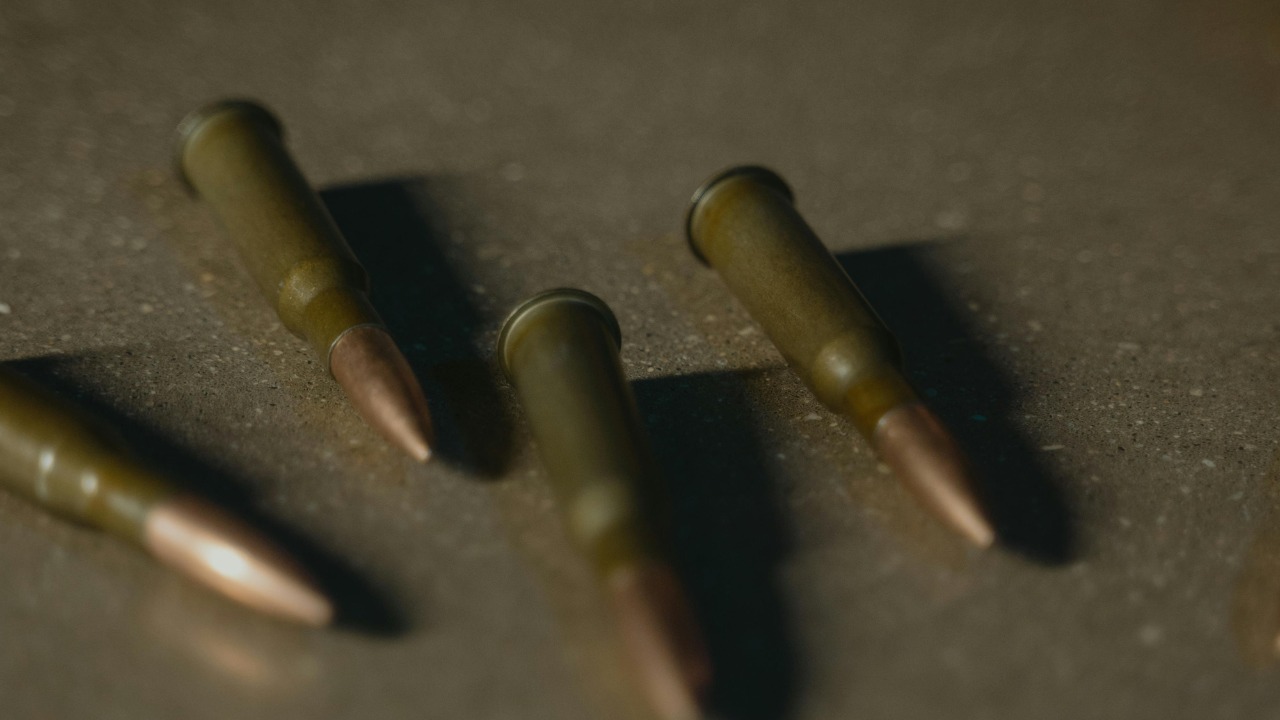
Every generation of shooters thinks it has finally cracked the code on the “perfect” round, then reality steps in. I have watched new cartridges arrive with big promises, only to see hunters and cops drift back to the same old standbys once the dust settles. The pattern looks a lot like what basketball writers describe when they note how Traditional programs such as Georgetown and Louisville were slow to embrace the three‑point shot, then eventually realized its value. In the gun world, the “three pointer” might be a hot new 6.5, but the teams still winning games are running tried and true 30‑caliber and 9mm playbooks.
That is why I pay attention to what keeps showing up in real‑world data. When a hunting chart lists Hog Hunting Calibers that include . 357 M, . 45 ACP, . 44 M, 12 Gauge, . 243 Win, 6.5 Creedmoor, . 270 Win, and . 30‑30 Win, that tells me which rounds have actually put pork in the freezer. When a handgun roundup notes that 9mm Ammo is the most sought after pistol caliber in the United States, that is not a fashion statement, it is a reflection of what shooters trust enough to buy by the case.
.30‑30 Winchester, the deer woods constant
If there is a cartridge that truly earned its reputation one whitetail at a time, it is .30‑30 Winchester. Long before anyone argued about 6.5s on the internet, this round was already known as Classic Deer Hunting, and it still shows up on modern lists of all‑around rifle choices. In one breakdown of three must‑own rifle rounds, .30‑30 sits alongside 7.62×39mm and 45‑70 Government, with the 7.62 labeled Modern Utility Caliber. That kind of company says a lot about how relevant the old lever‑gun round still is.
Guides in the East will tell you the same thing. One veteran voice flatly recommends “30‑30 for eastern whitetails” in a discussion of all‑around hunting rounds, and I have seen that play out in camp after camp where at least one hunter shows up with a scuffed carbine and a pocket full of flat‑nosed soft points. That advice shows up explicitly in a video segment that singles out 30‑30 for eastern, and it lines up with older comments from shooters who point out that the 30‑30 was the first commercially sold smokeless sporting cartridge. When a Facebook thread of rifle nuts notes that Most of the images in a caliber chart are wrong and that the round pictured is not a 30‑30, it is a reminder that this cartridge has been around so long that even the artwork struggles to keep up with its history.
45‑70 Government, the big hammer that never left
On the other end of the lever‑gun spectrum sits 45‑70 Government, a cartridge that has been flattening big animals since blackpowder days. Modern shooters sometimes forget how much authority lives in those two numbers, 45 and 70 G, until they see what a heavy bullet does to a big‑boned animal at woods ranges. In a side‑by‑side comparison with 30‑30, one analysis spells it out plainly in a section labeled The Short Answer, noting that the 45‑70 offers more power and is better suited to bigger game, while the 30‑30 kicks less and is cheaper to shoot.
I have seen that split in the field. The 30‑30 rides in the truck for deer and hogs, while the 45‑70 comes out when the tag says elk, moose, or big bear. That same comparison repeats the key figures, 45 and 70, to drive home that this is not a marginal upgrade, it is a different class of cartridge. Straight‑walled rounds like this have even seen a resurgence in states that opened special seasons for them, helped along by modern loads. One overview of that trend points out that Doubletap offers heavy straight‑wall loads and that LeverEvolution rounds from Hornady shoot flat enough to make hits at 250 yards uncomplicated, which is a long way from the rainbow trajectories many of us grew up with.
.30‑06 Springfield, from warhorse to deer camp king
Few cartridges have lived as many lives as .30‑06 Springfield. It was designed for warfare, then settled into civilian life as one of the most common calibers in use, and Today it is primarily a hunting round. That arc, from trenches to tree stands, is part of why hunters trust it so deeply. One whitetail roundup notes that You would be hard pressed to walk into any deer camp without seeing at least one hunter carrying a .30‑06, and I have found that to be true from the Northwoods to the Rockies.
Modern ammunition has only sharpened that edge. A detailed look at accuracy loads highlights Remington 30‑06 ammo packaged as 20 rounds of 150 g Scirocco Bonded bullets, a combination built to hold together on impact and still shoot tight groups. When a cartridge can be loaded with everything from light 150s to heavy elk bullets and still be called the most popular deer round in camp, it has clearly earned its place the hard way.
7.62×39 and the AK‑47, trust built in mud and sand
Some calibers earn their reputation not in deer blinds but in rice paddies and deserts. The 7.62×39 paired with the AK‑pattern rifle is the clearest example. One detailed history notes that The AK‑47, designed as an intermediate rifle for Soviet soldiers, became the prototype for modern assault rifles, valued not for match accuracy but for the rugged utility of a plumber’s helper. Another overview of infantry weapons flatly states that The AK‑47 has endured because it is simple to use, requires little maintenance, and works for the lowest common denominator of training.
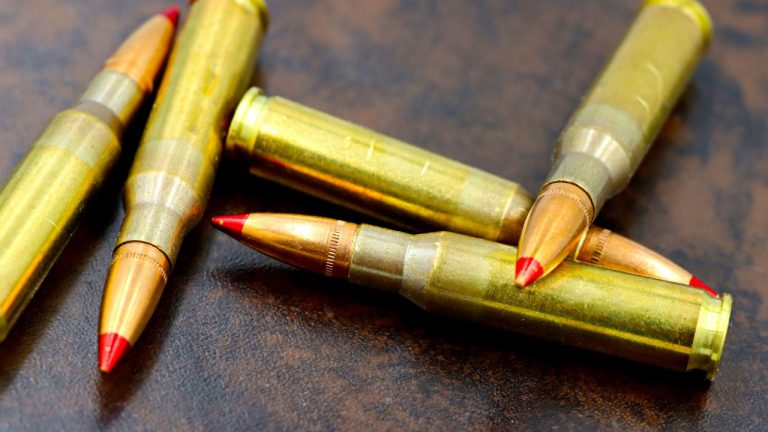
The cartridge itself, 7.62×39, has earned a similar reputation. A technical breakdown points out that the AK‑47 being chambered for this round was critical because it proved so reliable and ideal for the rifle’s intended role, with More emphasis placed on its reliability in all manner of conditions than on raw ballistics. Even modern rifle roundups still list 7.62×39mm as Modern Utility Caliber, right alongside .30‑30 and 45‑70, and one assault rifle guide notes that Then there is the AK‑47, often hailed as one of the most reliable rifles ever made, with Its rugged construction letting it run in harsh conditions where other rifles fail. That kind of track record is why hunters now look at 7.62×39 as a practical hog and deer round, not just a surplus curiosity.
9mm Luger, from Miami scars to modern dominance
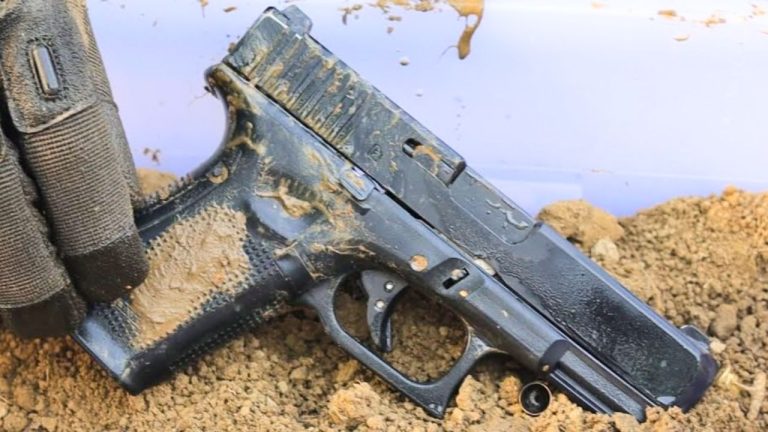
No handgun caliber has had its reputation dragged through the mud and then rebuilt quite like 9mm. The cartridge took a beating after the Miami shootout, where failures in bullet performance and tactics left scars on the FBI. For years after, the Federal Bureau of chased larger calibers, only to circle back once modern bullets fixed the old problems. A later review notes that Federal Bureau of returned to the 9mm jacketed hollow‑point Luger after once shunning it as ineffective, a rare public admission that the cartridge had been underestimated.
On the civilian side, the market has already voted. A handgun ammo survey points out that the Jan breakdown of common rounds shows 9mm as the most popular handgun cartridge in the world, and another analysis notes that In the last few years the 9mm cartridge has risen to dominate the firearm industry. That same piece points out that Calibers like . 40 S&W have all but disappeared from duty holsters, even though some shooters still argue that 40 S&W is better than 9mm. When the Ammo charts and the duty rosters all point the same direction, it is clear the round has earned back the trust it lost in the 1980s.
.38 Colt, .40 S&W and the hard lessons of service calibers
Service sidearms have always been a laboratory for what works and what does not. Long before 9mm took over, the U.S. military was experimenting with smaller revolver rounds. A historical overview notes that the Army adopted the 38 Colt in 1892, a move that later drew criticism when the round struggled in close‑range fights. That experience helped drive the eventual shift to heavier calibers, and it still echoes in today’s debates about what counts as “enough gun” for duty use.
Fast forward a century and the same arguments swirl around .40 S&W. In some training circles, people still ask whether 40 S&W is better than 9mm, pointing to its larger diameter and higher energy. At the same time, ballistic testing of defensive loads shows that bullet design can matter more than caliber. One gel test notes that a Remington 88-grain HTP load produced 16.8 inches of penetration but almost no expansion, measuring only 0.36-i in recovered diameter. That kind of data is why I tell new shooters to pick a proven load first and a caliber second.
.22 LR and the underrated rimfires that never quit
When people argue about “serious” calibers, they often forget the little rimfire that taught most of us to shoot. In one social media thread about iconic rifle rounds, a commenter named Chris Banks chimes in that . 22LR is “bad ass,” and another commenter notes that . 22 lr looks like the biggest one on a mis‑scaled chart. That kind of offhand praise might sound like internet noise, but it reflects something real: this tiny cartridge has probably put more small game in the pot and more rounds downrange than any centerfire ever will.
Rimfires rarely make the “best caliber” lists for big game or self‑defense, but they are the backbone of marksmanship. The same hunting chart that lists big‑game rounds like . 357 M and . 44 M Mag for hogs also assumes that many shooters started with a .22 before moving up. In that sense, the humble rimfire has earned trust in a different way. It is the round parents hand to their kids, the one farmers keep in a beat‑up single‑shot behind the truck seat, and the one that keeps showing up at the range when people want to work on fundamentals without burning through their stash of premium hunting Ammo.
Dangerous‑game bruisers and the outer limits of trust
At the far edge of the spectrum sit the cartridges built for animals that can stomp or gore you if things go wrong. In that world, reliability and stopping power matter more than recoil comfort. A look at classic double rifles notes that 577s are still regarded as premier choices for dangerous game, and that Nothing is as fast or as foolproof reliable for a life‑saving second shot. In the golden days of safari, not all African hunters trusted these big doubles, but the ones who did often had good stories to tell afterward.
Why these calibers still matter when new rounds keep coming
Supporting sources: The Double Counterinsurgency.

Leo’s been tracking game and tuning gear since he could stand upright. He’s sharp, driven, and knows how to keep things running when conditions turn.