Common home security blind spots burglars look for first
Burglars rarely pick homes at random. They look for predictable weak spots, from dark side yards to unlocked windows, and exploit the places owners overlook most. Understanding those blind spots, inside and out, is the fastest way to turn a tempting target into a far less appealing prospect.
I focus on how intruders actually move through a property, which areas they scan first, and which habits quietly help them. By mapping those patterns to specific fixes, you can close the gaps that burglars look for first without turning your home into a fortress.
How burglars size up a property before they ever touch a lock

Most break‑ins start with a quiet assessment from the street or sidewalk. Intruders look for homes that feel unobserved and unprotected, where there is a clear escape route and minimal chance of confrontation. Security specialists describe several Key Factors That to intruders, including poor lighting, overgrown landscaping that hides doors and windows, and telltale signs that nobody is home, such as piled‑up mail or dark windows night after night.
Another major signal is the Lack of visible deterrents. When a house has no cameras, no alarm signage, and no obvious reinforcement on doors or windows, it reads as a low‑risk opportunity. I see the same pattern in neighborhood footage after incidents: burglars often walk past several properties and only approach the one that looks easiest, not necessarily the one with the most valuables. That is why even simple, visible measures like a camera at eye level or a yard sign can shift a home out of the “easy target” category before anyone tests a lock.
Front doors, side doors and the illusion of safety
Many people assume burglars avoid the front door, yet security data shows the main entrance is still a primary attack point. Analysts who study Jun burglary patterns note that the front door is often the first place tested, precisely because it is so common for residents to leave it unlocked for short errands or rely on a flimsy knob lock. When the door is solid but the frame is weak, a single kick can still defeat it in seconds.
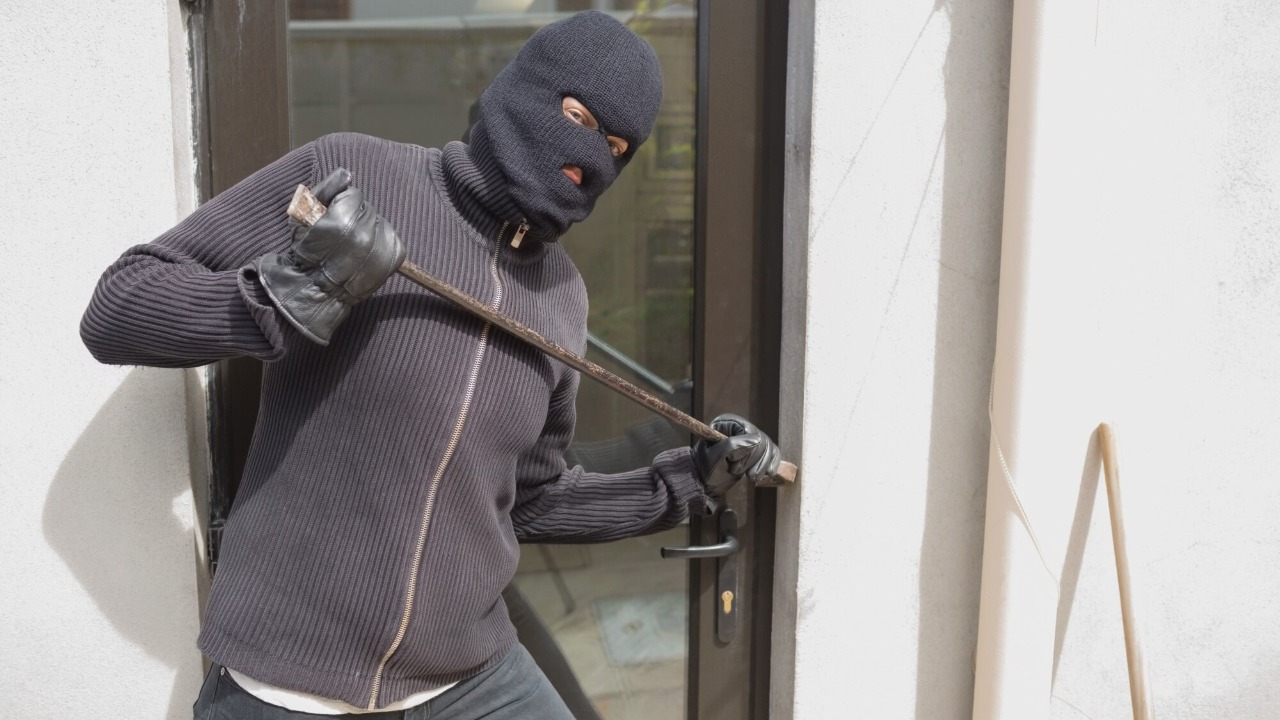
Side and back doors are even more attractive, since they combine easy access with privacy. Guidance on Residential Burglary Protection stresses that these Key Points of Entry are often hidden behind fences or shrubs, giving intruders time to work on a lock or hinge without being seen. I recommend treating every exterior door as if it is the most likely breach point: install a deadbolt that fully extends into the frame, reinforce the strike plate with long screws, and pair the door with a camera or doorbell that records anyone who approaches, even if they never knock.
Windows, sliders and upper floors that are easier to reach than you think
Once burglars have checked the doors, they typically move to glass. Security experts consistently rank Windows among the top Home Security Weak Spots, urging owners to Secure all windows, including those on upper floors. The assumption that a second‑story window is “too high” to matter ignores how often ladders, decks, or even nearby trees give intruders a boost. Basement windows that sit at ground level are another favorite, especially when they are hidden behind bushes.
Sliding glass doors combine the vulnerabilities of both doors and windows. Analysis of What Are Your Weak Points for Burglars highlights how easily standard latches can be jimmied or lifted off the track. I advise adding a security bar or dowel in the track, applying shatter‑resistant film, and tying these doors into your alarm system. When the Department of Justice reports that 40% of all burglaries involve an unlocked entry, simply locking and reinforcing every window and slider is one of the most effective, low‑cost changes you can make.
Unlocked entry points and the myth of “just for a minute”
The most uncomfortable blind spot is also the simplest: doors and windows that are not locked at all. Data on Weak Points for shows that a huge share of intrusions involve no forced entry at all, because residents assumed a quick dog walk or school run did not justify locking up. When the Department of Justice finds that Department of Justice statistics tie 40% of burglaries to unlocked access, it underlines how much risk comes from habit rather than hardware.
Security checklists for a New House put Unsecured Entry Points (Doors, Windows) at the top of the list of Home Security Vulnerabilities to Check When Moving Into any property. I encourage people to treat locking up as a non‑negotiable routine, backed by smart locks or app‑based reminders if needed. A door that auto‑locks after 30 seconds, or a phone alert when a window is left open, directly addresses the “just for a minute” mindset that burglars count on.
Where burglars head first once they are inside
Once an intruder crosses the threshold, the blind spots shift from hardware to layout. Interviews with consultants on Jan home invasions show that most burglars move straight toward the master bedroom. That is where they expect to find jewelry boxes, cash, passports, and small electronics that can be grabbed quickly. If they have only a few minutes, they will often ignore other rooms entirely and focus on nightstands, dresser drawers, and closet shelves.
Security professionals who study What Room Do to first recommend moving your most sensitive documents and valuables out of that predictable zone. I advise using a small, anchored safe in a less obvious room, or even a locked cabinet in a home office. When What Room Do research notes that security systems can also provide extra protection for these spaces, it reinforces a simple principle: do not keep everything a thief wants in the first room they are trained to search.
“Secret” hiding places that are anything but secret
Inside the home, another blind spot is misplaced confidence in classic hiding spots. Guidance on Door cylinders and key systems, Door fittings, Escutcheon plates, Security strike plates, Security hinge locks and Mortic hardware makes clear that professionals think in terms of layers, not tricks. Burglars, for their part, know to check under mattresses, inside sock drawers, behind picture frames, and in the freezer, because those are the same “creative” spots people talk about at dinner parties.
Specialists who map Escutcheon and Security hardware vulnerabilities also warn against leaving spare keys in flowerpots or under doormats, which are usually the first places checked outside. I suggest treating valuables and keys as if a determined stranger already knows your favorite hiding place. That means using a bolted safe, a lockbox in a less obvious room, or a code‑based key safe mounted out of direct sight, rather than relying on the illusion of secrecy in the most common spots.
Perimeter blind spots, dark corners and shared spaces
Even with solid locks, the areas around a home can quietly invite trouble. Security planners emphasize that the first step in Maximizing Your Security is to examine the perimeter for blind spots a burglar could use to their advantage. That includes side yards with no lighting, back fences that back onto alleys, and storage sheds that provide both cover and tools. I often walk clients around their property at night to see what an intruder would see, which is usually far darker and more concealed than they expect.
For apartments and high‑rise buildings, the weak points often sit just beyond the unit door. Analysts who study Exterior common spaces, such as parking lots, the backs of buildings and loading dock areas, describe these zones as frequent access routes for criminals to breach the building. I advise residents to push building managers for cameras and lighting in these shared areas, and to treat garage entrances, mailrooms and stairwells with the same caution they would bring to a dark street.
Tech blind spots, from Wi‑Fi jamming to overconfident apps
As more homes rely on connected locks, cameras and alarms, burglars are adapting to the technology. Analysts warn that, in an era where technology is meant to make life safer, tech‑savvy intruders are finding new ways to exploit vulnerabilities in connected systems, including signal interference and Mar Denial of service (DoS) attacks on security networks. If your cameras and sensors all depend on a single Wi‑Fi router with no backup, a simple disruption can create a temporary blind spot that looks a lot like an invitation.
That does not mean smart systems are a mistake, but it does mean they should be layered with traditional safeguards. I recommend hard‑wiring key devices where possible, enabling local recording on cameras, and pairing digital locks with physical deadbolts. Guidance on technology risks also underscores the importance of strong passwords and regular firmware updates. The goal is to avoid a single point of failure, so that even if an app or network goes down, your doors, windows and alarms still present a meaningful barrier.
Turning blind spots into a simple security checklist
When you strip away the myths, most burglaries still come down to a few predictable entry routes. Public safety guidance notes that the average burglar has only two options for entering a residence, Examine doors and windows, and urges residents to back every door with a deadbolt lock. The same document on Examine entry points encourages people to look at their home the way an intruder would, checking for weak frames, missing locks and easy climbing routes.
Lists of Top Home Security Weak Spots and moving‑day Home Security Vulnerabilities to Check When Moving Into a new place all converge on the same checklist: lock every door and window, reinforce the frames, light the perimeter, secure sliding glass doors, and avoid obvious hiding places for keys and valuables. I add one more step for every homeowner I work with. Walk your property slowly, day and night, and ask where you would go if you had five minutes to get in and out unseen. Wherever your eye lands first is probably where a burglar’s will too, and that is where your next upgrade should start.

Leo’s been tracking game and tuning gear since he could stand upright. He’s sharp, driven, and knows how to keep things running when conditions turn.