Handguns That Get Forgotten for a Reason
Some handguns fade away quietly, not because history was unfair to them, but because they never earned a place worth defending. A pistol might look interesting on paper or feel unique at the counter, but real shooters know what matters—reliability, shootability, parts support, and confidence. The guns here tended to miss one of those marks. They weren’t catastrophic failures, but they didn’t inspire anyone to carry them long-term either. These handguns live in the backs of safes, pawn shop cases, and dusty show tables because people bought them once, shot them a little, and moved on without much regret.
Lorcin L380
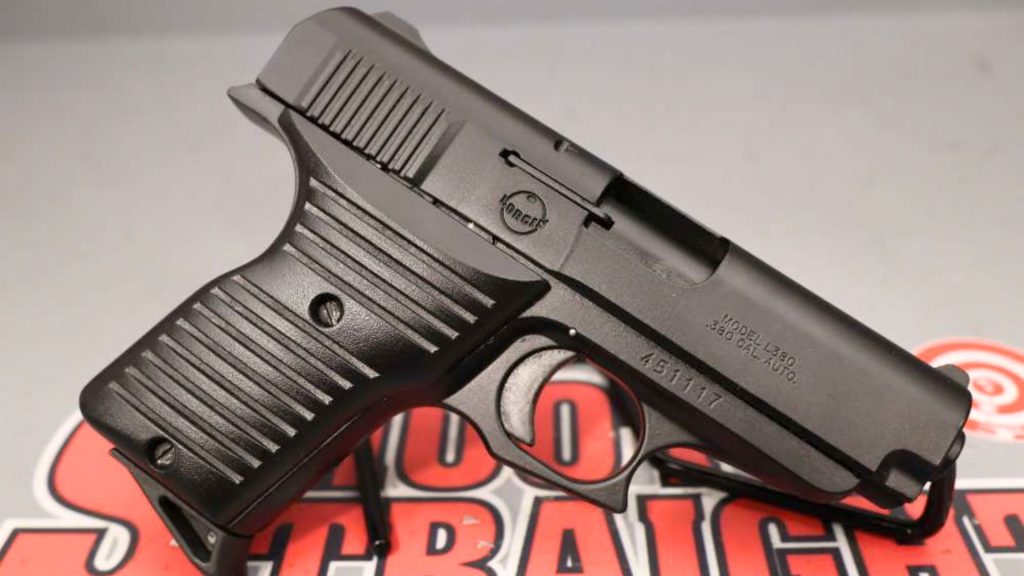
The Lorcin L380 is one of those pistols you see in pawn shops at suspiciously low prices. At a glance it offers a compact .380 at a budget cost, but in real use the story isn’t as pretty. Pot metal construction, erratic feeding, and heavy triggers made reliability hit or miss. Many shooters reported limp-wrist malfunctions or cracked frames under regular use.
It served as an entry point for buyers on tight budgets, but most quickly upgraded to something more trustworthy. Very few people keep a Lorcin long-term unless they like collecting oddities or teaching lessons about buying cheap guns.
Jennings J22
The Jennings J22 is tiny, pocketable, and often remembered as a gun that looked better in the box than on the firing line. Chambered in .22 LR, it suffers from light strikes, rough extraction, and ammo sensitivity. Run it clean with high-velocity rounds and it might behave—run it dirty or with bulk ammo, and failures become common.
It’s one of those pistols everyone seems to have owned once, shot a few magazines through, then forgot about. It’s not hateful, but there’s a reason it rarely rides in holsters today.
Taurus PT22
The PT22 is small, lightweight, and easy to carry, but the trigger pull feels long and mushy, and reliability can go downhill once dirty. Takedown is simple enough, but many guns struggle with hollow point cycling. Accuracy is fine inside close-contact distances, not much further.
The tip-up barrel is neat in theory, but most shooters eventually swap this gun for something more dependable. It’s more novelty than workhorse, which explains why it disappears from use as quickly as it appears.
Beretta Tomcat (.32 ACP)
The Tomcat earned fans early on, but cracking frames, especially in early production or with hotter ammo, placed a shadow over its reputation. It shoots smooth when everything’s right, yet many owners kept it clean and lightly used out of caution. The tip-up barrel is handy for those with weak grip strength, but that feature wasn’t enough to keep it in rotation among serious carriers.
People remember it fondly, but mostly in conversation—not in daily holsters. When a gun’s main legacy is “cool idea, fragile frame,” it rarely stays relevant.
Hi-Point C9 (Early Perceptions)
The C9 is reliable enough mechanically, but the bulky ergonomics and weight for a single-stack 9mm make it less appealing to carry. Many shooters buy one as a budget choice and then shelve it once they try smoother pistols. The trigger is functional but far from refined, and magazine issues can show up without tuning.
It works—usually—and that’s its main praise. But very few people brag about owning one. The market moved on quickly, leaving the C9 as a backup range curiosity instead of a beloved tool.
Colt 2000 All-American
Colt attempted to modernize with the 2000, but shooters remember gritty triggers, accuracy complaints, and early reliability problems. Polymer was new territory for Colt, and it showed. Even nostalgia hasn’t revived interest in this gun.
Collectors may chase them now for rarity, not performance. Most hunters or shooters who tried one never kept it long—the design lacked identity and didn’t perform well enough to earn loyalty.
Ruger P95
Ruger’s P-series pistols fired when needed, but the P95 vanished from holsters as slimmer, better-handling pistols arrived. Heavy slides, thick grips, and dated ergonomics made them reliable yet unappealing for concealed carry. You could trust it to run, but not enjoy carrying it.
Many owners sold theirs when striker-fired pistols took over. People didn’t hate the P95—they mostly forgot it existed. Durable? Yes. Memorable? Not so much.
Smith & Wesson Sigma
The Sigma promised Glock-like performance at a lower price, but the heavy trigger discouraged good shooting habits, and early reliability feedback wasn’t glowing. Many worked fine, but the trigger alone turned people away. Shooters who trained on newer pistols rarely went back.
Today, it feels like a relic from a transition era. It’s not awful, but the market passed it by with better striker pistols replacing it completely.
AMT Backup .380
Stainless construction sounded great, but the AMT Backup earned a reputation for hard triggers and poor reliability with hollow points. If kept clean and fed FMJ, it could work, but many shooters experienced light strikes and stiff controls. It was built for deep concealment, yet firing one wasn’t pleasant for long sessions.
Backup by name, backup in reality—most people who carried one eventually replaced it with something more shootable and never looked back.
Charter Arms Pitbull (Early Models)
Running rimless cartridges without moon clips is clever, but early Pitbull models often had extraction issues. Triggers felt rough compared to revolvers in same price range, and accuracy varied by gun. It wasn’t useless—just underwhelming for the hype some expected.
Later revisions improved things, but the early reputation stuck. Owners who wanted something simpler often moved to traditional .38 or .357 options and never thought twice.
Walther PPK/S (.380 in Today’s Market)
Bond nostalgia sells guns, but nostalgia doesn’t always equal performance. The PPK/S bites the web of larger hands, holds limited capacity, and kicks surprisingly hard for a .380. In its time it made sense, but today shooters have better choices that conceal easier and shoot softer.
People remember the aesthetics more than the experience. Many who buy one end up admiring it more than carrying it.
Rossi Model 461/462
These compact revolvers filled budget needs, but triggers could be inconsistent and lockup sometimes felt loose. They work when maintained well, but long-term trust doesn’t grow easily with mixed quality control. Most owners eventually upgrade to something sturdier.
You’ll still find them in drawers and glove boxes, but rarely on the hip of someone who shoots often. They function—just without enough charm or confidence to stay in rotation.

Leo’s been tracking game and tuning gear since he could stand upright. He’s sharp, driven, and knows how to keep things running when conditions turn.