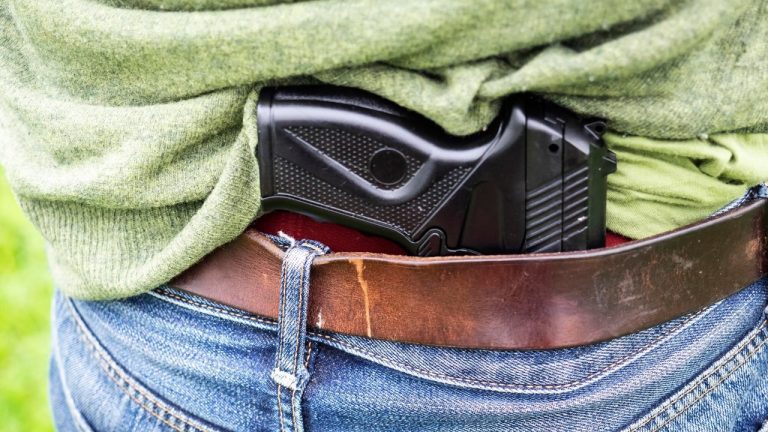
Are CCW badges useful or misunderstood in concealed carry circles?
Concealed carry badges sit in a strange corner of gun culture, marketed as tools for safety yet derided by many experienced carriers and instructors. The debate turns on whether these shiny shields help identify a lawful defender in chaos or simply invite legal trouble, social ridicule, and tactical risk. I want to unpack why these products inspire such strong reactions and whether they have any legitimate role for responsible permit holders.
Across training circles, online forums, and legal commentary, a pattern emerges: most professionals warn that CCW badges are at best unnecessary and at worst dangerous. Critics argue that the badge clashes with the core idea of discreet carry, can be mistaken for law enforcement insignia, and may even be used as evidence of poor judgment after a shooting. Supporters, a much smaller group, tend to frame them as a psychological comfort item rather than a serious defensive tool.
How CCW badges are sold to new carriers

Commercial pitches for CCW badges usually lean on fear and confusion about what happens after a defensive gun use. Vendors suggest that a metal shield clipped near the belt will quickly signal to police and bystanders that the person with a gun is a “good guy,” not a threat. Some sites emphasize that these badges can be purchased online with no proof of training or licensing, presenting them as an easy add-on to a new permit holder’s firearm, holster, and ammunition, a pattern highlighted in coverage of online sales.
Instructors and analysts describe a recurring sales scenario in which a nervous first-time carrier is told that a badge will “bridge the gap” between drawing a gun and police arrival. One detailed breakdown of this pitch notes that the imagined user has already invested in a firearm, holster, and ammunition, then is nudged toward a badge as the final piece of a supposed safety system, a pattern echoed in a separate discussion of that scenario. The marketing rarely grapples with how police actually respond to armed civilians or with the legal nuances of impersonation statutes.
What the law actually says about owning a badge
Legally, the picture is more nuanced than some social media jokes suggest. Analyses of state statutes point out that in most jurisdictions, simply owning or carrying a concealed carry badge is not, by itself, a crime. A recent legal explainer on Concealed Carry Badges stresses that the object itself is usually lawful to possess, which helps explain why so many vendors operate openly.
The legal risk comes from how the badge is used and perceived. The same analysis warns that if a carrier flashes a badge in a way that suggests official authority, prosecutors could argue that the person was trying to pass as law enforcement, triggering impersonation charges. A follow up discussion under the heading “However” in the same resource underscores that context, such as verbal statements or how prominently the badge is displayed, can tip the balance toward criminal liability, a point reinforced in a separate section on public perception. That gray area is exactly what worries many trainers and attorneys.
Why many instructors and attorneys warn against them
Among professionals who teach self defense law, the skepticism is blunt. In a widely shared video, the legal commentator Jan walks through the question “Should I Buy a Concealed Weapons Badge?” and emphasizes that “cops hate impersonators,” stressing that officers are protective of their licenses and authority and view lookalike badges with suspicion, a point he makes in the main segment of the video. Jan’s broader theme is that anything which looks like an attempt to blur the line between civilian and sworn officer can sour an encounter before a word is spoken.
Jan returns to the topic later in the same presentation, again underlining that officers “do” hate impersonators and that a badge can be read as an attempt to claim status that the carrier does not have, a concern he reiterates in a segment linked through a timestamped clip. In that same discussion, he briefly references the sponsor Aura, using the privacy service as a contrast to the false sense of security a badge might offer. The underlying message is consistent: if the people who will be responding to your 911 call dislike these items, carrying one is a poor strategic choice.
Voices from the training range and gun media
Firearms instructors who spend time on the range with new permit holders often see CCW badges as a red flag for misplaced priorities. In one video segment, a trainer recounts spotting a “Concealed License Badge” on a student who was otherwise investing in serious coursework, then bluntly advises viewers to “Trash It !” and focus instead on skills and judgment, a stance captured in a clip labeled “What” in the video. His frustration is less about fashion and more about the risk that a student is chasing symbols instead of competence.
Print and online gun media echo that skepticism. A detailed essay on badge stashing explicitly states that for civilians, the author does not advocate the use of any “Concealed Weapons License Bad” style insignia, arguing that such gear creates more problems than it solves, a position laid out under the heading “BADGES FOR CIVILIANS” in a feature. The author’s core concern is that a badge can escalate tension, confuse responding officers, and undermine the low profile that concealed carry is supposed to maintain.
How online communities really feel about CCW badges
In online communities where experienced carriers trade notes, CCW badges are often treated as a punchline. A long running thread on a major self defense forum opens with a moderator stating that they “highly recommend NOT having a CCW badge in any way,” warning user Bruno that such items can be construed as an attempt to impersonate a police officer, a stance laid out in the main discussion. Other participants pile on with variations of the same theme, arguing that the badge offers no legal benefit and plenty of downside.
On Reddit, the tone is even sharper. In one r/CCW thread, a user bluntly writes, “I just don’t understand why these things exist,” noting that no jurisdiction they know of requires permit holders to carry a badge and that any supposed benefit seems to come from vendor marketing, a sentiment captured in a post that asks why anyone buys them. Another thread in a New Jersey focused community is titled around whether these items are “useful or ultimate cringe,” with one commenter answering “Never” and warning that a “Cop” who sees such a badge might laugh, then consider an impersonation charge, a reaction described in a post that begins with Never. The social verdict in these spaces is clear: badges are seen as a mark of inexperience, not professionalism.
Concealment, tactics, and the risk of advertising you are armed
Beyond image and legality, there is a tactical argument that cuts against CCW badges. Experienced carriers often repeat that the key word in “concealed carry” is “CONCEALED,” warning that anything which advertises a firearm undermines the element of surprise and may draw unwanted attention from criminals, a point made explicitly in a forum post that capitalizes CONCEALED. The same contributor asks why anyone would put themselves at risk by advertising that they are armed when the entire point of the permit is to quietly protect themselves and their family.
Reddit users echo that logic in plainer language. In the New Jersey thread, one commenter responds to the idea of wearing a badge with “Why would you want to announce you are carrying? So someone can shoot you first?” before warning that a “Cop” might not only mock the badge but also consider an impersonation charge, a reaction detailed in the same discussion. From a tactics standpoint, a shiny emblem near the belt line can draw the eye to exactly where a gun might be, which is the opposite of what most self defense instructors recommend.
Impersonation fears and real legal exposure
Concerns about impersonation are not just cultural. In a Quora exchange about county rules that ban “badges or other accessories,” one respondent calls a “Concealed Firearms Permit” badge “the height of stupidity” and warns that in many places it is “probable” that a carrier could be arrested for impersonating a peace officer, a warning spelled out in a post that criticizes the Concealed Firearms Permit badge. That perspective aligns with Jan’s repeated reminder that officers are particularly sensitive to anything that looks like a fake credential.
Legal commentators who have parsed impersonation statutes note that prosecutors often look at the totality of circumstances, including clothing, verbal statements, and behavior. A badge that resembles a police shield, especially if paired with tactical gear or commands shouted at a scene, can be powerful evidence that a civilian was trying to act like an officer. That is why multiple instructors and attorneys in the CCW forum reiterate that they “highly recommend NOT having” such items, a phrase repeated in a separate link that again stresses NOT carrying a CCW badge. The legal risk may be low in day to day life, but it spikes the moment a gun is drawn and police reports are written.
Are there any situations where a badge might help?
Supporters of CCW badges usually point to one narrow scenario: the chaotic minutes after a defensive shooting, when police arrive and must quickly sort suspects from victims. Some badge vendors claim that a visible shield near the holster will reassure officers that the armed person is licensed and cooperative. A detailed breakdown of this argument appears in a piece that examines whether one “Should” buy a “Concealed Carry Badge,” noting that “Concealed Carry Badges” are marketed as a way to visually distinguish a “Concealed” carrier from a criminal, a framing discussed in an analysis of that scenario. The problem is that this imagined benefit assumes officers will recognize and respect a privately purchased trinket.
Some community members have floated alternatives that avoid the impersonation trap. In the same CCW forum, one contributor suggests that if a person wants something identifiable but not resembling police gear, a simple ID holder next to the holster could carry a permit or emergency contact card, an idea described in a post that discusses using an ID holder. That approach still raises questions about whether officers will have time to read anything during a high stress response, but it avoids the specific stigma attached to a fake shield.
How I weigh the balance between utility and stigma
Looking across legal commentary, training advice, and community sentiment, I see a consistent pattern: whatever theoretical benefit CCW badges might offer is overwhelmed by their practical drawbacks. Legal analyses emphasize that while the objects are usually lawful to own, misuse can feed an impersonation case, as outlined in the detailed review of Concealed Carry Badges. Tactical voices stress that the best way to survive a violent encounter is to stay discreet, avoid drawing attention, and follow clear commands when police arrive, not to rely on a piece of metal that officers may ignore or resent.
From a cultural standpoint, the stigma is real. Threads in r/CCW and r/NJGuns treat badges as a symbol of inexperience, while seasoned forum moderators and instructors repeatedly advise against them, as seen in the main CCW thread. When I weigh that against the fact that no jurisdiction requires such badges and that even Jan, in his full length video, frames them as a liability rather than an asset, I come down on the side that sees them as more misunderstood than useful. The better investment, in my view, is in training, clear communication with responding officers, and perhaps digital tools like Aura for privacy and documentation, as briefly mentioned in the timestamped segment of Jan’s talk, rather than in a badge that solves few problems and may create new ones.

Leo’s been tracking game and tuning gear since he could stand upright. He’s sharp, driven, and knows how to keep things running when conditions turn.