

Fact check: Minnesota law allows licensed carry at protests despite claims otherwise
Federal officials have asserted in recent days that firearms are categorically barred at protests in Minnesota, suggesting that even people with valid permits are breaking the law if they show up armed. Minnesota law does not say that. State statutes and public safety guidance instead draw a sharp line between lawful, licensed carry in public and criminal conduct such as rioting or carrying while intoxicated, and that distinction still applies when a crowd gathers with signs and chants.
The political fight over guns at demonstrations is unfolding in the shadow of the Minneapolis shooting of Alex Pretti and a national debate over how the First and Second Amendments intersect. Sorting rhetoric from reality starts with the black-letter law: Minnesota’s permit to carry framework, its riot statute, and its rules on impairment all spell out when a handgun on a protester’s hip is legal and when it becomes a crime.
What Minnesota’s carry statute actually says
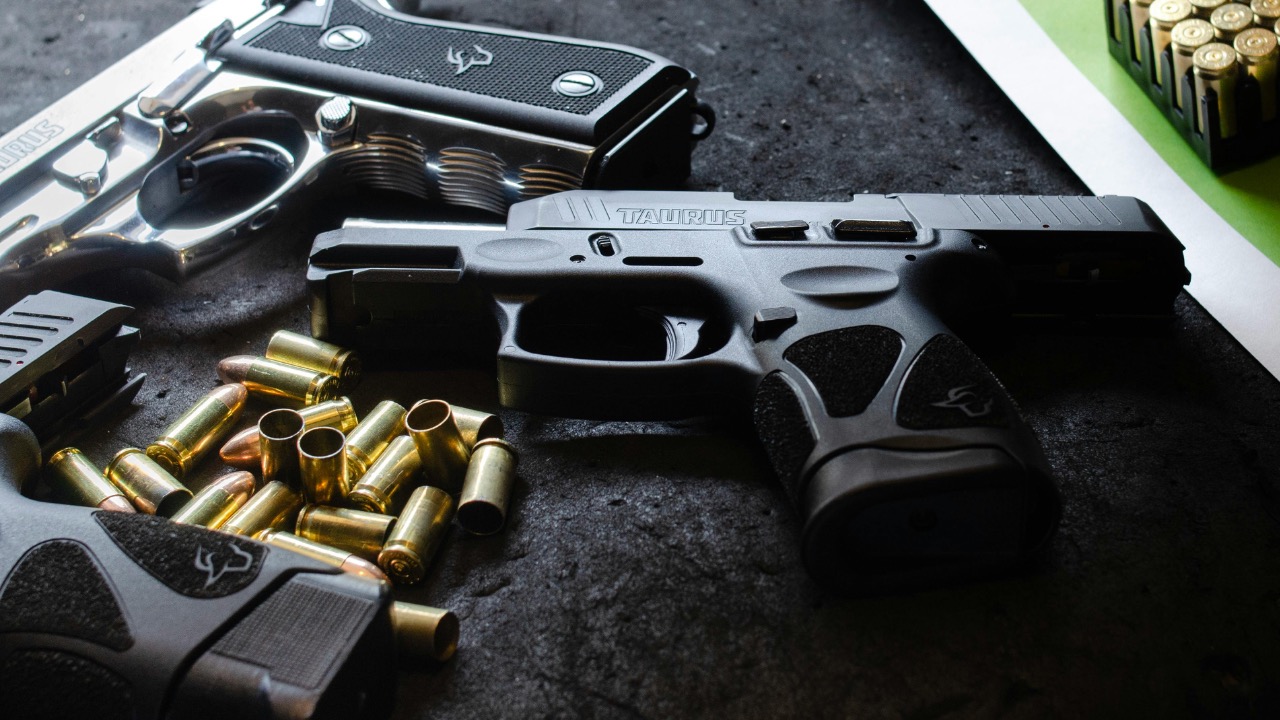
The core of Minnesota’s system is the permit to carry handgun law, codified in section 624.714 of the Minnesota Statutes. That provision authorizes qualified residents to obtain a permit that allows them to carry a handgun in public, subject to background checks, training and disqualifying conditions such as certain criminal convictions. The statute lists specific places where guns are restricted, including some school property and courthouses, but it does not carve out protests or demonstrations as off-limits locations. In other words, the law treats a public street or park the same way whether it is quiet or filled with marchers, so long as the permit holder is otherwise following the rules.
State officials reinforce that reading in their own guidance. The Minnesota Department of Public Safety explains that, under Minnesota law, a person “must obtain a permit to carry a handgun in public” and that “the law does not require that you conceal the weapon,” meaning both open and concealed carry are allowed for permit holders in most public places. That overview, available through the Bureau of Criminal Apprehension’s permit information page and a separate “Under Minnesota law” summary, makes no exception for protests, rallies or marches. If lawmakers wanted to bar guns at those events, they could have written that into the statute. They did not.
How state officials describe the permit program
To understand how this plays out on the ground, it helps to look at how Minnesota describes its own program to residents. The Bureau of Criminal Apprehension’s public guidance stresses that a permit to carry is required for anyone who wants to bring a handgun into public spaces, and that the same permit covers both open and concealed carry. On its main page, the agency notes that, Under Minnesota law, you must secure that permit before carrying and that a separate Permit to Purchase is needed to buy a firearm. The focus is on eligibility and compliance, not on carving out specific political activities where rights vanish.
Local coverage aimed at explaining the rules to viewers has echoed that structure. A video segment shared by CBS Minnesota walks through the basics of the permit-to-carry firearms program, telling viewers that in Minnesota “You” need a valid permit to carry in public and outlining where guns are prohibited. That explainer, posted on the station’s Minnesota Facebook page, again does not identify protests as a special category. Instead, it treats a protest as one more public setting where the same permit rules apply, unless some other law is being broken.
The federal claims that sparked confusion
The current controversy did not start in St. Paul, it started in Washington and in the aftermath of a deadly confrontation in Minneapolis. After Alex Pretti was shot and killed during a demonstration, Border Patrol Commander Gregory Bovino, speaking for DHS, claimed it was unlawful for protesters to carry a gun even if they had a legal permit. In a report on the Minneapolis shooting, that sweeping assertion was described as “absurd” by critics who pointed back to the state’s own statutes.
FBI Director Kash Patel then amplified the message on national television. In an appearance on Fox News the day after the shooting, Patel said, “You cannot bring a firearm loaded with multiple magazines to any sort of protest that you want. It’s that simple. You don’t have that right to break the law and incite violence.” That quote, captured in a CBS Minnesota explainer on the rules and data for permit holders, blurred two separate ideas: that inciting violence is illegal, which is true, and that carrying a lawfully possessed handgun at a protest is itself against Minnesota law, which is not supported by the statutes.
State and local pushback on Patel’s statement
Patel’s comments quickly drew scrutiny from legal experts and Minnesota officials who said he had misstated state law. A detailed fact check noted that Patel later tried to clarify his stance in a Monday interview with Fox News host Sean Hannity, but the underlying claim that guns are categorically barred at protests did not match the text of Minnesota’s carry statute. That analysis pointed out that The FBI declined to comment further and that Patel’s broad language ignored the way state law distinguishes between lawful carry and criminal acts like brandishing or assault, a distinction laid out in coverage of his remarks on Patel.
In Minnesota, law enforcement leaders and lawmakers emphasized that the state’s Personal Protection Act was written to protect “every peaceable Minnesotan” who follows the permitting rules. A Rochester television report on clarifying the law after comments by federal officials quoted critics who said the DHS and FBI rhetoric was being used “to demonize law-abiding citizens” rather than to accurately describe state statutes. That piece, which noted that Minnesota lawmakers approved the Personal Protection Act after intense debate, underscored that Hara’s stance, supportive of permit holders’ rights, had been disputed by some federal voices but remained grounded in the actual text of the law, as summarized in the clarifying coverage.
What Minnesota law says about riots, not protests
One place where guns and crowds do intersect in Minnesota law is the riot statute, but it addresses conduct, not the mere presence of a firearm at a peaceful protest. Section 609.71 of the Minnesota Statutes defines riot offenses and sets penalties when “three or more persons assembled disturb the public peace” through violence or threats. A related entry on the Minnesota Revisor’s site, under Minnesota Statutes with headings for Authenticate, Resources, Search Minnesota Statutes, Chapter and Table of Sections, spells out that second-degree riot applies when those assembled cause damage or bodily harm and can carry a sentence of up to five years in prison, a fine of more than $10,000, or both.
That riot framework is separate from the carry statute and does not transform every protest into a gun-free zone. A person who shows up at a demonstration with a lawfully carried handgun and does not engage in violent conduct is not committing riot under section 609 or 609.71. Only when a gathering crosses the line into violence or property destruction, or when someone uses a weapon to threaten or harm others, do the riot provisions and other criminal laws kick in. A separate link to the same section, which highlights that “When three or more persons assembled disturb the public peace” they can face serious penalties, reinforces that the trigger is behavior, not the act of attending a protest while armed, as detailed in the Minnesota Statutes entry.
Carrying while intoxicated and other limits
Another key limit on permit holders, which applies whether they are at a protest or a picnic, is Minnesota’s prohibition on carrying while intoxicated. Section 624.7142 of the Minnesota Statutes, listed under Authenticate, Resources, Search Minnesota Statutes, Chapter and Table of Sections, makes it a crime to carry a pistol in a public place while under the influence of alcohol or a controlled substance. Subdivision 5 specifies that a person charged under this section may be required to surrender their permit as a condition of release, underscoring how seriously the state treats mixing guns and impairment.
That rule is often overlooked in the national debate but is central to how Minnesota balances rights and safety. A person who attends a rally, chants and then has a beer at a nearby bar before returning to the crowd with a handgun could run afoul of section 624 and 624.7142 even if their presence at the protest is otherwise lawful. The statute does not mention protests specifically, but its broad language covers “any public place,” which plainly includes streets and parks where demonstrations occur. It is this kind of targeted restriction, focused on intoxication and other risk factors, that the state has chosen instead of a blanket ban on firearms at political gatherings.
How experts view the Alex Pretti case
The killing of Alex Pretti in Minneapolis has become a test case for how these laws work in practice. Coverage of the incident has asked directly, “Was Pretti within his rights to carry a gun?” and reported that Experts widely agree he was, because Minnesota legally permitted him to carry under its permit-to-carry framework. One detailed account noted that, in the view of multiple legal scholars, Pretti’s status as a permit holder meant his mere presence at the protest with a handgun did not violate state law, a point emphasized in a Yahoo analysis under the heading Was Pretti.
A separate fact check, which also examined Patel’s claims, quoted a University of Chicago law professor who said state law “says not carrying a gun at a protest” is not a requirement and that the focus should instead be on whether someone commits an independent crime such as assault. That piece, which noted that The FBI declined to comment and that Patel sought to clarify his remarks in a Monday conversation with Fox News host Sean Hannity, framed the Pretti case as an example of how national security officials can misstate state-level rules. The same outlet’s broader write-up on the Minneapolis shooting, Kash Patel, Kristi Noem and Greg Bovino, available through a state law link, reinforced that point.
National context: protests, guns and constitutional rights
Minnesota’s approach sits within a patchwork of state rules on guns at protests. A detailed explainer on whether guns are legally allowed at protests in the United States notes that there is no nationwide ban on firearms at demonstrations and that the answer “depends on the state.” Some states and the District of Columbia ban both open and concealed carry at certain protest sites, while others, like Minnesota, allow licensed carry in public unless a specific restriction applies. That broader overview, which asks “Are guns legally allowed at protests in the US?” and concludes “There is no nationwide ban on firearms,” is laid out in an Are analysis.
Constitutional scholars have also been weighing how the First and Second Amendments intersect when people show up to “Protest While Armed.” A research piece titled “Is It Legal to Protest While Armed? First Amendment Analysis” argues that Two of America’s strongest constitutional protections, free speech and the right to keep and bear arms, often collide in these situations. The authors conclude that “There is no prohibition on a permit holder carrying” at a protest in Minnesota and that the real legal questions involve time, place and manner restrictions or specific conduct, not a categorical ban. That perspective, grounded in case law and doctrinal review, is laid out in an Is It Legal First Amendment Analysis that has been widely cited in the Minnesota debate.
Political backlash and the Trump administration’s role
The legal arguments are unfolding alongside a fierce political fight. Coverage of the Minneapolis fallout has described a “2nd Amendment backlash” to how Alex Pretti was portrayed by the Trump administration, with gun rights groups insisting that “There is no prohibition on a permit holder carrying” at a protest under current Minnesota law. One report noted that Minneapolis live updates included President Trump saying DHS Secretary Noem would not step down, even as critics accused DHS of misrepresenting state statutes. That same piece, which quoted advocates warning against new legislation that would strip rights from permit holders, is accessible through a link that highlights There is no prohibition.

Leo’s been tracking game and tuning gear since he could stand upright. He’s sharp, driven, and knows how to keep things running when conditions turn.



Fed officials would have done much better just quoting the facts – Petti was not legally carrying a handgun. Petti has now been identified as part of the conspiracy chat group. The group trains their anarchists not to carry ID, and Petti had none on him. But Minnesota state law requires concealed permit holder to have both the permit and a state ID on their person. 624.714 CARRYING OF WEAPONS Subd. 1b.Display of permit; penalty. (a) The holder of a permit to carry must have the permit card and a driver’s license, state identification card, or other government-issued photo identification in immediate possession at all times when carrying a pistol and must display the permit card and identification document upon lawful demand by a peace officer, as defined in section 626.84, subdivision 1. Petti’s carry was not legal.