Handgun accessories now facing tighter legal scrutiny
Handgun add-ons that once seemed like simple comfort or performance upgrades are now at the center of complex legal fights. From pistol braces and forced reset triggers to marketing lawsuits and new federal fee rules, accessories are being examined not just for what they do mechanically, but for how they change the legal status of the firearm and the liability of the person who owns or sells it.
Regulators, courts, and even civil plaintiffs are using a mix of old statutes and new rules to test where the line falls between lawful customization and unlawful modification. That scrutiny is forcing gun owners, retailers, and manufacturers to treat small parts and marketing choices with the same care they once reserved for the underlying handgun itself.
From niche parts to legal flashpoints

Handgun accessories were long sold as lifestyle products: a better grip for concealed carry, a red dot for aging eyes, a brace that promised more control. Legal risk was often an afterthought, especially for parts that did not obviously turn a pistol into a machine gun or a short-barreled rifle. That assumption has eroded as regulators and litigants increasingly argue that certain add-ons effectively transform how a firearm functions or how it is perceived in court, even when the underlying frame and slide remain unchanged.
Federal officials have signaled that accessories are part of a broader strategy to tighten oversight of the firearms market. The Bureau of Alcohol, Tobacco, Firearms and Explosives, often referred to as the Bureau of Alcohol,, has used its rulemaking power to reinterpret long-standing definitions in the Gun Control Act and related statutes so that devices once sold as range toys now risk classification as regulated weapons. At the same time, the current administration has highlighted increased oversight of the firearms industry and new attention to items such as DIY kits and add-ons in its trafficking enforcement agenda, placing accessories squarely inside national debates over gun policy rather than at the margins.
Pistol braces and the ATF’s shifting stance
No accessory illustrates this shift more clearly than the pistol stabilizing brace. These devices were marketed as aids for shooters who wanted more stability with large-format pistols, but federal regulators eventually argued that many designs effectively converted pistols into short-barreled rifles. In January 2023 the ATF published a final rule in the Federal Register that reclassified braced pistols as rifles subject to the National Firearms Act, a move that upended how owners and dealers had treated these products for years and triggered a wave of litigation and compliance confusion.
Legal challenges have since produced a dramatic reversal. As of 2025, analysis of the ATF pistol brace notes that the rule has been vacated in federal courts, and that the Department of Justice formally announced that it would not enforce the reclassification while appeals play out. A separate summary framed the situation at a glance by explaining that, as of late 2025, pistol braces are again treated as lawful accessories for ordinary pistols rather than as automatic triggers for National Firearms Act registration. That whiplash has left owners and retailers wary that future reinterpretations could once again move the legal goalposts for what appears to be a simple plastic arm support.
Forced reset triggers and the line to machine guns
Another contested accessory is the forced reset trigger, a device that can dramatically increase the rate of fire of a semi-automatic handgun or rifle. For years, federal agents seized these parts as contraband, describing them as a threat to public safety because they could make a semi-automatic firearm mimic the rapid fire of a fully automatic weapon. Regulators argued that certain models effectively caused the weapon to fire more than one shot per trigger pull, which would place them inside the statutory definition of a machine gun.
Recent litigation has complicated that stance. After a controversial legal settlement, reporting found that forced reset triggers again for handguns and for semi-automatic AR-15 style rifles, even as communities and law enforcement worry about what that could mean for local safety. The back-and-forth over these products shows how accessories that change the firing cycle of a gun can bounce between legal and illegal status depending on how agencies and courts interpret technical details such as whether the trigger truly resets between shots.
Marketing lawsuits and “deceptive” accessory promotion
Legal scrutiny is not limited to how accessories function mechanically. Civil regulators and plaintiffs are increasingly focused on how these products are advertised and to whom. In Illinois, a new statute allows the state and private individuals to sue gun manufacturers and dealers for marketing firearms, accessories, and even branded clothing in ways that are alleged to encourage unlawful use. Under the law, gun dealers and manufacturers can face claims that their promotional materials target minors or glorify criminal behavior, even when the underlying products remain legal to sell.
Coverage of the Illinois measure explains that Under the law, claims can extend to accessories and items such as stuffed animals or toys if they are tied to firearm branding that is alleged to be deceptive or dangerous. A related report notes that the firearms industry could face lawsuits for deceptive marketing under this new regime, which effectively treats certain advertising choices as a public safety issue. For handgun accessory makers, that means edgy branding and youth-oriented campaigns now carry real litigation risk, even if the parts themselves never cross into National Firearms Act territory.
Upcoming 2026 NFA changes and the $200 tax stamp
While some rules have been vacated, other changes are set to take effect and will directly affect handgun accessories that fall under the National Firearms Act. Legal analysis of federal reforms explains that Beginning in 2026, the federal tax stamp, described as the infamous $200 fee paid on each NFA item transfer or manufacturing application, will be restructured for categories that include short-barreled rifles and short-barreled shotguns. Those categories can be triggered when a handgun is modified with certain barrels, stocks, or other accessories that change its overall configuration.
The same commentary on NFA changes notes that short-barreled shotguns (SBSs) and similar items sit alongside suppressors and other regulated devices in the statute, which means that a handgun fitted with the wrong combination of parts could unexpectedly move into a heavily regulated class. Even if Congress does not amend core definitions, adjustments to how the tax stamp is collected and processed will affect how attractive it is for owners to add certain barrels or stocks to pistols. Those financial and bureaucratic frictions are part of why accessory makers now track federal rulemaking as closely as they track consumer demand.
How prosecutors frame accessories in criminal cases
Beyond regulatory filings, handgun accessories can change how a self-defense case or unlawful possession charge is argued in court. Defense attorneys warn that prosecutors may use modifications such as lightened triggers, aggressive slide cuts, or provocative engravings to argue that a defendant was reckless or eager for a confrontation. A detailed discussion of Illegal firearm modifications notes that changes that convert a legal gun into an illegal one can result in severe federal charges, especially when they implicate statutes that define machine guns or short-barreled weapons.
Everyday carriers are paying attention. In one widely shared conversation among concealed carriers, users debated They type of modifications that might look bad to a jury. One contributor argued that it is probably wise to avoid featuring anything political or controversial on a carry gun, warning that prosecutors are, in that poster’s words, all unscrupulous and Completely politically driven. That discussion also described how even legal modifications can feed a narrative that a defendant was an “asshat spoiling for a fight,” a phrase that captures the concern that accessories can color how a shooting is interpreted in a courtroom.
State-level bans and civil penalties on handgun modifications
Some states have moved beyond federal definitions to criminalize specific handgun modifications outright. In Illinois, for example, criminal defense guidance explains that residents face prosecution for illegal gun modifications, including converting a semi-automatic firearm into a fully automatic weapon, adding a silencer without proper authorization, or altering serial numbers. Those rules apply equally to handguns and long guns, and they turn certain accessories into contraband even if similar parts might be lawful in neighboring states.
Other state laws focus on the civil side. The Illinois marketing statute that targets deceptive practices does not only apply to rifles or shotguns; it also covers handgun accessories when they are promoted in ways that are alleged to encourage misuse. The same firearms industry could report notes that the law sweeps in branded clothing, toys, or stuffed animals tied to firearm marketing, which illustrates how far beyond the metal and polymer of the gun itself state scrutiny can now extend. For retailers that sell both pistols and accessories, that mix of criminal and civil exposure has turned compliance into a multi-front challenge.
Accessories in the broader Second Amendment fight
The legal status of handgun accessories is also being shaped by ongoing Second Amendment litigation over what counts as protected “arms.” One high-profile case involving magazine limits features Challenger Virginia Duncan, who argues that courts are split on whether magazines are arms and whether the common use test should apply to devices that increase a firearm’s capacity to function. In that dispute, summarized in a relist overview, the Supreme Court is being asked to say whether accessories that expand capacity fall under the same constitutional shield as the underlying handgun.
Historical research shows that lawmakers have been wrestling with accessories and firing capacity for a century. A detailed law review survey cites the Act of June 2, 1927, no. 44, 1927 Mich. Pub. Acts 372, 887, 888 and the Act of Apr. 10, 1933, ch. 190, 1933 Minn. Laws 231, 232, which restricted weapons capable of firing large numbers of rounds in a fully automatic manner. Those early statutes focused on machine guns, but they show that accessories affecting capacity and firing mode have long been treated as a distinct regulatory problem rather than as mere cosmetic enhancements.
Gun culture, social media, and the risk of glamorizing add-ons
As regulators and courts scrutinize accessories, social media creators and influencers are shaping how these products are perceived. Videos that promise to explain how gun accessories can send a person to prison, such as the piece featuring independent presenter James Reeves that is summarized in the description of How Gun Accessories, blend entertainment with legal warnings. Other content focuses on market reactions to legal decisions, with one clip on handgun and rifle sales noting that viewers should buckle up as the host returns to gun related content and describing a surge in purchases after a Supreme Court ruling, as seen around the 45 second mark of a video linked through Gun Sales SURGE.
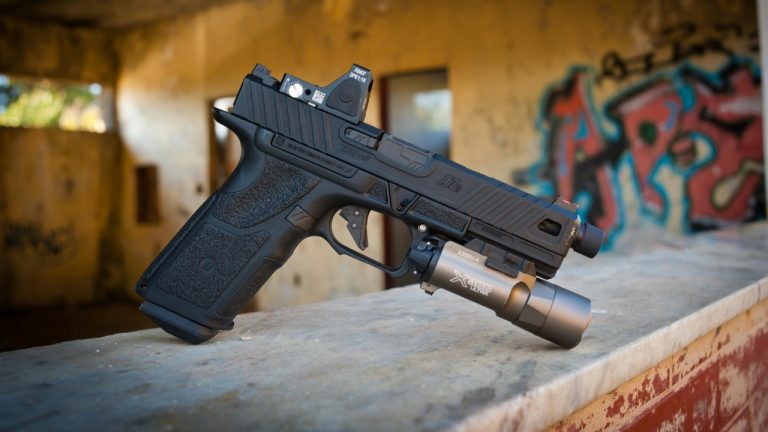
These cultural signals can influence both consumer behavior and legal risk. A marketing campaign that shows a compact pistol fitted with an arm brace, a compensator, and an extended magazine in a fast-cut montage may look appealing on Instagram, but it could also be cited in a deceptive marketing lawsuit if it appears to glamorize unlawful or reckless use. The Illinois law that allows suits over such promotions has already prompted trade groups to warn members that accessories and branded merchandise are under the same microscope as the handguns themselves. That convergence of law, culture, and commerce suggests that the era when add-ons were an afterthought is over, and that every part bolted to a pistol now carries a legal story along with it.

Asher was raised in the woods and on the water, and it shows. He’s logged more hours behind a rifle and under a heavy pack than most men twice his age.