Handguns that handle abuse without complaint
When people talk about handguns that can be trusted in the worst conditions, they are really talking about tools that shrug off neglect, rough handling, and high round counts without drama. The models that earn that reputation tend to share a few traits: simple internals, proven service records, and a track record of surviving tests that would sideline lesser designs. I look at durability as more than marketing language, it is the pattern that emerges when military contracts, law‑enforcement adoption, and hard‑use civilian shooters all converge on the same names.
Handguns that handle abuse without complaint are not always the newest or flashiest, but they are the ones that keep cycling when the shooter is tired, the gun is dirty, and the environment is unforgiving. From polymer workhorses to metal‑framed classics, the most trusted pistols have been vetted in everything from elite special operations units to long‑running civilian endurance stories, and that shared history is what separates them from the rest of the market.
What “abuse tolerant” really means in a handgun
Durability in a pistol starts with reliability, because a gun that will not fire every time the trigger is pressed is already failing its most basic test. One detailed guide to defensive pistols puts it bluntly, stating that there is no more significant attribute than reliability for a weapon that might be used to protect life, and it then stresses choosing designs built with robust materials like stainless steel for extremely long life, citing the M18 as an example of a duty pistol engineered for extended service with quality steel components for extremely long life in harsh use extremely long life. That kind of construction matters when a handgun will be carried daily, exposed to sweat and weather, and fired enough that small weaknesses eventually show up.
Modern designs have also closed the gap between ruggedness and user friendliness. One analysis of contemporary defensive firearms notes that today’s modern handgun designs are much more reliable and tolerant of a lack of maintenance than older models, and that a quality pistol can still properly function even if the owner neglects it for stretches of time, as long as it is not abused beyond reason much more reliable. For a handgun to truly handle abuse, it has to combine that mechanical resilience with controls and safety systems that reduce the risk of accidents, which is why some concealed carry experts emphasize features like consistent trigger pulls and passive safeties that reduce accidental discharge risks when they discuss what is the safest gun to carry in daily life reduce accidental discharge risks.
Glock’s reputation as the default hard‑use workhorse
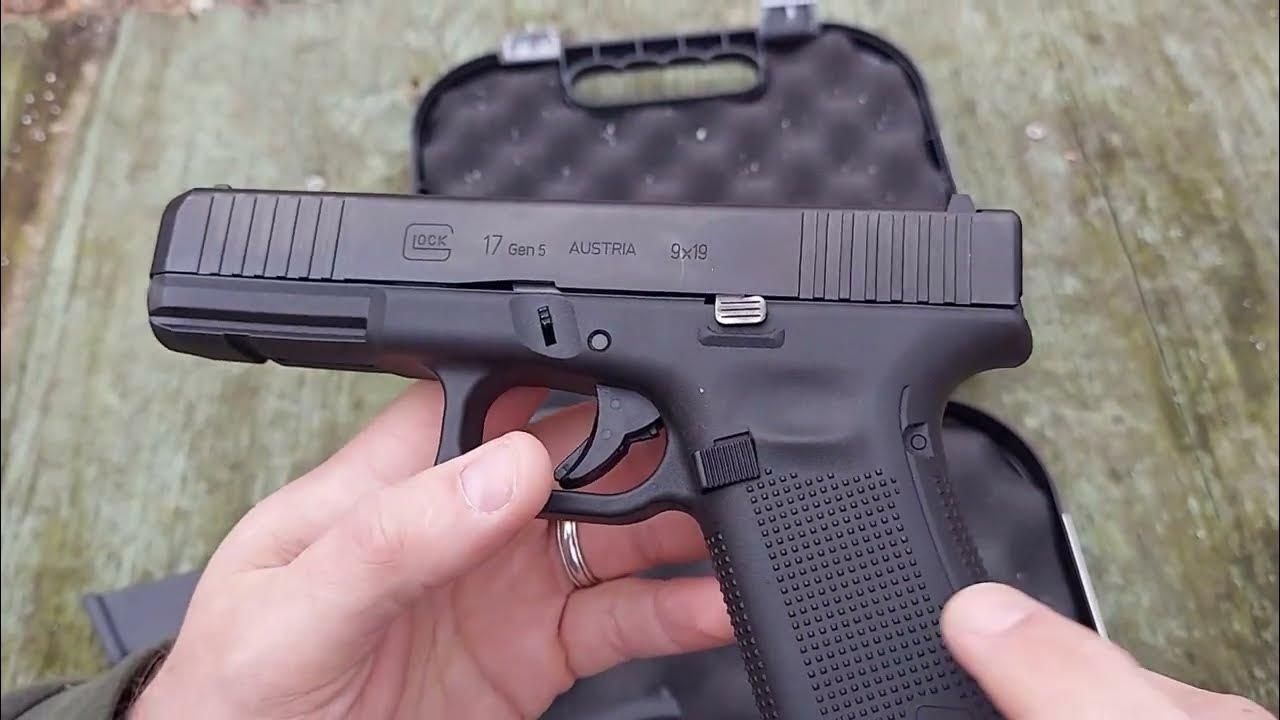
Any conversation about pistols that thrive on hard use eventually runs into Glock, and that is not an accident. One detailed look at the platform describes how The Glock has become a fixture in American pop culture, but it also notes that the design’s real staying power comes from a simple, striker‑fired mechanism and polymer frame that together deliver a combination of light weight and toughness that many duty users prize Glock Pistols. That same analysis acknowledges that The Glock does have a learning curve and some ergonomic compromises, but it also points out that owners who understand the system can get better performance from their Glocks with minimal maintenance and sensible parts replacement.
Supporters of the brand often highlight how Reliability and Durability One of Glock pistols’ defining characteristics is their ability to function flawlessly even in the harshest conditions, a claim backed by decades of police and military service where the guns have been dragged through mud, sand, and extreme temperatures without losing basic function Reliability and Durability One of Glock. A separate overview of the platform notes that these pistols are designed to be used easily while having a lower profile that will make them ideal for concealed carry, and that Glock pistols are built to withstand rough weather conditions and heavier usage without quickly wearing out withstand rough weather conditions. It is not surprising that when one detailed ranking of defensive pistols looked at the best 9 mm options for every situation, it named the Glock 19 as the best reliability pick, treating it as the benchmark against which other compact service pistols are measured HERE.
Service‑grade metal frames: SIG P226 and Beretta 92FS
Polymer may dominate the market, but some of the most abuse‑tolerant pistols ever fielded are classic metal‑framed designs that earned their reputations in uniform. The Sig P226, formally listed as The Sig P226 ( SIG SAUER P226 ), is described as a renowned semi‑automatic pistol that has earned its reputation for reliability and accuracy in the hands of law enforcement officers, military personnel, and civilian enthusiasts, which is exactly the kind of broad user base that tends to expose weaknesses if they exist The Sig. A specific variant, the P226 MK25, is marketed with the reminder that Once reserved only for an elite few, the MK25 delivers the advanced features that made the P226 the official sidearm of the U.S. Navy SEALs, and that the SIG SAUER P226 is the standard by which other combat handguns are measured, a claim that underscores how thoroughly that design has been vetted in maritime and special operations environments where corrosion, sand, and heavy firing schedules are routine Once.
Another stalwart of the metal‑frame era is the Beretta 92 series, particularly the 92FS. One detailed product description opens with the line Description The Beretta 92FS has been setting the standards for best military, police and tactical pistol for over a quarter century, and it goes on to describe the 92FS as the most tested and reliable semiauto handgun on the market, language that reflects its long tenure as a standard sidearm in large armed forces and police agencies Description The Beretta. When shooters on one concealed carry forum were asked to name the most reliable pistol besides Glock, several pointed to service pistols that had gone through insane testing schedules, and one response specifically said to add the Glock 19/17, CZ SP‑01/P‑01, and P226 to that list, noting that they have all been heavily tested by multiple militaries and have proven ultra‑reliable in that role Add the Glock. That kind of cross‑validation, from both official procurement and hard‑use civilians, is a strong indicator that these pistols can handle abuse without complaint.
Heckler & Koch, CZ, and the “mil‑gun” durability club
Beyond the familiar Glock and SIG names, several European manufacturers have carved out reputations for building pistols that feel overbuilt in the best possible way. One overview of Heckler & Koch products notes that Heckler & Koch firearms are designed to deliver exceptional accuracy and unmatched robustness, ensuring optimum reliability in extreme conditions while still offering good handling, safety, and effectiveness in the field, a combination that has made models like the USP and HK45 staples in units that prioritize reliability over fashion Heckler. That design philosophy often results in pistols that are slightly bulkier than their competitors, but the payoff is a gun that keeps running when exposed to mud, sand, and thousands of rounds between detailed cleanings.
Experienced carriers often group these pistols together as “mil guns” that have survived brutal trials. In one discussion about the most reliable pistol besides Glock, a commenter summarized the pattern by saying Yeah, basically the mil guns that went through insane testing schedules, then named Manurhin, HK USP and Mk series pistols as examples of designs that had been pushed hard and kept working Yeah. CZ’s full‑size and compact metal pistols also show up in these conversations, and one preparedness‑focused video on top pistols for when it hits the fan singles out the CZ platform, noting that it has been around for a very long time, is very reliable, very flat shooting, and that a lot of people really enjoy their CZ handguns for that blend of shootability and toughness Apr. When shooters who expect to be rough on their gear keep circling back to the same brands, it is usually because those guns have already proven they can take the abuse.
Real‑world abuse: civilian endurance stories and “never jam” picks
Laboratory tests and military trials tell part of the story, but the way pistols hold up in civilian hands over decades can be just as revealing. In one discussion about what is probably the most durable pistol available, a long‑time owner described how they Shot it regularly for 20+ years, then the frame started to crack, and the company replaced it free of charge, which they held up as proof that the design and the manufacturer’s support together made that pistol a practical lifetime tool for most shooters Shot. Stories like that are not formal test data, but they do show how some handguns continue to function under regular use for decades before any structural issues appear, and how responsive manufacturers can be when they do.
Endurance also shows up in how often a pistol malfunctions under realistic conditions. One popular video that surveys 11 handguns that never jam frames its picks as buy once, shoot forever options, highlighting models that have run through thousands of rounds in the hands of reviewers and owners without recurring stoppages never jam. On the preparedness side, another discussion about what is the most reliable, durable handgun with minimal maintenance argues that with the advancement of 9 mm these days plastic guns and recoil management are not mutually exclusive anymore, suggesting that modern polymer pistols can offer both controllable shooting and the kind of durability that used to be associated only with heavier metal frames With the. When I weigh those accounts alongside formal testing, the pattern that emerges is that abuse‑tolerant pistols are usually those that combine simple, proven mechanisms with manufacturers willing to stand behind their products over the long haul.
Home defense and neglected guns: why simplicity wins
For many owners, the handgun that must handle abuse is not a daily carry piece but the pistol that lives in a nightstand or safe and only comes out for occasional practice. A detailed home safety guide points out that How Does a Handgun Designed for Home Defense Differ From Other Handguns is not just a theoretical question, because a home defense pistol may sit unused for long periods, then be expected to work perfectly under stress, and it emphasizes that a handgun is a gun that can be held with one hand but must still be chosen with reliability and ease of use in mind for that specific role How Does. Another discussion among handgun owners about home defense recommendations notes that the best home defense firearm is often a long gun, but when a pistol is chosen, handgun competency requires a lot more effort than most gun owners realize, which is why they stress simple controls and consistent triggers that are easier to manage under adrenaline Apr.
That need for simplicity and low‑maintenance reliability is one reason modern striker‑fired pistols dominate home defense recommendations. A broader look at defensive firearms notes that Today’s modern handgun designs are much more reliable and tolerant of a lack of maintenance than handguns of old, and that a quality pistol can properly function even if you neglect it, as long as it is stored reasonably and not subjected to outright abuse Today. When I match that with the emphasis on reliability as the single most important attribute for a defensive weapon, and the advice to choose robust designs like the M18 that are built with quality steel for extremely long life, it reinforces the idea that the best home defense pistols are those that can sit for months, then fire every round in the magazine without drama when it matters There.
Choosing your own abuse‑proof sidearm
When I look across the reporting and user experiences, a few patterns stand out for anyone trying to choose a handgun that will handle abuse without complaint. First, service history matters: pistols like the Glock 19, The Sig P226, Beretta 92FS, and Heckler & Koch USP have all been adopted by militaries or large police agencies that subjected them to grueling tests before signing contracts, and that kind of vetting is hard to replicate as an individual buyer SIG. Second, community consensus is not infallible but it is informative, and when experienced carriers on one forum list the Glock 19/17, CZ SP‑01/P‑01, and P226 as ultra‑reliable options that have been heavily tested by multiple militaries, or when another commenter groups Manurhin and USP pistols into the same “mil gun” durability club, that is a signal that these models have earned trust under real‑world conditions They.
Finally, it is worth remembering that even the toughest pistol still depends on the person behind it. One detailed discussion of the safest concealed carry gun stresses that What is the safest gun is as much about training and safe handling as it is about mechanical safeties, and that features which reduce accidental discharge risks only work when the user understands them What. A pistol that can survive thousands of rounds, rough weather, and years of carry is only truly abuse tolerant when its owner maintains basic competence, replaces worn parts on schedule, and respects the limits of the design. The good news, reflected in everything from long‑term user stories to rankings of the best 9 mm pistols for every situation, is that there has never been a better time to find a handgun that will quietly endure hard use and still be ready when it is needed most ARE.

Leo’s been tracking game and tuning gear since he could stand upright. He’s sharp, driven, and knows how to keep things running when conditions turn.