How a downed U.S. airman evaded capture before rescue in hostile terrain
A U.S. Air Force officer who went down inside Iran stayed alive and out of enemy hands for roughly two days by relying on training, improvisation, and sheer endurance in steep, hostile terrain. His eventual pickup by American forces ended a tense search that began with a garbled radio call and unfolded under the constant threat of Iranian patrols.
The episode offers a rare public glimpse into how modern combat search and rescue works in practice, from the first distress signal to the final hoist, and how a single airman’s choices on the ground can shape the outcome as much as any high-tech aircraft overhead.
What happened
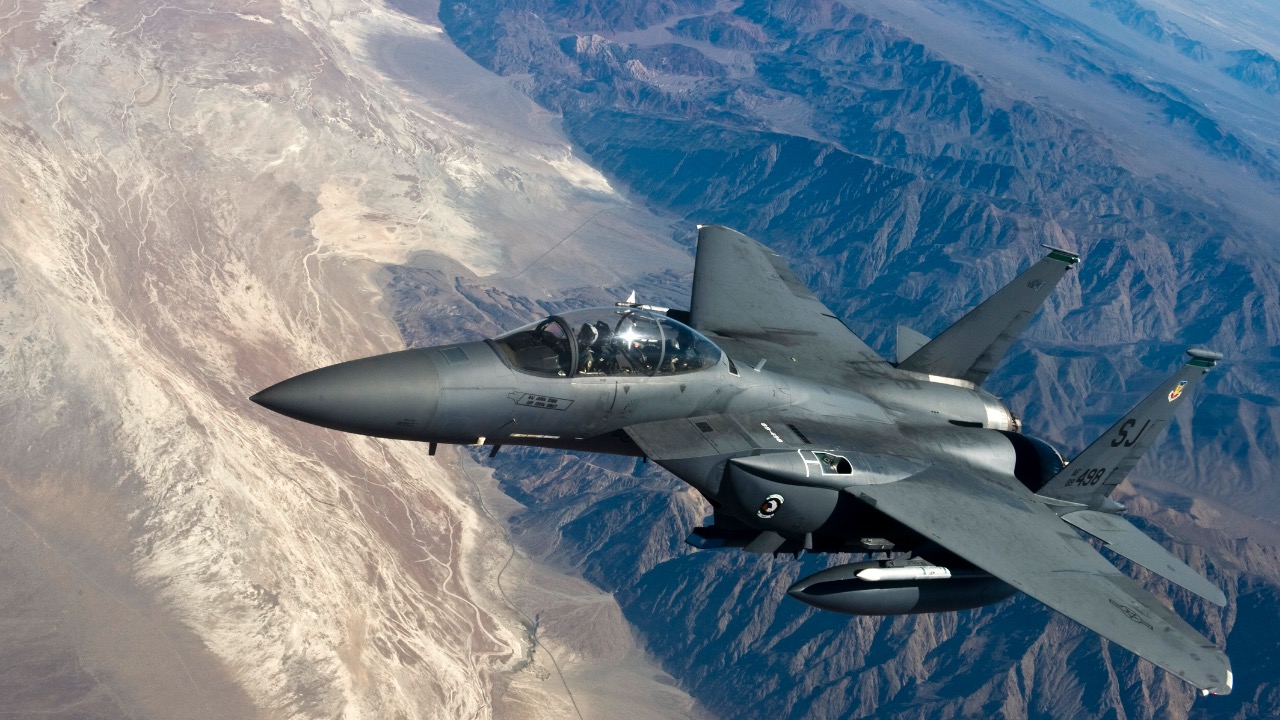
The incident began when a U.S. airman flying a mission near Iran lost his aircraft and was forced to eject into Iranian territory. Initial reporting describes the pilot landing in rugged mountains, far from friendly lines, with only the survival gear carried on his person and what he could salvage after hitting the ground. A brief, alarming radio transmission that hinted at possible capture triggered an immediate scramble among American commanders to locate him and determine whether Iranian forces were already closing in, according to U.S. rescues accounts.
On the ground, the officer faced a stark set of problems. He had to avoid detection in an area where Iranian security units could respond quickly to any report of a parachute or explosion. He also had to manage injuries from the ejection, navigate unfamiliar terrain, ration limited water and food, and keep his communications equipment powered and concealed. The terrain itself was a mixed blessing: steep slopes and broken rock made movement slow and punishing, but also offered folds, ravines, and high ground that could help him hide from search parties and aerial surveillance.
Survival, evasion, resistance, and escape training, known in the military as SERE, shaped his immediate response. SERE schools drill aircrew on how to get away from a crash site, break visual contact, and reach locations that are easier for rescuers to find yet harder for hostile forces to search. According to reporting on how SERE instruction guided his choices, the officer moved away from his ejection point, used natural cover to mask his route, and focused on staying concealed during daylight hours while planning movement for periods of lower visibility. That training, described in detail in accounts of SERE training, framed almost every decision he made while alone in Iran.
One of his most consequential choices was to climb. The airman reportedly ascended roughly 7,000 feet from his original landing area, a brutal effort in thin air and rough ground, in order to improve his chances of communicating with friendly forces. Higher elevation can extend the range of survival radios and satellite devices that depend on line of sight to aircraft or satellites. By pushing himself up the mountain, he traded physical exhaustion for a better shot at getting a clear signal out, a move later detailed in coverage of how he climbed 7000ft to reach rescuers.
Over roughly 24 to 48 hours on the ground, the officer balanced movement with concealment. He had to assume that Iranian units would be searching likely landing zones, checking roads and villages, and monitoring radio traffic for any sign of an American presence. SERE doctrine teaches aircrew to avoid predictable patterns, stay away from obvious man-made features such as roads or power lines, and use terrain to break up their silhouette. Reports indicate he followed those principles, using rocky folds and vegetation to stay out of direct observation while still keeping a line of sight to the sky for potential aircraft overhead.
Meanwhile, U.S. forces were mounting a complex search and rescue operation. The initial ambiguous radio message created a sense of urgency, since any delay could allow Iranian forces to capture the pilot or move him out of reach. Air assets were tasked to sweep the area where his aircraft had last been tracked, looking for signals from his survival radio or any visual cue such as a mirror flash, panel, or infrared strobe. The search had to be aggressive enough to find him quickly but controlled enough to avoid triggering a direct clash with Iranian units that might also be converging on the region.
Eventually, the combination of his elevated position and careful use of communications equipment allowed him to make contact. SERE training emphasizes that downed aircrew should transmit briefly, at planned intervals, and only when they have some concealment, since any radio call can be triangulated by an adversary. In this case, a clear transmission reached U.S. aircraft, which were able to authenticate his identity and refine his location. That breakthrough set the stage for the extraction phase, when helicopters or other recovery platforms moved in under protective cover to pick him up.
The final recovery required precise coordination. Combat search and rescue units typically time their approach to minimize exposure, flying routes that reduce the chance of early detection and relying on electronic warfare support, armed escorts, and detailed terrain analysis. The pilot, for his part, had to move to a pickup point, signal the rescuers without giving away his position to others, and prepare for a rapid hoist or boarding. According to the available accounts, U.S. forces successfully retrieved him from Iranian territory and brought him back without a firefight, capping a high-risk mission that depended as much on his discipline on the ground as on the aircraft overhead.
Why it matters
The episode highlights how much the U.S. military still invests in the individual survival skills of its aircrew, even in an era of precision weapons and long-range drones. SERE training is not an abstract classroom exercise. It is a set of habits and reflexes that can determine whether a downed pilot is recovered within hours or disappears into enemy custody. In this case, the officer’s ability to evade capture for up to 48 hours in Iran, manage his limited supplies, and keep his wits under extreme stress directly shaped the outcome described in the detailed survival account.
His decision to climb 7,000 feet to gain better communications range illustrates the kind of tradeoff SERE instructors ask students to think through long before they face the real thing. Every step uphill in thin air costs energy and water and increases the risk of injury, yet it can also be the difference between a weak, unreadable signal and a clear call that guides a rescue team to the right valley. The fact that this airman chose the harder physical route shows how training and mental rehearsal can push someone toward decisions that are tactically sound, even when they are punishing in the short term, as highlighted in reports on his mountain climb.
The rescue also carries strategic weight. Any U.S. military incident inside Iran risks rapid escalation, especially if American personnel fall into Iranian hands. A captured pilot can become both an intelligence target and a bargaining chip. Iranian state media would likely publicize such a capture, and Tehran could use it to pressure Washington or to rally domestic audiences. By retrieving the airman before that happened, U.S. forces avoided a scenario in which a single downed aircraft might have spiraled into a prolonged political crisis.
From a regional security perspective, the operation shows how quickly U.S. planners must be ready to act when missions operate near or inside contested airspace. The ambiguous initial radio message described in the radio message scare meant commanders had to consider worst-case scenarios while still working with incomplete information. That kind of uncertainty is common in the first hours after an aircraft is lost, and it tests not only technical systems but also decision-making processes at every level of command.
The case also reinforces how terrain shapes risk. Operating in mountainous areas of Iran is very different from flying over open desert or coastal plains. Steep ridges and deep valleys can block radar and radio signals, complicate navigation for both the survivor and the rescue force, and provide hiding places for hostile units. At the same time, those features give a trained survivor options to break line of sight, move along less obvious routes, and set up observation points. The airman’s choice to use altitude and cover to his advantage reflects a detailed understanding of how to turn a harsh environment into a partial ally rather than a pure threat.
On a human level, the story underlines the psychological side of survival. SERE programs stress not only technical skills like building shelters or signaling aircraft, but also mental resilience. Downed aircrew must manage fear, isolation, and the constant calculation of risk versus reward. Every decision, from when to move to whether to drink the last of the water, carries consequences that may not be clear until hours later. The officer’s ability to keep making sound tactical choices over a day or two in hostile territory suggests that the mental conditioning piece of SERE, often less visible than the physical drills, did its job.
For the U.S. Air Force and broader defense community, the incident will likely become a case study. Training syllabi and planning checklists are often updated based on real-world events, especially those that test the limits of existing doctrine. Instructors can point to this rescue when explaining why students must memorize authentication procedures, practice radio discipline, or run exhausting field exercises in rough terrain. Likewise, planners can review the timing, coordination, and intelligence support involved to refine future search and rescue playbooks.
The episode also speaks to allies and adversaries who watch how the United States responds when its personnel are in danger. Effective, timely recovery operations can reassure partner nations that the U.S. will go to significant lengths to protect its people, which can matter when those partners are asked to host bases or support missions. At the same time, adversaries take note of how quickly American forces can locate and extract someone behind their lines, and what that implies about U.S. surveillance reach, communications security, and willingness to accept risk.
What to watch next
Several threads will shape what this rescue means over the longer term. Inside the U.S. military, investigators will examine every stage of the incident, from the original mission planning and aircraft loss to the final extraction. They will look at whether equipment performed as expected, whether survival gear loads need adjustment, and how well communication and authentication procedures worked under pressure. Any gaps that emerge could lead to changes in how aircrew are briefed before missions that approach Iranian territory or other high-threat areas.
One likely area of focus is the performance of survival radios, beacons, and satellite communicators in mountainous terrain. The fact that the airman had to climb 7,000 feet to improve his odds of making contact suggests that line-of-sight limitations were a real constraint. Engineers and procurement officials may review antenna designs, power management, and integration with satellite networks to see whether future kits can reduce the need for such extreme physical efforts while still maintaining security from enemy interception.

Leo’s been tracking game and tuning gear since he could stand upright. He’s sharp, driven, and knows how to keep things running when conditions turn.