How land-use rules are reshaping hunting access nationwide
Across the country, the real fight over hunting access is shifting from trailheads and parking lots to policy memos and land-use rules. Federal orders, state programs, and private-land incentives are quietly redrawing the map of where you can carry a rifle, bow, or shotgun. I see it every season: the best hunting spots now depend less on secret ridges and more on how agencies and landowners interpret access on the ground.
Those decisions are reshaping everything from crowded public elk units to pay-to-play whitetail leases. New federal directives are trying to swing the gates open, while conservation groups and landowners negotiate how much access is enough. If you want to understand where hunting is headed, you have to follow the land-use rules that decide who gets through the fence and who does not.
Federal land policy flips the default on access
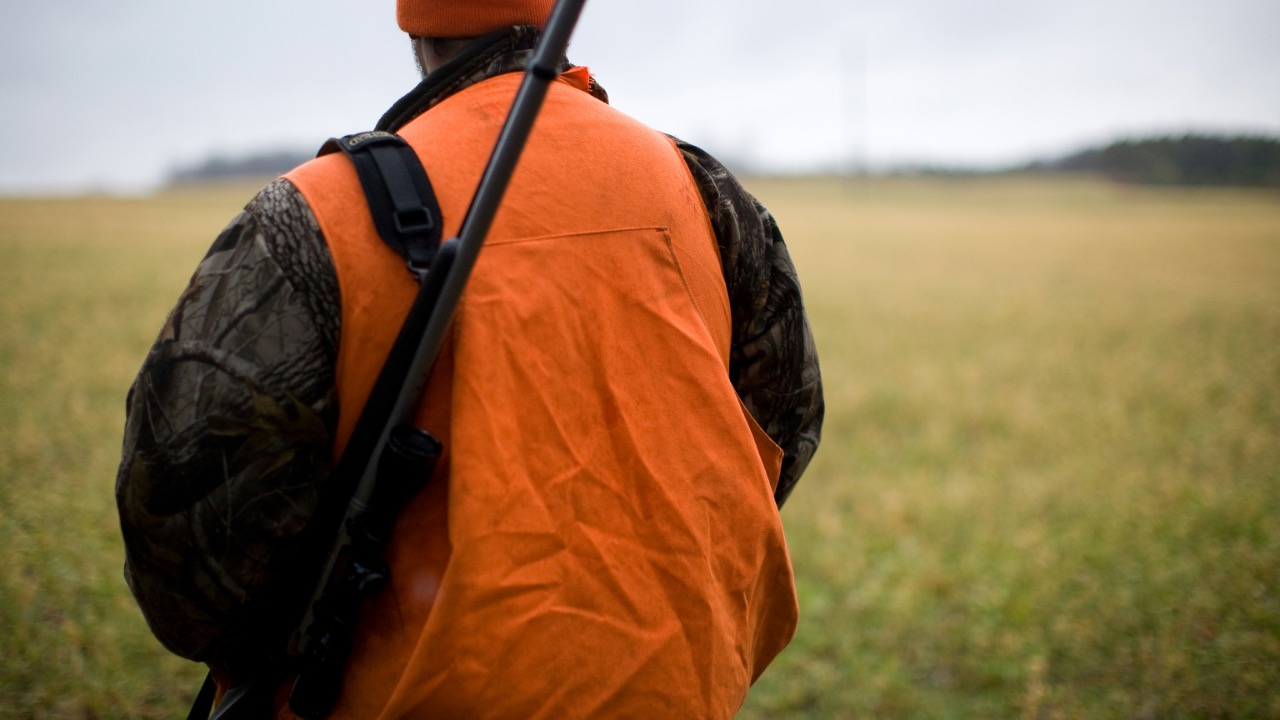
The biggest change in the last year is philosophical as much as practical: hunting and fishing are being treated as the default use on federal ground instead of something that needs to be carved out one refuge or forest at a time. A new Secretarial Order from the U.S. Department of the Interior sets hunting and fishing as the starting point on public lands, and it requires any closure to be backed by clear legal and documented reasons tied to safety, resource protection, or other statutory limits. That is a major shift from the old pattern where local managers often had to build a case to open a unit, and it puts the burden of proof on those who want to restrict access rather than on the hunters asking to get in, as outlined in the description of a Secretarial order.
At the same time, the National Parks Conservation Association has warned that the Department of Interior’s move may be more symbolic in some places than transformative. In WASHINGTON, D.C., the group pointed out that the Department of Interior’s Secretarial Order 3447, described as Expanding Hunting and Fishing Access, is being layered onto a landscape where many national park units already have strict statutory limits on hunting, and where the National Parks Conservation Association argues that access already exists across many national areas that allow it. That tension, captured in the debate over the Department of Interior order, shows how the same policy can feel like a breakthrough to hunters and like a paperwork exercise to park advocates who focus on units where hunting is already tightly constrained by law.
Secretarial Order 3447 and the “Open Unless Closed” era
On the ground, the most concrete change is Secretarial Order 3447, signed by Secretary of the Interior Doug Burgum. The order, formally titled Expanding Hunting and Fishing Access, Removing Unnecessa, directs Interior bureaus to treat hunting and fishing as core uses and to sweep away what it describes as unnecessary barriers. It also reflects a political decision at the top: Secretary of the Interior Doug Burgum is using his authority to align Interior’s land-use rules with a broader push from President Donald Trump’s administration to prioritize traditional recreation on federal holdings, as described in coverage of Secretary of the and the Secretarial Order.
The order does not stop at broad language. It tells all DOI offices that within 60 days they must identify lands that can be opened to hunting and fishing, and it tells them to prioritize opportunities that reconnect fragmented access and respond to local demand. That 60 day clock is aggressive by federal standards and is meant to force agencies to inventory parcels that have been closed by default, overlooked, or fenced off by complicated travel plans. The directive is framed as a win for sportsmen, with advocates calling it an Important Step Forward for Sportsmen and pointing to the sheer size of DOI’s land holdings that could be affected, as detailed in a summary noting that the order directs DOI offices to act on that timeline.
“Open Unless Closed” meets local reality
Policy language is one thing, but the real test is how it plays out in specific forests, refuges, and field offices. Interior’s new approach is often described as “Open Unless Closed,” a phrase that has already become shorthand among hunting groups. Supporters say this flips decades of bureaucratic inertia and will keep most federal lands open to hunting and fishing unless there is a clear reason to shut them down. One hunting organization publicly backed Secretary Burgum’s new Open Unless Closed public lands policy and highlighted that this approach is meant to guide access and stewardship across 480 million acres, as reflected in a post supporting the Open Unless Closed framework.
At the same time, some conservation advocates argue that the order is chasing access that already exists in many places and that it risks overselling what can be done in units where Congress has drawn hard lines. The National Parks Conservation Association has stressed that national park units have their own enabling laws and that hunting is already prohibited in many of them regardless of Interior policy, a point they raise in their critique of the Secretarial Order. That split view is important for hunters to understand: the Open Unless Closed language is powerful on Bureau of Land Management tracts and some refuges, but it does not magically open national parks or override statutes that have been on the books for decades.
Refuges, regulations, and the Fish and Wildlife Service
While Interior’s big-picture order grabs headlines, the quieter work of the U.S. Fish and Wildlife Service is where a lot of actual hunting opportunity gets created. The Service periodically updates station-specific rules for the National Wildlife Refuge System, and in the current 2025 to 2026 cycle it has proposed to open or expand hunting or sport fishing on 16 National Wildlife Refuge units and several national fish hatcheries. Those proposals are written in dense regulatory language, but they translate into real-world changes like adding a waterfowl season on a refuge that previously allowed only upland hunting, as laid out in the Federal Register notice from the Fish and Wildlife.
The Service also has to balance access with its conservation mission, which means every new hunting opportunity is weighed against habitat goals, endangered species protections, and public safety. That is why the same rulemaking that opens new units often includes clarifications on methods of take, season dates, and areas that remain closed. The agency’s plain-language mandate is supposed to make those rules easier for hunters to understand, but in practice it still takes careful reading of refuge-specific regulations to know where you can legally hunt. For anyone planning a trip to a new refuge, the safest move is to start with the official National rule text and then call the refuge office with specific questions.
Congress steps in: EXPLORE and modern access laws
Congress has not been sitting on the sidelines while Interior rewrites its manuals. Lawmakers passed H.R. 6492, the Expanding Public Lands Outdoor Recreation Experiences Act, better known as the EXPLORE Act, which is designed to Improve public land access for sportsmen and women and Modernize technology to improve visitor experiences. The law directs agencies to look at road and trail systems, digital maps, and access points with an eye toward making it easier for people to reach hunting and fishing spots on America’s public lands and waters, as described in the summary of H.R. 6492.
Advocacy groups that pushed for the EXPLORE Act see it as part of a broader wave of “modernizing public access” legislation. They point to wins like formalizing requirements for agencies to map landlocked parcels, track easements, and coordinate with states on access corridors. In their view, the future of access looks bright in 2026 and beyond because Congress is finally telling agencies to treat access data and easements as core infrastructure instead of afterthoughts. That perspective is laid out in a detailed look at The Origins, Wins, Future of Modernizing Public Access Legislation, which argues that these laws are already producing more places to hunt and fish and are poised to tackle issues like landlocked parcels and outdated fishing restrictions, as highlighted in the discussion of The Origins of that legislative push.
Public land openings and the new default on federal ground
Interior’s policy shift is not just words on paper. For the 2025 to 2026 season cycle, the department has moved to Open All Federal Lands to Hunting and Fishing by Default, which means land managers now have to justify closures instead of hunters having to lobby for openings. That new policy is framed as a way to standardize access across a much larger footprint of federal land and to reduce the patchwork of inconsistent rules that frustrate hunters who cross from one unit to another. It is part of a broader Interior effort described as a move to Open All Federal to hunting and fishing by default.
Alongside that, Interior has announced specific expansions of hunting opportunities on public lands, with officials saying they want to increase hunting and fishing whenever feasible. One report on these changes notes that the Interior Department Increases Hunting Opportunities on Public Lands and frames it as part of a News, New for 2026 package of access improvements, including new or expanded seasons on certain refuges and other DOI-managed tracts. That same report underscores that the department is trying to align its regulations with the new default policy so that on-the-ground rules match the rhetoric about access, as seen in the description of how the Interior Department Increases on public lands.
Private land, public access: VPA-HIP and state walk-in programs
Even with all the federal noise, the reality is that a huge share of the country’s best hunting still sits behind private gates. That is where voluntary access programs come in. The 2018 Farm Bill, formally cited as Public Law 115-334, re-authorized the Voluntary Public Access and Habitat Incentive Program, often shortened to VPA-HIP. This program pays willing landowners to open their ground to public hunting and fishing, and it is designed to funnel federal dollars, paid by taxpayers, into rural communities that host these access sites, as spelled out in the description of the Farm Bill and its Public Law 115, 334 citation.
On top of that federal backbone, states run their own walk-in and access programs, often with help from the Voluntary Public Access and Habitat Incentive Program and other grants. One overview notes that the Voluntary Public Access and Habitat Incentive Program, also referred to as VPA and HIP, is supported by the Farm Bill and that these funds are combined with state dollars and incentives to pay landowners who enroll acres in public access programs. Those programs are described as Public Access to Private Land Hunting Programs and are held up as examples of how state and federal partnerships can expand opportunity without forcing landowners into anything, as explained in the summary of the Voluntary Public Access approach.
How tech and mapping tools unlock “temporary” access
Even when land is technically open, finding the gate can be half the battle. That is where mapping tools and access reports have become essential gear. One access report describes the challenge as Unlocking Public Land, Temporarily, pointing out that there are over a million acres of public land that are effectively landlocked by surrounding private parcels. Voluntary public access programs help open those parcels during the window of time the landowner is enrolled, giving hunters a temporary corridor to reach otherwise unreachable ground and to access adjoining public land, as detailed in the discussion of Unlocking Public Land and how Voluntary access works.

Asher was raised in the woods and on the water, and it shows. He’s logged more hours behind a rifle and under a heavy pack than most men twice his age.