New artillery shell sets record for longest battlefield range
Artillery has quietly become one of the most disruptive technologies on the modern battlefield, and its latest evolution is measured in miles rather than meters. A new generation of guided shells is pushing conventional guns to ranges that once belonged only to rockets and missiles, reshaping how commanders think about distance, survivability, and firepower. The record now set for the longest battlefield shot is not just a technical milestone, it is a signal that the race for extreme-range artillery is entering a decisive phase.
Behind the headline figure is a web of innovations in propulsion, guidance, and gun design that link laboratories, proving grounds, and active war zones. From precision strikes at 70 Km to experimental ramjet rounds and extended-range howitzers, the story of this record shot is really the story of how artillery is being reinvented for an era when whoever reaches farther, and hits first, can dictate the tempo of an entire front.
From trench guns to precision reach: how range became the new currency
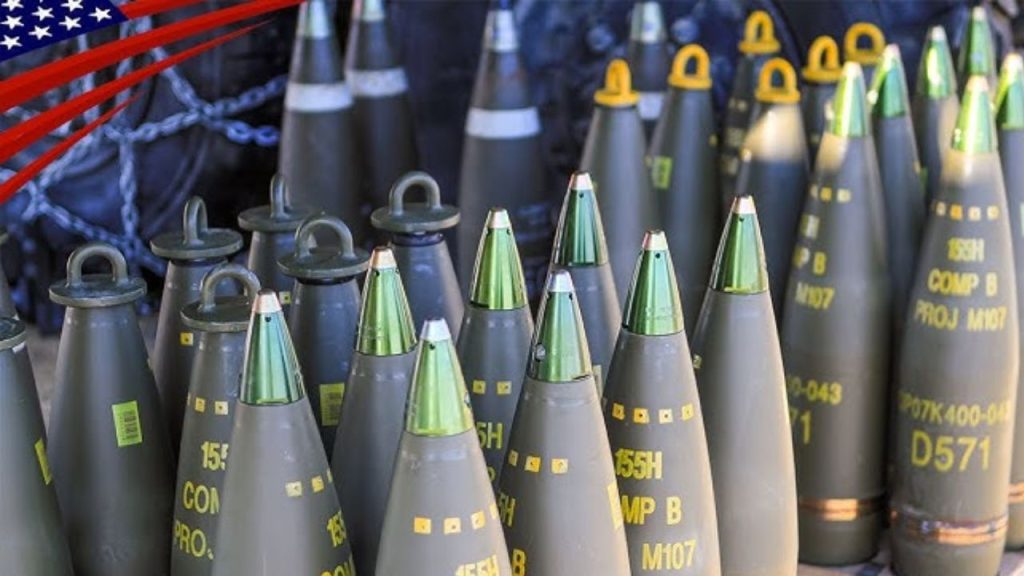
For much of the twentieth century, conventional artillery was constrained by physics and metallurgy, with most field guns topping out at just over 20 kilometers before accuracy and barrel wear became unacceptable. That ceiling shaped doctrine, forcing batteries to operate relatively close to the front and exposing them to counterbattery fire and drones. As adversaries fielded longer range rockets and precision missiles, traditional tube artillery risked becoming a blunt, vulnerable instrument rather than the backbone of ground firepower.
Industry engineers and military planners responded by treating range as a strategic variable rather than a fixed limit. Companies like Nammo framed this as a “range revolution,” arguing that extreme distance could be achieved without sacrificing the accuracy that modern operations demand. That shift in mindset, from accepting 20 kilometer envelopes to designing for multiple times that distance, set the stage for the record-breaking shell now redefining what a howitzer can do in combat.
Ukraine’s 70 Km strike and the first combat benchmark
The clearest proof that extreme-range artillery is no longer theoretical came when Ukrainian forces executed what has been described as the longest artillery hit in Combat, Striking Target 70 Km Away. Using a Polish Crab howitzer paired with advanced Vulcano GLR ammunition, the gunners demonstrated that precision-guided shells could reach deep into the enemy rear while still landing on a defined target area. The engagement, highlighted under the banner of How Ukraine Set World Record for Longest Artillery Hit, showed that a 70 Km shot was not just a range card entry but a practical battlefield tool.
That record was not an isolated stunt but part of a broader pattern in which Ukraine has turned artillery innovation into a survival skill. A separate clip of Ukraine artillerymen describes how they set a new world record for the range of conventional artillery hitting a target, again emphasizing both distance and accuracy. Together, these episodes underline how a country under intense pressure has become an early adopter and real-world tester of the very long-range shells that are now setting global benchmarks.
Proving ground to front line: how test shots paved the way
Before any shell earns a place in a combat loadout, it has to survive the unforgiving environment of instrumented ranges. At Yuma Proving Ground, Arizona, industry teams working with the Army have been firing experimental projectiles to the edge of what existing barrels and propellants can handle. In one series of firings, a new round paired with an XM1113 projectile using supercharged propellant pushed range records while still landing in its designated target area, a critical requirement for any munition that hopes to graduate from test stand to war zone.
These trials are not just about bragging rights, they are about mapping the envelope of safe pressures, muzzle velocities, and guidance performance. A Yuma Proving Ground campaign that couples GPS guidance with extended-range ballistics, for example, helps engineers understand how a shell behaves in thin upper air and how much correction authority its fins and electronics really have. Those data points feed directly into the designs that later appear in combat, including the record-setting rounds now being fired over the horizon in Ukraine.
Ramjet propulsion and the 155 m frontier
One of the most ambitious attempts to stretch artillery range involves turning the shell itself into a miniature air-breathing missile. In a recent Indirect Test, a Boeing and Nammo team fired a Ramjet 155 munition that used onboard propulsion to sustain velocity far beyond what a simple ballistic arc would allow. The demonstration, described under the line Boeing Ramjet Artillery Shell Hits Record Range, showed that a ramjet-powered projectile could be launched from a standard gun and still achieve a step change in distance.
The Ramjet concept is built around a 155 m class shell that fits existing 155 mm systems but carries an integrated engine that ignites after it leaves the barrel. By compressing incoming air and burning fuel inside the body of the projectile, the Ramjet 155 maintains speed and lift, flattening its trajectory and extending its reach. Engineers involved in the program have suggested that, depending upon the platform, such technology could push artillery into ranges that overlap with tactical missiles, blurring the line between gun-launched and rocket-launched fires.
Excalibur and the rise of GPSG-guided precision
Range alone is meaningless if shells cannot be steered onto specific points, which is why guided munitions like Excalibur have become the template for modern artillery. The M982 Excalibur, previously designated XM982, is a 155 mm extended-range guided artillery shell developed in a collaborative program to give commanders the ability to hit targets with meter-level accuracy. Initial combat experience with Excalibur showed that it could reliably reach out to 40 km (25 mi) while still landing within a tight circular error probable, a performance that made it a natural stepping stone toward even longer range designs.
Excalibur’s guidance package, often described as GPSG guided in popular explainers, uses satellite navigation and onboard control surfaces to correct its flight path in real time. A widely shared video titled “Insane Precision of ‘Excalibur’ Super Shell” walks through how the Excalibur round can be programmed to strike individual vehicles or fortified positions instead of broad grid squares. The same Wikipedia entry on Excalibur underscores that this 155 m class shell is not just about distance but about turning artillery into a precision instrument, a philosophy that underpins the new record-setting projectiles.
Extended Range Cannon Artillery and the M1299 platform
Pushing shells farther also requires rethinking the guns that fire them, which is where the Extended Range Cannon Artillery program and the M1299 howitzer come in. Using the same principles that guided earlier self-propelled howitzer designs, the Army commissioned a new platform with a longer barrel, improved recoil management, and advanced fire control to exploit the full potential of next-generation rounds. BAE Systems was given a $45 million contract in 2019 to develop this system, a figure often shortened to $45 m in technical summaries, underscoring the scale of investment behind the effort.
The M1299 has already shown what this combination of gun and shell can do. In one widely discussed test, an Army crew used the new self propelled Artillery to hit a range of 43 miles and broke velocity records, a performance that enthusiasts highlighted in an Aug discussion thread. The M1299 howitzer entry notes that this Extended Range Cannon Artillery approach is central to how the Army plans to keep tube artillery relevant in a world of long-range rockets, and it is precisely this kind of platform that can exploit the new record-setting shell at the heart of today’s range race.
Marine gunners and the 22-mile benchmark
Long before the latest record, U.S. forces were already stretching the envelope of what conventional guns could do in combat. A U.S. Marine artillery battery’s strike on a group of insurgents, described in detail by weapons specialists, not only neutralized its target but also set a new benchmark by hitting from 22 miles away. That shot, executed with a massive round and careful fire direction, illustrated how even legacy systems could be pushed to surprising distances when paired with improved propellants and fire control.
The Marine battery’s achievement became a reference point for later efforts, including the Army’s 43 miles shot and Ukraine’s 70 Km engagement. Each new record has built on the last, with gunners learning how to manage barrel wear, meteorological data, and trajectory corrections at ranges where even small errors can translate into hundreds of meters of miss distance. In that sense, the Marine experience at 22 miles was an early chapter in the same story that now includes the longest battlefield shot on record.
Base bleed, rocket assist, and the Nammo philosophy
Behind the headline-grabbing technologies like ramjets and GPSG guidance are quieter innovations in shell aerodynamics and propulsion that have steadily added kilometers to artillery range. Techniques such as base bleed, which reduces drag by filling the low-pressure wake behind a projectile, and rocket assist, which adds a small motor to boost velocity mid-flight, are central to how modern rounds achieve their extended envelopes. Engineers at Nammohave argued that Long range is the new norm, with Thomas Danbolt emphasizing that moving towards longer ranges is a shift that could define armed forces for decades.
In a companion discussion of the range revolution, Nammo’s specialists explain how careful shaping of the projectile and optimization of propellant charges can deliver extreme range without unacceptable dispersion. Their range revolution narrative stresses that extreme range must be matched by extreme control of the accuracy, a philosophy that aligns with the precision-first approach seen in Excalibur and the new record-setting shells. By combining base bleed, rocket assist, and advanced guidance, designers are effectively stacking incremental gains into a cumulative leap that makes shots like 70 Km or 43 miles not just possible but repeatable.
Sabots, sub-projectiles, and the physics behind the record
Another piece of the puzzle lies in how projectiles interact with the air, and here the concept of the armour-piercing discarding sabot offers useful lessons. In these designs, a smaller, denser sub-projectile is encased in a lightweight carrier that falls away after leaving the barrel. This, in combination with the sub-projectile’s higher sectional density, gives the resulting sub-projectile vastly reduced aerodynamic drag compared to full-caliber projectiles, such as armour-piercing, composite rigid (APCR). The same physics that let tank rounds punch through armor at long range can be adapted to artillery shells that need to fly farther and straighter.
While the new record-setting artillery shell is not itself an APCR round, its designers draw on the same understanding of drag, stability, and mass distribution that underpins the armour-piercing discarding sabot family. By refining ogive shapes, adjusting center of gravity, and integrating guidance fins that do not add excessive drag, engineers can squeeze extra kilometers out of each shot. The result is a shell that not only sets a record for longest battlefield range but also embodies a century of accumulated knowledge about how to cheat gravity and air resistance, turning a simple gun-launched projectile into a precision instrument that can shape the fight far beyond the front line.

Leo’s been tracking game and tuning gear since he could stand upright. He’s sharp, driven, and knows how to keep things running when conditions turn.