“No One’s Taking My Guns Away”: Tucker Carlson Shuts Down Piers Morgan’s UK Gun Grab Argument
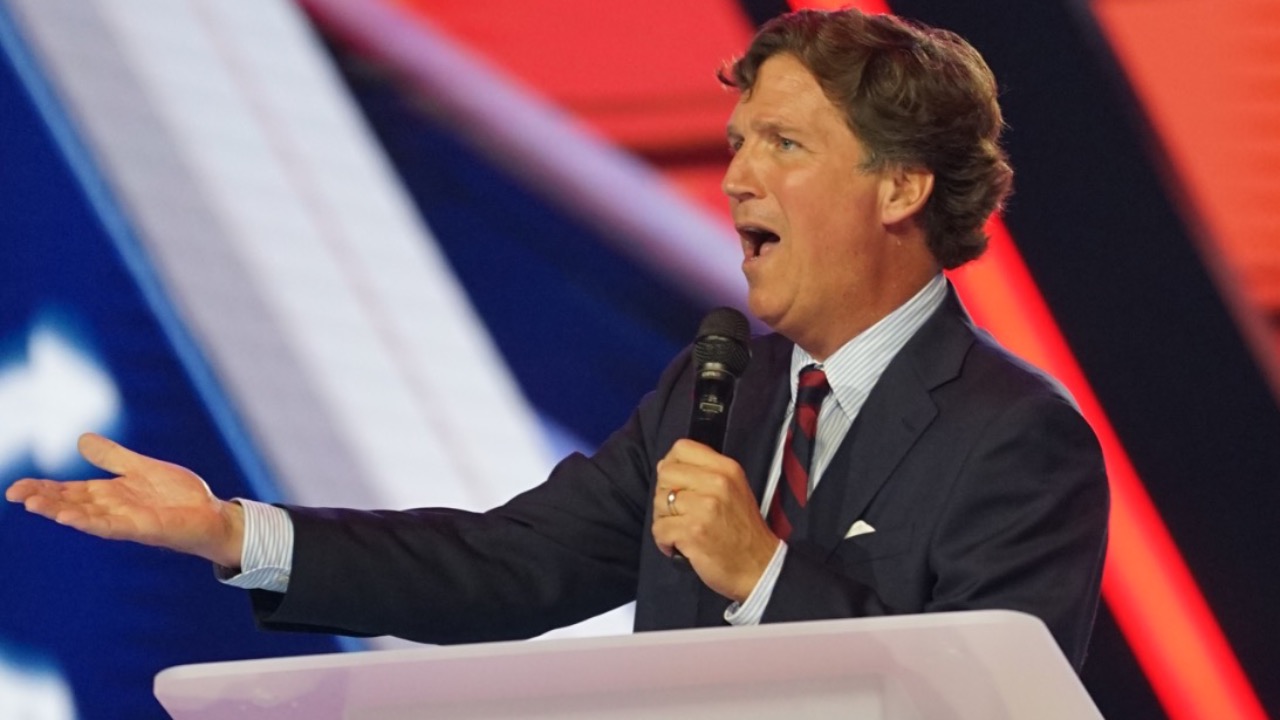
Tucker Carlson and Piers Morgan turned a familiar clash over guns into a sharper argument about freedom, security and national identity, with Carlson insisting that “no one” is going to confiscate his firearms while Morgan urged Americans to look at the United Kingdom’s strict controls as a model. Their back-and-forth, recorded in Riyadh, Saudi Arabia, used the contrast between British and American gun laws to probe who gets to decide how citizens defend themselves. The exchange quickly moved beyond statistics and into a larger fight over whether the state or the individual should have the final say on personal protection.
What unfolded was not simply a culture-war skirmish but a test of two competing stories about modern democracy. Carlson framed widespread gun ownership as proof that Americans are “free” because, in his view, no authority can tell them they cannot defend themselves, while Morgan pressed the argument that the British experience shows tighter rules can coexist with public order. Together, they offered a vivid snapshot of how debates over firearms, hate speech and even foreign wars are now entangled in a single argument about power and rights.
The Riyadh setting and a clash of media heavyweights
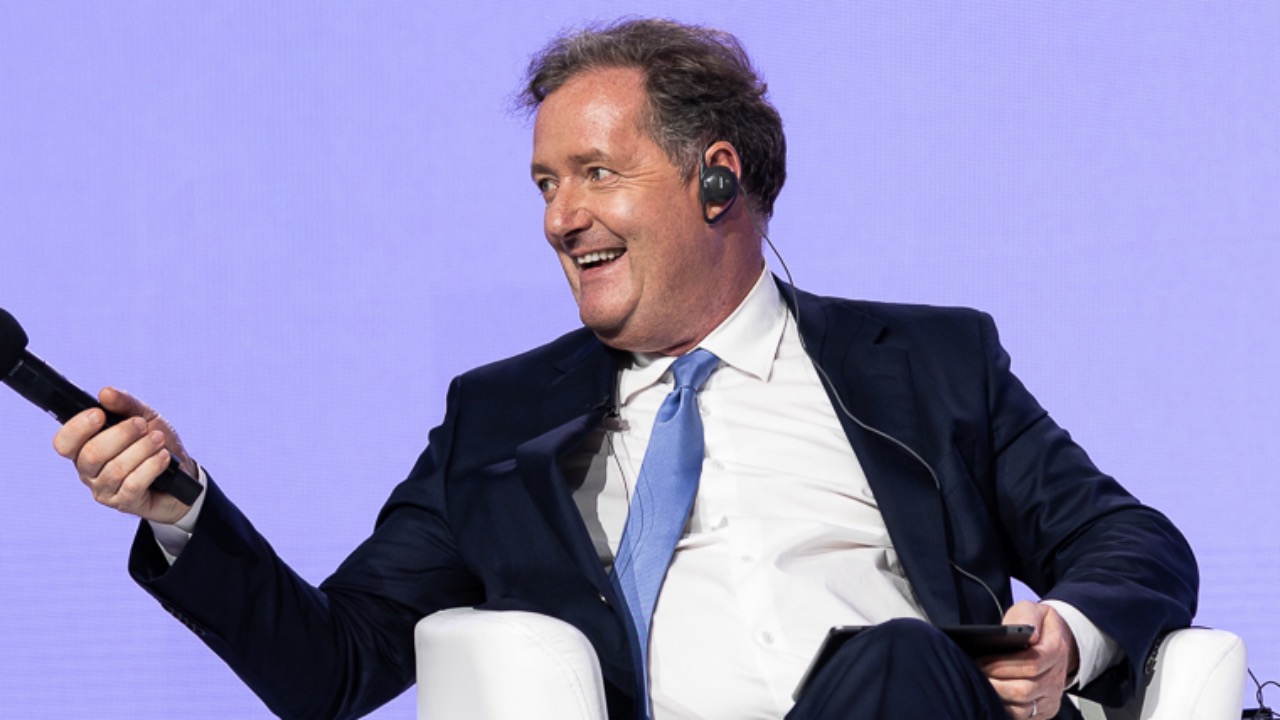
The conversation took place in Riyadh, Saudi Arabia, where Carlson welcomed what a transcript describes as “Beers Morgan” to his set, a tongue-in-cheek slip that captured the informal tone as the two men joked about “telling off-colour jokes off camera” before turning to serious topics. The Riyadh backdrop underscored how both men were willing to critique Western governments while speaking from a country with a very different approach to speech and dissent, a contrast that hung over their later argument about who is really free.
The encounter formed part of a longer episode of The Tucker Carlson Show, a program that Jan sources list under “Information * Show * The Tucker Carlson Show * Frequency * Updated Daily,” with that particular installment running for 1 hour and 42 minutes. The extended runtime let Carlson and Morgan move across foreign aid, NATO, hate speech and gun control, then circle back to the question of whether Western leaders such as And Zelensky are defending democracy or eroding it. The gun argument slotted into this broader canvas of what kind of liberties liberal societies should protect.
Descriptions of the event on podcast platforms refer to it as “Tucker & Piers Morgan Debate Foreign Aid, Hate Speech, NATO, Gun Control,” a formulation that captures how firearms were one of several pressure points rather than an isolated topic. Even so, the gun segment quickly became the emotional core of the exchange, with Carlson’s declaration that no one would confiscate his weapons serving as the sharpest line in a conversation that otherwise ranged widely across policy and geopolitics.
How the gun control segment unfolded
The gun segment emerged after the two had already sparred over foreign policy and leadership in Kyiv, with Carlson arguing that Western governments, including U.S. and British policymakers, had helped provoke conflict and Morgan countering that And Zelensky had “actually, I think, been a force for good, not bad.” Once the discussion turned to domestic freedoms, Carlson pivoted from the morality of war to the rights of citizens to protect themselves, linking his skepticism of foreign interventions to his distrust of centralized control at home.
From there, Morgan invoked the United Kingdom’s response to mass shootings, pointing to the country’s sweeping restrictions on private firearms as evidence that tighter laws can follow tragedy. Carlson responded by insisting that Americans “have so many guns cuz we’re free,” then added that they are “free cuz no one can tell us we can’t defend ourselves,” a line that echoed across social media clips. That framing treated any move toward a British-style regime as a direct attack on the core of American identity.
Throughout the exchange, Carlson pressed Morgan on whether British citizens have any meaningful right to bear arms, drawing a sharp contrast between the U.S. constitutional framework and the UK’s tradition of parliamentary sovereignty. Morgan, in turn, leaned on the British experience as proof that a society can function, and even thrive, without widespread civilian gun ownership, arguing that the trade-off in individual firepower buys a form of collective safety.
“Is London safe?” and the British example
The question “Is London safe?” became a shorthand for this clash, surfacing in a video where Carlson challenged the idea that the British capital represents a success story for strict gun control. In that clip he mocked the official line that “everything’s totally fine and if you complain about it you’re going to jail,” then pressed whether the British people have any right to bear arms at all. The video, which refers to “Tucke” in its transcript, framed London as a cautionary tale about what happens when the state monopolizes force.
Morgan pushed back by defending British public order and pointing to the absence of widespread gun ownership as a feature, not a bug, of that system. He argued that British citizens do not live in constant fear of mass shootings, and he presented that reality as a direct product of the United Kingdom’s decision to sharply limit civilian access to firearms. For Morgan, the British model showed that a modern democracy can prioritize safety without collapsing into tyranny.
Carlson’s retort was to question whether a society that criminalizes complaints about crime or migration, as he claimed Britain does, can still describe itself as free. He tied gun ownership to a broader set of rights, including speech, suggesting that once a government can disarm its citizens it can more easily police what they say. The London debate therefore became a proxy fight over whether security without firearms is genuine safety or a fragile peace enforced from above.
“You’re a slave” and the rhetoric of freedom
The sharpest language emerged in a short clip titled “You’re A Slave!” in which Carlson and Morgan debated freedom in England. In that exchange, Carlson repeated his line that Americans “have so many guns cuz we’re free,” then extended the point by arguing that people are not free if someone can tell them they cannot defend themselves. The February clip distilled his philosophy into a simple equation: guns equal autonomy, and limits on guns equal subordination.
By framing the argument in those terms, Carlson pushed the conversation out of the realm of policy and into moral territory. If restricting firearms makes people “slaves,” then any compromise on gun rights becomes not just a pragmatic trade-off but a betrayal of human dignity. That kind of language resonates strongly with his audience, which often views regulatory measures as steps toward a more intrusive state.
Morgan, for his part, rejected the idea that British citizens are slaves simply because they do not own AR-15s or handguns. He argued that British voters still choose their leaders, that courts still function, and that daily life in cities like London continues without the constant threat of armed violence. In his framing, freedom is measured less by the presence of weapons and more by the stability and safety of public life.
Foreign wars, Stalin and Hitler, and why guns came up
The gun argument did not happen in isolation. Earlier in the conversation, Carlson and Morgan had tangled over foreign aid and wartime alliances, with Carlson questioning whether NATO and Western governments had pushed Russia into confrontation. An account of the episode notes that “They discuss NATO’s role in provoking the war, with Carlson blaming U.S. and British policymakers for fueling conflict, while Morg expresses frustration with Britain’s current political stagnation.” That split over international power fed directly into their dispute over domestic control.
At one point, the transcript records a provocative line about “Stalin Hitler,” with Carlson riffing that “So this is why we support Stalin Hitler because in a way, we had that debate. Hitler is bad, so Stalin wants to be good. But no,” as he tried to expose what he saw as simplistic moral binaries in wartime rhetoric. He used references to Hitler and Stalin to argue that backing one side in a conflict does not automatically make that side virtuous, and that citizens should be wary when governments present complex wars as morality plays.
That skepticism of government storytelling about war mirrored his skepticism of government assurances about safety at home. If leaders can mislead the public about foreign conflicts, he suggested, they might also mislead them about the need for disarmament. Morgan responded by insisting that some fights, such as resisting territorial aggression, are clearer than Carlson allowed, and he defended Western support for And Zelensky as a necessary stand against expansionism.
Zelensky, dictators and the meaning of self-defense
The question “Is Zelensky a dictator?” hovered over the entire conversation, as the full episode description makes clear. Carlson pressed that question to highlight what he saw as hypocrisy in Western rhetoric: leaders who champion democracy abroad, he argued, often tolerate restrictions on speech and protest at home. Morgan countered that And Zelensky, despite flaws, has “actually, I think, been a force for good, not bad,” and that supporting Ukraine does not require endorsing every domestic policy in Kyiv.
This disagreement over Zelensky’s character fed into their clash over who should control weapons. If, as Carlson suggested, elites are prone to overreach and misjudgment, then citizens need tools of self-defense not only against criminals but also against the possibility of state abuse. For Morgan, the primary threat came from external aggressors and violent extremists, and he saw coordinated state action, including arms control, as a legitimate response.
By linking Zelensky, NATO and gun rights in a single conversation, the two men sketched out rival theories of self-defense. Carlson emphasized individual capacity to resist both crime and tyranny, while Morgan stressed collective mechanisms such as alliances, law enforcement and international norms. Their argument over whether anyone would “take” Carlson’s guns away was therefore a stand-in for a deeper disagreement about where protection really comes from.
Hate speech, civil casualties and the boundaries of state power
The same episode also touched on hate speech laws, with Morgan more open to restrictions on extreme expression and Carlson warning that such laws often expand to cover mainstream dissent. That divide paralleled their dispute over guns: Morgan trusted legal frameworks to balance rights and harms, while Carlson saw every new category of regulated speech as a potential weapon against political opponents.
In a separate clip, Morgan discussed the justification for civilian casualties in war, saying that even when governments make “the case that we had to do it or whatever,” people “should weep” and acknowledge that “that’s evil.” He argued that leaders should not hide behind legalistic language to excuse harm to civilians, and that moral clarity requires calling such harm what it is. That stance showed Morgan’s willingness to criticize state violence even as he defended state control over weapons.
Carlson used those kinds of contradictions to press his point that governments cannot be trusted as sole arbiters of right and wrong. If leaders can rationalize civilian deaths abroad, he asked, why should citizens accept their assurances that disarming the public is purely about safety? The tension between Morgan’s critique of wartime excesses and his support for domestic regulation gave Carlson an opening to argue that individuals need independent means of protection.
Media rivalry and the Fuentes controversy
The Carlson Morgan clash also unfolded against a backdrop of broader media rivalries. On another platform, critics such as Julie Speier accused Carlson of conducting a “softball” interview with Nick Fuentes and suggested that he had “already failed miserably with Candice Owens.” That criticism, shared on social media, framed Carlson as too lenient with far-right figures and raised questions about how he uses his platform.
Those debates over interview style fed into Morgan’s posture during their Riyadh meeting. Morgan has built a reputation for confrontational questioning, and his willingness to challenge Carlson on guns and foreign policy fit that brand. At the same time, Carlson’s defenders saw Morgan’s stance on issues like gun control as evidence that he is more comfortable with strong state authority than with radical individualism.
The result was a layered media drama in which both men were not only arguing policy but also defending their professional identities. Morgan presented himself as a tough but reasonable interrogator who supports firm laws on hate speech and guns, while Carlson cast himself as a tribune for those who feel overruled by elites, whether in Washington, London or Kyiv.
How the podcast packaging shaped the debate
The way the episode was packaged across platforms reinforced its central themes. On Spotify, the program appeared under the label “Tucker & Piers Morgan Debate Foreign Aid, Hate Speech, NATO, Gun Control,” which signaled to listeners that firearms would be treated on the same level as international alliances and speech laws. That framing invited audiences to see gun rights not as a niche issue but as part of a larger argument about Western power.
The transcript hosted on a service that promotes itself as an “audio to text” tool captured the rhythm of the conversation, including slips like “Beers Morgan” and references to “Jan” and “But” that reflect the rough edges of spoken language. Those details highlighted how the debate oscillated between banter and high-stakes claims, with jokes about off-colour humor sitting alongside references to Stalin, Hitler and mass death.
Sharing tools linked to the transcript encouraged users to spread clips on platforms such as Facebook, Twitter and LinkedIn, where prompts invited them to post about “Tucker & Piers Morgan Debate Foreign Aid, Hate Speech.” That distribution network helped turn individual lines, such as Carlson’s “you’re a slave” comment about disarmament, into viral sound bites divorced from the longer, more meandering context of the full 1 hour and 42 minute conversation.
Freedom, guns and the UK–US divide
At the heart of the argument was a deep divide over what freedom looks like in practice. For Carlson, the American model, with its constitutional right to bear arms and widespread gun ownership, represents a safeguard against both crime and creeping authoritarianism. His insistence that no one would “take” his guns away was less a prediction than a vow of resistance, a way of stating that he and his audience would not accept a British-style settlement.

Asher was raised in the woods and on the water, and it shows. He’s logged more hours behind a rifle and under a heavy pack than most men twice his age.