Pentagon Threatens Vatican Envoy Over Pope’s Criticism of US Military Posture in Middle East
The clash between Washington and the Holy See over Middle East policy has escalated into an unusually personal confrontation. After Pope Leo XIV condemned the scale and intent of the current United States military posture in the region, Pentagon officials privately pressed the Vatican’s envoy with language that Vatican insiders describe as a threat. The episode has opened a rare window into how far the United States is prepared to go when a moral authority challenges its security doctrine.
What happened
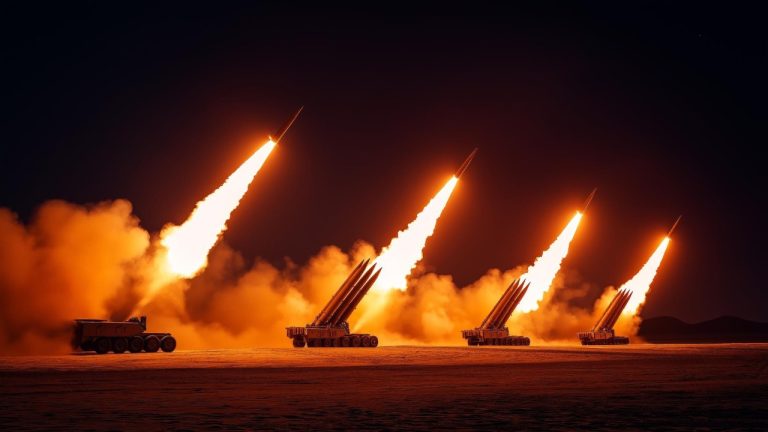
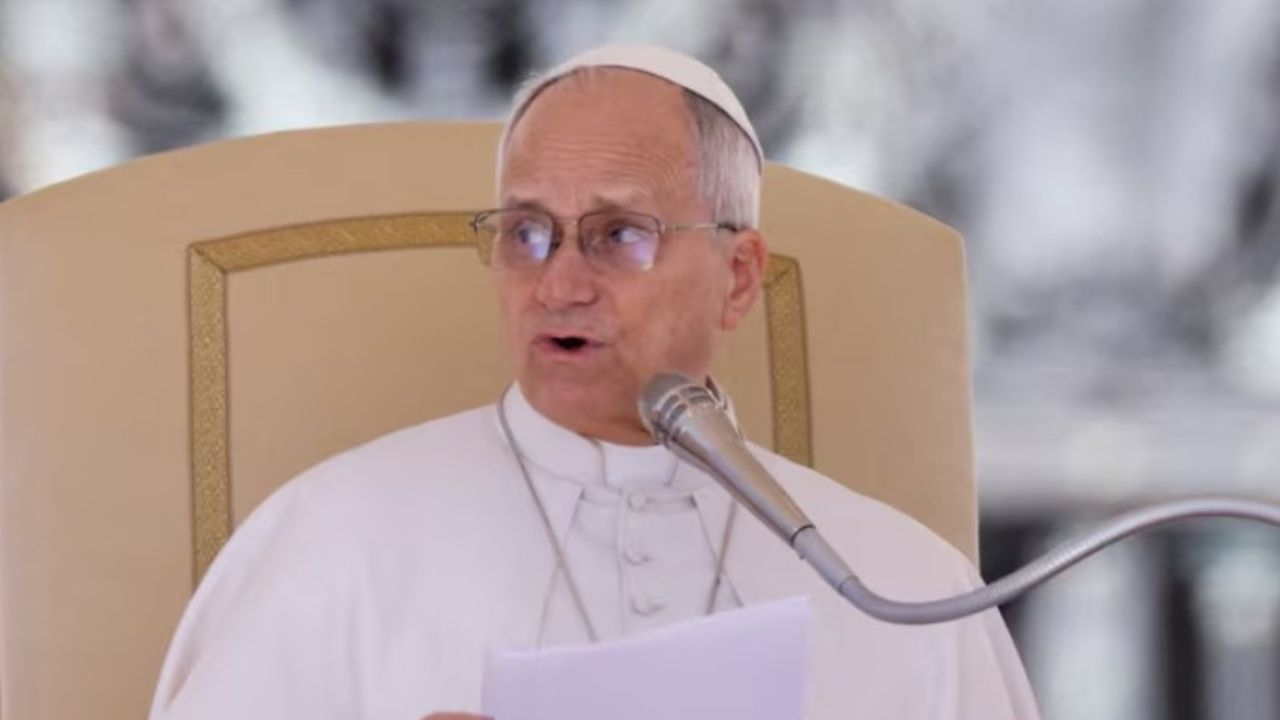
According to people briefed on the exchange, the controversy began after Pope Leo XIV used a closed-door address to senior diplomats to criticize the build-up of American forces across key Middle Eastern hubs. The pope warned that the deployment pattern, which he framed as an offensive posture rather than a stabilizing presence, risked turning already fragile conflicts into a wider regional war. He also questioned the compatibility of targeted killing campaigns and large-scale arms transfers with Catholic teaching on just war and the protection of civilians.
Those remarks quickly circulated through diplomatic channels and eventually reached the United States government. In response, senior Pentagon officials requested an urgent meeting with the Vatican’s representative to Washington. People familiar with that encounter describe it as a tense session in which the American side insisted that the pope’s comments undermined deterrence, emboldened hostile actors, and misrepresented the intent of U.S. operations.
Accounts of the meeting indicate that Pentagon officials did not limit themselves to policy rebuttals. According to a detailed reconstruction of the encounter, they warned that continued Vatican criticism could have consequences for intelligence-sharing arrangements, humanitarian access to certain conflict zones, and the broader rhythm of U.S.–Holy See engagement. One participant characterized this as a direct attempt to pressure the Vatican into silence, a description that aligns with reporting on the infamous meeting between the Vatican envoy and the Pentagon.
The Vatican side, led by the apostolic nuncio, reportedly pushed back by stressing that the pope’s statements were grounded in Catholic moral teaching and in first-hand reports from bishops in Syria, Iraq, Lebanon, and the Palestinian territories. The envoy argued that silence in the face of civilian suffering would constitute a failure of the church’s mission. That argument did little to soften the American position. At one point, a Pentagon official is said to have suggested that if the pope persisted, Washington would be forced to “reconsider” the level of diplomatic access the Holy See currently enjoys.
Subsequent coverage of the episode has connected the Pentagon’s posture to broader tensions between Pope Leo XIV and the administration of Donald Trump. Reporting on the Trump–Vatican relationship notes that the White House viewed the pope’s Middle East interventions as politically damaging at home, particularly when he linked American airstrikes and arms sales to what he called the “gravest sin” of turning human lives into expendable collateral. One account of the dispute over Pope Leo XIV’s Middle East stance describes how Trump’s circle encouraged a harder line with the Vatican, a dynamic highlighted in coverage of the Trump–Pope confrontation.
From the Vatican’s perspective, the papal critique was not a one-off outburst but part of a sustained moral campaign. In a widely circulated reflection, Pope Leo XIV framed the current Middle East strategy as a “gravest sin” because it normalized permanent war and habituated the world to the death of children under rubble. That text, which has been analyzed in detail by Catholic commentators, sets out his view that long-term basing, repeated bombing campaigns, and permissive rules of engagement violate the principles of proportionality and last resort. A close reading of that reflection on the gravest sin shows how directly the pope links American force posture to spiritual and political decline.
Why it matters
The confrontation carries weight far beyond the narrow world of Vatican diplomacy. The Holy See is one of the few actors with both global moral stature and a network of local institutions across conflict zones. When the pope condemns a military strategy, it can influence public opinion in Europe, Latin America, parts of Africa, and among Catholic communities inside the United States itself. That reach helps explain why the Pentagon reacted so sharply to what might otherwise have been written off as a homily.
For the United States, the episode exposes the tension between its claim to uphold a rules-based order and its heavy reliance on forward-deployed power in the Middle East. Successive administrations have argued that carrier strike groups, drone bases, and special operations hubs are necessary to contain terrorism, deter Iran, and protect shipping lanes. Pope Leo XIV, by contrast, has framed the same posture as a system that entrenches authoritarian partners, fuels arms races, and traps civilians between rival security agendas.
The dispute also tests how much space remains for religious authorities to criticize U.S. security policy without facing direct pushback. American leaders frequently invoke religious freedom and conscience rights abroad, yet the reported threats to scale back engagement with the Vatican suggest a willingness to penalize a church that applies its moral framework to U.S. actions. That contradiction will not be lost on governments and movements that already accuse Washington of double standards.
Within the church, the clash highlights a deeper debate over the role of papal diplomacy. Some bishops and Catholic policymakers argue that the Holy See should avoid specific condemnations of individual states and instead focus on general appeals for peace. Pope Leo XIV has taken the opposite view in his Middle East interventions, insisting that moral teaching loses credibility if it never names the structures and decisions that produce suffering. The Pentagon’s reaction may harden his resolve, since backing down under pressure would risk signaling that powerful states can set the limits of papal speech.
There are also concrete humanitarian implications. Catholic charities and religious orders run hospitals, schools, and refugee centers in places like Aleppo, Mosul, and Gaza City. Their access often depends on quiet arrangements with both local authorities and foreign militaries. If Washington were to curtail cooperation with the Vatican in retaliation for papal criticism, those operations could lose logistical support, security guarantees, or diplomatic cover. Even subtle shifts, such as slower visas for church workers or reduced coordination on aid convoys, would be felt by displaced families and wounded civilians.
On the American side, the incident may reverberate inside the national security bureaucracy. Military planners who already face scrutiny over civilian casualty counts and long-running deployments now see a major religious leader casting their entire posture as morally disordered. That kind of judgment can affect recruitment, retention, and the willingness of allied governments with strong Catholic constituencies to host or expand U.S. facilities.
What to watch next
The immediate question is whether either side chooses to escalate or de-escalate the confrontation. The Vatican could respond by publishing more of Pope Leo XIV’s private remarks, granting interviews that sharpen his critique, or convening bishops from the region for a high-profile synod focused on war and occupation. Any of those steps would signal that the Holy See intends to keep pressing its case regardless of Pentagon pressure.
Washington, for its part, has several levers. Officials could quietly walk back the more aggressive language used with the nuncio and emphasize shared priorities such as the protection of religious minorities and the fight against the Islamic State group. Alternatively, they could make good on the implied threats by reducing the frequency of high-level meetings, limiting Vatican participation in certain briefings, or slowing cooperation on issues where the Holy See has traditionally had a seat at the table, such as conflict mediation and prisoner exchanges.
Observers will also watch how other governments and religious bodies respond. If European allies with strong Catholic traditions echo the pope’s concerns about permanent U.S. basing and regional escalation, the Pentagon may find itself facing a broader coalition of skeptics rather than a single isolated critic. Conversely, if key partners publicly back the American posture and distance themselves from the Vatican, that would weaken the pope’s leverage and reinforce Washington’s narrative that its deployments are a stabilizing force.

Leo’s been tracking game and tuning gear since he could stand upright. He’s sharp, driven, and knows how to keep things running when conditions turn.