Reports Claim El Mencho Killed: What It Could Mean for Mexico’s Cartel Power Structure
The reported killing of Nemesio “El Mencho” Oseguera Cervantes has removed one of the most powerful cartel leaders in Mexico and one of the United States’ most wanted fugitives. His death is already reshaping patterns of violence, governance and business in regions long controlled by the Jalisco New Generation Cartel. How Mexico’s cartel hierarchy adjusts to this loss will determine whether the country sees a rare opening for the state or a new cycle of chaos.
The operation that ended Mexico’s most wanted man

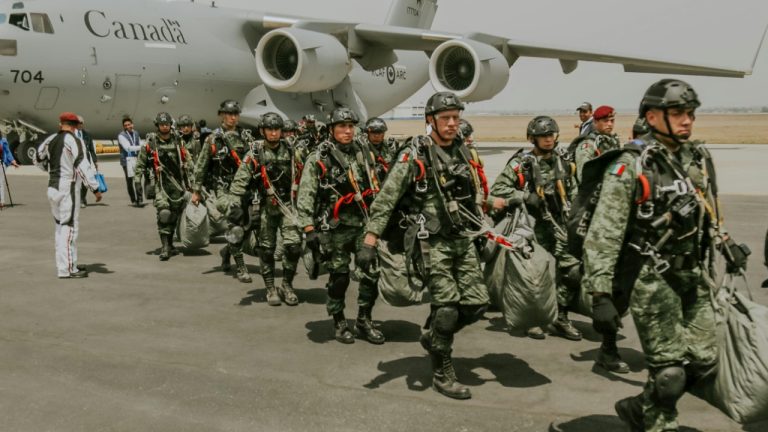
Mexican armed forces tracked Nemesio “El Mencho” Oseguera Cervantes as part of a high risk operation that officials cast as a major national security victory. Security forces in Mexico City described him as the country’s most powerful cartel leader and one of the United States’ top fugitives, a man whose capture had eluded authorities for years despite multiple binational efforts. According to reporting on the government’s account, the Mexican army ultimately killed him in Jalisco, a stronghold of the Jalisco New Generation Cartel, after a confrontation that left several suspected cartel members and others dead, marking the end of a long pursuit of a figure blamed for industrial scale drug trafficking and brutal violence across Mexico’s western corridor.
The government has framed the killing as a potential turning point in its campaign against organized crime. Officials have suggested that eliminating such a high profile target could give the state a temporary advantage in contested regions along the border with Mexico and in interior states where the Jalisco New Generation Cartel, often shortened to CJNG, had entrenched itself. Analysts caution that while the operation clearly demonstrates increased tactical capacity, the longer term impact on Mexico’s security remains unclear, since previous kingpin takedowns have sometimes triggered more bloodshed rather than less, a pattern that observers are now watching closely in the aftermath of the Mexican army operation.
How surveillance and relationships opened a path to El Mencho
Behind the dramatic final clash was a quieter, methodical intelligence effort that focused less on the kingpin himself and more on those around him. Security sources have described how surveillance of a romantic partner helped Mexican forces narrow down the movements of Nemesio Oseguera Cervantes, after years in which his ability to disappear into rural strongholds and rely on trusted couriers had repeatedly frustrated attempts to locate him. By monitoring communications, meetings and travel patterns connected to this partner, investigators gradually pieced together a trail that pointed to his presence in a specific area, which in turn allowed the armed forces to plan the operation that ended in his death.
The use of personal relationships as an investigative lever highlights both the sophistication and the risks of modern cartel hunting. It shows that even the most security conscious leaders can be exposed through the habits and vulnerabilities of close associates, including family members and romantic partners, who may be less disciplined in their movements. At the same time, this approach can widen the circle of those swept up in raids or surveillance, raising concerns about collateral harm to people who orbit figures like El Mencho without holding formal roles in the organization. The account of how surveillance of a led to his deadly capture illustrates how personal networks have become both a shield and a liability for cartel bosses.
Who El Mencho was and how he built CJNG
To understand what his reported death might change, it helps to recall who El Mencho was and how he rose. Nemesio Rubén Oseguera Cervantes, often identified in reporting as Nemesio Rub Oseguera Cervantes, was born in Mexico and spent years moving between that country and the United States, including multiple arrests and deportations. Over time he emerged as the architect and leader of the Jalisco New Generation Cartel, or CJNG, which expanded from a regional group into what many analysts now describe as the dominant criminal organization in Mexico, with influence in most states and a reputation for military style tactics, rapid territorial pushes and extreme violence against rivals and authorities alike.
Accounts of his life describe a man who combined old school trafficking routes with diversified revenue streams that included extortion, fuel theft and control of local businesses. One detailed profile of his finances, titled El Mencho Net, notes that Nemesio Rub Oseguera Cervantes built wealth through involvement in cartel linked businesses and international trafficking networks, even as he cultivated a low public profile compared with other drug lords. His ability to manage both violence and logistics helped CJNG challenge older organizations such as The Sinaloa cartel, turning Jalisco and neighboring states into some of the most contested territory in Mexico.
Immediate shock: blockades, clashes and stranded tourists
The first visible consequence of his killing was a surge of violence and disruption across parts of Mexico. News of the death of El Mencho triggered cartel members in multiple states to block roads, torch vehicles and businesses and send a clear message that the organization would retaliate for the loss of its leader. In Jalisco and nearby regions, soldiers kept up clashes with cartel gunmen a day after the operation, while children whose classes had been suspended by the outbreak of violence played in cobblestone streets as tourist shops reopened in some towns, a jarring contrast between ordinary life and the threat of renewed fighting. These scenes reflected a now familiar pattern in Mexico, where the removal of a major cartel figure often leads to immediate shows of force by loyalists.
The shock waves extended far beyond cartel strongholds and into some of Mexico’s most popular tourist destinations. Live coverage described how Nemesio “El Mencho” Oseguera Cervantes, identified as the head of the Jalisco New Generation Cartel, was killed and how the resulting violence left US tourists stuck in a Mexican beach town, with airlines suspending flights to Puerto Vallarta and other hubs as a precaution. Travel advisories warned visitors to shelter in place as roadblocks and gunfire disrupted access to airports and resorts. The scenes of stranded visitors and shuttered terminals underscored how a single security operation can ripple through the broader economy, with live updates from documenting the scale of the disruption.
Decapitation strategy and why chaos often follows
Mexico has spent years targeting cartel leaders in the belief that removing the top of an organization will weaken it and reduce violence. The killing of Nemesio Ruben Oseguera Cervantes, the leader of Mexico’s Jalisco New Generation Cartel and widely known as El Mencho, fits squarely within this decapitation strategy. Yet research on previous cases suggests that taking out a kingpin often fragments a group instead of dismantling it, as mid level commanders and rival factions compete for control of routes, revenue and territory. The resulting power struggles can produce more kidnappings, extortion and killings in the short term, particularly in regions where the state lacks the capacity to quickly fill the vacuum.
Analysts studying Mexico’s drug war have pointed to past examples where the fall of a cartel boss led to total chaos rather than stability. The question they now pose is not simply whether El Mencho’s death weakens CJNG, but whether it triggers a wave of internal conflict and external turf wars similar to those seen after other high profile takedowns. One detailed analysis of this pattern examines how decapitation can increase violence by incentivizing splinter groups and opportunistic rivals, and it uses the killing of Nemesio Ruben Oseguera Cervantes as a fresh test case for these theories, asking directly why killing a Mexican so often leads to more bloodshed instead of less.
Shifts inside CJNG: succession, splintering and rival opportunities
Inside CJNG, the death of its founder has immediately raised questions about who will lead and whether the organization can maintain its cohesion. The Sinaloa conflict of recent years, which escalated after the arrest of a key leader and the absence of a clear family successor, has been cited by analysts as a cautionary example, and some suggest that the same dynamic may now apply to CJNG. Reports have highlighted that El Mencho’s son Rubén, sometimes shortened to Rub in coverage, is one potential heir, but his ability to command the same loyalty and fear as his father is uncertain, especially if other regional bosses see an opening to assert their own authority.
Security assessments describe CJNG as the dominant criminal organization in Mexico, with influence in most states, and warn that fragmentation could benefit certain rivals and local gangs even as it weakens the group’s central command. One analysis of the short term outlook argues that internal splits would likely trigger localized turf wars as factions fight over profitable markets and strategic corridors, from Guanajuato to the Pacific coast. At the same time, older organizations such as The Sinaloa cartel could exploit the turmoil to reclaim territory or court CJNG’s former partners. A detailed forecast of the short term balance in Mexico suggests that while the central structure of CJNG may weaken, its fragments could remain highly violent and entrepreneurial.
Impact on Mexico’s security strategy and political calculus
The operation that killed El Mencho is already being interpreted inside Mexico as a statement about state capacity and political will. Commentators have argued that the killing of “El Mencho” marks a major shift in Mexico’s security approach, signaling a peak in state tactical capacity while raising questions about whether the government will pair military operations with institutional reforms. One policy analysis notes that this success could embolden authorities to pursue similar high risk raids against other cartel figures, but warns that without parallel investments in local policing, justice systems and social programs, the underlying drivers of organized crime will remain largely intact, leaving communities vulnerable to the next wave of violence.
The political implications extend beyond security doctrine. David Mora, described as a Mexico analyst for the International Crisis Group, wrote that the Sunday operation is likely to strengthen Sheinbaum’s narrative that the government can confront powerful criminal organizations while maintaining a broader agenda. At the same time, he and others caution that any short term boost could evaporate if violence continues to spread or if new factions expand their areas of operation in the vacuum left by CJNG leadership. A detailed assessment of whether the United States is safer from Mexico’s cartels after the kingpin was killed points out that while cross border trafficking routes may face temporary disruption, the long term effect will depend on whether authorities in both Mexico and the United States use this moment to coordinate deeper structural changes rather than treating it as a one off victory, a point underscored in Mora’s analysis.
Tourism, daily life and the economic fallout
The reaction to El Mencho’s killing has exposed how deeply cartel power is intertwined with Mexico’s economy and daily routines. In tourist hubs along the Pacific coast, many American visitors found themselves stranded as roadblocks, burning vehicles and sporadic gunfire made it difficult or impossible to reach airports. Airlines suspended flights to cities such as Puerto Vallarta, and hotels scrambled to adjust bookings while advising guests to stay indoors. One detailed overview of what is happening in Mexico described widespread unrest and travel disruption after El Mencho was killed, noting that many American tourists visiting Mexico are stuck as authorities and businesses reassess the state of travel in Mexico and weigh how quickly normal service can safely resume.
Beyond tourism, local economies that had learned to coexist uneasily with CJNG now face new uncertainty. In some towns, extortion payments and cartel control had become a grim constant that at least offered predictability to shop owners and transport operators. The sudden removal of the top boss, followed by retaliatory violence and the prospect of internal splits, threatens to upset that fragile equilibrium. Reports from affected areas describe how businesses shuttered during the worst of the clashes, how public transport routes were suspended and how parents kept children at home even after classes technically resumed. A detailed account of unrest and travel emphasizes that the economic damage from even a few days of chaos can be significant in regions heavily dependent on tourism and small scale commerce.

Asher was raised in the woods and on the water, and it shows. He’s logged more hours behind a rifle and under a heavy pack than most men twice his age.