Revolvers many dismissed — until they actually used one that worked
For years, a large slice of the shooting world treated revolvers as outdated, heavy and only marginally relevant beside modern polymer semi‑autos. Then a funny thing kept happening at classes, ranges and in defensive shootings: once people actually ran a reliable wheelgun hard, many of those old assumptions began to look shaky. The revolvers had limits, but they also had strengths that only became obvious under live fire.
That gap between reputation and lived experience sits at the center of the current debate over whether revolvers are ideal tools, obsolete curiosities or something in between. The answer usually depends less on internet talking points and more on whether the shooter has spent time with a sample that truly works.
How revolvers earned a reputation they did not always deserve
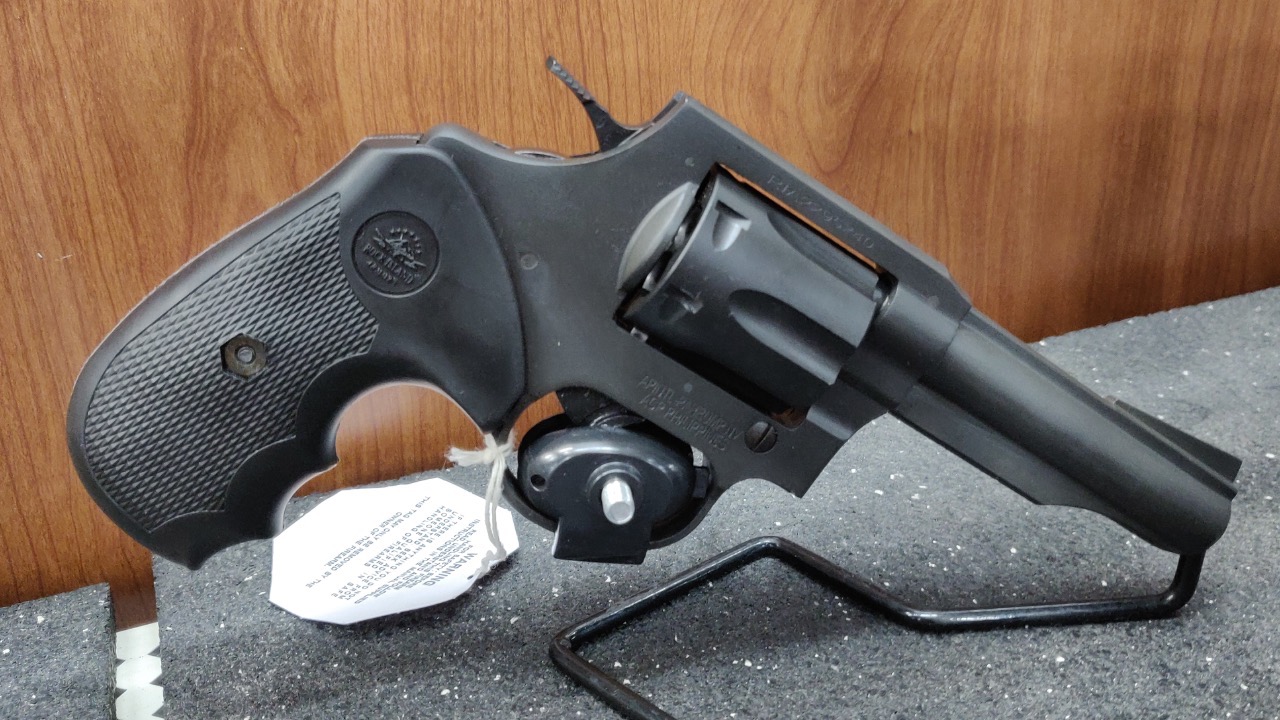
Revolvers arrived in the modern era carrying a lot of baggage, some of it deserved. A few high‑profile incidents involved cylinders that locked up, timing that went out of spec or small parts that failed, underscoring that a revolver is still a machine that can stop when something goes wrong. Detailed breakdowns of stoppages, including guns that literally stopped rotating in the middle of a drill, have made that point clear in a way that marketing slogans never did, especially when instructors document what happens when a revolver stopped during training.
At the same time, revolvers also inherited a set of myths from earlier decades. For a long stretch of the twentieth century, service revolvers often did prove more tolerant of poor ammunition and rough handling than the early generations of self‑loading pistols. That history hardened into the broad claim that revolvers simply do not malfunction. Modern shooters then encountered older, neglected guns with worn springs or poorly executed budget models and drew the opposite conclusion, deciding that wheelguns were fragile antiques that could not keep up with current demands.
Both caricatures obscured the reality that a well built, properly maintained revolver is neither indestructible nor obsolete. It is a specific tool with distinct tradeoffs, and those tradeoffs only become clear when the gun is used in realistic conditions rather than admired or dismissed from a distance.
Inside the mechanics: why a revolver runs when it runs
Mechanically, a double‑action revolver is simple to operate and complex inside. The shooter presses the trigger, the hammer rises and falls, and the cylinder indexes to bring a fresh chamber into alignment with the barrel. There is no reciprocating slide, no detachable magazine and no feed ramp to guide cartridges from one to the other. When everything is in time, that system delivers a remarkably consistent cycle.
One core advantage is that the revolver does not depend on the energy of the fired cartridge to complete that cycle. The trigger finger and mainspring do the work of rotating the cylinder and cocking the hammer. That is why many experienced shooters still describe the wheelgun as less sensitive to weak ammunition. If a cartridge fails to fire, the shooter simply presses the trigger again and the mechanism rotates to a fresh round. Advocates in online communities often frame this as the gun operating independently of the cartridge’s power, a point that appears repeatedly in Comments Section debates about revolver advantages.
Because of that mechanical independence, a revolver can digest a wide range of bullet shapes and power levels without the tuning that some semi‑automatics require. Wadcutters for target work, heavy hard‑cast loads for outdoors carry and mild practice rounds can all be fired without worrying about slide velocity or magazine springs. That flexibility is one reason some shooters keep a medium‑frame wheelgun as a generalist tool even if they carry a compact semi‑auto day to day.
Reliability myths and the reality of revolver stoppages
The belief that a revolver cannot malfunction has been tested hard in recent years. Instructors who run high‑round‑count classes have watched guns lock up when unburned powder or shaving from bullets wedges under the extractor star. Others have seen primers back out of cases and drag on the recoil shield, freezing the cylinder. Detailed case studies of revolver malfunctions catalog these problems and show that they are not theoretical.
Many of these stoppages share a common theme: they are less frequent than the feedway issues that plague some semi‑automatics, but when they occur they can be harder to fix in the moment. A tap‑rack‑bang drill can clear a semi‑auto with a bad round or a failure to feed. A revolver that has a bent ejector rod or debris lodged under the extractor may require tools and a bench, not a quick manipulation. That difference matters in a defensive context where time is limited and fine motor skills are compromised.
On the other hand, a significant share of revolver problems trace back to user error and poor maintenance rather than inherent design flaws. High primers in handloads, incorrect assembly after home gunsmithing or neglect of basic cleaning can all turn a solid gun into a liability. Trainers who urge shooters to test fire new guns with their chosen ammunition and inspect critical parts are trying to close that gap, a message echoed in guidance that urges owners to test fire every carry gun before trusting it.
Capacity, speed and the semi‑auto comparison
The most obvious comparison point between revolvers and semi‑automatic pistols is capacity. Typical defensive revolvers carry five or six rounds, while compact semi‑autos often hold double that in a flush‑fit magazine. Modern service‑size pistols can carry even more. Guides that walk new shooters through Handguns choices usually highlight this difference early, because it shapes how a user trains and plans for potential threats.
Reload speed is the second major factor. A practiced shooter with a quality speedloader can replenish a revolver quickly, but the motion still involves aligning cartridges with chambers and managing an open cylinder. Swapping a magazine in a semi‑auto is simpler to learn for many people and easier to perform under stress. That is one reason capacity and reloads remain central in arguments about which format is better for home defense or concealed carry.
Yet capacity and speed do not tell the entire story. Some comparative guides that look at Semi Auto Revolver tradeoffs point out that revolvers can be easier to stage safely in a nightstand or glove box, since they can be stored with an empty chamber under the hammer yet brought into action with a single trigger press. Others note that a snub‑nose revolver can be fired from inside a coat pocket without going out of battery, something most semi‑autos cannot do reliably.
Why some shooters still choose the wheelgun
Despite the dominance of semi‑automatics in law enforcement and military service, a steady segment of private gun owners still gravitates to revolvers. Part of that appeal is simplicity of operation. To load, the shooter opens the cylinder, inserts cartridges, closes it and is ready. There are no external safeties to manipulate and no slide to rack. For new or less mechanically inclined users, that straightforward manual of arms can be reassuring.
Comfort with the manual of arms also plays a role. Some shooters who grew up with service revolvers or who trained heavily on them early in their careers simply run them better. They can manage the longer double‑action trigger pull, stage shots when needed and clear the few issues that do arise. For them, the revolver is not a nostalgic choice but a platform in which they have deep skill.
Online discussions about whether Because revolvers remain in circulation often highlight another factor: storage and maintenance. A revolver that sits in a drawer for years without use is less likely to suffer from magazine spring fatigue or lubrication breakdown that can affect some semi‑autos. That is not an argument for neglect, but it reflects the reality that many defensive guns are rarely shot and only occasionally inspected.
Training, trigger control and the learning curve
One of the biggest surprises for shooters who dismiss revolvers is how much they can improve their fundamentals when they train with a double‑action trigger. The longer, heavier pull forces deliberate grip, sight alignment and follow‑through. Instructors often use revolvers in classes to expose flinches and anticipation because the movement of the gun during that long stroke makes errors obvious.
When a shooter spends time mastering a smooth double‑action press, they often find that their performance with semi‑autos improves as well. The discipline required to run a revolver cleanly carries over to shorter, lighter triggers. That training benefit is rarely mentioned in equipment debates, but it is one of the reasons some seasoned coaches still keep a rack of wheelguns on hand.
There is also a psychological component. For some new shooters, the visible cylinder and straightforward controls of a revolver reduce anxiety. They can see the cartridges, understand the state of the gun at a glance and feel more in control. That confidence can make early range sessions more productive and encourage better practice habits.
Weight, ergonomics and the “ugly and heavy” complaint
A common criticism of revolvers is that they are bulky, unattractive and uncomfortable to carry. In a widely read question thread, a user described them as ugly and heavy and asked why anyone would choose one over an automatic. Responses from experienced shooters, including Chris Coleman, who is described as a Former Geophysical Technician at Phillips 66, pushed back on that perception by pointing to real‑world advantages.
Weight can be a drawback on the belt, especially for all‑steel medium and large frames. At the same time, that mass tames recoil and allows faster follow‑up shots with powerful cartridges. A small, lightweight semi‑auto in a major caliber can be snappy and difficult to control, while a slightly heavier revolver in the same caliber may feel more manageable for some shooters.
Ergonomics are another area where blanket statements fall apart. Revolver grips can be changed to fit a wide range of hand sizes, from compact boot grips for concealment to larger target stocks that fill the palm. The absence of a reciprocating slide also allows a higher grip in some designs without risk of slide bite. For shooters with weaker hands or limited dexterity, the ability to load and unload without racking a slide can make the difference between independence and reliance on others.
Maintenance, inspection and the hidden complexity
From the outside, revolvers look simple. Inside, they are intricate. The lockwork that connects trigger, hammer and cylinder involves small parts and precise timing. That complexity is invisible to many users, which can lead to neglect. A semi‑auto that starts to choke often signals the problem with obvious failures to feed or eject. A revolver may slowly drift out of time or develop endshake that only appears as light primer strikes or spitting at the forcing cone.
Gunsmiths and experienced shooters encourage regular inspection of cylinder gap, timing and ejector rod straightness, along with cleaning under the extractor star and around the forcing cone. Visual guides that show revolver guts help owners understand what is happening inside the sideplate, which in turn makes them more likely to catch problems early.
Dry practice with snap caps is another maintenance‑adjacent topic that often comes up with revolvers. Many owners use dummy rounds to practice trigger control and reloads without live ammunition. Dedicated products such as snap caps are designed for this purpose and can extend the life of firing pins and other components during extensive dry fire sessions.
Modern roles: from backup gun to primary tool
In the current handgun market, revolvers occupy several distinct niches. One is the classic snub‑nose used as a deep concealment or backup gun. Lightweight five‑shot .38 Special models slip into pockets or ankle holsters where thicker semi‑autos may print or dig into the leg. The ability to fire from within a pocket without cycling issues remains a strong selling point for some users.
Another niche is the outdoors or trail gun. Medium and large‑frame revolvers chambered in powerful cartridges offer a level of penetration and reliability with heavy loads that many semi‑autos cannot match. Hunters and hikers who worry about four‑legged threats often choose these guns for their ability to handle hard‑cast bullets and stout charges without concern for slide timing or magazine wear.
There is also a small but steady group of shooters who still carry a revolver as a primary defensive handgun in urban or suburban settings. They accept the lower capacity in exchange for a manual of arms they trust, a trigger they have mastered and a platform that fits their lifestyle. Discussions around whether Revolvers are obsolete often include these voices, who argue that context and skill matter more than raw round count.
Speedloaders, moon clips and the art of keeping a revolver fed
One of the strongest arguments against revolvers has always been reload speed. Loose cartridges are slow, and in a fight seconds matter. Modern accessories have narrowed that gap. Quality speedloaders allow all chambers to be filled at once, while moon clips hold rimless cartridges together for extremely fast reloads in compatible guns.
Manufacturers and aftermarket companies have refined these tools to the point where a trained shooter can reload a revolver nearly as fast as a semi‑auto under ideal conditions. Products such as moonclips have become common in competition and among enthusiasts who want the fastest possible revolver reloads. The technique still demands more practice than a simple magazine swap, but it shows that capacity and speed are not fixed weaknesses.
Even with these advances, most instructors still encourage revolver users to think carefully about realistic scenarios. For many civilian defensive uses, the number of rounds in the gun may matter less than shot placement, awareness and avoidance. That does not erase the advantage of a larger magazine, but it places the capacity debate in a broader context.
When a working revolver changes a skeptic’s mind
The most telling stories in the revolver debate often involve shooters who disliked them in theory and then found themselves impressed in practice. Sometimes the shift happens in a structured environment, such as a defensive handgun course where a student borrows a well‑tuned medium‑frame revolver after struggling with a subcompact semi‑auto. The smoother recoil impulse, clear controls and reliable ignition can quickly build confidence.

Leo’s been tracking game and tuning gear since he could stand upright. He’s sharp, driven, and knows how to keep things running when conditions turn.