Six surprising facts about American badgers
American badgers are often reduced to a cartoon stereotype of a grumpy digger, but the real animal is far stranger and more impressive than that flat image suggests. Look closely at their bodies, their underground engineering and even their hunting partnerships, and a far more complex portrait emerges. I want to walk through six of the most surprising realities behind this tough little carnivore, from its unusual build to its unexpected alliances.
These stocky predators shape prairie ecosystems, carve elaborate tunnel systems and even team up with other species in ways that challenge how we think about wildlife behavior. Each of the following sections unpacks one of those lesser known truths, using field descriptions, biological data and a few vivid stories to show why the American badger deserves more attention than a passing roadside glimpse.
1. A compact body that is stranger than it looks
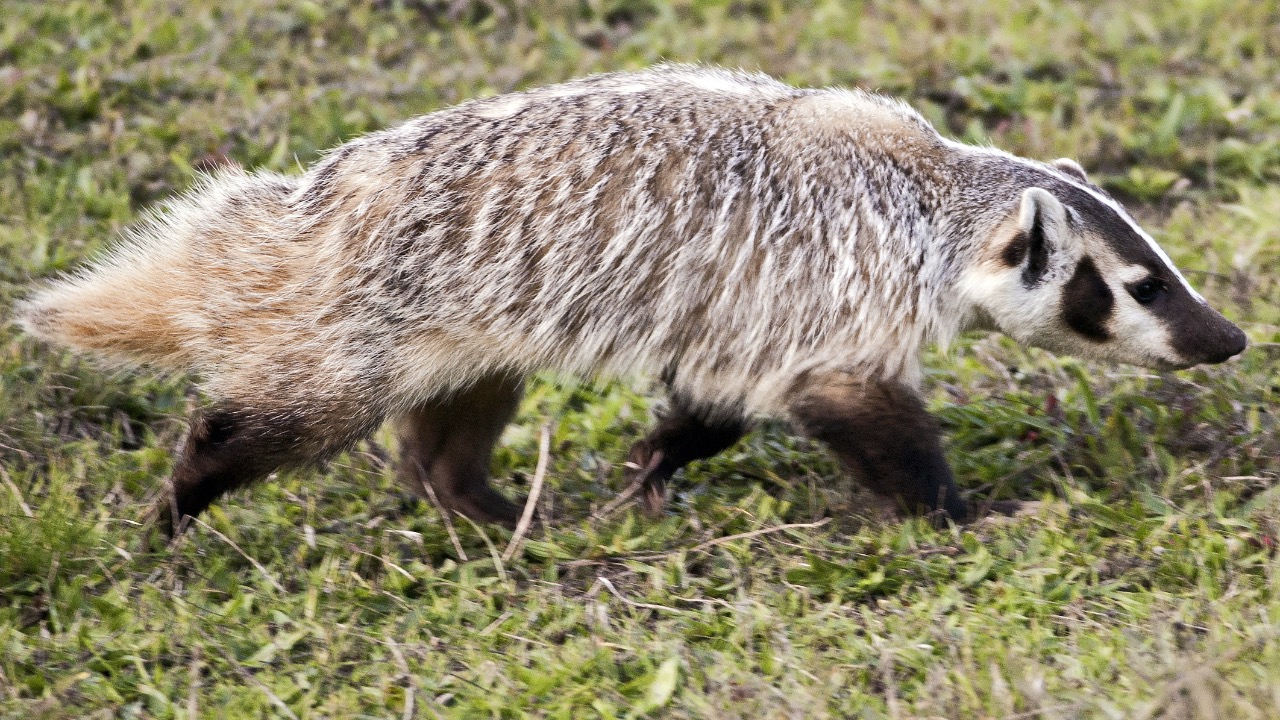
At first glance, the American badger looks like a low, shaggy mound of fur with a face painted in bold stripes, but its proportions are more unusual than most people realize. Formal accounts describe a body that is broad and flattened, with a head that tapers to a point and a neck so thick it almost erases the line between skull and shoulders. That profile is not just cosmetic. It lets the animal press close to the ground, slip into narrow openings and brace its whole torso against soil while it digs. The fur, usually a mix of brown, gray and buff, is dense enough to shed dirt and debris as the animal backs out of a tunnel.
Measurements underline how oddly built these predators are. In a detailed Physical Description, Badgers are reported to measure “520 to 875 mm from head to tail, with the tail making up only 100 to 155 mm of this length.” That means the tail is a tiny fraction of the overall body, leaving a compact, muscular core that is almost all digging machine. Municipal wildlife notes echo that impression, describing in their own Creature Features a brown fur covered mammal with short legs, a low profile and a pointed head that seems built to wedge into the earth.
2. Built like a living excavator
That odd body supports one of the most specialized digging toolkits in North American mammals. If I picture a badger at work, I see the front legs first, thick and bowed with outsized claws that act like natural shovels. Wildlife educators note that if you take a close look at a badger, many of the physical features you notice, from those claws to the broad shoulders, help it excel at digging, a point that is spelled out in detail in outreach materials on how They move soil. The front feet are so enlarged that they almost resemble miniature spades, while the hind feet, slightly smaller, help push loosened dirt backward.
Descriptions from state agencies reinforce that image of a compact excavator. Under formal Identification, the animal is labeled a medium sized, heavily furred mammal with a “Thick necked, broad shouldered” frame and short, powerful legs. That combination lets the badger dig so quickly that it can vanish into the ground in the time it takes a person to cross a small field. It also means that when the animal is cornered, it can spin and claw at the soil to throw up a defensive mound, using its own excavation skills as a shield.
3. A taste for life underground
American badgers are not just occasional burrowers. They are what biologists call fossorial carnivores, predators that live primarily below the surface and hunt animals that share that underground world. Outreach from Montana wildlife educators spells this out clearly, noting that They, identified explicitly as “They ( American Badger ) are fossorial carnivores which is a fancy way of saying that they ( American Badger ) are meat eaters that primarily live underground,” a phrase that captures both the diet and the lifestyle in one line of They. That underground focus shapes everything from their hunting strategy to their choice of habitat.
Because they spend so much time below ground, badgers are picky about soil. Species profiles explain that the American badger prefers prairie regions with sandy loam soils where it can dig more easily for prey. That preference shows up again in more detailed habitat notes that describe how American badgers select open grasslands, shrub grasslands and deserts with few trees and good soil for digging, a pattern that is repeated in a separate American badger profile. The result is an animal that is as tied to the texture of the ground as a fish is to the chemistry of its water.
4. A range that stretches across a continent
For a species that spends so much time hidden, the American badger covers an impressive swath of the map. Children’s reference material spells out that The American badger, formally named “The American badger (Taxidea taxus) is a type of badger found in North America,” and that simple phrase, anchored to American and Taxidea, captures the core of its distribution. Additional outreach from Montana notes that the animals range from southern Canada to central Mexico, with strongholds in states like Montana where open grasslands and shrublands still dominate large landscapes.
State level wildlife summaries add more texture to that map. Under the heading of habitat and range, one agency explains that badgers are most often found where there are few trees and good soil for digging, and that they spend much of the day tucked away in their underground burrows, a pattern laid out in the Habitat and range section of its profile. That combination of broad geographic reach and very specific local requirements helps explain why the species can be common in one county and almost absent in the next, depending on how much intact prairie or desert remains.
5. Underground homes that reshape the landscape
Badger burrows are not simple holes. They are multi room structures that can extend several meters, with side chambers for sleeping, food storage and raising young. Municipal notes on the species emphasize that “Their homes are burrows,” a concise phrase embedded in the same Creature Features description that covers their appearance. Educational materials on fast digging badgers add that individuals may maintain several burrows within their home range and move between them, using different chambers from day to day as they hunt and rest, a pattern described in outreach on how They live.
Those burrows do more than shelter a single animal. Once abandoned, they become ready made refuges for other species, from ground squirrels to foxes, and the mounds of soil at their entrances can change how water flows across a prairie. Children’s references aimed at younger readers note that the American badger is a tough animal that does not give up easily and that in some regions it is considered a California species of special concern, a status mentioned in the same The American badger entry. That combination of engineering impact and conservation attention makes their underground homes a focal point for both ecologists and land managers.
6. A fierce predator with a specialized menu
Despite their somewhat comical appearance, American badgers are serious carnivores with a diet built around burrowing prey. Species accounts describe how they target ground squirrels, prairie dogs, pocket gophers and other rodents that live in tunnels, using their own digging skills to break into those burrow systems. One detailed Taxideataxus profile notes that these predators are well adapted to excavating and that their body proportions, from the short tail to the powerful forelimbs, support that hunting style. In effect, the badger has evolved to chase its food into the ground rather than across open ground.
Public facing wildlife campaigns lean into that image, sometimes branding the American Badger as “The Fierce Digger of the Prairies Compact, American badger is one” of the most specialized subterranean hunters in its ecosystem, language that appears in a social media post highlighting the American Badger. That fierceness is not just about temperament. It reflects a life spent forcing its way through soil, confronting prey in tight spaces and defending burrows against intruders, all of which demand a level of determination that field observers consistently remark on.
7. A surprising partnership with coyotes
One of the most counterintuitive facts about American badgers is that they sometimes hunt in tandem with coyotes. Outreach from Montana describes how the American badger will work with Coyote to hunt for ground squirrels or prairie dogs, calling this relationship mutualism because both animals benefit from the interaction. In that description, the badger digs into the ground squirrels’ or prairie dogs’ burrows while the coyote waits above ground to catch any animals that bolt between holes, a cooperative pattern laid out in the same American Badger outreach.
Children’s storytelling materials echo that dynamic in more narrative form. In one educational story titled Dig Badger Dig, the character Badger ambles across a grassy field, pausing to sniff the air and detecting Coyote’s scent, a moment that sets up their shared interest in the same prey and appears in the Dig Badger Dig booklet. The fact that a solitary, underground predator will tolerate, and even benefit from, the presence of a fast moving canid on the surface challenges the usual assumption that carnivores always compete. Instead, it shows how different hunting styles can mesh into a joint strategy when the prey is quick and the landscape is open.
8. Regional variations written in white stripes
Not all American badgers look exactly alike, and one of the most intriguing differences is literally written on their backs. Montana educators point out that the American badgers in the north, such as those in Montana, look slightly different from the ones in the south, in Mexico and Texas. In the north, the white stripe in the middle of their body goes from the snout to the neck or shoulders, while in the south, the line usually goes all the way to the rump, a distinction spelled out in the same They focused post. That means a single glance at the length of the stripe can hint at where an individual comes from.
More formal species accounts support the idea that northern and southern populations differ in subtle ways. Detailed Taxidea taxus entries note that northern animals tend to be larger and heavier than those from southern populations, a pattern that fits a broader ecological rule in which mammals in colder climates often grow bigger bodies. Combined with the stripe differences, those size shifts hint at how flexible the species has been in adapting to the varied climates and open landscapes that stretch from Canada to central Mexico.
9. A tough survivor that still needs space
For all their toughness, American badgers are not invulnerable. Children’s references emphasize that the American badger is a tough animal and does not give up easily, but they also note that in some places it is treated as a California species of special concern, a status that appears in the same American badger entry. That label reflects pressures from habitat loss, road mortality and conflicts with people who see burrowing predators as threats to crops or livestock. The animal’s reliance on open, diggable ground means that when prairies are plowed or paved, its options shrink quickly.
At the same time, conservation messaging increasingly frames the species as a symbol of healthy grasslands. Species profiles describe how the American badger prefers intact prairie regions with sandy loam soils, while state agencies stress in their General description that these animals spend much of their time tucked away in burrows, out of sight but still shaping the ecosystem. When I put all of these strands together, from the precise “520 to 875 mm” body measurements to the storybook scenes of Badger and She sniffing for Coyote in Badger stories, the American badger emerges as a surprisingly intricate neighbor, one whose survival depends on keeping enough wild, diggable ground on the map.

Leo’s been tracking game and tuning gear since he could stand upright. He’s sharp, driven, and knows how to keep things running when conditions turn.