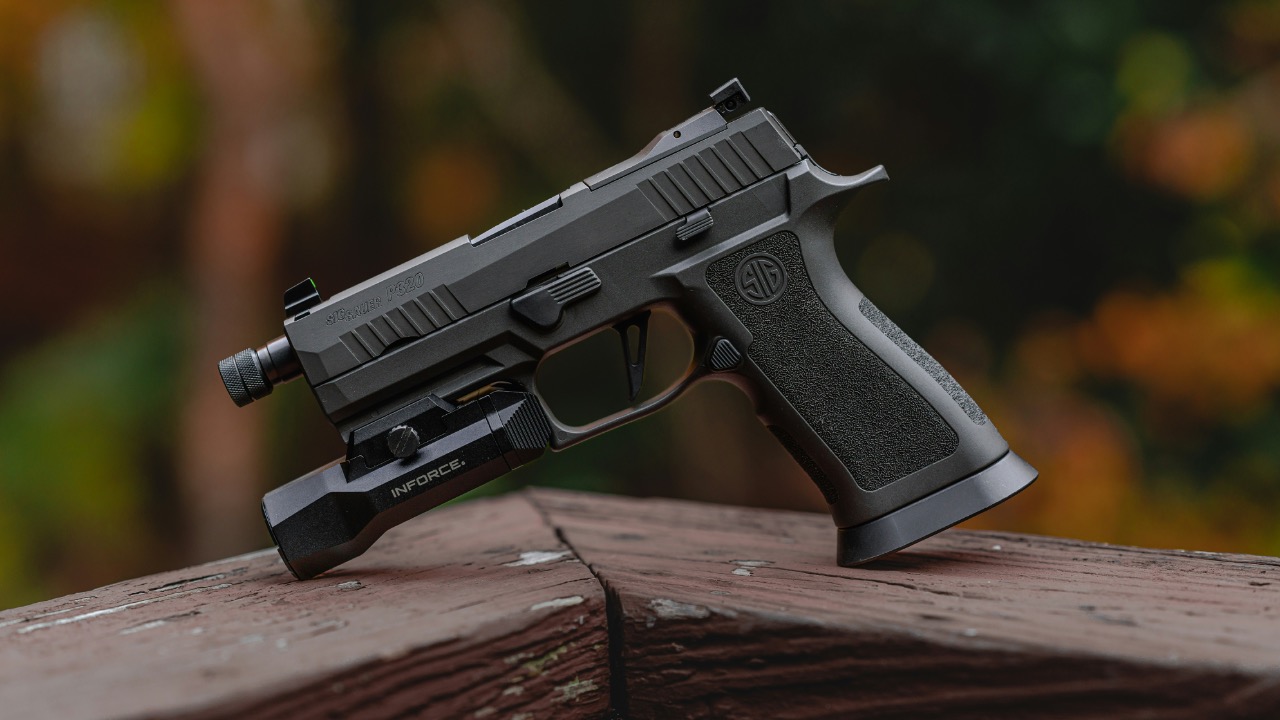
The difference between handgun reliability and internet reputation
Handgun buyers today are swimming in opinions, rankings, and “must have” lists, and most of them live online. Some of those takes are useful, a lot of them are noise, and very few line up cleanly with how reliable a pistol actually runs over thousands of rounds. The gap between what the internet says about a handgun and how that gun behaves when it is dirty, hot, and fed mixed ammo is wide enough to matter if you ever need it for real.
I have carried, shot, and watched others break guns on ranges long enough to see patterns that do not match the loudest voices on social media. Internet reputation is built on charisma, editing, and small sample sizes, while real reliability comes from round counts, standards, and boring consistency. Sorting one from the other is the difference between owning a conversation piece and owning a tool you can trust.
What “reliability” actually means when your life is on the line

When shooters talk about reliability, they often mean “the gun worked fine the last time I shot it.” That is not enough. In a defensive context, reliability is about how consistently a handgun performs the way it is supposed to function over time, across different conditions, and with the ammunition you actually carry. One training resource defines “Reliability” as the degree to which a system does what it is supposed to do without failure, and that is the lens I use when I judge a pistol I might stake my life on.
That definition sounds dry, but it has teeth. It means a gun that runs flawlessly for one magazine and then chokes every other trip to the range is not reliable, no matter how good it feels in the hand. It also means that a pistol that has a single stoppage in 2,000 rounds might still be more trustworthy than one that has “only” a couple of hiccups in the first 200. Some instructors borrow from military weapon standards, pointing out that, Yeah, military gear is not always perfect, but those weapon systems are tested on large sample sizes and hard use. That kind of scale is what separates a truly dependable handgun from one that is just having a good day.
Why internet gun reviews are such a shaky foundation
Most people start their search for a “reliable” pistol on YouTube or forums, and that is where the trouble begins. A slick video with a few hundred rounds on camera can make any handgun look bombproof. In one widely shared clip, Steve Fisher from Sentinel Concepts lays out why you should not blindly trust gun reviews on the internet, pointing out that short tests, free guns, and friendly editing hide the kind of long term issues that only show up after real use. When a creator is trying to keep sponsors happy and crank out content, there is not much incentive to drag a pistol through a multi thousand round schedule and then admit it started to choke.
On top of that, the format itself encourages exaggeration. A video titled “Watch This Before You Choose! The 7 Most RELIABLE Handguns 2023!” is built to grab clicks, not to walk through failure logs and maintenance schedules. One such clip, labeled Watch This Before and promising the “Most RELIABLE Handguns,” is framed as a quick video review, not a controlled test. That kind of content can be entertaining and even give you a starting list, but it is not a substitute for structured reliability data or your own time on the range.
Ranking videos and the illusion of scientific certainty
Nothing travels faster online than a ranked list. Viewers love seeing their favorite brand crowned and their buddy’s choice dragged, and creators know it. A video that claims “I RANKED All Pistol Brands from WORST to Best (Shocking)” sounds authoritative, but it is usually one person’s experience with a handful of samples. One such clip, labeled with RANKED, “All Pistol Brands,” “WORST,” “Best,” and “Shocking,” promises a verdict on an entire industry without showing the kind of round counts, environmental conditions, or maintenance logs that would make those rankings meaningful.
That does not mean rankings are useless, but it does mean you have to treat them as opinion, not gospel. Even written lists that sort companies into S Tier and A Tier categories are still built on limited experience. One popular breakdown puts Beretta in S Tier as “the best of the best,” but then immediately notes that the author would not recommend a Beretta Pico over a Tier Bersa Thunder. That kind of internal contradiction is a reminder that even careful rankings are still filtered through personal taste, limited samples, and the quirks of individual models.
How serious trainers and standards bodies think about reliability
When I look for a handgun I can carry every day, I pay more attention to how serious trainers and standards driven communities define reliability than to any viral clip. Instructors who live on the range see guns fail in volume, and they tend to think in terms of sample sizes and failure rates, not brand loyalty. Some of them point out that, Inherent Reliabilit is not about one pistol that runs well, it is about how a design performs across many copies in many hands. That is why they lean on standards borrowed from military and law enforcement testing, where guns are run hot, dirty, and with varied ammunition until weaknesses show up.
Communities built around concealed carry echo that mindset. One detailed breakdown of Reliability for carry pistols walks through multiple factors, from design and manufacturing to ammunition choice and shooter grip. Instead of chasing a magic brand, it treats reliability as a system problem: the gun, the ammo, the magazines, and the person behind the trigger all matter. That is a far cry from the internet habit of declaring one model “flawless” based on a single range trip.
Round counts, break in, and what actually proves a gun
One of the biggest disconnects between online reputation and real world performance is round count. A pistol that runs 100 rounds on video without a hiccup is not “proven,” it is barely warmed up. Experienced carriers talk in terms of hundreds of rounds of mixed ammunition before they start to trust a handgun. In one community discussion, a shooter talking about Smith & Wesson recommended 250 to 300 rounds for break in before judging reliability. That is not a magic number, but it is a more realistic starting point than the “I shot a box of ammo and it was perfect” reviews that dominate social feeds.
Round count also exposes issues that never show up in short tests. Magazine springs that start to weaken, extractors that lose tension, and small parts that walk out of spec often do not reveal themselves until you are several hundred rounds in. That is why I treat any gun that has not gone through a structured test with my carry ammo as unproven, no matter how many five star reviews it has online. The internet can tell you what other people saw in the first afternoon; only your own logbook can tell you how your specific pistol behaves over time.
Case studies: Glock, SIG, and the weight of real track records
Some handguns have reputations that are actually backed by long service histories, and it is worth separating those from pure internet legend. The Glock family is a good example. One detailed look at The Glock notes that it has a track record for durability that exceeds many of its peers and lookalikes, and that many shooters benefit from replacing small parts on a schedule to get even better performance. That is the kind of reputation that comes from decades of police and civilian use, not from a single viral video.
SIG Sauer’s P226 MK25 is another case where real world use lines up with online praise. The company describes the Once reserved P226 MK25 as the official sidearm of the U.S. Navy SEALs, and that kind of adoption does not happen without serious reliability testing. When an elite unit carries a pistol, it has been vetted through high round counts, harsh environments, and strict maintenance protocols. That does not mean every commercial P226 MK25 is perfect, but it does mean the design has been proven in ways that most internet famous handguns have not.
Forum wisdom, Reddit debates, and what the crowd actually agrees on
If you spend time on gun forums and Reddit, you will see the same arguments repeat: which brand is “most reliable,” whether polymer pistols can be trusted, and how much 9 mm recoil matters. In one survival focused thread, a user posting under the name EauRougeFlatOut argued that, With the advancement of 9mm these days plastic guns and recoil management are no longer mutually exclusive. That kind of comment reflects a broader shift in the community toward accepting modern polymer framed pistols as serious tools, not disposable toys, and it lines up with what I have seen on the range.
Another discussion in a concealed carry forum tackled what “modern reliability” really means. One commenter in that Oct thread pointed out that if one gun simply feels better in your hand than the others, you may have found the right choice for you. Buried in the back and forth is a quiet consensus: most current production pistols from reputable makers will run well enough for defensive use if you test them properly, and ergonomics, shootability, and support matter as much as brand name. That is a far more nuanced view than the “this brand never fails” claims that rack up likes.
When the internet is right, and when it is badly wrong
To be fair, the online crowd is not always off base. When a design has a serious flaw, word spreads quickly, and you will see patterns of similar complaints across different users and platforms. In one California focused discussion, a commenter under the name Lord_Vorkosigan argued that 90% of guns made today are reliable, while another user, therevolutionaryJB, reported 4k on a CZ P01 and still running strong. Those kinds of comments show up across brands and models, and they support the idea that the baseline for modern factory pistols is pretty high.
Where the internet goes wrong is when it turns that baseline into mythology. If 90% of current guns are reliable, then the question is not “which brand is magic,” it is “which specific gun, in my hands, with my ammo, has proven itself.” That is a much less exciting thumbnail, but it is the only question that matters. When you see a thread or video that declares one brand flawless and another junk without talking about round counts, maintenance, or sample size, you are looking at reputation, not data.
Building your own data instead of borrowing someone else’s
The only way I know to close the gap between internet chatter and real reliability is to build your own track record. That starts with picking a handgun from a maker with a solid history, whether that is an S Tier name like Beretta or a proven workhorse like Glock or SIG, and then running it through a structured test. I like to see several hundred rounds of mixed ball and carry ammo, shot over multiple sessions, with careful notes on any stoppages. If the gun makes it through that without drama, I start to trust it. If it does not, I fix the problem or move on.
Along the way, I pay attention to the kind of details that never show up in flashy reviews. Do the magazines drop free when they are dirty. Does the slide lock back consistently on empty. Can I run the gun well one handed. Those are the questions that matter when things go sideways. Internet reputation can help you narrow the field and avoid known lemons, and voices like Here, Aug, or Dec can spark useful questions, but they cannot do the work for you. In the end, the only reputation that counts is the one your handgun earns in your holster and on your range, one round at a time.

Asher was raised in the woods and on the water, and it shows. He’s logged more hours behind a rifle and under a heavy pack than most men twice his age.