The M79 grenade launcher began in Vietnam and still appears in modern roles
The M79 grenade launcher arrived in the Vietnam War as a simple answer to a complex problem: how to give small infantry units portable explosive firepower without dragging along heavy mortars. Decades later, that single-shot “Thumper” still turns up in modern arsenals and even on today’s battlefields, valued for accuracy, versatility, and a kind of rugged reliability that newer systems have not fully replaced.
I see the M79’s story as a through line from early 1960s weapons labs to current special operations teams and police crowd-control units, a case study in how a straightforward mechanical design can survive waves of technological change and still carve out niche roles in a very different era of warfare.
From concept to “Thumper” in Vietnam
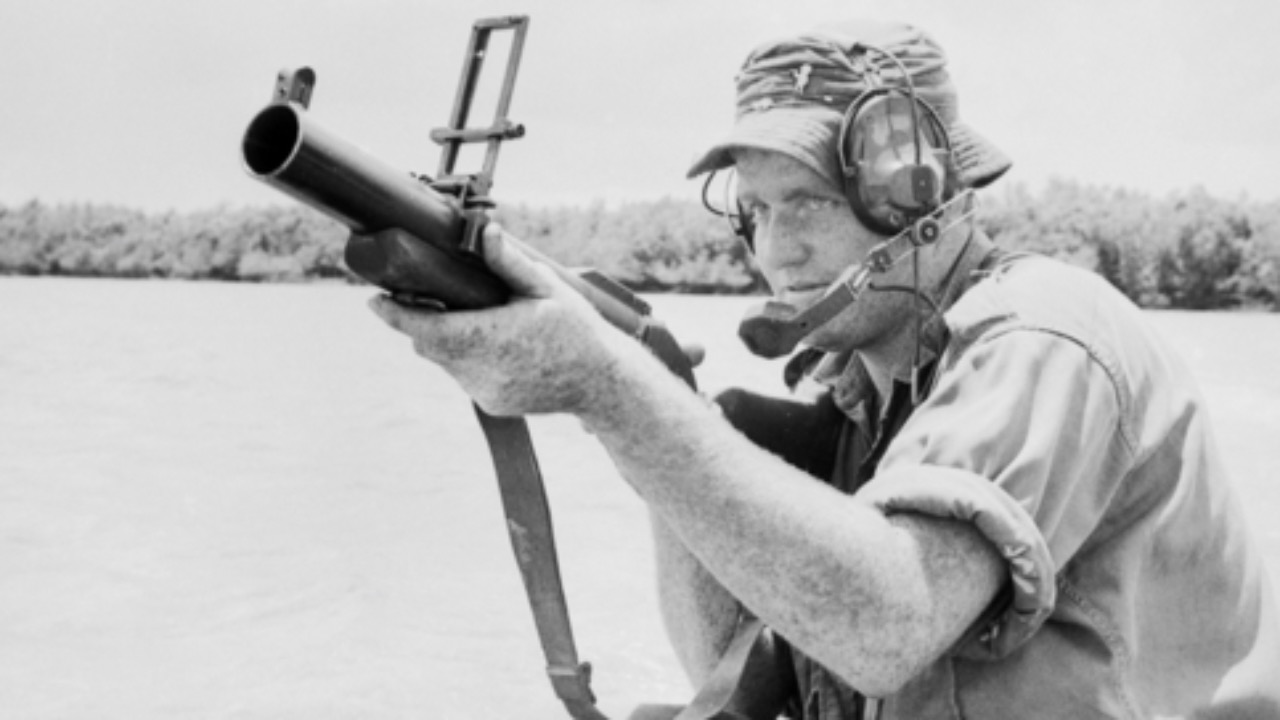
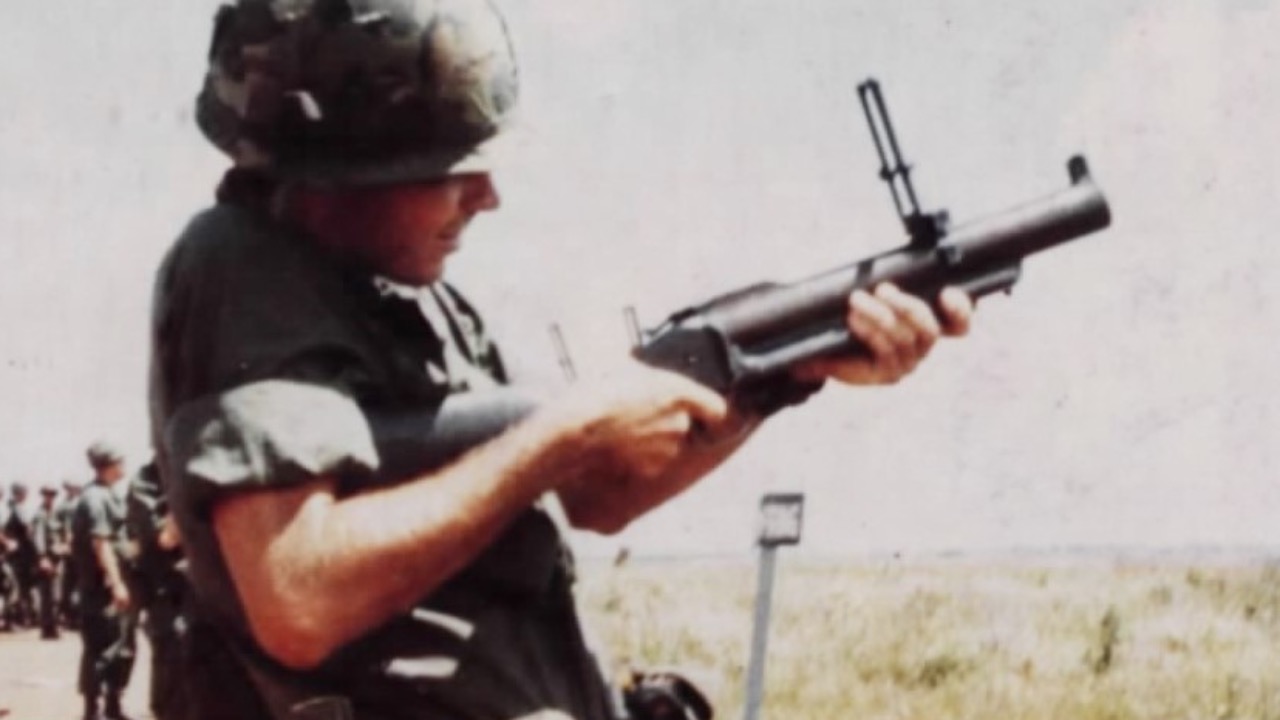
The M79 began as an attempt to bridge the gap between hand grenades and mortars, giving a single soldier the ability to lob explosive rounds farther than a throw but with more precision than indirect fire. With the addition of a redesigned sight, it was adopted as the M79 in December 1960, and it first saw combat in Vietnam and quickly earned a reputation for reliability and punch among U.S. troops who needed portable firepower in dense jungle terrain, a history captured in accounts that note it first served in Vietnam and rapidly became part of the infantry toolkit. The weapon’s break-action, single-shot layout meant it was easy to train on and maintain, even for conscripts or short-tour soldiers, which mattered in a conflict defined by small-unit patrols and ambushes.
On the range and in the field, instructors like Sergeant First Class Bill, featured in a detailed walk-through of the launcher’s operation, emphasize how the simple “Thumper” nickname came from the distinctive sound of its 40 mm rounds leaving the barrel and arcing toward a target, a reminder that this was a shoulder-fired system built for intuitive use rather than gadgetry, as seen in demonstrations with Sergeant First Class explaining its heavy-weapons role. That combination of straightforward mechanics and immediate feedback helped embed the M79 in the muscle memory of a generation of soldiers, setting the stage for its long afterlife even as newer designs emerged.
Design simplicity and the 40 mm advantage
At its core, the M79 grenade launcher is a single-shot, shoulder-fired, break-action grenade launcher that fires a 40 mm round, a configuration that strips the system down to the essentials and minimizes points of failure while still delivering serious explosive effect at squad level, as detailed in technical descriptions of the 40 mm platform. The weapon’s hinged barrel allows a grenadier to crack it open, drop in a round, close it, and fire in a sequence that is easy to learn and hard to forget, which is one reason it has remained in service in various forms for so long.
The 40 mm grenade itself has been a pivotal component of the United States military’s arsenal since its introduction in the 1960s, originally paired with the M79 to give infantry a way to combine explosive firepower with impressive accuracy at intermediate ranges, a role highlighted in histories of the United States adoption of the caliber. Later analyses of the launcher describe it as a single-shot, shoulder-fired, break-action system that fires a 40 mm round and remains in use in many units worldwide in niche roles, a testament to how that basic design still meets specific operational needs despite the arrival of more complex multi-shot and underbarrel alternatives, as summarized in entries on the Grenade Launcher and its enduring service.
Why troops loved it in the field
Veterans often describe the M79 as more accurate, powerful, and longer-ranged than the rifle grenades it replaced, which helps explain why U.S. and allied troops in Southeast Asia embraced it and gave it nicknames like “Thumper” or “Bloop Tube” that reflected both its sound and its central place in patrol life, a sentiment echoed in accounts that call it More accurate and popular among those who carried it. The dedicated grenadier role meant one soldier focused on delivering explosive rounds while others covered with rifles, a division of labor that could break ambushes or clear tree lines with a single well-placed shot.
On the technical side, the M79 can fire a wide variety of 40 mm rounds including explosive, anti-personnel, smoke, buckshot, flechette, and less-lethal projectiles, giving a small unit commander a flexible tool for both combat and signaling without changing weapons, as detailed in references to the M79 grenade launcher ammunition family. That versatility meant the same launcher could mark targets with smoke, deliver high-explosive rounds against enemy positions, or fire buckshot-style loads in close terrain, all while keeping the manual of arms consistent for the grenadier.
Drawbacks and the shift to underbarrel launchers
For all its strengths, the M79 had a major drawback: the grenadier could not fire a rifle at the same time, which left them at a disadvantage in close firefights and forced squads to work around that limitation. Due to its drawbacks, the M79 was eventually replaced in frontline U.S. service by both the XM148 and the M203, which were underbarrel grenade launchers mounted directly beneath standard rifles, allowing a single soldier to switch between bullets and grenades without changing weapons, a transition described in analyses that note how Due to those issues, the M79 gave way to newer systems. In 1969, the M79 grenade launcher was largely replaced by the M203 underbarrel launcher in U.S. service, a shift that reflected the military’s preference for multi-role individual weapons over dedicated single-function arms, as noted in accounts that point out that in 1969 the M79 was largely replaced by the M203.
Designers did not stop with the original single-shot concept either, and development histories describe how The Springfield Armory experimented with multi-shot launchers, including a three-shot design, as part of efforts to increase the volume of fire and reduce reload time for grenadiers, a process detailed in research that credits The Springfield Armory with key design changes. Even so, the basic break-action M79 persisted alongside these experiments, especially in units and countries that valued its simplicity over the added complexity of multi-shot or integrated systems.
From Vietnam relic to global workhorse
Despite being phased out of standard U.S. infantry roles, the M79 never truly disappeared, instead spreading across the globe through military aid, surplus sales, and local production. The M-79 can still be found in the inventory of many armed forces in Africa, Asia, Europe, Latin America, the Mideast, and the Car, where it serves in roles ranging from frontline combat to training and internal security, a geographic spread documented in reports that note the 79 is still present across those regions. At the present time the M79 is no longer used by the U.S. Army as a standard issue weapon, although it can still be encountered in the hands of soldiers from other countries including Saudi Arabia, Turkey, and others, according to technical overviews that note that At the present time it remains in foreign inventories.
Popular culture has helped keep the M79 in the public eye as well, with film and television frequently depicting its distinctive profile and arcing grenades in Vietnam-era stories and modern action scenes. Commentators who track its screen appearances point out that the M79 grenade launcher has been in service since 1961 and has been used around the world in almost 50 countries, a reminder that what might look like a period prop is in fact a weapon still carried by real forces, as noted in discussions that highlight its presence in nearly 50 national arsenals. That blend of real-world longevity and cinematic visibility reinforces its status as both a historical artifact and a living tool of war.
Special operations and niche combat roles today
Even as underbarrel launchers became standard, some elite units rediscovered the value of a dedicated 40 mm platform. Some US Navy SEALs and Army Special Forces in Iraq were seen using the M79 due to its greater accuracy and range compared to the M203, especially when engaging targets at the edge of grenade range or when precise placement mattered more than rate of fire, according to accounts that describe how Some US Navy and Army Special Forces operators brought the launcher back into service. For these teams, the tradeoff of carrying a separate launcher was worth it if it meant more consistent trajectories and better control over where each round landed.
Special operations veterans also emphasize that the 40 mm grenade comes in many variants, including high-explosive, high-explosive dual-purpose, buckshot, smoke, and illumination, which gives a standalone launcher like the M79 a kind of modularity that is hard to replicate with other weapons, a point underscored in analyses that describe how the 40 m grenade family underpins its special and irreplaceable capabilities. In practice, that means a small team can carry a mix of rounds tailored to mission needs, from bunker-busting to signaling, and rely on the M79’s simple action to deliver them without worrying about complex feed systems or electronics.
Police, non-lethal use, and homeland security
Outside pure combat, the M79 has found a second life in law enforcement and crowd-control roles, where its ability to fire less-than-lethal munitions is as important as its original explosive purpose. The grenade launcher has the capability of firing less-than-lethal rounds for crowd control and riot suppression and has been used by police and military units for those missions, a role described in accounts that note it is Used in both lethal and non-lethal configurations. Detailed breakdowns of its employment in this space explain that the M79 has been used extensively for crowd control where it is desirable to have a weapon dedicated solely to firing non-lethal rounds, including specific munitions like the M1029 Crowd Dispersal rounds, which are designed to incapacitate or scatter groups without the intent to kill, as outlined in references that highlight its Non-lethal applications.
Internationally, the M79 remains in widespread use with military and paramilitary forces, including agencies under the US Department of Homeland Security, where it is paired with 40 mm low-velocity grenades in roles that range from perimeter defense to riot control, according to surveys that note the M79 remains in widespread service and is linked to the Grenade launcher dawn of modern 40 mm systems. Technical encyclopedias reinforce that the M79 can fire a wide variety of 40 mm rounds, including less-lethal options, and that it continues to serve in many units worldwide in niche roles where a dedicated launcher is preferred over integrated systems, as summarized in entries that describe how the Grenade Launcher remains part of specialized inventories.

Leo’s been tracking game and tuning gear since he could stand upright. He’s sharp, driven, and knows how to keep things running when conditions turn.