U.S. plans to restart a Cold War–era nuclear facility idle for three decades
After sitting idle for more than 30 years, a massive Cold War era nuclear complex in Washington State is being pulled back into service as part of a broader push to rebuild the United States nuclear fuel and research base. The plan centers on turning an unfinished plutonium facility into a modern workhorse for fuel testing, uranium recovery, and advanced reactor support. It is a technical project, but it is also a political and cultural one, reopening old debates about risk, waste, and what kind of power system the country wants.
I see this restart as a bellwether for where U.S. energy policy is headed. The same government that spent decades cleaning up the nuclear legacy of the twentieth century is now trying to squeeze new value out of those very sites, tying them to grid reliability, medical isotopes, and national security. Whether that tradeoff pencils out will depend on how this project is managed on the ground and how honestly its benefits and hazards are explained to the public.
The Cold War facility getting a second life
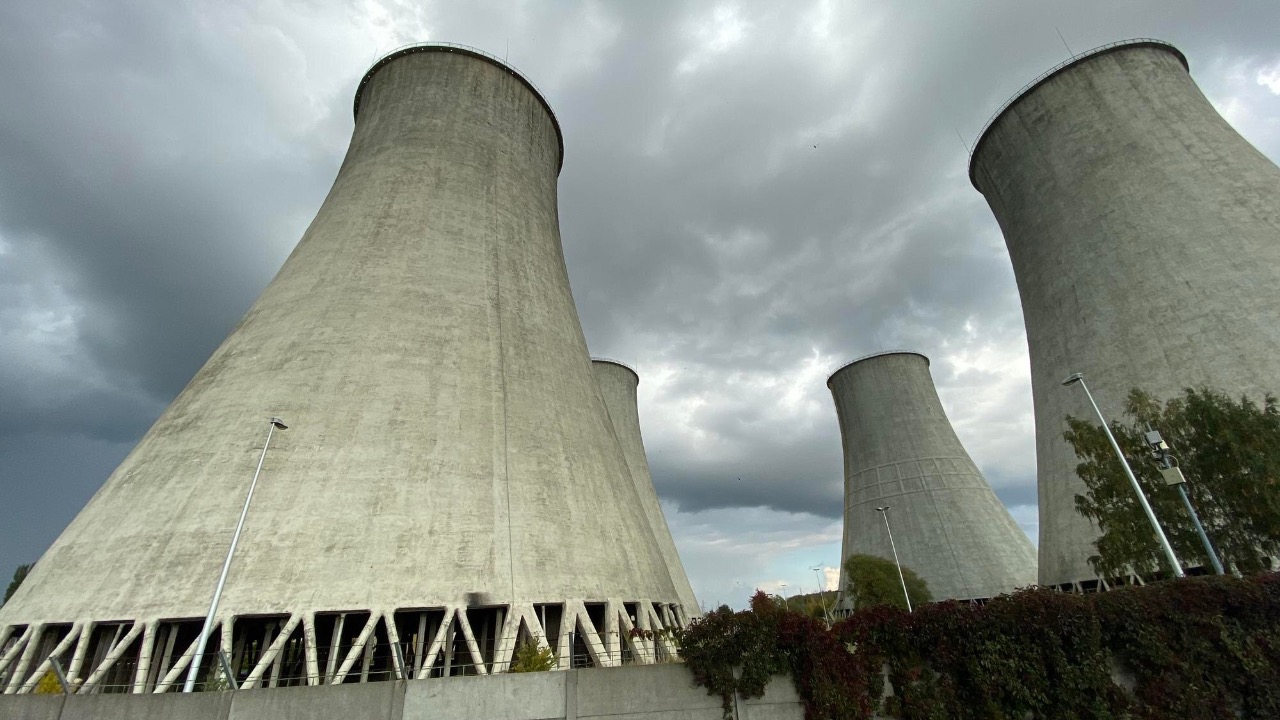
The centerpiece of the new push is the Fuels and Materials Examination Facility, or FMEF, a 190,000-square-foot building at the Hanford site that was originally designed to handle plutonium work during the Cold War. Construction largely wrapped up decades ago, but the plant never went into full operation, leaving a hulking shell of heavy concrete, shielded hot cells, and thick-walled vaults sitting unused on the Columbia River plateau. Now the Department of Energy wants to turn that dormant asset into a hub for examining advanced fuels and components after they have been irradiated in test reactors, a job that demands exactly the kind of remote handling and containment the FMEF was built to provide, according to technical descriptions of the 190,000-square-foot facility.
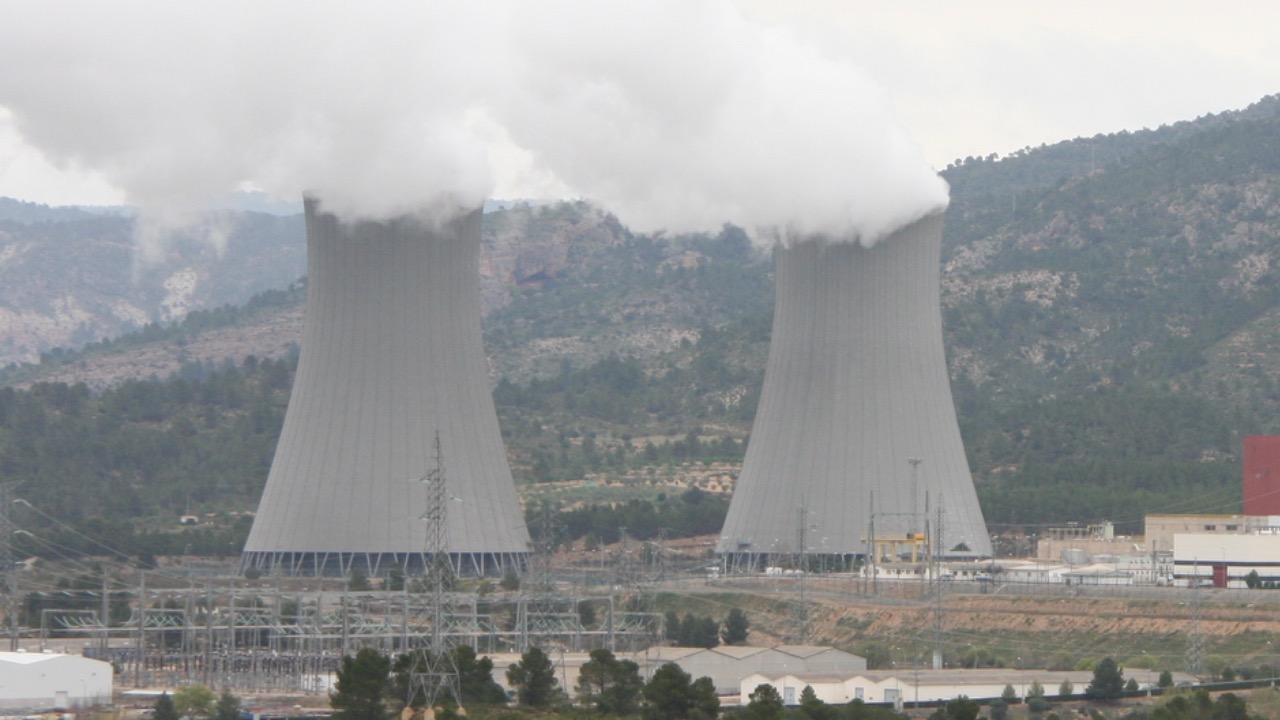
Officials are pitching the restart as a way to support a new generation of reactors that promise steady, around-the-clock baseload power with lower emissions than coal or gas. The FMEF’s hot cells could be used to dissect fuel rods, metal alloys, and structural materials after years of neutron bombardment, giving engineers the data they need to qualify new designs for commercial use. That work would plug directly into a broader effort to treat nuclear power as a stable baseload option in a grid that is adding more intermittent wind and solar, a framing that has been echoed in public descriptions of the Cold War era complex and its planned second life After decades of disuse.
Why Hanford’s legacy still matters
To understand why this move is controversial, you have to remember what Hanford represents. The site was one of the core pillars of the U.S. weapons complex, producing plutonium for the first atomic bombs and then for the Cold War stockpile, leaving behind a tangle of aging reactors, waste tanks, and contaminated soil. The FMEF sits inside that larger reservation, near other heavily engineered structures that were built to handle irradiated fuel and high level waste, including facilities cataloged in public records of the Hanford area.
For years, the federal government’s main job at Hanford has been cleanup, not expansion, and that work is far from finished. Turning part of the complex into a new research and fuel handling center means threading a needle between ongoing environmental management and fresh industrial activity. It also means working within a landscape that includes other specialized buildings, such as the nearby waste treatment and examination structures that show up in detailed maps of the reservation. That history is why local tribes, river users, and downwind communities will be watching closely to see whether the restart tightens safety standards or stretches them.
From weapons work to energy independence
What is different now is the way Washington is talking about nuclear infrastructure. Instead of treating legacy sites purely as liabilities, the Department of Energy is trying to fold them into a strategy for energy independence and fuel security. Earlier this year, the Office of Environmental Management announced that it was restarting uranium recovery work in South Carolina, framing the move as a way to support domestic fuel supplies for power reactors, research reactors, medical applications, and commercial uses. That program, described in detail by the Office of Environmental, shows how cleanup missions are being paired with resource recovery.
The same office has highlighted how recovering usable uranium from legacy materials can reduce the volume of high level waste that ultimately needs to be vitrified and stored. In South Carolina, the uranium recovery restart is being justified not only as a fuel play but also as a way to cut the number of waste canisters that will have to be managed for generations, a point echoed in technical briefings on Recovering uranium from used fuel. At Hanford, the FMEF is being slotted into a similar logic, with planners arguing that using existing shielded cells for new work is more efficient than building fresh facilities from scratch on greenfield sites.
A broader revival of legacy nuclear sites
The FMEF restart is not happening in isolation. Across the country, the Department of Energy and private operators are moving to bring mothballed nuclear assets back into service, either as power producers or as fuel cycle facilities. The same Office of Environmental Management that is backing uranium recovery in South Carolina has also been touting a “new lease of life” for several legacy sites, including work at the Hanford site in Washington State that ties cleanup, research, and potential new missions together, as described in recent updates from US Department of.
On the power side, the federal government has approved a major loan to restart a reactor at Three Mile Island in Pennsylvania, a plant that became shorthand for nuclear risk after its 1979 accident but later ran safely for decades. The new plan would see Constellation Energy revive an 835 m unit that is expected to generate enough electricity for 800,000 homes, according to project descriptions that spell out how Constellation Energy intends to bring the reactor back. That kind of restart, paired with the FMEF’s research role, signals a shift from retiring nuclear assets to squeezing more value out of them.
Three Mile Island, Palisades, and the politics of reopening
Three Mile Island is not the only retired plant being pulled back into the mix. In Michigan, the Palisades station on the shore of Lake Michigan has been the focus of an intense effort to return a shuttered reactor to service, with backers arguing it can provide carbon free power and good paying jobs in a region that knows the plant well. That restart has already hit schedule turbulence, with reports noting that Officials are pushing back the anticipated restart date to early 2026 as regulators and engineers work through the details, a delay outlined in public updates on the Retired Michigan plant.
These moves are unfolding against a backdrop of lingering public unease. Three Mile Island’s name still carries weight, even though the unit slated for restart is not the one that suffered the partial meltdown and has its own operating history. Local coverage of the project has emphasized both the economic upside and the safety questions, and national attention has returned to the Three Mile Island site as a symbol of the nuclear industry’s second act. The FMEF restart will be judged in that same climate, where every promise of clean power is weighed against memories of past accidents and missteps.
Fuel supply, HEU, and advanced reactor ambitions
Underneath the facility restarts is a quieter but equally important story about fuel. Advanced reactors, research reactors, and some legacy designs rely on specialized uranium products that the United States has allowed to atrophy, leaving gaps that foreign suppliers have been happy to fill. To close that gap, the Department of Energy has launched a series of initiatives aimed at producing more domestic fuel, including support for companies that can recover highly enriched uranium from used fuel and convert it into forms that can be reused. One of those efforts involves Alpha Nur Inc, which has been tasked with researching and validating a process to recover HEU from used nuclear fuel and feed that material into a pyro processing plant design, according to technical summaries of the Alpha Nur Inc project.
The FMEF is well suited to support that kind of work, even if it does not handle HEU directly. Its shielded cells and analytical labs can be used to characterize new fuel forms, test cladding materials, and study how recycled uranium behaves under irradiation, all of which are critical for closing the fuel cycle. Those capabilities line up with a broader push to make sure the United States is not dependent on foreign fuel supplies for its next wave of reactors, a concern that has been front and center in policy discussions about how to handle used fuel and legacy stockpiles. If the FMEF can help qualify fuels that rely on recycled or domestically enriched uranium, it will be doing more than lab work, it will be helping to redraw the map of who controls the nuclear fuel market.
Executive orders and the push to “reinvigorate” nuclear
The political scaffolding for all of this was built in Washington, D.C., long before any lights flicked back on inside the FMEF. In 2025, the White House issued a series of nuclear focused executive orders, including one titled Nuclear E.O. No. 2, “Reinvigorating the Nuclear Industrial Base,” which laid out a plan to rebuild domestic reactor manufacturing, fuel supply chains, and export capacity. That order explicitly tied nuclear power to national security, arguing that the United States needed a strong industrial base to avoid overreliance on foreign fuel supplies and to maintain global leadership in reactor technology, language that has been parsed in detail by analysts looking at Nuclear policy.
When you read that order alongside the FMEF restart, the uranium recovery work in South Carolina, and the Three Mile Island and Palisades projects, a pattern emerges. The federal government is not only tolerating nuclear power, it is actively trying to rebuild a full spectrum nuclear ecosystem, from fuel fabrication to research to grid scale generation. The FMEF’s rebirth fits neatly into that agenda, giving the Department of Energy a high capability facility on U.S. soil that can support advanced fuels and materials testing without sending sensitive work overseas. It also signals to industry that the government is willing to invest in the unglamorous parts of the nuclear chain, not just splashy new reactor designs.
Local landscapes and outdoor communities in the shadow of reactors
For people who live, hunt, and fish near these sites, the story looks a little different. Hanford sits along a prime stretch of the Columbia River, a corridor for salmon, waterfowl, and big game that has drawn outdoorsmen for generations. The FMEF itself is tucked inside a controlled area, but the broader landscape includes public access points, wildlife refuges, and small towns that depend on both the river and the federal payroll. Maps of the region show how the industrial core is surrounded by open country, from the shrub steppe around the Hanford Reach to the agricultural fields that stretch toward the Tri Cities.
When a facility like the FMEF comes back to life, it brings jobs and investment, but it also revives old questions about groundwater, river health, and access. Anglers want to know whether new shipments of irradiated materials will change how the site manages stormwater and effluent. Waterfowl hunters pay attention to any changes in refuge boundaries or security zones. Those concerns are not abstract, they are rooted in decades of experience living next to one of the most complex nuclear cleanup projects on earth. The challenge for planners is to show that a second life for the FMEF will not mean a step backward for the river and the country around it.

Asher was raised in the woods and on the water, and it shows. He’s logged more hours behind a rifle and under a heavy pack than most men twice his age.