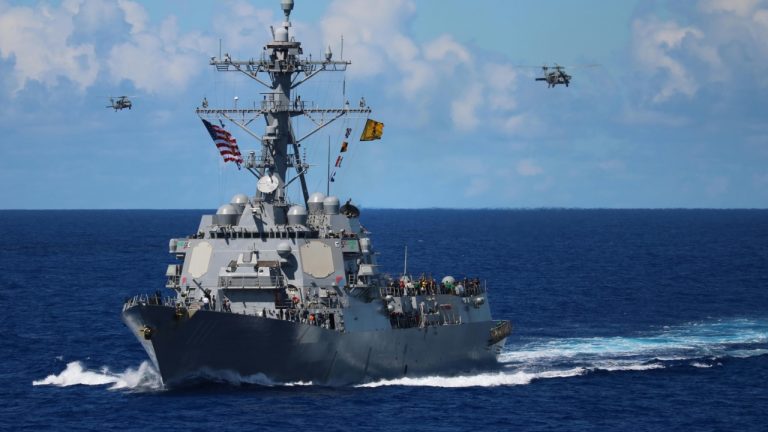
Warning Signs U.S. Troops Could Be Headed for the Middle East
Signals are piling up that the United States is shifting from an air and naval campaign against Iran toward something more sustained and more dangerous. From fresh deployments and canceled training exercises to blunt warnings from senior commanders, the pattern points to a military posture that could support large numbers of ground troops in the Middle East.
None of these steps alone guarantees a new ground war. Taken together, however, they sketch a picture of a government that expects the Iran conflict to be longer, bloodier and closer to American forces than many in Washington had suggested only weeks ago.
From airstrikes to a grinding campaign

Before the launch of U.S. hostilities against Iran, the president was reportedly told that the operation would be a high-risk, high-casualty effort that could continue into a second week and beyond. That assessment, described in one account as part of a classified briefing, framed the Iran war as something far more serious than a short, symbolic strike.
Public signals now match that private warning. The conflict, widely described as the 2026 Iran war, has already featured the Abraham Lincoln Carrier Strike Group operating in the Arabian Sea and the launch of Tomahawk missiles against Iranian targets. Those are not the tools of a quick demonstration; they are the opening moves of a campaign that can escalate in tempo and scope.
Officials have also begun to describe the fight in language that suggests endurance rather than a brief exchange. One television segment reported that the United States appears to be preparing for a longer fight in Iran, with planners adjusting logistics and rotations to sustain operations over time rather than surge for a single blow. That kind of planning is a prerequisite if ground forces are eventually ordered into Iranian territory or into neighboring states that could become spillover battlefields.
Blunt warnings from the Pentagon and the White House
The most striking shift has come from senior leaders who rarely talk openly about expected casualties before they occur. In one briefing, the Pentagon and Trump both warned that more U.S. troops are likely to die in the Iran operation. Joint Chiefs Chairman Dan Caine said more troops are being sent into harm’s way and that additional losses should be expected.
Presidential rhetoric has moved in the same direction. In a separate statement, Trump cautioned that Iran’s response to U.S. and Israeli actions could lead to American casualties. He framed the confrontation as a test of resolve and insisted that the United States would not retreat even if the price in blood rose sharply.
Such explicit references to “additional losses” are not standard talking points. They function as political groundwork for a scenario in which more service members are killed or wounded, and they hint at operations that bring personnel closer to Iranian missiles, drones and proxy militias on the ground.
Central Command’s alerts and casualty count
The operational arm overseeing the fight is also speaking in unusually stark terms. U.S. Central Command issued a warning that “The Iranian regime is knowingly endangering innocent lives,” and added that “Additionally, Iranian forces are using military capabilities in close proximity to civilian airports, hotels, and residential neighborhoods.” The warning, shared through a Central Command bulletin, signaled that any expanded U.S. presence would likely operate in dense urban environments where collateral damage and ambush risk are high.
The same communication described how the U.S. military announced new deployments into the region after Israel launched a major attack on Iran and to its north in Lebanon. That chain of events has already produced American casualties. The United States Central Command later announced the death of a seventh service member in the Middle East conflict, a toll that has grown as the war has stretched into a second week. The rising number of dead and wounded is one of the clearest indicators that U.S. forces are operating within reach of Iranian weapons and allied militias.
Senior officers have begun to speak more openly about the possibility of ground deployments. In one televised interview, Trump was described as weighing a ground deployment in Iran as the war entered week two, a discussion that would have been politically unthinkable if planners expected the campaign to remain limited to air and naval strikes.
A visible buildup of ships, jets and logistics
Hardware movements tell their own story. Analysts tracking open-source data have documented a rapid expansion of U.S. military assets in and around the Middle East. One monitoring team reported that more aircraft have arrived in the region, and that it has tracked more than 85 fuel tankers and over 170 cargo planes heading into theater after the first strikes on Iran. Those numbers, 85 and 170, suggest a supply chain designed to support sustained operations rather than a short burst.
Additional reporting described how numerous U.S. fighter jets and support aircraft have touched down in the Middle East at bases that already host American forces. Some of those aircraft reportedly arrived at a base in Saudi Arabia, which has long served as a key hub for U.S. air operations in the region.
Naval deployments are expanding as well. One account said the United States is expected to deploy a third aircraft carrier to the Middle East, a step that would give commanders greater flexibility to launch airstrikes, protect sea lanes and provide air cover for any ground forces that might be sent ashore. Carrier strike groups are expensive assets that are rarely concentrated in one region unless Washington anticipates a serious and prolonged contingency.
Ground units on the move from U.S. bases
Movements at home mirror the buildup overseas. At Quonset Point Air National Guard Base in Rhode Island, the 143rd Airlift Wing, which flies C-130 cargo aircraft used to transport troops and supplies, has been preparing aircraft for missions tied to the Iran conflict. The report from Quonset Point Air emphasized that these C-130s routinely carry personnel and materiel into conflict zones.
Westover Air Reserve Base in Massachusetts has also been drawn into the effort, coordinating with Army units in the area as part of a broader mobilization. Officials involved in the planning noted that they avoid publicizing exact departure times or destinations in order to prevent tipping off adversaries, but the pattern of preparation is clear. Units that typically support humanitarian missions or training exercises are now focused on moving troops and equipment toward the Middle East.
One report even cited a specific number of troops, 130, in connection with an early wave of deployments from New England. That figure is small by the standards of past wars, yet it represents a seed force that can be rapidly reinforced if the White House orders a larger ground presence.
Additional brigades and the expectation of “additional losses”
Inside the Pentagon, planners have quietly shifted from crisis response to force generation. A detailed account of internal deliberations quoted Gen. Caine saying that Americans should expect “additional losses” as more units deploy to the region. The same report said that additional troops are set to deploy to the Middle East, with Central Command officials laying out a plan that could send thousands of soldiers, sailors, airmen and Marines into the conflict zone.
These deployments are not limited to a single service. Companion reports from Army, Navy, Air Force and Marine Corps news outlets, linked through portals such as Army Times and Navy Times, describe a steady drumbeat of mobilization orders, readiness checks and rapid training cycles. Together, they sketch a picture of a joint force being readied for operations that could include everything from air defense and logistics to direct combat on the ground.
One subscription site, Sightline, surfaced in connection with these reports, underscoring how much of the detailed planning remains behind paywalls or in classified channels. Even so, the information that has emerged in public is enough to show that the United States is building a layered presence that can support ground maneuver if required.
Warning signs inside the Army: canceled training and shifting priorities
Perhaps the clearest internal signal has come from the Army itself. A widely shared report by Josh Marcus described how the Army abruptly canceled a large-scale training exercise that had been planned months in advance. The cancellation was presented as a response to emerging operational needs in the Middle East, and it came with little public explanation.
The same reporting, which framed the development as a warning sign that U.S. troops could be headed for Mideast deployment, said that commanders were quietly shifting units from training pipelines into deployment preparation. The article by Josh Marcus highlighted how unusual it is for the service to scrap such exercises on short notice unless real-world demands leave no choice.
A separate version of the story, also featuring Josh Marcus, appeared in another outlet and repeated the theme that this was a warning that U.S. troops could be headed for Mideast deployment. Together, the accounts suggest that senior Army leaders are clearing schedules and freeing up units that might soon be ordered to the Middle East or to staging bases in Europe.
Forward bases in Jordan, Iraq and the Gulf
Where those troops might go is becoming clearer by the day. One detailed analysis of the U.S. military buildup around Iran noted that the most visible element is the deployment of F-15E Strike Eagles to Muwaffaq Salti Air Base in Jordan. The report described how these Strike Eagles, which are designed for deep strike missions, arrived at Muwaffaq Salti Air Base along with support from the United Kingdom earlier in the year.
Jordan is not the only regional partner being drawn deeper into the conflict. A separate profile of Jordan as a host nation for U.S. forces highlighted its strategic location between Israel, Syria, Iraq and Saudi Arabia. The presence of advanced strike aircraft there positions the United States to hit targets across much of the northern Middle East while also providing air cover for any ground troops that might operate in adjacent countries.
To the east, the situation in Iraq is becoming more volatile. A report by Humeyra Pamuk and Simon Lewis said that the United States issued a warning over Iran-aligned militias in Iraq amid efforts to help stranded citizens. The U.S. embassy in Baghdad has been at the center of those concerns, and any escalation involving militias could draw American troops into direct confrontations on Iraqi soil.
Elsewhere along the Gulf, additional air and missile defense units have been deployed to protect bases and partner infrastructure. One analysis noted that although many newly deployed assets appear to be defensive, the intensifying U.S. build-up around Iran raises the possibility of new strikes and a broader war. Defensive systems such as Patriot batteries and radar sites often accompany ground forces, since they are needed to shield troops from missile and drone attacks.
Evacuations, travel alerts and the civilian front
Military planning is only one part of the picture. Diplomatic and consular actions also point toward a conflict that could expand. In Washington, the State Department declared the Iran war an “Emergency,” a move that sped the sale of 20,000 plus bombs to Israel. The phrase “State Department Declares Iran War Emergency Speeding Sale of Bombs Israel” captured the urgency of the decision and the scale of the munitions transfer.
At the same time, officials updated travel advisories for U.S. citizens in the region. One report described a security alert in which the State Department updated warnings for U.S. travelers after Iran, the target of the joint U.S. and Israel military operation, responded with threats against American interests. The alert urged citizens to reconsider travel and to remain vigilant in countries where Iranian proxies are active.
Trump has also said that the United States is moving thousands of people out of Middle Eastern countries as the conflict intensifies. The evacuation effort, described in the same report that covered the warning over Iran-aligned militias in Iraq, involves charter flights, military aircraft and coordination with partner governments. Large-scale evacuations often precede or accompany major military operations, since they reduce the number of civilians who might need rescue if fighting spreads.
The regional chessboard: Iran, Israel and Gulf partners
At the core of the crisis is Iran, whose nuclear program and regional network of proxy groups have long put it at odds with Washington and its allies. The current war has seen direct strikes on Iranian territory and on Iranian-linked forces in Lebanon, as well as cyber operations and covert actions that have not been fully disclosed. Iranian leaders, including Supreme Leader Ayatollah Ali Khamenei, have vowed to retaliate and to drive U.S. forces out of the region.
Israel’s role is equally central. The joint U.S. and Israel operation against Iran has included coordinated strikes, intelligence sharing and the rapid transfer of precision-guided munitions. The sale of more than 20,000 bombs to Israel under the emergency declaration reflects a shared strategy that envisions a prolonged campaign against Iranian targets.
Regional hosts such as Saudi Arabia, Jordan and Qatar provide the basing and overflight rights that make such a campaign possible. Saudi Arabia has allowed U.S. aircraft to operate from its territory, while Jordan has accepted advanced fighters at Muwaffaq Salti Air Base. Qatar, which already hosts a large U.S. air base, has seen additional traffic as cargo planes and tankers flow into the region.
Militias, proxies and the risk of a wider ground fight
Iran’s response is unlikely to be limited to direct missile launches. The warning over Iran-aligned militias in Iraq hints at a broader strategy that uses proxy groups to harass U.S. forces, attack embassies and target commercial shipping. These militias, some of which fought U.S. troops during the occupation of Iraq, are now better armed and more experienced.
Central Command’s warning that Iranian forces are using military capabilities near civilian airports, hotels and residential neighborhoods suggests that Tehran is also positioning assets in ways that complicate U.S. targeting. If American ground troops are deployed into urban areas to counter these tactics, they will face a mix of conventional and irregular threats that can quickly escalate into street fighting.
Lebanon, Syria and Yemen all host groups that align with Iran’s regional agenda. Any significant U.S. ground deployment in one theater could trigger retaliatory actions in others, stretching American forces and raising the risk of miscalculation. That dynamic is one reason planners are building a flexible force posture with carriers, long-range bombers and rapid reaction units that can shift between fronts.
Domestic politics and the decision to send troops
At home, the prospect of a new ground war in the Middle East carries heavy political baggage. Memories of Iraq and Afghanistan remain fresh, and lawmakers from both parties have pressed the administration to clarify its objectives in Iran. Some have demanded a formal authorization for the use of military force, while others have argued that existing authorities are sufficient.
Trump’s public statements reflect that tension. On one hand, he has warned of potential U.S. casualties and acknowledged that more troops are likely to die in the Iran operation. On the other, he has insisted that retreat would embolden Iran and endanger allies such as Israel and Saudi Arabia. That framing sets up a narrative in which sending ground troops is presented as a reluctant but necessary step to protect American credibility.
Public opinion is harder to read. Early polling suggests that many Americans support limited strikes against Iran’s nuclear and military infrastructure but are wary of a prolonged ground campaign. If casualties mount and deployments expand, that support could erode quickly, especially if the administration struggles to articulate a clear endgame.
What the warning signs add up to
Individually, each piece of evidence might be explained away as routine: a carrier rotation, a training cancellation, a travel advisory. Together, they form a pattern that is difficult to ignore. The Pentagon and Trump are openly warning that more U.S. troops are likely to die. Central Command is highlighting Iranian tactics that endanger civilians and complicate air-only campaigns. Ground units from Rhode Island to Massachusetts are packing up for missions tied to the Middle East.
Advanced aircraft such as F-15E Strike Eagles are concentrating at bases like Muwaffaq Salti Air Base in Jordan, while cargo planes and tankers flow into the region in numbers that suggest a long haul. Diplomats are evacuating thousands of civilians and rushing 20,000 bombs to Israel under an emergency declaration. The Army is canceling major exercises as Josh Marcus and others report that troops could be headed for Mideast deployment.
None of this guarantees that American soldiers will soon be ordered to seize ground in Iran or to fight street by street in Iraq or Lebanon. Political decisions, diplomatic openings and battlefield developments could still shift the trajectory. Yet for anyone watching the signals, from the words of Gen. Caine to the rumble of C-130s lifting off from New England, the possibility of a large-scale U.S. ground presence in the Middle East looks less hypothetical with each passing day.

Leo’s been tracking game and tuning gear since he could stand upright. He’s sharp, driven, and knows how to keep things running when conditions turn.