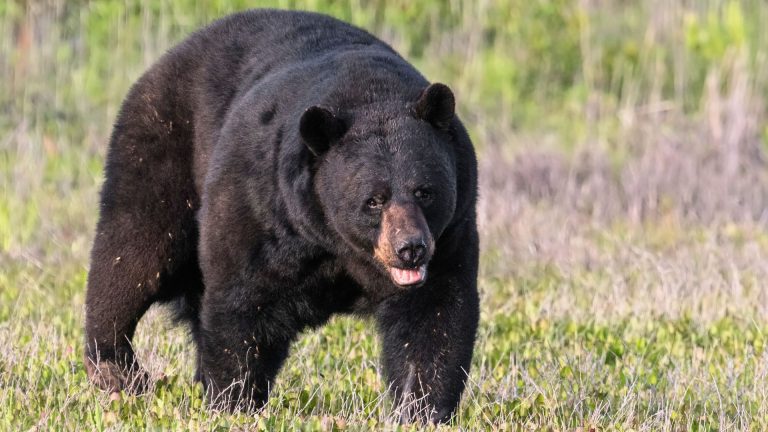
Where black bear encounters are increasing near residential areas
Across the country, more people are waking up to find paw prints on their decks, bird feeders ripped down, and security cameras full of midnight visitors with black fur and curious noses. Black bears are pushing into suburbs and small towns that rarely saw them a generation ago, and the line between wild country and cul-de-sac is getting thinner every year. I want to walk through where those encounters are climbing fastest, why it is happening, and what you can realistically do if a bear starts treating your neighborhood like part of its home range.
The new bear map: where encounters are climbing fastest

Black bears are turning up in places that used to think of them as a mountain or deep woods problem, not a backyard one. Across the United States, wildlife agencies are logging more calls about bears in driveways, on porches, and even squeezing through tight gaps into homes, like the black bear caught forcing itself out of a house vent in North Carolina that made national rounds on video. Those clips are entertaining until you remember that a 200 to 300 pound animal is trying to navigate human structures that were never built with wildlife in mind, and people are often only a thin wall away.
The trend is not limited to one region. Reports of surging encounters now span states as different as California, Vermont, Virginia and Texas, and they mirror what is happening north of the border in parts of Canada where expanding bear populations are brushing up against growing towns. Researchers who study human–bear conflict say the overlap is being driven by two simple forces: more bears on the landscape after decades of protection, and more people building homes and leaving food where those bears can get to it. Once a bear learns that trash cans, pet food, or bird feeders pay off better than foraging in the woods, it starts to redraw its own mental map of where it should spend time.
Why bears are showing up in neighborhoods more often
At the core, black bears are walking stomachs with fur, and that is not an insult, it is biology. They are hard wired to seek out the most calorie dense food they can find, especially in late summer and fall when they are trying to pack on fat for winter. Wildlife biologists who work with urban bears in California describe them keying in on neighborhoods because the buffet there, from unsecured garbage to backyard chickens, beats anything they can dig up in a dry hillside. A UCLA researcher put it bluntly, noting that bears are drawn into communities by the promise of calorie dense food, and once they find it, they remember.
That memory is what turns a one time sighting into a pattern. Guidance from groups that specialize in coexistence, like BearWise, stresses that bears will readily use human created food sources and that repeat access makes them bolder. The same point shows up in behavior research that notes how Bears have a powerful sense of smell and can quickly become comfortable around people if a known food source is nearby. When you combine that with neighborhoods that back right up to forest edges, it is no surprise that more homeowners are flipping on the porch light and finding a bear instead of a raccoon.
East Texas: a comeback that is now reaching front yards
One of the most striking shifts is happening in Texas, where black bears were once hunted so heavily that they were functionally wiped out in much of the state. A long absence made it easy for several generations to grow up thinking of bears as something you traveled to Colorado or New Mexico to see, not something that might raid your deer feeder. That is changing. Recent coverage of why people are now seeing more bears in the state points out that sightings climbed into the triple digits, with reports reaching 154 in 2022, a sign that the animals are reclaiming old ground after decades of being scarce.
The return is most obvious in East Texas, where biologists and meteorologists alike have been warning residents to be “bear aware” after multiple confirmed sightings. A detailed post titled Black Bears Are in East Texas, Here is How We Got Here, lays out a timeline from the late 1800s through the 1950s when bears were common, then nearly gone, and now slowly filtering back. Radio coverage has echoed that story, noting that it is surprising news for many Texans because bears were such a target for hunters in years past that their presence today feels like a new phenomenon even though it is really a return.
Texas counties now on the bear radar
Wildlife officials are not guessing about where bears are turning up in the Lone Star State, they are naming counties. A recent update from the Texas Parks and, or TPWD, confirmed several sightings of a black bear in specific parts of the state and reminded residents that these animals are guided by food sources like trash, bird feeders and deer feeders. Other reporting has highlighted how Black bears have been spreading through West Texa, which means the issue is no longer confined to one corner of the map.
On the ground, that expansion is showing up in counties that many hunters and landowners know well. Confirmed or suspected bear activity has been discussed in places like Cherokee, Anderson, Panola and Rusk in the east, as well as Kaufman closer to the Metroplex and more western counties like Menard, Kimble and Uvalde. When you see that spread on a map, it is clear that bears are not hugging one border anymore, they are threading through ranch country, timber tracts and even exurban neighborhoods where deer feeders and corn piles are common.
Tennessee’s growing bear population and new suburban hot spots
The Southeast has long been black bear country, but even there the pattern is changing as bears push out of traditional strongholds. The Tennessee Wildlife Resources, or TWRA, has been blunt that encounters are rising as the state’s bear population grows and people continue to build into bear habitat. One report framed it clearly, noting that as the state’s population continues to grow, interactions with bears are rising with it, a point that lines up with what many hunters and hikers have been seeing on the ground in the Tennessee hills.
Those encounters are no longer limited to the Smokies. TWRA data show bears turning up in places like Signal Mountain, Collegedale and Ooltewah, all of which have seen enough bear activity that local news has taken notice. In one interview, Said Jenelle Musser, a Black Bear Support Biologist, explained that technology like doorbell cameras is making bears more visible than ever, but she also stressed that the underlying numbers are climbing. Another TWRA warning carried by WZTV underscored that the agency is seeing increased interactions as bears expand beyond their historic habitat across the state.
Colorado, Florida and the western front of backyard bears
Head west and the same story plays out along the Front Range and in mountain towns that have grown into full blown suburbs. Colorado Parks and Wildlife has reported an above average number of bear conflicts and sightings, and it has been reminding residents that simple precautions can avoid many of those run ins. In a detailed regional breakdown, Colorado Parks and urged people to secure trash, remove attractants and help keep bears wild by not rewarding them with easy meals. Another update from CPW made it clear that if you see a bear causing trouble in an urban area, the right move is to call the agency, not try to handle it yourself.
Farther south, Florida has its own version of the same problem, with bears turning up in subdivisions that back into palmetto thickets and pine flatwoods. The state’s wildlife commission has been blunt that if you have bears in your area, you need to follow BearWise Basics to prevent conflicts, which include securing garbage, taking down bird feeders and feeding pets indoors. In Louisiana, residents around Arcadia and other small towns have seen similar issues as bears wander through neighborhoods that sit right on the edge of good habitat. When you zoom out, you see a belt of bear country that now runs straight through growing communities from the Gulf Coast to the Rockies.
New England and the Northeast: bears in the cul-de-sacs
The Northeast has quietly become one of the busiest regions for backyard bear encounters, especially in states with healthy populations and dense development. In Connecticut, wildlife officials have dealt with everything from a child suffering non life threatening injuries in a bear incident to a black bear taking a dip in the Gulf of a residential pool. Agencies there have been clear that if you see a black bear in your neighborhood, you should give it space, remove attractants and report aggressive behavior.
Neighboring states are in the same boat. New Jersey and Massachusetts have both seen enough bear activity in suburbs that residents are now used to seasonal warnings. New York’s conservation agency has leaned into the BearWise program, telling people that Bears will readily use human created food sources and that repeat access can make them bolder, which is exactly what homeowners are seeing when the same bear returns to a bird feeder night after night. Regional coverage has also pointed out that earlier in the year a black bear swam off a crowded beach, a reminder that these animals are comfortable moving through heavily used human spaces when food or curiosity pulls them in.
California and the West Coast: bears on porches and in driveways
On the West Coast, the overlap between bears and people is most visible in California’s foothill towns and mountain suburbs. Videos of a black bear strolling through a Los Angeles area neighborhood, or padding across a driveway in the San Gabriel foothills, have become common enough that local outlets now treat them as routine. One recent clip of Bear encounters in LA homes and neighborhoods showed exactly how comfortable some of these animals have become around porches, parked cars and front doors. A separate social media post from Please stay alert and practice bear safety in our communities highlighted a black bear spotted in a Poolesville driveway, underscoring that this is not just a mountain town issue anymore.
Researchers tied to UCLA have been studying how neighborhoods can respond, and their advice lines up with what seasoned hunters already know: do not feed bears, do not let them associate people with food, and secure anything that smells like calories. That includes trash, pet food, compost and even fruit that drops from backyard trees. When those attractants are left out, bears quickly learn that neighborhoods are worth the risk. When communities move in the other direction and lock things down, bears tend to shift back toward wild foods and spend less time on streets and in yards.
How to stay safe when bears move into your zip code
As someone who has spent a lot of time in bear country, I can tell you that most encounters do not have to end badly if people understand how bears think. National guidance from BearWise and state agencies boils down to a few core habits. Secure your garbage in bear resistant containers or keep it in a sturdy building until pickup day. Take down bird feeders when bears are active, feed pets indoors, and clean grills so they do not smell like a steakhouse. In the yard, pick up fallen fruit and do not leave coolers, fish scraps or game meat where a bear can get to them. These steps remove the reward that keeps bears coming back.

Asher was raised in the woods and on the water, and it shows. He’s logged more hours behind a rifle and under a heavy pack than most men twice his age.