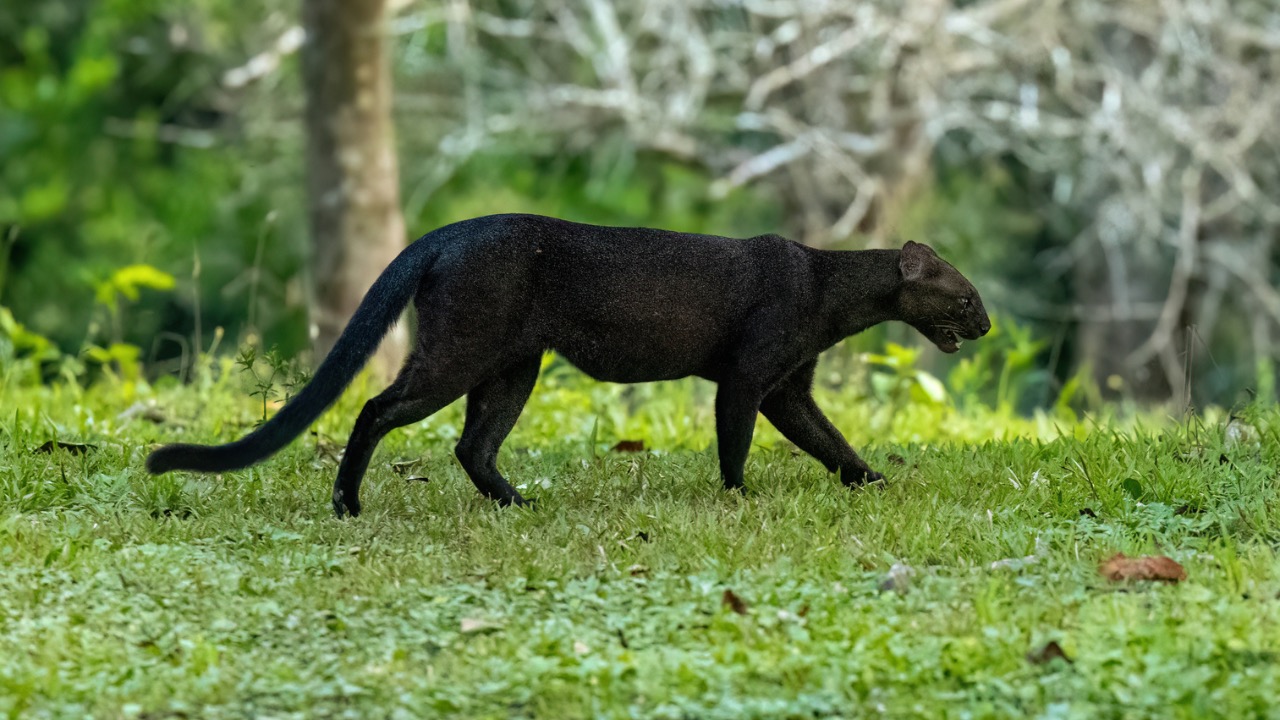
Where jaguarundi sightings are reported in the U.S.
Across the southern United States, hunters, landowners, and hikers keep reporting a low‑slung, long‑tailed cat that does not quite match a bobcat or a house cat. Those stories usually point to the jaguarundi, a small wild feline better known from Mexico and Central and South America. I want to walk through where people say they are seeing these cats in the U.S., what the science actually supports, and how to separate campfire talk from evidence.
Most of the reports cluster in a loose band from South Texas across the Gulf states and into Florida, with a scattering farther west and north. Some of those accounts line up with what biologists know about the species, while others fall apart once you compare them with field studies and trail‑camera data. The picture that emerges is a mix of genuine mystery, understandable misidentification, and a lot of wishful thinking layered onto real wild country.
What a jaguarundi is, and why it causes so much confusion
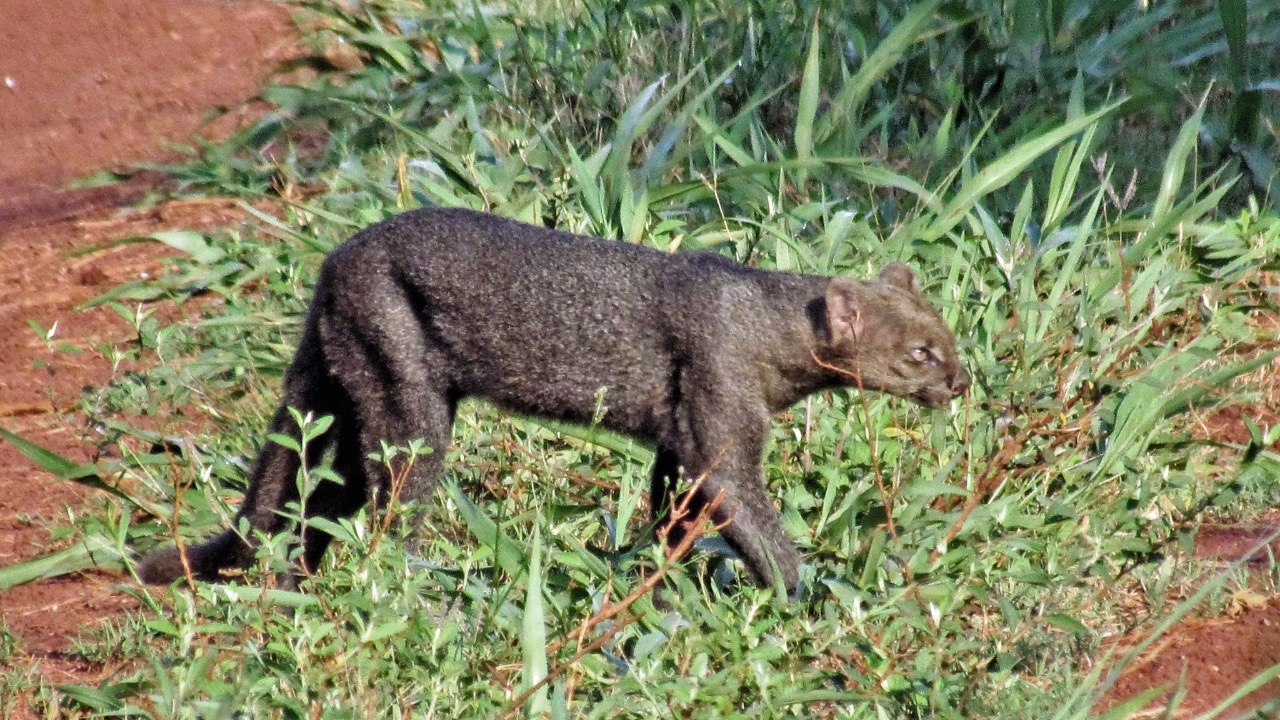
Before getting into maps and counties, it helps to know what people are supposedly seeing. The jaguarundi, also known as Herpailurus yagouaroundi, is a small, long‑bodied wild cat with short legs, a long tail, and a head that looks almost otter‑like. It comes in rusty red and dark gray color phases, which is why some folks call it the “Otter Cat.” Basic natural history work on the species notes that Herpailurus is native from central Argentina north through much of Latin America, with the northern edge of its range historically brushing into the borderlands of the United States.
That odd body shape and color pattern is exactly what makes the animal so easy to mix up with other species. Field guides point out that the jaguarundi is smaller than a cougar but longer and leaner than a typical feral cat, and it often moves in a low, weasel‑like trot. One overview of the species notes that the scientific name was shifted from Puma to Herpailurus, which hints at how different it is from the big cats most Americans know. That same source stresses that reports in the United States are rare and unsubstantiated, which is important context once we start plotting sightings on a map.
What the science says about jaguarundis in the United States
When I look at the hard data, the first thing that jumps out is how cautious biologists are about claiming any resident jaguarundi population north of the Rio Grande. A detailed review of the species’ status in the border region describes the jaguarundi as a small felid whose historical range reached into southern Texas, but the authors conclude they do not believe a breeding population persists in the country today. That assessment, focused on Texas and northeastern Mexico, is built on years of camera trapping and field surveys that failed to turn up solid proof on the U.S. side of the line.
Broader overviews echo that caution. A widely cited summary of the species notes that the jaguarundi is “possibly extirpated” in the United States, and it points to a 1999 study that specifically refuted earlier claims of sightings in the Huachuca Mountains in Arizona, where its presence had been doubted. Another conservation profile describes how The Jaguarundi is a master of adaptability across lowland habitats, but it treats talk of established U.S. populations as speculation, mentioning only that some animals may have escaped from captivity in the 1940s. Put together, the scientific picture is clear: if jaguarundis are still slipping across the border, they are doing it quietly and in very low numbers.
South Texas: the historic stronghold and today’s hotspot for reports
Most of the modern stories about jaguarundis in this country start in South Texas, which makes sense given the geography. The state’s wildlife agency notes that the species historically occurred in the brushlands of extreme southern Texas, where dense thornscrub and river corridors connect directly into habitat in northern Mexico. That same agency describes how these cats hunt birds, rabbits, and small rodents, usually in the early morning and evening, and how they are endangered in the state because of habitat loss and fragmentation. In other words, if there is any place in the U.S. where a wild jaguarundi might still pad across a sendero, it is the far southern tip of this state.
On the ground, that potential shows up as a steady trickle of unconfirmed sightings. A recent report on Unconfirmed sightings in Central Texas described residents who believe a locally extinct wild cat is still around, even as biologists caution that the species is considered extirpated in much of the state. Another thread of discussion about a jaguarundi in the Scrub of Northern Mexico notes that various sightings point to Present Possibly in Texas, including an unconfirmed sighting in the hill country. None of that rises to the level of proof, but it explains why hunters and ranchers in the region keep an eye on every long‑tailed cat that crosses a sendero.
From Brownsville to Uvalde and Seguin: where Texans say they are seeing these cats
When people talk about specific jaguarundi encounters in Texas, certain towns and counties come up again and again. The lower Rio Grande Valley around Brownsville sits right on the Mexican border, surrounded by thornscrub and resaca wetlands that match the species’ preferred cover. One hunter posting about a sighting in Northern Hidalgo County said he reported the animal to a Texas Parks and, who listened to the description and then, according to the account, Told him that there are reports of the species in the area. Another discussion about a jaguarundi spotted in Uvalde County mentions a rancher from Blanco County, Texas, who had seen what he believed were Puma on his place, underscoring how easily people slide between different cat species when they trade stories.
Farther east, suburban growth has not stopped the rumors. A report on big cat sightings in Seguin described social media posts about a long‑tailed cat slipping through backyards in this part of Texas, and quoted a San Antonio Zoo staffer who said that if the animal were a jaguarundi, it would be an escapee rather than a wild native. That same piece tied the speculation to broader concerns about Habitat destruction and the way development around San Antonio squeezes wildlife into smaller pockets. In another case, a driver shared photos of a mystery cat spotted between Quinlan and Terrell Texas on Highway 34, with commenters arguing over whether it matched the proportions of a jaguarundi or a lanky house cat.
Florida and the Gulf states: rumors, rewilding talk, and official skepticism
Once you leave Texas and follow the Gulf Coast east, the stories get even murkier. The state of Florida has long been a magnet for exotic pets and escapees, and that history feeds into modern jaguarundi rumors. One conservation summary notes that the species’ range runs through the lowlands of the tropics and mentions that some animals may have escaped captivity in the 1940s, which helps explain why people in places like Florida still swap stories about odd cats in the palmettos. A discussion among rewilding enthusiasts asked bluntly about the status of Jaguarundis in Florida and Alabama, and one commenter using the handle Death2mandatory argued that no carcasses or roadkills have been found in Florida.
Official write‑ups back up that skepticism. A kid‑friendly overview of the species notes that jaguarundi reports in the state are rare and unsubstantiated, even though the broader state of Florida has plenty of suitable cover. Some enthusiasts still insist that a hidden population may exist in the swamps and pine flatwoods, and one social media post about jaguarundi wild cat species information mentions that Some experts believed sightings could be misidentified large house cats or mountain lions, while others think a small population may exist in Florida. Until someone produces a clear trail‑camera sequence, a carcass, or genetic material, the state’s jaguarundi will remain more rumor than record, whether the story is set near Jacksonville or deep in the interior.
Alabama, Louisiana, Mississippi, Arkansas, Oklahoma, and Georgia: the wider southern rumor belt
Move west along the Gulf and up into the interior South, and the pattern repeats: plenty of stories, almost no hard proof. The wildlife agency in Alabama lists the jaguarundi as an accidental species, with rare sightings reported from the southwestern part of the state. Its official profile gives the SCIENTIFIC NAME as Herpailurus yagouaroundi and notes OTHER NAMES like Otter Cat, but it stops well short of claiming any resident population. Social media threads about jaguarundi sightings in the southern US states mention that Jagurundi have been spotted by plenty of people in Kansas, Arkansas, Oklahoma, Louisiana, Alabama, and more, with one commenter named Chad Edwards insisting there is no denying them.
State‑level references are more cautious. The profile from Outdoor Alabama treats the species as a rarity, and neighboring states like Louisiana, Mississippi, and Oklahoma show up in online discussions more than in peer‑reviewed surveys. One post about a sighting near Mobile and Baldwin counties, or another from rural Jefferson, fits the same mold as the old eastern cougar stories. A piece on frontier folklore about the Eastern United States cougar notes that in spite of repeated reports of sightings, no substantiated evidence ever emerged and many of those animals turned out to be other creatures such as lynxes or bobcats, a pattern that applies neatly to jaguarundi talk in Wild country across the South.
Arizona, Utah, and the Southwest: where the data say “no”
Head west and the picture gets even starker. A major review of the species’ status notes that a 1999 study refuted claims of jaguarundi sightings in the Huachuca Mountains in Arizona, where its presence had been doubted for years. That conclusion is echoed in the broader summary that labels the species possibly extirpated in the United States, and it lines up with the lack of verified photos or carcasses from the state. Even though Arizona has plenty of rugged canyon country and desert scrub, the evidence simply is not there.
That has not stopped people from reporting odd cats in the wider region. A comment on a conservation site from a man named Dave Coats describes seeing what he believed to be a Jaguarundi in the outskirts of Washingto in Utah, and he sticks by what he saw. That kind of first‑person account is common in the Southwest, whether it is tied to a desert wash outside Scottsdale or a greenbelt near Old Town Scottsdale. But when I stack those stories against the lack of physical evidence and the clear statement that the species’ presence in the region was doubted, I have to treat them as unverified based on available sources, whether they come from Utah or the deserts of the Southwest.
How misidentification and folklore fuel the jaguarundi map
Once you have listened to enough of these stories, a pattern starts to emerge. People see a long‑tailed, low‑slung cat in the half‑light and reach for the most exotic label they know. A social media post about jaguarundi wild cat species information notes that experts believed that some jaguarundi sightings could be misidentified large house cats or mountain lions, and that some people can mistake a bobcat for a jaguarundi. That lines up neatly with the eastern cougar experience, where a long history of unverified reports in the Eastern United States turned out, in many cases, to be lynxes, bobcats, or even dogs once someone got a clear look.

Asher was raised in the woods and on the water, and it shows. He’s logged more hours behind a rifle and under a heavy pack than most men twice his age.