Why certain gear choices spark endless debate among gun owners
Arguments over calibers, optics, holsters, and rifle furniture can turn a quiet gun counter or online forum into a battlefield of opinion. Some of these disputes orbit around tiny performance differences, yet they carry emotional weight that far exceeds any measurable advantage. The most persistent fights over gear are not just about metal and polymer, but about identity, status, and the stories people tell themselves about risk and safety.
Form versus function: why the AR silhouette matters so much
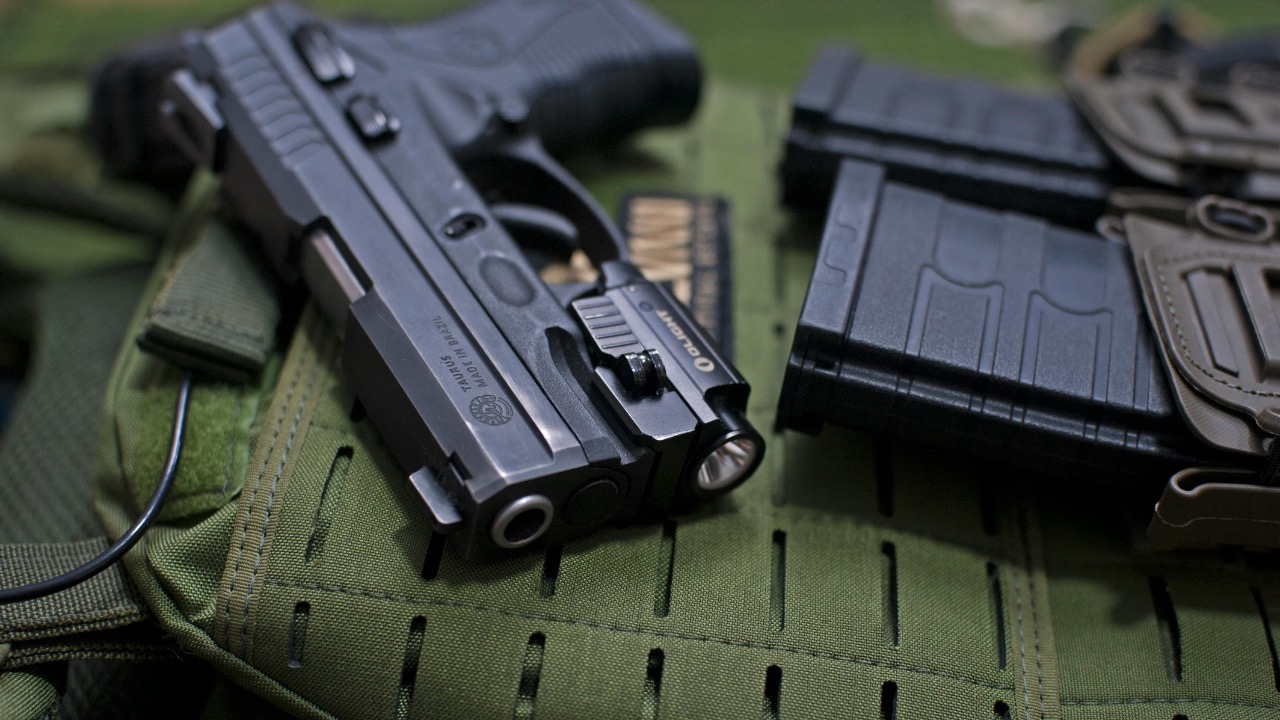
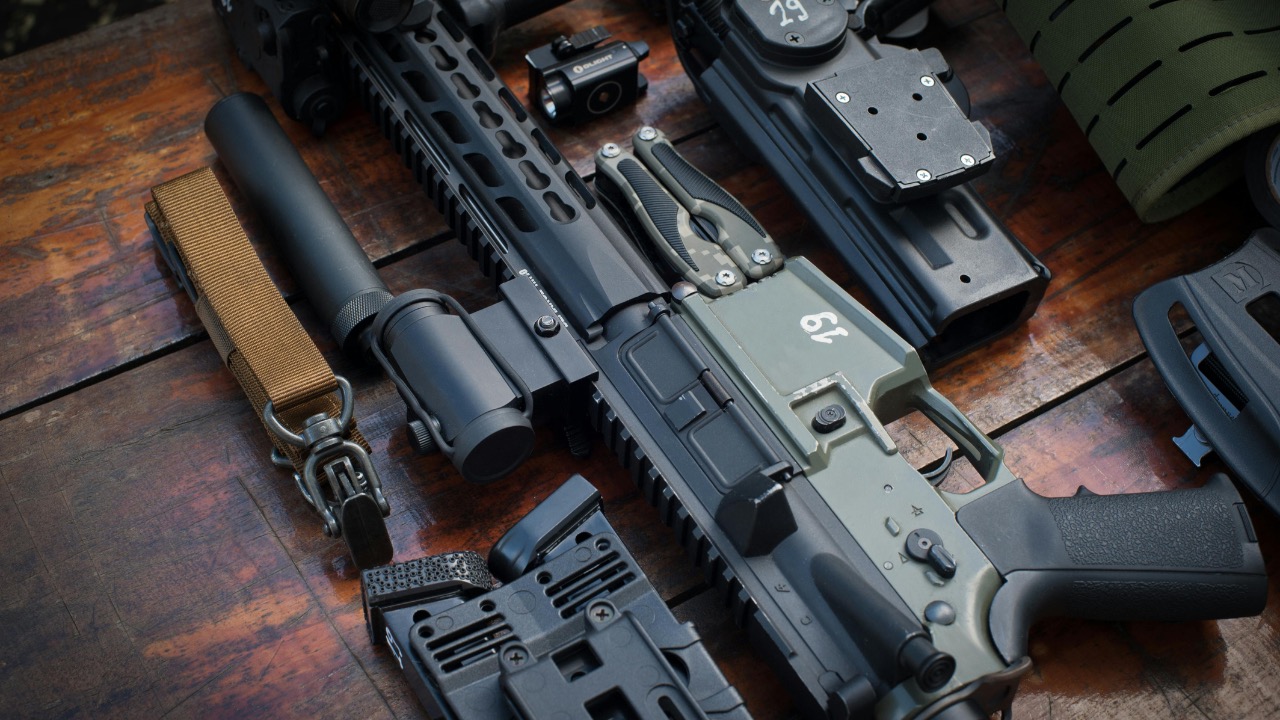
When many Americans picture a rifle, they imagine something black, angular, and covered in accessories. The rifle that likely comes to mind is black and has any number of aftermarket attachments, and maybe there is a grip attached under the handguard along with a light, laser, and everything that fits on the rail. That mental image is not accidental. It reflects how a particular aesthetic has come to symbolize power, modernity, and in some circles, menace.
Reporting on the way public debate fixates on the look of rifles points out that the same basic operating system can be wrapped in very different shells. A traditional wood-stocked design such as the Mini-14 can share broad functional similarities with a black rifle, yet only the latter tends to be treated as a political lightning rod. The focus on surface features like pistol grips and collapsible stocks, rather than internal mechanics, shows how form can eclipse function in both policy fights and gun shop arguments.
Inside enthusiast spaces, this obsession with appearance becomes its own kind of shorthand. Owners trade jokes about how many rails or attachments are enough, and they argue over whether a rifle that looks like it belongs in a special operations unit is inherently more serious than a plain hunting carbine. The same source that describes the black rifle stereotype also notes that such debates have become a running joke in the firearms community, where people openly mock how often cosmetic tweaks are treated as technical revolutions.
Once a certain look becomes a cultural symbol, it carries baggage that transcends ballistics. The AR-pattern rifle in particular has been framed as everything from a patriotic tool to an emblem of social breakdown. That symbolic charge helps explain why small visual differences in handguards or stocks can ignite long threads, while more subtle mechanical questions such as gas system length or metallurgy rarely attract the same heat.
Caliber wars and the search for the “right” answer
Few topics illustrate the emotional pull of gear debates better than caliber wars. In one widely cited community discussion, a concealed carrier explains that they voted for 9 mm as their preferred option, chose that caliber for their EDC, and planned to carry the same in their eventual BUG. The reasoning is straightforward: ammunition is more affordable, recoil is manageable, and modern bullet design has narrowed the performance gap with larger rounds.
Other participants in that same debate insist that anything 9 mm and bigger is acceptable, but some cling to .40 Smith & Wesson or .45 ACP as marks of seriousness. The arguments often lean on anecdotes, personal comfort, or half-remembered ballistics charts rather than controlled data. Once someone has invested in a particular pistol and a few hundred dollars of ammunition, admitting that another option might be equally good can feel like a loss.
Psychological research on firearms suggests that these choices are rarely just technical. One analysis of gun symbolism notes that advocates often describe firearms as expressions of selfhood forged through protection. In that frame, a caliber is not only a tool, but also a statement about how a person sees risk and their own competence. A larger cartridge can feel like a buffer against fear, even if real-world outcomes depend far more on training and context.
There is also a social dimension. Declaring allegiance to a caliber puts a shooter inside a tribe. Jokes about 9 mm being the choice of the practical, or .45 ACP being the mark of a traditionalist, give people a shared language. Once those identities harden, evidence that multiple calibers perform similarly in defensive shootings does little to cool the argument.
Gear Acquisition Syndrome and the pull of constant upgrades
Behind many of these disputes sits a quieter compulsion: the urge to keep buying and tweaking. In a video that has circulated widely among enthusiasts, a reviewer jokes that he is one of the guys on Soldier Systems and the Firearms Blog or The Truth About Guns, consuming article after press release about the latest accessories. The clip, titled in a way that warns viewers not to watch if they have Gear Acquisition Syndrome, captures how easily hobbyists can slide into a cycle of endless upgrades.
Gear Acquisition Syndrome, or GAS, is not unique to gun owners. Cyclists chase lighter carbon frames, photographers swap lenses, and guitar players accumulate pedals. In the firearms context, however, the stakes feel higher because purchases are tied to safety and self-defense. A new optic or holster is not just a toy; it is framed as a way to be more prepared, to shave fractions of a second off a draw or to see better in low light.
Psychological research on ownership and emotion helps explain why this compulsion is so sticky. One analysis of the emotional impact of firearms argues that one of the most important psychological effects of owning a firearm is the illusion of control and security. Owners indicate feeling more capable in uncertain or threatening environments when they have a gun nearby. That same illusion of control can extend to gear. Each new accessory promises a bit more mastery over chaos.
Online content ecosystems amplify the cycle. Product announcements, influencer reviews, and sponsored posts create a constant sense that the current setup is outdated. For someone already primed to view equipment as a buffer against risk, skipping the latest micro red dot or weapon light can feel like neglecting their own safety, even when their existing gear is perfectly serviceable.
Identity, politics, and the symbolic life of hardware
Firearms do not exist in a vacuum. They are embedded in broader stories about freedom, authority, and community. Scholarly work on the symbolic lives of firearms notes that gun advocates often describe their weapons as extensions of a protected self, where the act of carrying or owning is tightly bound to personal autonomy. Once hardware is tied to that kind of identity, arguments about gear become arguments about values.
One line of psychological research describes how the broader gun debate in America is often framed as a stand-off between two immutable positions with little room to move. Each side interprets the same events through different mental filters, a process sometimes called motivated reasoning. Within enthusiast circles, a similar dynamic plays out on a smaller scale. Someone who sees themselves as a serious defender of family and community may feel that only certain brands, calibers, or configurations fit that role.
Another analysis of gun psychology points out that if there is a commonality between the pro-gun and anti-gun divide, it is that people on both sides feel the world is unsafe, even when crime data suggests otherwise. For owners, that shared sense of danger often translates into a belief that guns make them feel safer. Gear choices then become ways to fine-tune that feeling. A more aggressive aesthetic might signal readiness to confront threats, while a low-profile setup might align with a self-image built around discretion.
Political narratives add further layers. One essay arguing that the Second Amendment does not protect an absolute right to own guns notes that in the U.S., few debates spark as much passion and division as the conversation about firearms, and that identifying with one side or the other can become a core part of a person’s political identity. Within that polarized climate, even small choices such as preferring a wood-stocked rifle over a black one can be read as subtle political statements.
Why aesthetics feel like performance
For many enthusiasts, the look of a gun is not a trivial detail. A Quora discussion of why some owners prefer certain aesthetics argues that between the two options given, no doubt the design is the deciding factor, and that because it is highly customizable, the AR-15 will, to the ignorant, most often look like a military weapon. That perception shapes both pride among some owners and fear among some critics.
Visual cues such as rails, suppressors, or short barrels can create a sense of capability that bleeds into assumptions about performance. A rifle with a free-floated handguard and a low-profile gas block simply looks more advanced than a plain carbine, even if both produce similar accuracy at typical distances. The human brain is wired to read signals from appearance, and in a hobby where many people lack formal training, those signals can stand in for deeper technical understanding.
Public debate often mirrors this bias. Regulations sometimes single out cosmetic features rather than underlying mechanics, which reinforces the idea that certain looks are inherently more dangerous. One detailed report on form and function in the gun debate notes that policy conversations frequently revolve around how a rifle appears instead of how it operates internally. That focus can leave both owners and non-owners talking past each other, with one side fixated on aesthetics and the other on engineering.
Inside the community, aesthetic preferences can also map onto generational and cultural divides. Older shooters might gravitate toward blued steel and walnut, while younger enthusiasts embrace polymer frames and modular rails. Each camp can view the other as missing something essential, whether that is tradition or practicality, and gear debates become proxies for those deeper disagreements.
Online tribes, status, and the policing of taste
Digital spaces magnify every disagreement. In one Reddit thread, a frustrated user asks why everyone cares so much about what everyone else buys, before venting that but yeah, great fun being pontificated at that a semiautomatic-only version of a rifle made in an actual military contract factory is somehow less legitimate than a boutique build. The complaint captures a familiar pattern: gear choices become grounds for status games.
Some of this is simple signaling. Running a particular brand of optic or a specific sling setup tells others that the owner follows certain instructors or content creators. Mocking cheaper or off-brand gear can serve as a way to mark in-group membership. Those who cannot or choose not to keep up with the latest trends can feel looked down on, even when their equipment is reliable and well suited to their needs.
Commercial pressures blend with social dynamics. A video warning viewers about collapsing gun brands claims that some of the biggest and most recognized names in the firearms industry are quietly falling apart right now and almost nobody is talking about it. That kind of narrative encourages enthusiasts to treat brand selection as a high-stakes decision, where choosing the wrong logo is not only uncool but also financially risky.

Leo’s been tracking game and tuning gear since he could stand upright. He’s sharp, driven, and knows how to keep things running when conditions turn.