Why some animals become far more aggressive during drought conditions
Across dry landscapes, animals that usually keep their distance from people can suddenly seem bolder, edgier and quicker to lash out. As droughts stretch longer and bite harder, scientists are documenting a sharp rise in conflicts, from backyard bear encounters to predators clashing more often with each other. The pattern points to a simple but unforgiving driver: when water and food vanish, the stakes of every decision rise, and aggression often follows.
The climate link: when scarcity turns up the temperature on conflict

Researchers are starting to quantify how a hotter, drier climate changes animal behavior, and aggression has emerged as a key pressure point. One broad analysis of wildlife behavior under climate stress found that climate change alters animal activity patterns and can increase conflicts stemming from resource competition, especially when heat and drought arrive together. In that work, the authors highlighted how repeated climate extremes can reshape social interactions and territorial disputes, particularly in crowded or fragmented habitats where animals have fewer escape routes.
That big-picture pattern now has concrete numbers attached to it. A study of human and wildlife incidents in California showed that prolonged decreases in rainfall were linked to more frequent conflict across a wide range of species. The authors reported that extended periods of lower precipitation amplified human-wildlife conflict, with carnivores especially sensitive to dry spells that reduced prey and pushed them toward people. Their analysis, which drew on a large incident database, treated drought as a cumulative stressor that builds over months rather than a single bad season.
Another team took a similar approach and found that drought intensified conflict by changing how carnivores used the landscape. They showed that during dry years, carnivores shifted their movements toward remaining water and food sources, which often overlapped with farms and residential areas. The number of conflicts increased during the dry season for eight species, a clear sign that scarcity was reshaping both where animals went and how often they ran into people.
From forest to driveway: why bears show up in backyards
Few animals illustrate drought stress more vividly than American black bears. In normal years, black bears are wary and keep to forest cover, and wildlife officials emphasize that Even though they are incredibly strong and surprisingly fast, black bears will typically do everything they can to avoid people. Drought disrupts that pattern by stripping away the plants, berries and insects that make up much of their diet. When natural food fails, bears follow their noses toward human garbage, pet food and orchards.
State wildlife agencies report that drought conditions impact plants that produce acorns and berries, which can draw a bear into neighborhoods in search of calories. One advisory described how dry years leave bears with fewer high-energy foods in the wild, which in turn increases the odds that a hungry animal will test new food sources and take more risks around people. That shift is not simple curiosity. It reflects a calculation that the danger of approaching houses is outweighed by the danger of going hungry.
Researchers at the Hopland Research and Extension Center in Hopland, California, have captured that behavior in vivid images. A camera trap recorded a bear sitting in a bathtub at the facility while seeking water during dry conditions, a snapshot of how drought pulls wildlife into human spaces. Scientists there examined seven years of records from the Wildlife Incident Reporting database and found that as climate change increases the frequency and intensity of drought, reports of wildlife in yards and near homes also rise.
Those patterns are backed up by broader numbers. One analysis of conflict reports across species found that Across species, the drought effect persisted. With each 1-inch shortfall in annual rain, reported conflicts climbed about 2.1% for all species combined, with even higher percentages for some carnivores such as black bears and bobcats. The researchers linked those jumps directly to rainfall deficits, a sign that behavior is tracking environmental stress rather than random chance.
Predators on the move: coyotes, bobcats and mountain lions
Large carnivores that roam at the edge of cities also respond quickly when drought tightens resources. As deer, cougars, bears, raccoons, snakes and other wildlife search for food, water and cover during a drought, they may travel farther than usual and into more developed areas. That movement increases the odds that predators will encounter livestock, pets or people, and it can also bring them into contact with one another more often, raising the chance of aggressive encounters between species.
Coyotes are a clear example. Typically adaptable and opportunistic, coyotes expand their diet to include rodents, fruit and human food waste. During dry periods, less grass and vegetation growth means fewer small mammals and less cover for hunting, so coyotes may target unsecured trash, outdoor pet food or backyard chickens. Guidance for communities facing drought notes that animals searching for water and food are drawn to irrigated lawns, vegetables in yards and gardens, and artificial ponds, which act as magnets in an otherwise dry landscape. As coyotes push into these spaces, they can become bolder and more defensive, especially if they discover reliable food sources.
Smaller carnivores such as bobcats also feel the squeeze. These solitary hunters rely on rabbits, rodents and birds that decline when vegetation withers. Field reports from dry years describe bobcats venturing closer to barns and suburban edges, where poultry and outdoor cats become tempting targets. A separate analysis that looked at multiple species found a roughly 3% rise in reported conflicts for bobcats tied to each inch of rainfall shortfall, a sign that even modest deficits can change how often they cross paths with people.
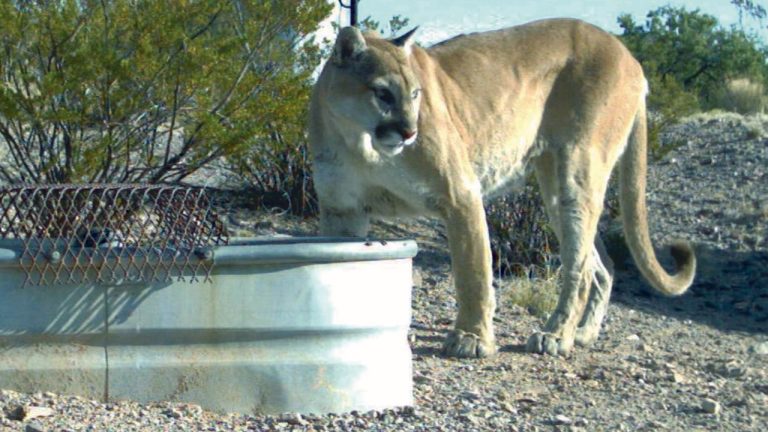
Larger predators such as mountain lions respond in more complex ways. A study of large carnivore movement under drought described how spatial overlap and encounter rates shift when prey becomes scarce. Spatial overlap measures how much of their home ranges two individuals share, while encounter rates indicate how often they come into contact. During dry years, lions may travel farther to find deer and other prey, which increases overlap with other lions and with human-dominated areas. That combination can lead to more territorial fights between lions and more livestock depredation, both of which are perceived as rising aggression.
Inside the brain: hunger, thirst and psychological stress
Behavioral changes during drought are not only about geography. They also reflect what chronic hunger and thirst do to animal physiology. Educational work on hunger, thirst and psychological stress in animals explains that most species reproduce in very high numbers, from arthropods to fishes that can lay thousands to millions of eggs, because harsh conditions will kill a large share of offspring. When drought hits, adults that survive must compete more fiercely for what remains, and stress hormones rise as a result.
Laboratory experiments with social fish show how water scarcity can directly increase aggression. In one study on cichlid fish, researchers examined the Effect of aquarium’s water renewal on cichlid fish aggression and found that aggressive interactions increase when water renewal is reduced. The Highlights of the study noted that limited water exchange led to more frequent chases and attacks, along with detrimental impacts on fish health. A follow-up analysis of the same work pointed out that these findings suggest that, in artificial environments, poor water quality and reduced renewal can magnify social stress and aggression in fish.
Those controlled results mirror what field biologists see in drought-stricken rivers and ponds. Lower water levels concentrate fish into smaller areas, which boosts competition for oxygen, food and shelter. Similar crowding pressures emerge on land when animals cluster around the last remaining waterholes. Predators and prey, as well as rival groups of the same species, are forced into close contact, and the threshold for aggressive behavior drops.
Why human-wildlife conflict spikes when the rain stops
Evidence from California provides one of the clearest pictures of how drought translates into everyday conflict. A study that analyzed the Wildlife Incident Reporting database found that prolonged drought periods were associated with a marked increase in negative interactions between people and wild animals. The authors described how Carnivores may also be prone to conflict with humans during drought due to a reduction in prey biomass caused by drought, the spatial redistribution of carnivores toward human-dominated landscapes, and the tendency for people to vilify carnivore species when conflicts occur.
Another report on the same dataset emphasized the scale of the problem. More than 60 animal species were named in the reports, ranging from large carnivores to smaller omnivores. Researchers developed a statistical method to test how changes in precipitation influenced incident rates and concluded that drought linked to increased conflict between humans and wildlife in California. They highlighted that in addition, less water on the landscape concentrates animals at the remaining sources, which are often near farms, reservoirs and residential water features.
A separate analysis of conflict trends across species echoed those findings, noting that Across species, the drought effect persisted across different habitats and animal groups. With each 1-inch shortfall in annual rain, reported conflicts climbed about 2.1% overall, with the effect particularly strong for black bears and bobcats. The researchers argued that these consistent percentages point to a structural relationship between water availability and conflict, rather than isolated local problems.
Local guidance for communities facing drought reinforces the mechanism behind those statistics. Educational materials on coexisting with wildlife during drought explain that Drought conditions send wildlife in search of food, water, and cover, which means some animals travel farther than usual and into more developed areas. Less grass and vegetation growth means less food for herbivores and fewer hiding places for prey, which in turn changes predator behavior. Irrigated yards, gardens and livestock troughs become focal points, and animals that might normally avoid humans are more willing to take risks.
Case study: black bears as reluctant aggressors
Black bears offer a detailed case study of how drought can shift an animal from avoidance to apparent aggression. Wildlife agencies stress that Even though they are incredibly strong and surprisingly fast, black bears will typically do everything they can to avoid people. Yet during drought years, reports of bears breaking into garages, raiding chicken coops or standing their ground near trash cans often spike.
Guidance from Utah wildlife officials explains why. The drought conditions impact plants that produce nuts and berries that bears rely on, which forces them to search more widely for food. When bears discover unsecured garbage or pet food, they quickly learn that human areas provide high-calorie meals with relatively little effort. Over time, a bear that has been rewarded this way may become less fearful and more willing to confront people or dogs that try to chase it away.

Leo’s been tracking game and tuning gear since he could stand upright. He’s sharp, driven, and knows how to keep things running when conditions turn.