10 myths about calibers that refuse to die
Caliber myths hang on longer than bad hunting stories at deer camp, and they shape what people carry, buy, and trust when it matters most. I want to walk through ten of the worst offenders, using hard test data instead of gun-counter folklore, and show where the numbers flat-out contradict the legend.
1. Myth: .45 ACP Always Outstops 9mm
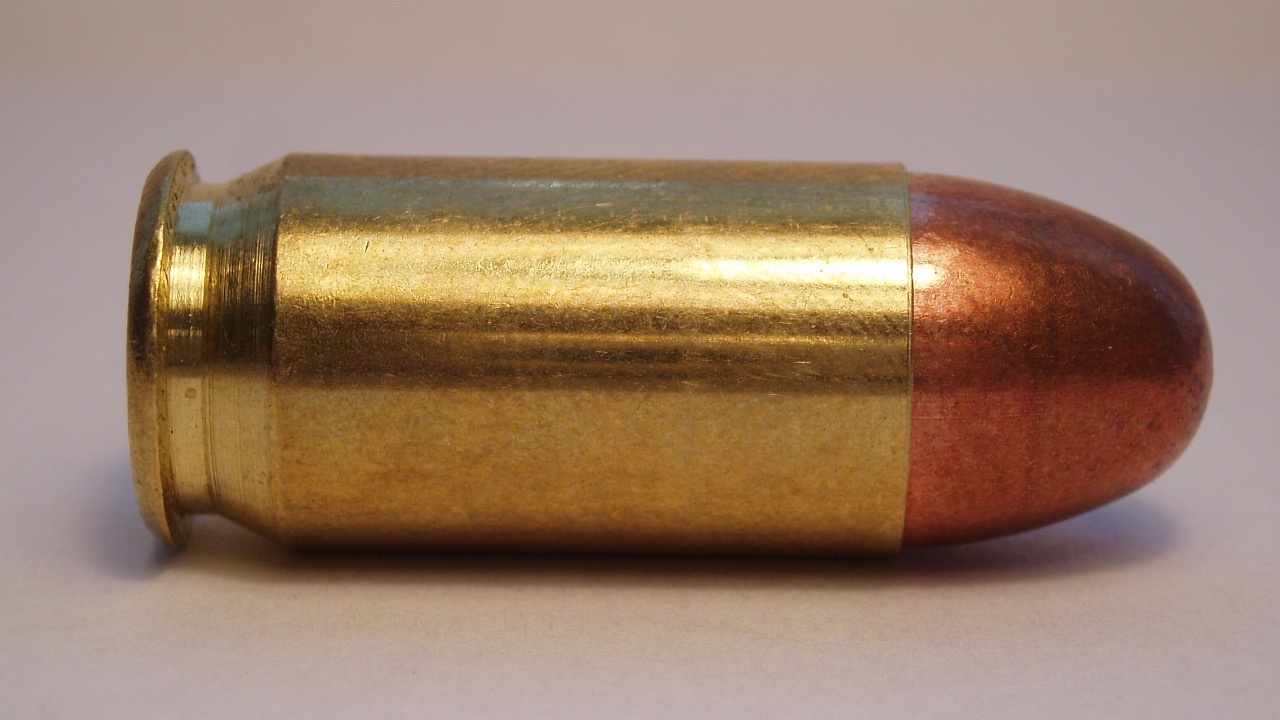
The first stubborn myth says .45 ACP is automatically a better “man-stopper” than 9mm. In reality, FBI ballistic tests in the 1980s found that 9mm loaded with modern hollow points delivers penetration and expansion on par with .45 ACP. The key line from that work is that “9mm with modern hollow points achieves comparable penetration and expansion,” which undercuts the idea that bigger diameter alone wins the fight.
For anyone choosing a carry gun, that matters. If 9mm performs on the same level in gel, then magazine capacity, controllability, and training cost start to matter more than caliber bragging rights. I see shooters run 9mm faster and more accurately, and the FBI data explains why many agencies moved back to it after flirting with larger rounds.
2. Myth: Rifle Rounds Cause Hydrostatic Shock Incapacitation
Another long-running claim is that high-velocity rifle rounds like 5.56 mm drop people instantly through “hydrostatic shock.” Wound ballistics researcher Dr. Martin Fackler pushed back hard on that idea, showing in his rifle studies that temporary cavitation in human tissue is minimal at typical 5.56 mm velocities. His conclusion was blunt, stating that hydrostatic shock from these rounds “does not cause instant incapacitation.”
That does not mean 5.56 mm is weak, it means the mechanism is different from the campfire stories. Incapacitation still comes from disrupting the central nervous system or causing rapid blood loss, not some mystical pressure wave. For hunters and defensive shooters, the takeaway is to prioritize shot placement and adequate penetration instead of banking on velocity alone to flip a switch.
3. Myth: .22 LR Is Useless for Self-Defense
.22 LR gets written off as a plinking round with no defensive value, but the numbers tell a more complicated story. A 2018 International Wound Ballistics Association study, cited in a caliber review, found that .22 LR can penetrate 12 to 16 inches in ballistic gelatin. That depth meets the common standard for reaching vital organs, as long as the shooter can place the rounds where they count.
I am not arguing that .22 LR is ideal for carry, especially compared with service calibers that expand more reliably. However, the data shows it is not the harmless “BB gun” some people describe. For recoil-sensitive shooters or as a last-ditch option, understanding that it can reach critical structures changes how seriously it should be treated and handled.
4. Myth: .40 S&W Is the Ultimate Man-Stopper Over 9mm
.40 S&W built its reputation on being a harder-hitting alternative to 9mm, and the myth says that extra snap translates into clearly better stopping power. A U.S. Army Research Laboratory report on 9mm versus .40 S&W undercuts that belief, stating that terminal ballistics data does not show .40 offering superior “man-stopping” performance. Instead, the report notes that .40 S&W brings higher recoil without proportional gains.
That recoil penalty matters in real fights, where fast, accurate follow-up shots are critical. The same Army work points out that shooters can generally run 9mm quicker, which lines up with what I see on the range. When the wounding performance is similar, the round that lets you put more hits on target, more quickly, often ends up being the smarter choice.
5. Myth: .357 Magnum Dominates 9mm in Power
Plenty of shooters still assume .357 Magnum always hits harder than 9mm, no matter the gun. In archived Gunsite lectures, Jeff Cooper referenced 1992 chronograph tests where Federal Premium 9mm +P loads actually exceeded .357 Magnum in muzzle energy from short barrels. That finding directly contradicts the blanket claim that .357 Magnum is always more powerful.
Short-barreled revolvers bleed velocity, and those tests showed how a hot 9mm from a compact semi-auto can keep more of its punch. For people carrying snub-nose revolvers, it is a reminder that barrel length and specific load matter as much as the headstamp. It also explains why many modern defensive loads focus on optimizing performance from shorter carry guns instead of chasing raw velocity numbers.
6. Myth: .380 ACP Fails Concealed Carry Standards
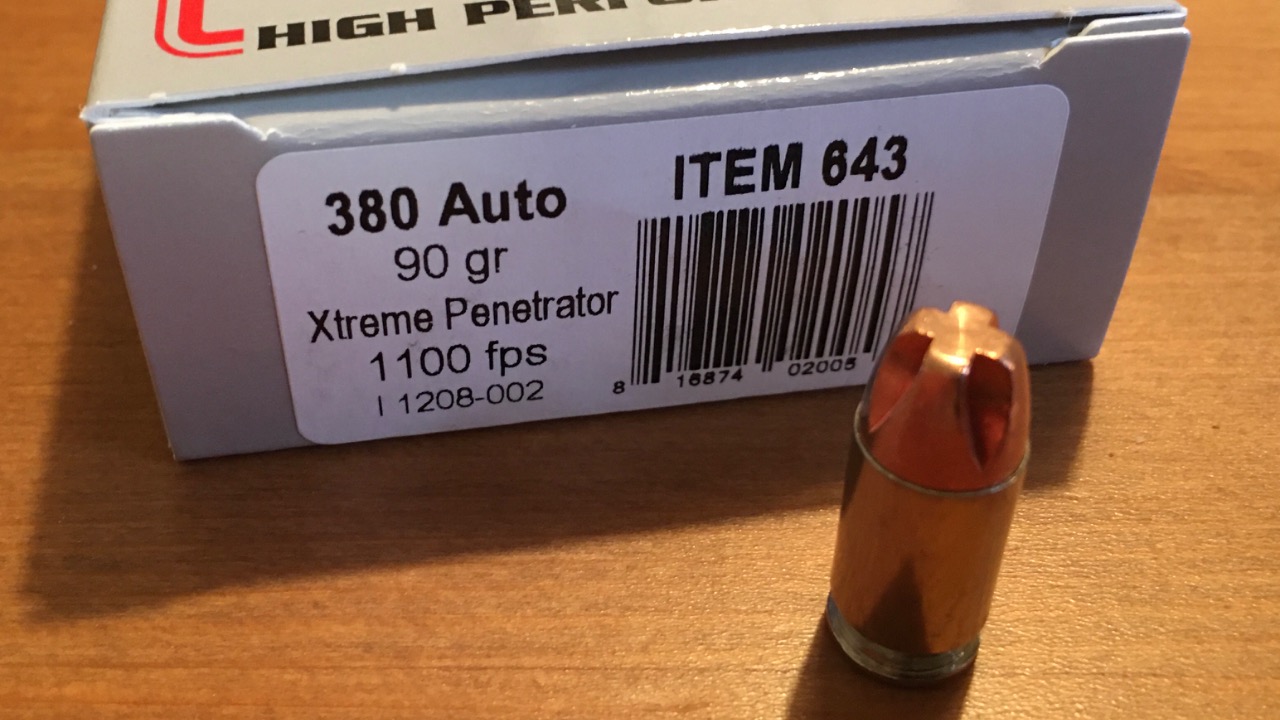
.380 ACP is often dismissed as too weak to meet accepted defensive benchmarks. However, testing by the ATF Firearms Technology Branch, summarized in a 2007 report, showed that .380 ACP loads like Hornady Critical Defense can meet the FBI’s 12 inch minimum penetration standard in ballistic gelatin. That directly challenges the idea that .380 ACP cannot reach vital organs under protocol conditions.
There are tradeoffs, of course, including less expansion and energy than service calibers, but the data shows .380 ACP is not automatically below the bar. For people who carry very small pistols, or who struggle with 9mm recoil, knowing that certain .380 ACP loads pass FBI-style tests gives a more realistic picture of what the round can and cannot do.
7. Myth: 10mm Auto Risks Excessive Overpenetration
10mm Auto has a reputation as a runaway freight train that will zip through targets and keep going. A Journal of Forensic Sciences study by Dr. Gary Roberts complicates that story, showing that controlled 10mm loads expand reliably to about 0.70 inches. That level of expansion soaks up energy and reduces overpenetration risk compared with non-expanding full metal jacket rounds.
In other words, bullet design matters more than caliber alone. A well-chosen 10mm hollow point can dump energy efficiently in tissue, while a smaller-caliber FMJ can sail straight through. For hunters using 10mm on hogs or as bear defense, and for defensive carriers, the study underscores the importance of matching load selection to the job instead of assuming every 10mm behaves the same.
8. Myth: All .300 Blackout Is Subsonic and Weak
.300 Blackout is often pigeonholed as a slow, quiet cartridge meant only for suppressors. In reality, SAAMI specifications allow supersonic .300 Blackout loads up to 2,200 feet per second. Those supersonic options can outperform 5.56 mm in short-barreled AR platforms for hunting, delivering heavier bullets at useful velocities where 5.56 mm starts to lose steam.
That flexibility is the whole point of the cartridge. Subsonic loads keep things quiet for specialized roles, while supersonic hunting loads turn short ARs into capable deer or hog rigs inside moderate ranges. Treating .300 Blackout as “all subsonic” ignores half of what the chambering was built to do and can lead shooters to underestimate its practical field performance.
9. Myth: .38 Special Trumps .327 Federal Magnum
Revolver fans sometimes assume .38 Special, especially in +P form, is the more capable defensive round compared with .327 Federal Magnum. Data from a Buffalo Bore white paper shows .327 Federal Magnum loads reaching 1,400 feet per second from a 2 inch barrel. That velocity gives .327 Federal Magnum more energy than .38 Special +P, while still keeping recoil manageable.
On top of that, .327 Federal Magnum revolvers often hold an extra round compared with similar .38 Special or .357 Magnum guns. For concealed carriers who prefer wheelguns, that combination of higher energy and additional capacity is not trivial. The numbers undercut the casual claim that .38 Special is automatically the superior choice in small-frame defensive revolvers.
10. Myth: 5.7x28mm Lacks Real Stopping Power
The 5.7×28 mm cartridge, especially from the FN Five-seveN pistol, is frequently labeled as too light and fast to be effective. Ballistic gel testing by Luckygunner Labs with SS197SR loads recorded penetration in the 13 to 18 inch range. That performance is comparable to many 9mm duty loads that also aim for the FBI’s 12 to 18 inch window.
While 5.7×28 mm uses lighter bullets, the gel results show it can reach the same vital depth envelope as established service calibers. For shooters considering the Five-seveN or similar platforms, the data suggests the round is not the underperformer some critics claim. As with every other caliber on this list, real-world effectiveness depends on load choice, shot placement, and the shooter’s ability to run the gun under stress.

Asher was raised in the woods and on the water, and it shows. He’s logged more hours behind a rifle and under a heavy pack than most men twice his age.