15 Historic military firearms that earned lasting respect
Some military firearms earn more than a footnote, they earn a kind of grudging respect from anyone who studies or carries a gun. The 15 weapons here shaped tactics, politics, and survival, from blackpowder line battles to jungle firefights and city streets. I look at what each one was, how it worked, and why soldiers on every side learned to respect it.
1. Brown Bess Musket, the primary British Army firearm from 1722 to 1838 that fired a .75 caliber lead ball with a flintlock mechanism and equipped redcoats at Yorktown in 1781.
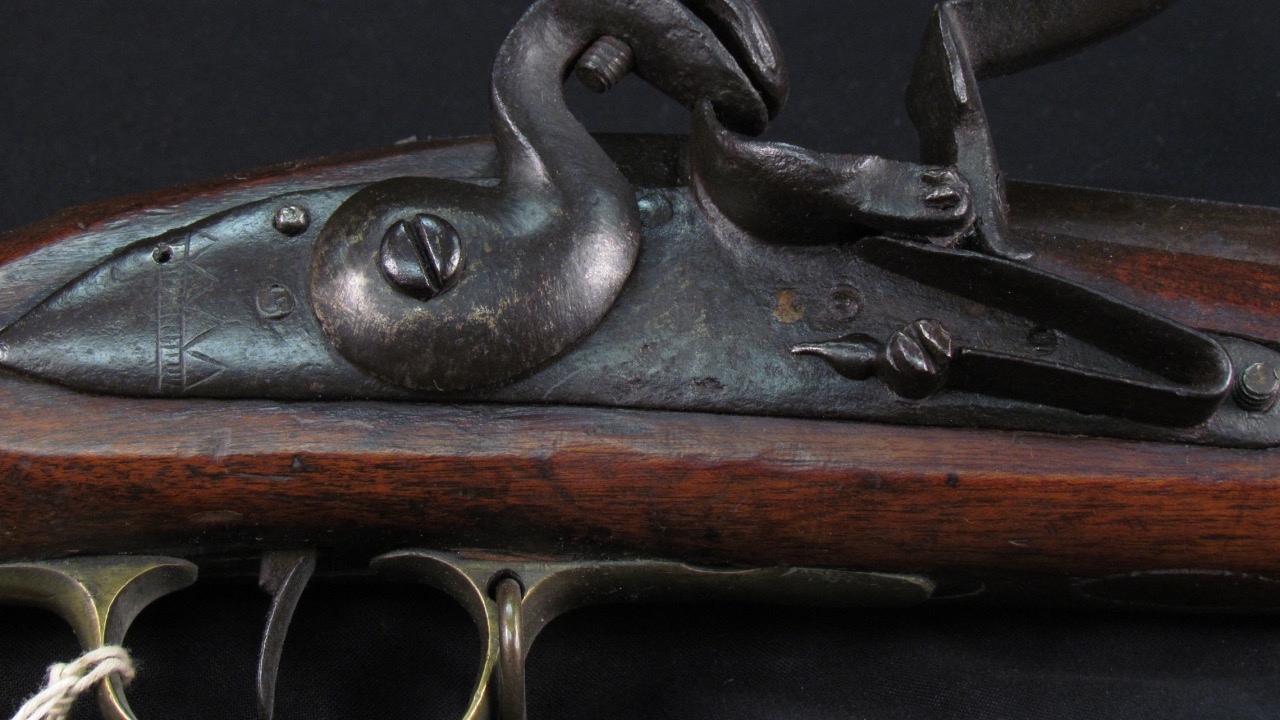
The Brown Bess was the workhorse of the British Army, officially the Long Land Pattern Musket, throwing a .75 caliber lead ball from a flintlock smoothbore. From 1722 to 1838 it armed redcoats on battlefields across the globe, including the American Revolutionary War and the British lines at Yorktown in 1781, where its reliability mattered more than pinpoint accuracy.
Nicknamed Brown Bess, this Land Pattern Musket and its derivatives became a symbol of imperial power. Accounts of the .75 caliber Bess Kipling blessed describe British infantrymen carrying it from the 1730s through the Napoleonic era. That long service record is why historians still treat the Brown Bess as a benchmark for musket-era military firepower.
2. Kentucky Rifle, a muzzle-loading flintlock developed by German immigrants in the 1730s with a 40-60 inch barrel grooved for rifling that improved accuracy to 200 yards.
The Kentucky Rifle, also called the Pennsylvania long rifle, was a very different tool, built for accuracy instead of volley fire. German immigrants in the 1730s gave it a 40-60 inch barrel grooved for rifling, which spun the ball and pushed effective accuracy out to roughly 200 yards, a huge leap over smoothbore muskets of the same era.
Frontiersmen and militia carried these rifles into the French and Indian War from 1754 to 1763, using that reach to harass enemy formations from cover. In dense woods and broken terrain, the long rifle’s precision let small groups punch far above their weight, a pattern that foreshadowed later emphasis on marksmanship and individual rifle skill in North American warfare.
3. Dreyse Needle Gun, the first breech-loading rifle adopted by the Prussian Army in 1841 using a paper cartridge pierced by a needle-like firing pin to fire 7mm rounds.
The Dreyse Needle Gun, Model 1841, marked a turning point because the Prussian Army finally had a practical breechloader. It fired 7mm rounds from a paper cartridge that a long needle-like firing pin pierced from the rear, letting soldiers load while prone instead of standing to ram a charge down the barrel like earlier muzzle-loaders.
In skilled hands, reports credit the Dreyse with rates up to 300 rounds per minute, a staggering figure for the era that reflected its rapid manipulation and pre-made cartridges. At the Battle of Königgrätz in 1866, that firepower helped Prussian infantry outshoot opponents still tied to slower systems, showing how a single rifle design could tilt the balance in a major campaign.
4. Spencer Repeating Rifle, a lever-action carbine introduced in 1860 firing .56-56 rimfire cartridges from a 7-round tube magazine and adopted by Union forces.
The Spencer Repeating Rifle brought true repeating fire to the American Civil War. Introduced in 1860, this lever-action carbine fed .56-56 rimfire cartridges from a 7-round tube magazine in the stock, giving Union cavalry and infantry a huge edge over single-shot muzzle-loaders when the shooting got close and fast.
The Spencer is often described as a manually operated lever-action repeater, and by the time over 200,000 examples were built in the United States it had proven its worth. At Gettysburg in 1863, repeating fire from Spencer-armed troops helped repel Confederate charges, and that performance is why veterans later said the rifle had saved “a thousand lives” in brutal fights.
5. Henry Rifle, patented in 1860 by Benjamin Tyler Henry as a lever-action repeating rifle holding 16 .44 rimfire cartridges in a side-loading magazine.
The Henry Rifle, patented in 1860 by Benjamin Tyler Henry, pushed the repeating idea even further. Its lever-action design fed 16 .44 rimfire cartridges from a side-loading magazine under the barrel, letting a trained shooter send a sustained stream of fire without pausing to reload after every shot, a major psychological shock to opponents used to slower weapons.
Union troops and scouts prized the Henry in the Civil War, especially in rough country where fast follow-up shots mattered. Wild Bill Hickok reportedly carried one in 1864 skirmishes along the Kansas-Missouri border, where a 16-shot rifle could decide whether a small patrol walked away from an ambush or got overrun by a larger force.
6. Colt Single Action Army Revolver, adopted by the U.S. Army in 1873 as the “Peacemaker” chambered in .45 Colt with a 6-shot cylinder and single-action hammer.
The Colt Single Action Army, adopted by the U.S. Army in 1873, gave soldiers and scouts a rugged sidearm that matched frontier conditions. Chambered in .45 Colt with a 6-shot cylinder and single-action hammer, the “Peacemaker” delivered serious stopping power in a package that could ride on a trooper’s hip day after day.
Ordnance reports tie this revolver directly to the Indian Wars, including Custer’s Last Stand at Little Bighorn in 1876. Its presence in so many frontier fights, from cavalry charges to close-range skirmishes around isolated outposts, is a big reason the Colt Single Action Army still looms large in both military history and American gun culture.
7. Maxim Gun, invented by Hiram Maxim in 1884 as the world’s first fully automatic machine gun, water-cooled and belt-fed with .303 British rounds at 600 rounds per minute.
The Maxim Gun, created by Hiram Stevens Maxim in 1884, was the first fully automatic machine gun to see real service. Using recoil operation, a water-cooled barrel, and a belt of .303 British cartridges, it could sustain roughly 600 rounds per minute, turning a small crew into the firepower equivalent of an entire line of riflemen.
The Maxim went to war with the British in colonial campaigns, including the Sudan fighting. At the Battle of Omdurman in 1898, Maxim positions helped inflict over 10,000 casualties on attacking forces, a grim example of how industrial-age weapons could devastate massed assaults and reshape commanders’ ideas about offense and defense.
8. Mauser Gewehr 98, adopted by the German Army in 1898 as a bolt-action rifle firing 7.92x57mm Mauser cartridges from a 5-round internal magazine.
The Mauser Gewehr 98 set the standard for bolt-action military rifles. Adopted by the German Army in 1898, it fired 7.92x57mm Mauser cartridges from a 5-round internal magazine and used a controlled-feed action that guided each round smoothly into the chamber, reducing jams and making cycling more reliable under stress.
This rifle served as Germany’s primary infantry arm through both World Wars, including the trenches of the Somme in 1916. Its strong action and cartridge design influenced later hunting and military rifles worldwide, and many modern bolt guns still trace their basic layout back to the Gewehr 98’s proven combination of strength, safety, and accuracy.
9. Thompson Submachine Gun, developed by John T. Thompson in 1918 but entering U.S. military service in 1942 as Model 1928 firing .45 ACP from 20- or 50-round magazines.
The Thompson Submachine Gun, Model 1928, finally reached U.S. military service in 1942 after John T. Thompson’s earlier work in 1918. Chambered in .45 ACP and fed by 20-round box or 50-round drum magazines, it delivered 600 to 900 rounds per minute, giving American troops a hard-hitting option for close-quarters fighting.
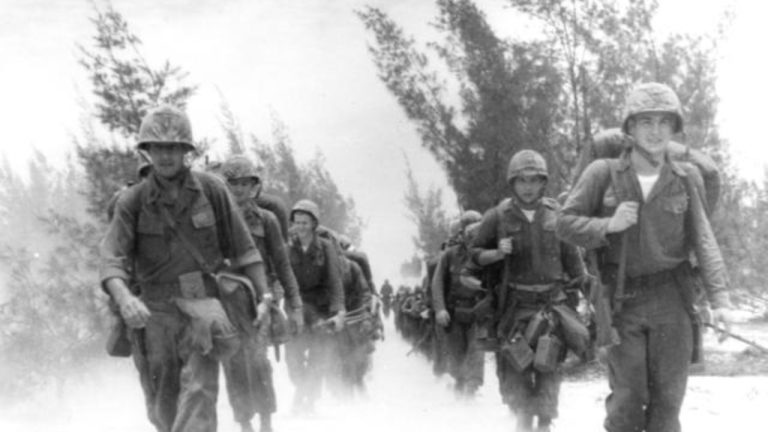
Marines carried Thompsons into Pacific island battles like Guadalcanal in 1942, where dense jungle and short engagement ranges favored submachine guns. Reports from those campaigns describe how the Thompson’s volume of fire helped clear bunkers and repel sudden charges, making it one of the most respected personal weapons in that brutal theater.
10. M1 Garand Rifle, designed by John C. Garand and adopted by the U.S. Army in 1936 as a semi-automatic .30-06 caliber rifle with an 8-round en bloc clip.
The M1 Garand changed what an infantry rifle could do in regular service. Designed by John C. Garand and adopted in 1936, it was a semi-automatic .30-06 rifle that fed from an 8-round en bloc clip, letting American soldiers fire aimed shots as fast as they could work the trigger without manually cycling a bolt.
General George S. Patton famously called it “the greatest battle implement ever devised,” a line often quoted in discussions of the rifle’s impact. In the Normandy landings of 1944 and the push across Europe, that fast, reliable fire gave U.S. infantry a real edge over opponents still relying heavily on bolt-action rifles.
11. MP40 Submachine Gun, produced by Steyr-Daimler-Puch starting in 1938 for the German Wehrmacht firing 9mm Parabellum from a 32-round box magazine at 500 rounds per minute.
The MP40 submachine gun reflected Germany’s push toward efficient mass production before World War II. Built by Steyr-Daimler-Puch starting in 1938 for the Wehrmacht, it fired 9mm Parabellum from a 32-round box magazine at about 500 rounds per minute, using stamped metal parts that were quicker and cheaper to manufacture than earlier milled designs.
Paratroopers carried MP40s in operations like the 1941 invasion of Crete, where compact automatic firepower mattered during chaotic airborne drops and close-in fighting. Its folding stock and controllable rate of fire made it a favorite among troops who needed a handy weapon for urban streets, vehicles, and tight terrain.
12. Sten Gun, designed by Reginald Shepherd and Harold Turpin in 1941 for the British Army as Mark II, a cheap 9mm blowback submachine gun with a 32-round magazine.
The Sten Gun, Mark II, was Britain’s answer to a desperate need for submachine guns in 1941. Designed by Reginald Shepherd and Harold Turpin, it was a simple 9mm blowback design with a 32-round side-mounted magazine, built from stamped parts that kept the unit cost under $10 at wartime production levels.
That low cost and compact size made the Sten ideal for arming resistance movements. British planners used it in clandestine drops to fighters in occupied Europe, including French Resistance groups in 1943, where a cheap, concealable automatic weapon could level the playing field against better-equipped occupying forces.
13. AK-47 Assault Rifle, designed by Mikhail Kalashnikov and adopted by the Soviet Army in 1949 firing 7.62x39mm intermediate cartridges from a 30-round curved magazine.
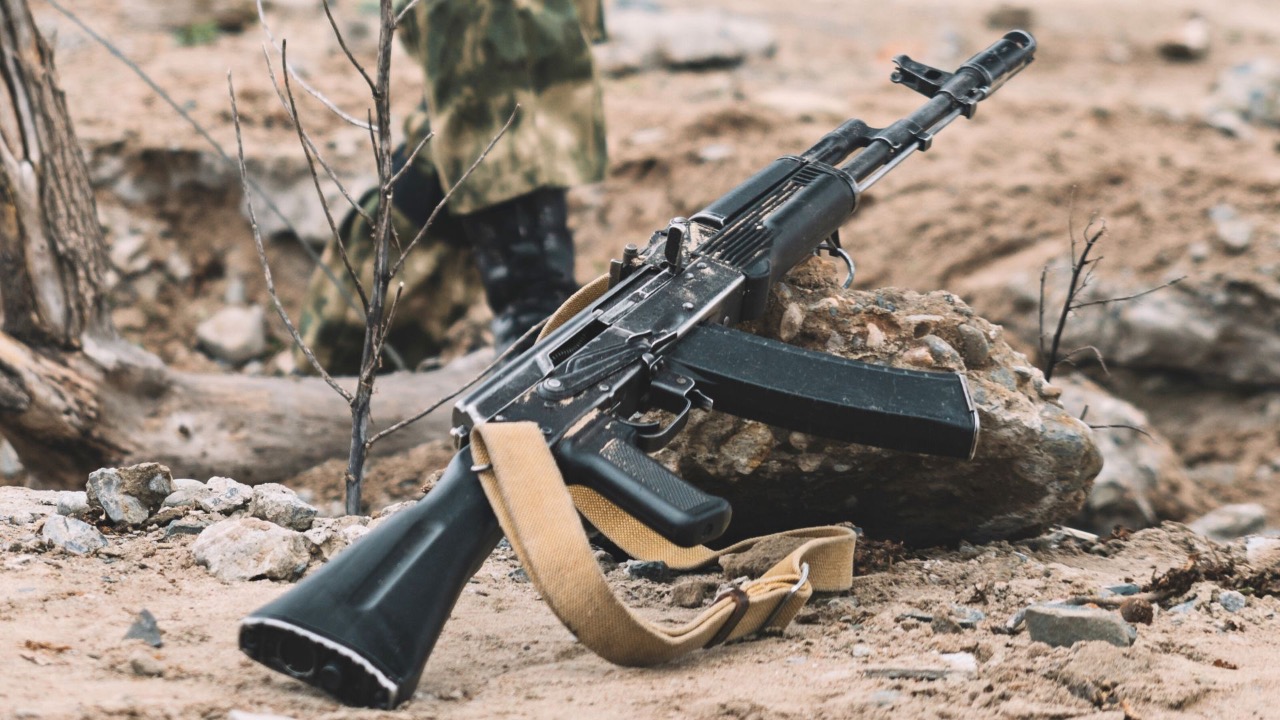
The AK-47, designed by Mikhail Kalashnikov and adopted by the Soviet Army in 1949, centered on a 7.62x39mm intermediate cartridge and a 30-round curved magazine. Its gas-operated action and loose tolerances gave it legendary reliability in mud, sand, and extreme temperatures, traits that mattered more to conscript armies than fine accuracy.
According to reporting on the AK’s global spread, this rifle influenced conflicts from Korea in 1950 through Afghanistan in the 1980s. Its durability and ease of use turned it into a default choice for regular armies and irregular forces alike, reshaping small-arms warfare in the second half of the twentieth century.
14. M16 Rifle, adopted by the U.S. military in 1964 as the XM16E1, a lightweight 5.56x45mm select-fire rifle with 20- or 30-round magazines.
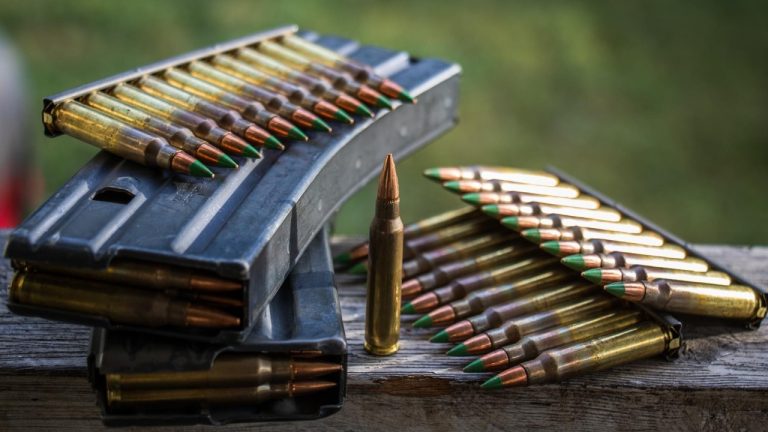
The M16 rifle, first fielded as the XM16E1 in 1964, took U.S. forces in a different direction with a lightweight 5.56x45mm cartridge and aluminum-and-plastic construction. It offered select-fire capability and used 20- or later 30-round magazines, giving infantry more ammunition on tap while cutting the weight they had to haul through jungle or rice paddies.
Early jamming problems hurt its reputation, but later fixes and training changes turned the M16 into a Vietnam War staple. By the time of the Tet Offensive in 1968, it was firmly embedded in U.S. doctrine, and over 8 million rifles would eventually be produced, shaping how NATO and many allies thought about small-caliber, high-velocity service rifles.
15. Uzi Submachine Gun, designed by Uziel Gal and adopted by the Israeli Defense Forces in 1951 firing 9mm rounds from 25- or 32-round magazines at 600 rounds per minute.
The Uzi submachine gun, designed by Uziel Gal and adopted by the Israeli Defense Forces in 1951, used a compact telescoping bolt that wrapped around the barrel. Chambered in 9mm and fed by 25- or 32-round magazines, it delivered about 600 rounds per minute in a package short enough to handle easily in vehicles and tight alleyways.
Israeli paratroopers carried Uzis during the Six-Day War in 1967, including the fighting around Jerusalem’s Old City, where urban combat demanded quick handling and close-range firepower. That performance, and the gun’s later export to police and military units worldwide, cemented the Uzi’s reputation as one of the most respected submachine guns of the postwar era.
Supporting sources: Spencer Rifle History:.

Asher was raised in the woods and on the water, and it shows. He’s logged more hours behind a rifle and under a heavy pack than most men twice his age.