From Da Nang to the DMZ: One Marine commander’s year in Vietnam combat
For one Marine company commander, the road from Da Nang to the Demilitarized Zone was not a metaphor but a literal 13‑month march through some of the most contested ground in Vietnam. His tour traced the arc of the Marine Corps’ wider war, from coastal enclaves to the hill fights that came to define the northern front. By following that single year in combat, I can show how strategy, leadership, and loss collided in a landscape that still shapes how Americans remember Vietnam.
His story unfolded against a backdrop of expanding Marine operations, rising casualties, and a determined enemy that refused to break. It is a ground‑level view of a conflict often reduced to abstractions, told through patrol routes, radio calls, and the names of Marines who never came home.
Arriving in-country: Da Nang as a gateway to war
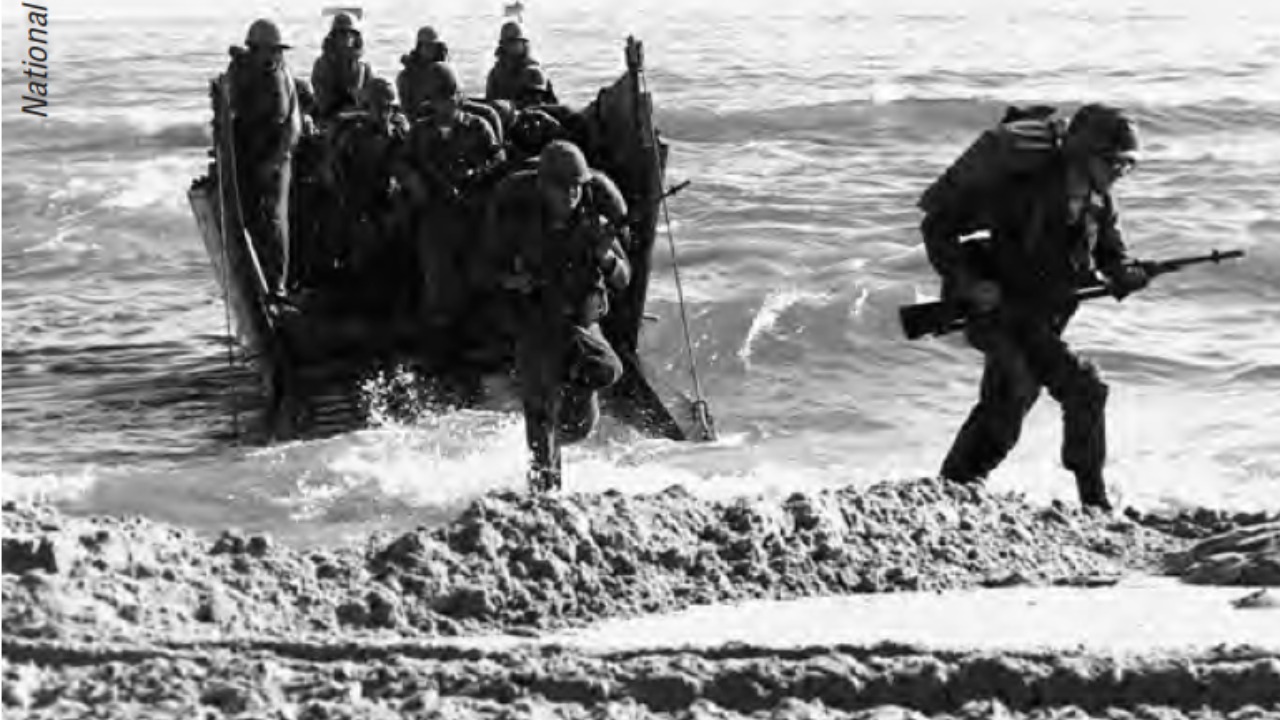
When Capt. Walter Fleming stepped off the aircraft in Da Nang, he entered a war that had already shifted from advisory missions to full‑scale combat. The airfield and surrounding bases formed the hub of Marine operations in I Corps, the northernmost region of South Vietnam, and new arrivals like Fleming were quickly funneled into units that would push outward toward the highlands and the DMZ. His assignment as a Marine commander of a rifle company meant he would spend the next 13 months moving between defensive perimeters, search‑and‑destroy sweeps, and the kind of small‑unit actions that rarely made it into official communiqués but defined daily life in the field.
Da Nang’s role as a gateway was not unique to Fleming, but his path from that coastal city to the front lines mirrored the broader Marine Corps campaign. Historians have traced how Marines established beachheads and then extended their reach northward, a progression captured in works that follow the Corps “from Da Nang to the DMZ” across the critical years of the war. That larger arc, documented in studies of Marine campaigns in Vietnam, provides the strategic frame for Fleming’s personal journey and helps explain why a company commander arriving in Da Nang could expect to end up near the border within a single tour.
From training fields to company command
Fleming did not stumble into combat leadership; he had been groomed for it from the moment he chose the Marine Corps as his path. He joined the service through the Platoon Leaders Class, a commissioning pipeline that took college students and turned them into officers prepared to lead infantry units. By the time he reached Vietnam, he had already internalized the Corps’ expectations for a Marine commander: absolute responsibility for his Marines, fluency in small‑unit tactics, and the ability to make life‑or‑death decisions under pressure. That preparation shaped how he approached his 13 months of combat, from the way he planned patrols to how he handled the first time his company took casualties.
The transition from stateside training to a rifle company in Vietnam was abrupt. Fleming’s route through the Platoon Leaders Class placed him in a generation of officers who arrived just as the war’s tempo intensified, and his assignment to a front‑line unit reflected the Corps’ need for leaders who could sustain operations over a full year in the field. Reporting on his career notes that Capt. Walter Fleming walked through the gap between training grounds and combat zones with little time to adjust, moving almost directly from the structured environment of officer preparation to the unpredictable reality of Vietnam. That pipeline, described in accounts of how he joined the Marine Corps through the Platoon Leaders Class, underscores how quickly young officers were expected to shoulder command in a war that was still evolving.
Thirteen months between Da Nang and the DMZ
Once in command, Fleming’s tour unfolded as a continuous rotation through some of the most dangerous terrain in northern South Vietnam. His 13 months of combat took him from the relative security of positions near Da Nang to exposed firebases and hilltops closer to the DMZ, where North Vietnamese Army units probed Marine lines and contested every ridge. The phrase “from Da Nang to the DMZ” was not just geographic shorthand; it captured the way his company’s area of operations stretched along a corridor of ambush sites, river crossings, and villages caught between opposing forces. Each move north brought heavier contact and a growing sense that the war’s center of gravity was shifting toward the border.
Accounts of his service describe how Fleming’s company operated in that corridor as part of a broader Marine effort to block infiltration routes and protect key population centers. As a Marine commander, he had to balance aggressive patrolling with the need to keep his Marines combat‑effective over a long tour, a challenge that intensified as operations pushed closer to the DMZ. Reporting on his 13 months of combat in Vietnam notes that he repeatedly led his company through contested gaps in the terrain, including areas where enemy forces had already tested Marine defenses. Those movements, traced in narratives that follow units from Da Nang northward, illustrate how individual company commanders became the connective tissue between high‑level strategy and the daily grind of keeping platoons alive.
Mutter’s Ridge and the cost of holding ground
The most searing chapter of Fleming’s tour came on Mutter’s Ridge, a stretch of high ground that offered commanding views of the surrounding valleys and, for that reason, drew intense attention from both sides. Holding that ridge meant controlling observation and artillery positions, but it also exposed Marines to well‑planned North Vietnamese attacks. For Fleming, the fight for Mutter’s Ridge crystallized the brutal arithmetic of Vietnam: terrain that looked like a tactical asset on a map could become a killing ground once the shooting started. His company paid a heavy price to keep its foothold on those heights.
The losses on Mutter’s Ridge were not abstract. Fleming later named four Marines who were killed there under his command: LCpl. Robert W. Cromwell, LCpl. John C. Liverman, Cpl. Agustin Rosario, and Cpl. James O. Weaver. Each name represents a specific moment on that ridge, a firefight or mortar barrage that turned a patrol into a memorial. Reporting on his 13 months of combat in Vietnam records how those Marines died on Mutter’s Ridge, and how their deaths stayed with Fleming long after he left the country. By anchoring the story of that battle in the names of LCpl. Robert W. Cromwell and LCpl. John C. Liverman, along with Cpl. Agustin Rosario and Cpl. James O. Weaver, the narrative forces readers to confront the human cost of holding a few hundred meters of high ground.
Facing a determined enemy in the North Vietnamese Army
Fleming’s respect for the North Vietnamese Army grew with each engagement. He later described The NVA as “pretty darn good,” a blunt acknowledgment that the units facing his company were not a disorganized force but a disciplined, motivated army. In his view, they fought with a clear sense of purpose, which he understood as a drive for freedom for their country. That assessment did not diminish his commitment to defeating them, but it did shape how he evaluated their tactics and the risks his Marines faced on every operation near the DMZ.
His comments about the enemy highlight a professional soldier’s perspective on a foe that many Americans at the time underestimated. Fleming noted that They had a purpose for fighting that he could recognize, even if he opposed their goals, and he regarded them as professional in the way they planned and executed attacks. Reporting that captures his quote about The NVA, including his remark that he saw them as professional too, provides a rare window into how a Marine commander processed the experience of facing a capable adversary day after day. It also underscores why operations along the border were so costly: Marines were not just battling the terrain and the weather, but an enemy that learned, adapted, and refused to yield.
Life inside a Marine rifle company
Behind every firefight and patrol order was the daily routine of a Marine rifle company trying to function in a harsh environment. As company commander, Fleming had to manage logistics, morale, and discipline while his Marines lived in foxholes, bunkers, and temporary positions carved into hillsides. The work ranged from coordinating resupply and medevac to resolving conflicts within the ranks, all while maintaining readiness for contact at any hour. That constant pressure meant that leadership was not just about tactics; it was about keeping a small community intact under extraordinary strain.
Broader histories of Marine operations in Vietnam help fill in the texture of that life. Studies that follow the Marines’ experiences from their arrival in Vietnam to their campaigns near the DMZ describe how rifle companies rotated between combat operations and brief periods of stand‑down, with little true rest. One such account, which traces Marine Corps campaigns from Da Nang to the DMZ between 1965 and 1975, details how units like Fleming’s balanced offensive missions with defensive responsibilities and civic action work in nearby villages. By situating his company within that larger pattern, I can see how his 13 months of combat fit into a sustained effort that stretched across a decade of war.
How historians have framed the Marines’ northern war
Fleming’s story does not exist in isolation; it sits inside a well‑documented chapter of Marine Corps history that focuses on the northern provinces of South Vietnam. Historians have emphasized how the Marines’ move from Da Nang toward the DMZ marked a shift from enclave defense to a more aggressive posture aimed at interdicting North Vietnamese forces. That shift brought units like Fleming’s into frequent contact with regular NVA formations and forced Marine commanders to adapt to a war that looked less like counterinsurgency and more like conventional combat in difficult terrain. His 13‑month tour, with its progression from coastal bases to hill fights like Mutter’s Ridge, tracks closely with that broader narrative.
One influential study of Marine operations in Vietnam, often cited under the title “Semper Fi: Vietnam,” follows the Corps from Da Nang to the DMZ and situates individual company actions within the larger campaigns of 1965 to 1975. The work, available through references to Marine Corps campaigns in that period, underscores how rifle companies bore the brunt of a strategy that demanded both mobility and the defense of fixed positions. Another reference, a hardcover first edition from 1997 that examines the same era, notes that by the end of the conflict the Marine Corps’ total casualties in Vietnam approached the scale of the Corps’ total casualties in World War II. That comparison, preserved in the item description of a VERY GOOD First Edition, highlights the intensity of the fighting that officers like Fleming and their Marines endured.
The emotional ledger of command
For Fleming, the end of his 13 months in Vietnam did not close the book on what he had seen and done. The names of LCpl. Robert W. Cromwell, LCpl. John C. Liverman, Cpl. Agustin Rosario, and Cpl. James O. Weaver remained with him as a personal ledger of command, a reminder that every tactical decision carried human consequences. He had led his company through ambushes, artillery barrages, and the grinding uncertainty of patrolling near the DMZ, and he carried the weight of knowing which Marines did not make it home. That burden is a recurring theme in accounts of company commanders in Vietnam, where the intimacy of small‑unit leadership made every loss feel both professional and deeply personal.
His reflections on the enemy and on his own Marines suggest a commander who tried to reconcile respect for The NVA with loyalty to the men he led. By acknowledging that They fought with purpose and professionalism, he implicitly recognized that his Marines had faced a formidable opponent, which in turn sharpened his sense of what their sacrifices meant. Reporting that captures his comments about the NVA, alongside the detailed listing of his Marines killed on Mutter’s Ridge, shows how intertwined those two strands became in his memory: the quality of the enemy and the cost paid by his company to hold the line between Da Nang and the DMZ.

Leo’s been tracking game and tuning gear since he could stand upright. He’s sharp, driven, and knows how to keep things running when conditions turn.