15 of the most influential firearms the U.S. Army has fielded
The Army’s small arms story runs from early bolt guns to today’s 6.8mm systems, and a handful of designs shaped everything that followed. From the Springfield Model 1903 to the new M7 and M250, these are 15 of the most influential firearms the U.S. Army has fielded and how they changed the way American soldiers fight.
1. Springfield Model 1903 Rifle
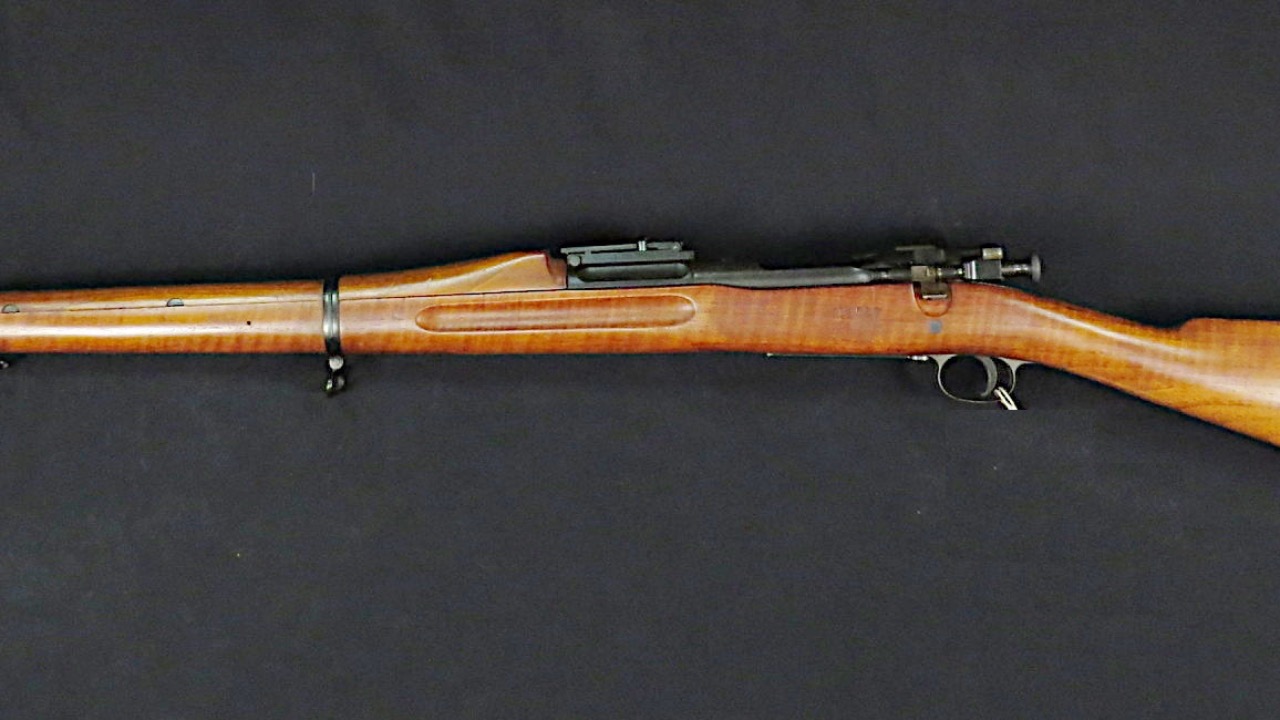
The U.S. Rifle, Caliber .30, Model of 1903 became the Army’s standard service rifle in 1903 and stayed in front-line use into the 1930s. Collectors still obsess over the Springfield because it set the pattern for American bolt guns, with fine sights and tight tolerances that rewarded careful marksmanship in World War I trenches.
Built on Mauser patents, the Springfield Model 1903 was described as the most successful bolt-action military rifle in the history of the US. That accuracy and ruggedness gave doughboys confidence when long-range fire decided who held a shell-torn ridgeline or a cratered village street.
2. M1911 Pistol
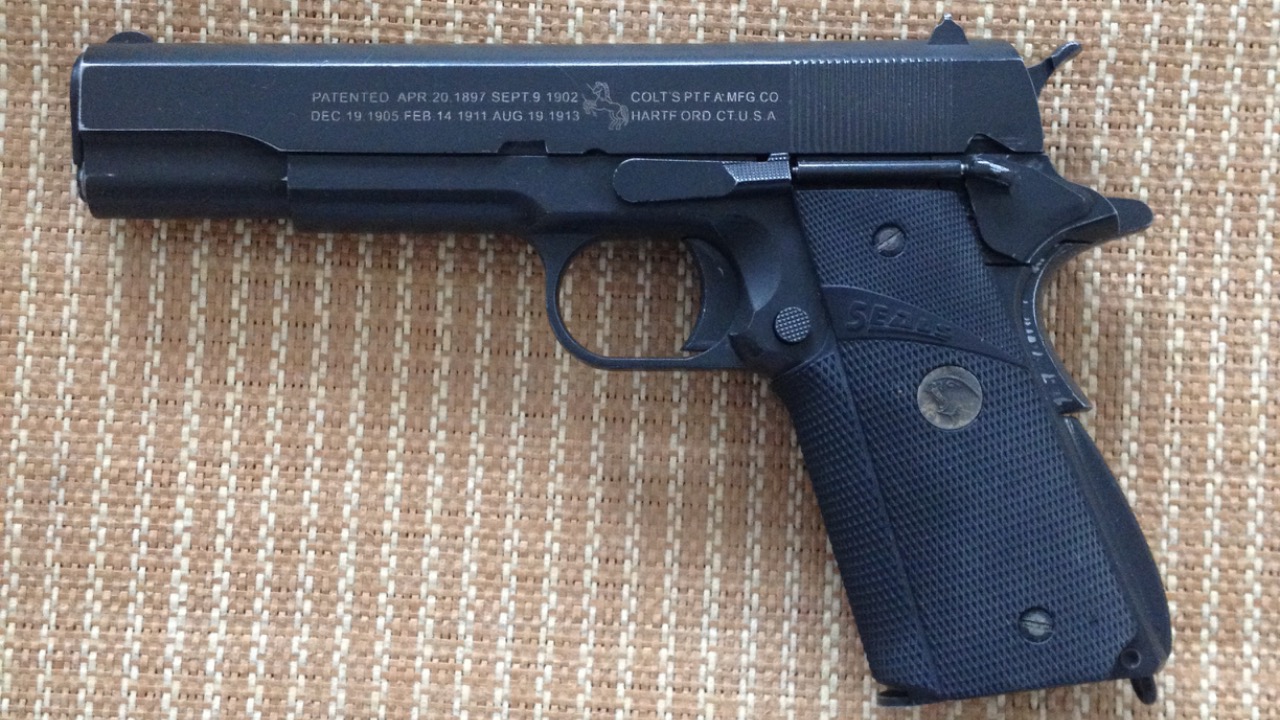
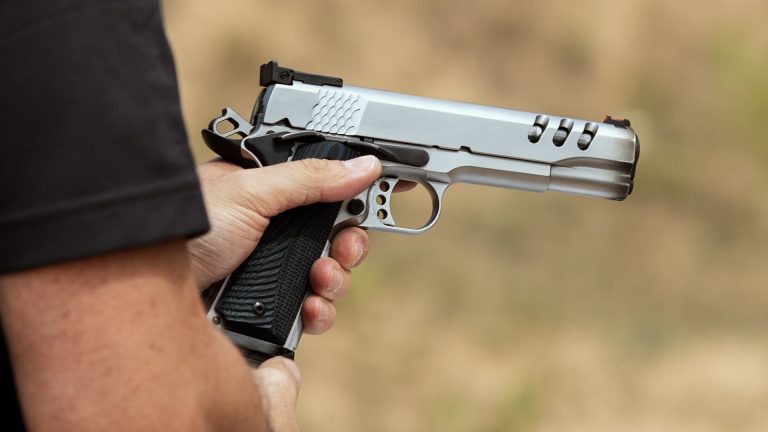
The M1911 pistol rode on the hips of American soldiers from 1911 to 1985, a remarkably long run for a sidearm. Chambered in .45 ACP, John Browning’s single-action design delivered the kind of stopping power commanders wanted after earlier revolvers struggled in close fights, especially in jungle and urban combat where rifles were unwieldy.
Its grip angle, thumb safety, and crisp trigger became the benchmark for combat handguns and influenced later designs across the world. When veterans talk about a sidearm they trusted, the M1911 still comes up, which is why it regularly appears among the Army weapons most soldiers considered reliable in hard use.
3. Browning Automatic Rifle (BAR)
The Browning Automatic Rifle, or BAR, first reached troops in 1918 and stayed in some Army roles into the 1990s. John Moses Browning built it as a portable automatic rifle that a single soldier could fire from the shoulder, giving assaulting infantry a curtain of bullets while advancing across no man’s land.
Historians note that Browning Automatic Rifle gave attacking troops a genuine tactical advantage in World War I, World War II, and Korea. The BAR’s concept of a squad-level automatic weapon paved the way for later light machine guns and changed how American fire teams thought about suppressing an enemy position.
4. Thompson Submachine Gun
The Thompson submachine gun, often shortened to Thompson and nicknamed the “Tommy Gun,” brought .45 ACP firepower into the submachine category. In World War II, it excelled in close-quarters fighting, from European cities to Pacific jungles, where its controllable bursts and heavy bullets hit harder than pistol-caliber carbines of the era.
Analysts looking at World War II small arms point out that this Submachine design, along with later guns like the M3, gave American squads a new tool for room clearing and trench raids. The Thompson’s profile and drum magazines became cultural icons, but for soldiers it meant raw firepower when fights collapsed into a few yards.
5. M1 Carbine
The M1 Carbine answered a specific problem: support troops and paratroopers needed something lighter than a full-size rifle but more capable than a pistol. Fielded from 1942 into the 1960s, the Carbine gave clerks, radiomen, and airborne infantry a handy shoulder arm that was easier to carry on long marches or jumps.
More than 6 million Carbines were produced, making it one of the most common American firearms of World War II and the Korean War. Technical histories of World War II note that the M1 Carbine’s intermediate cartridge and compact size foreshadowed later carbine roles, influencing how the Army thought about arming every soldier, not only front-line riflemen.
6. M1 Garand Rifle
The M1 Garand rifle replaced the Springfield as the Army’s standard service rifle in 1936 and stayed in that role through World War II and the Korean War. Chambered in .30-06, the Garand used an eight-round en bloc clip that automatically ejected with its famous ping when empty, letting soldiers fire faster than bolt-action opponents.
General George S. Patton famously called the Garand “the greatest battle implement ever devised,” a line often repeated in modern coverage of the rifle. Detailed features on the Garand describe how its reliability and semi-automatic fire gave American infantry a real edge when trading shots across hedgerows, frozen hills, or volcanic Pacific islands.
7. M2 Browning Machine Gun
The M2 Browning machine gun, nicknamed Ma Deuce, has been in Army service since the 1930s and still rides on vehicles and guard towers today. Firing the heavy .50 caliber cartridge, it can chew through light armor, vehicles, and field fortifications at ranges where rifles and lighter machine guns fall short.
Histories of iconic U.S. weapons note that the Browning M2 .50 caliber has served since the 1930s and remains a fixture on modern battlefields. Its ability to provide anti-materiel fire from trucks, tanks, and aircraft keeps it relevant, and Its long service life makes it the longest-serving U.S. firearm in continuous use.
8. M3 “Grease Gun” Submachine Gun
The M3 “Grease Gun” submachine gun entered service in 1943 as a cheaper alternative to the Thompson. Built from stamped metal with a slow rate of fire, it was easier to control and far less expensive to produce, which mattered when the Army was equipping massive armored and airborne formations late in World War II.
World War II technical analyses describe how the M3 and other Submachine designs gave tank crews and paratroopers compact automatic weapons for cramped interiors and night drops. The Grease Gun’s crude looks hid a practical tool that stayed in some armored units into the 1990s, proving that cost-effective design can have a very long tail.
9. M14 Rifle
The M14 rifle entered Army service in 1959, intended to replace the Garand, the BAR, and several other weapons with one select-fire 7.62×51mm NATO rifle. In early Vietnam fighting, it offered excellent range and power, but its full-auto setting was hard to control and the rifle was heavy in thick jungle terrain.
Those shortcomings highlighted the need for lighter rifles and smaller calibers, setting the stage for the M16. Even so, the M14’s accuracy kept it in designated marksman and ceremonial roles long after its official replacement, and it bridged the gap between World War II battle rifles and modern optics-ready 7.62mm platforms.
10. M16 Rifle
The M16 rifle began reaching Army units in the mid-1960s and fundamentally changed American small arms doctrine. Chambered in 5.56×45mm, it used aluminum receivers and plastic furniture to cut weight, letting soldiers carry more ammunition than they could with 7.62mm rifles like the M14 while still maintaining effective fire at typical combat ranges.
Early M16s suffered from jamming issues in Vietnam, often tied to ammunition and maintenance problems, but later improvements turned it into a reliable standard. The rifle’s modular layout, with easily swapped uppers and accessories, shaped decades of carbine and rifle development and influenced how the Army structured squads around lightweight automatic fire.
11. M60 Machine Gun
The M60 machine gun, adopted around 1960, gave the Army a general-purpose 7.62×51mm belt-fed weapon that infantry could carry or mount on vehicles. Nicknamed “The Pig” for its weight and appetite for ammunition, it became a familiar silhouette in Vietnam, where its sustained fire covered patrols breaking contact or assaulting bunkers.
Despite quirks like fragile parts and a finicky gas system, the M60 stayed in service into the 2010s in some roles. Its presence in Vietnam and later conflicts like the Gulf War helped define what soldiers expected from a squad or platoon machine gun, setting performance benchmarks later designs had to beat.
12. Beretta M9 Pistol
The Beretta M9 pistol replaced the M1911 as the Army’s standard sidearm in 1985, bringing 9mm NATO standardization to U.S. forces. With a 15-round magazine, it more than doubled the capacity of the old .45 while meeting alliance requirements for ammunition commonality, which simplified logistics across joint operations.
Coverage of the Army’s most trusted guns notes that the M9 served through the post-Vietnam era, including long wars in the Middle East, before being phased out. Its double-action/single-action system and open-slide design influenced how many soldiers thought about duty pistols, even as debates over caliber and ergonomics continued.
13. M249 Squad Automatic Weapon
The M249 Squad Automatic Weapon, based on the Belgian FN Minimi, entered Army service in 1984 to give each squad its own belt-fed 5.56mm light machine gun. It could also feed from standard rifle magazines, which meant gunners were never completely out of options if belts ran dry in a firefight.
By putting that kind of suppressive fire directly at squad level, the M249 changed small-unit tactics and helped define modern infantry doctrine. Analyses of trusted Army guns highlight how the M249 boosted platoon firepower, letting maneuver elements pin an enemy with high-volume fire while riflemen closed in from another angle.
14. M7 Rifle
The Army’s new rifle, the M7, is part of the Next Generation Squad Weapon program and is chambered in a high-pressure 6.8mm cartridge. Reporting on what it is like to shoot the M7 describes a rifle with more reach and armor penetration than 5.56mm carbines, intended to replace many M4s in close-combat units.
That extra performance comes with more recoil and weight, but testers note that modern suppressors, optics, and ergonomics help manage the trade-offs. For soldiers facing better-protected adversaries, the M7 signals a shift toward cartridges that can defeat advanced body armor while still being carried in realistic quantities on patrol.
15. M250 Machine Gun
The M250 machine gun is the automatic rifle counterpart to the M7, also built around the new 6.8mm round. Firsthand accounts of firing the Army’s new machine gun system describe a lighter weapon than legacy 7.62mm guns, with controllable recoil and better hit probability at extended ranges.
By pairing the M250 with the M7, the Army is trying to give squads a matched set of weapons and ammunition that outperforms older 5.56mm and 7.62mm systems. For future infantry fights, that combination could redefine what “standard” small arms look like, much as the BAR and M16 did in earlier generations.

Asher was raised in the woods and on the water, and it shows. He’s logged more hours behind a rifle and under a heavy pack than most men twice his age.