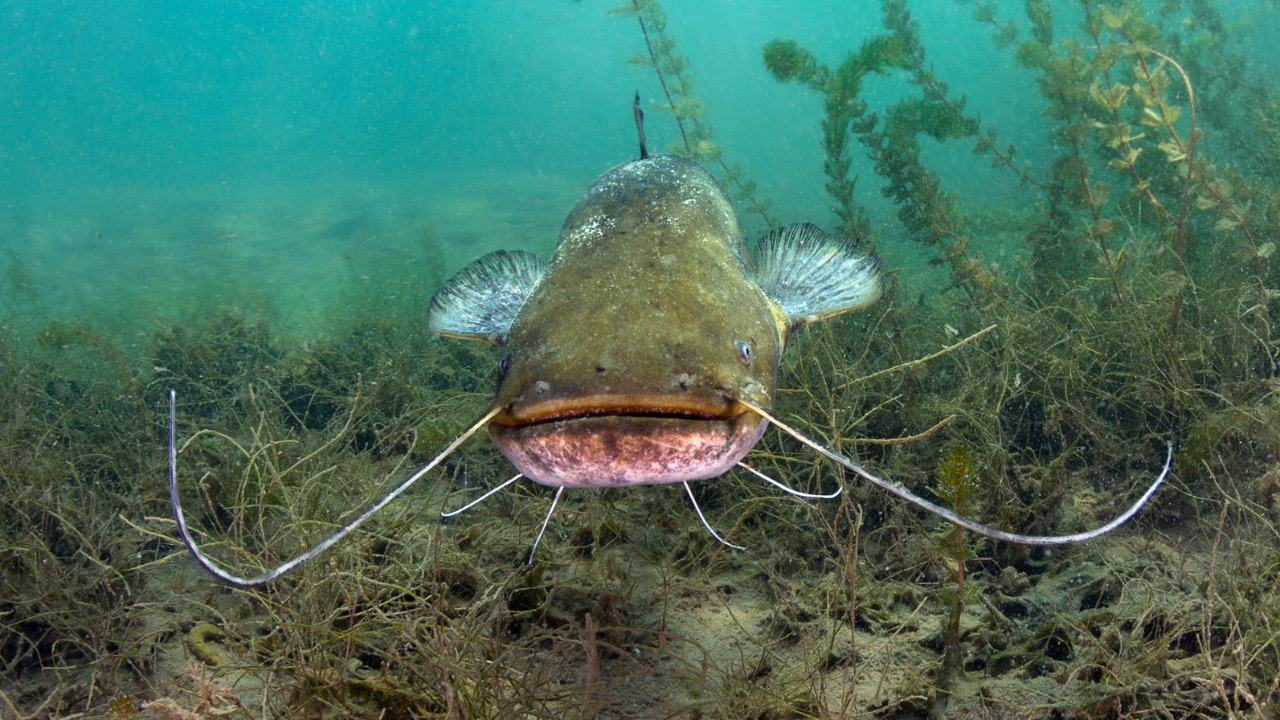
15 Surprising Facts About Catfish
Catfish have a reputation as bottom dwellers, yet their biology and behavior are far stranger and more sophisticated than the nickname suggests. From fish that walk on land to giants that rival a small car in length, these whiskered predators defy expectations at almost every scale. Taken together, at least 15 of their quirks reveal an animal that is both highly specialized and remarkably adaptable.
Scientists group catfish in the order Siluriformes, a diverse collection of species that share a few signature traits but have evolved into radically different shapes and lifestyles. Some live quietly in home aquariums, others dominate major rivers, and a few have weaponized electricity or sound. The surprises start with their basic anatomy and only get stranger as the focus shifts to how they sense, move, and survive.
1. A Global Family With Whiskers, Skin, and Spines
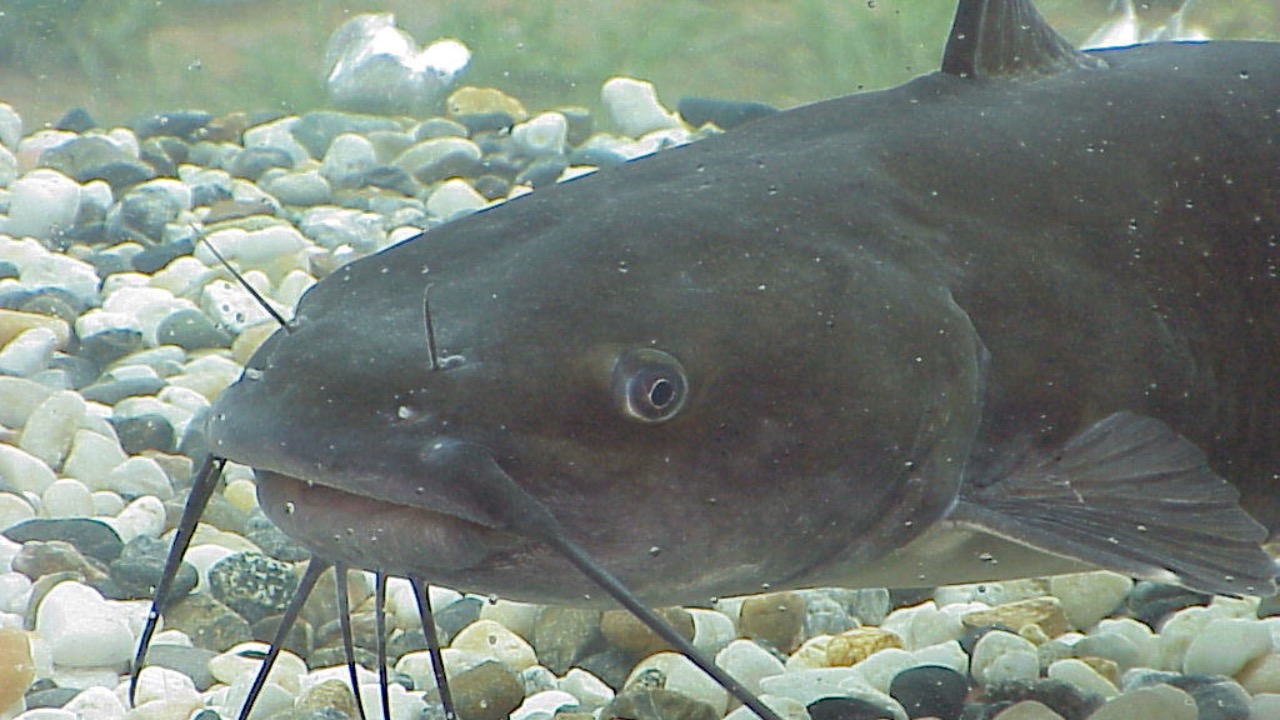
At first glance, a catfish is easy to recognize by its whiskerlike feelers, yet those barbels are more than decoration. A typical catfish has one or more pairs of these sensory organs around the mouth, and they help the fish locate food in murky water where vision is limited. Children’s references describe catfish as a fish that has these whiskerlike feelers by its mouth, and that simple image captures a key evolutionary advantage: barbels are packed with taste and touch receptors that turn a dark riverbed into a searchable map.
Beneath the surface, catfish differ from many familiar fish. Technical guides on food species explain that all catfish lack scales and instead carry smooth, mucus covered skin, often reinforced with heavy, sharp spines in the pectoral and dorsal fins that can deliver a painful wound. Aquarium care resources echo that description and add that this scaleless, mucus coated surface helps protect against infection and parasites, while the spines give even small individuals a surprising ability to defend themselves. Together, barbels, skin, and spines form a basic blueprint that more than 3,000 species have tweaked into a wide range of body plans.
2. Super Senses: Taste Buds, Teeth, Smell, and Electricity
Catfish are sometimes described as swimming tongues, and the comparison is not far off. One educational post notes that the entire body of a catfish is covered with taste buds that can detect chemicals in the water and respond to touch, with the greatest concentration on the whiskers, gill arches, and fins. Another source highlights that catfish have more taste buds than humans do in their mouths, with some species having over 27,000 spread across their bodies, fins, and barbels. These figures help explain why channel catfish can home in on a scent trail in parts-per-billion concentrations and why anglers rely on strongly scented baits.
Their mouths are just as extreme. A widely shared “Fun Fact” points out that the catfish order Siluriformes is described as the animal group with the most teeth in the world, citing a figure of 9,280 teeth in some individuals. These teeth are typically small and sandpaper like, arranged in dense pads that grip rather than slice, ideal for holding slippery prey. Sensory specialists also describe catfish as having exceptional smell and taste capabilities, able to detect minute traces of scents, and some reports describe a form of electroreception that, though not as advanced as sharks, still lets them sense electric fields and subtle disturbances in the water. Combined with acute hearing and a lateral line system that tracks vibrations, these adaptations make catfish formidable nocturnal hunters.
3. Giants, Longevity, and Extreme Environments
Catfish occupy an enormous size range, from tiny aquarium favorites to river giants that rival the length of a small boat. Fact files on freshwater species report that catfish typically live between 15 and 20 years, but some can live up to 60years, growing to lengths of 5 m in exceptional cases. The Mekong River provides one of the most dramatic examples, where the Mekong Giant Catfish has been recorded at several hundred kilograms and several meters long, a true freshwater heavyweight that depends on large, relatively undisturbed river systems.
Smaller relatives show their own extremes by thriving in conditions that would challenge many fish. A recent overview of river species notes that some catfish can thrive in really cold and fast moving water, while others tolerate warm, low oxygen ponds that would suffocate more delicate species. Sea going members of the group, often called sea catfish, extend this versatility into brackish estuaries and coastal waters, where they navigate tides and changing salinity. This environmental range helps explain why catfish are important in aquaculture and wild fisheries from Asia to the Americas.
4. Walking, Talking, and Other Odd Behaviors
Some of the strangest catfish behaviors start when they leave the water or begin to make noise. The species Clarias batrachus, commonly known as the walking catfish, has become famous enough to feature in educational videos that describe a fish that gets its common name from its ability to walk on land. Overviews of Clarias batrachus explain that members of the family Clariidae have accessory breathing organs and can travel overland between pools when conditions are right, a trait that has helped the species spread aggressively in some introduced habitats.
Sound has become a survival tool for other catfish. So called talking catfish use their pectoral spines and swim bladders to produce audible clicks and grunts, and one example is Acanthodoras spinosissimus, a species highlighted in aquarium focused videos for its rasping sounds when handled or disturbed. These noises likely serve as warnings to predators and signals to other catfish in murky environments where vision is limited. In South American rivers, the oddly shaped banjo catfish adds another twist by combining camouflage with stillness, burying itself in leaf litter so completely that only the outline of its banjo like body hints at the predator hidden below.
5. From Home Aquariums to Working Cleaners and River Myths
While some catfish giants inspire awe, many species are small enough to live quietly in home tanks and even help with maintenance. General references on catfish biology note that a number of the smaller species, especially those of the genus Corydoras, are popular aquarium fishes that sift through substrate and consume leftover food. Pet care guides echo that catfish make an excellent addition to many aquariums because they help keep tanks clean and have smooth, mucus covered skin that tolerates close quarters when water quality is managed. Educational videos for children introduce catfish as amazing river animals and emphasize their role in cleaning up uneaten food and organic debris.
In the wild, catfish behavior has inspired both careful study and persistent myths. Observers at public aquariums report that channel catfish are most active at night and often patrol midwater rather than hugging the bottom, a pattern that contradicts the stereotype of a sluggish scavenger. Angling focused analyses have pushed back on myths that catfish only feed in muddy water or only bite at night, pointing to evidence that species in North America respond to a range of conditions and can be caught in daylight when anglers adapt tactics. Another popular claim suggests that some catfish can detect pH directly, but myth busting reviews describe that ability as unproven for the main sport species, labeling it “unknown” rather than established fact.

Leo’s been tracking game and tuning gear since he could stand upright. He’s sharp, driven, and knows how to keep things running when conditions turn.