15 Surprising Facts About Skunks
Skunks are famous for one notorious weapon, but their biology, behavior, and even social lives are far stranger and more intricate than that single spray. Look past the smell and a very different animal emerges, from agile insect hunters to surprisingly gentle neighbors that quietly patrol backyards at night. Here are 15 facts that challenge the cartoon stereotype and reveal how remarkable skunks really are.
1. Skunks have their own scientific family

For years, skunks were grouped with weasels, otters, and badgers, but modern genetics places them in a distinct family, Mephitidae, separate from the classic Mustelids. That shift reflects how specialized their anatomy and scent glands are compared with their former relatives. The reclassification underscores that the familiar black and white animals in North American suburbs represent a unique evolutionary branch, not just smelly weasels.
2. There is more than one kind of skunk
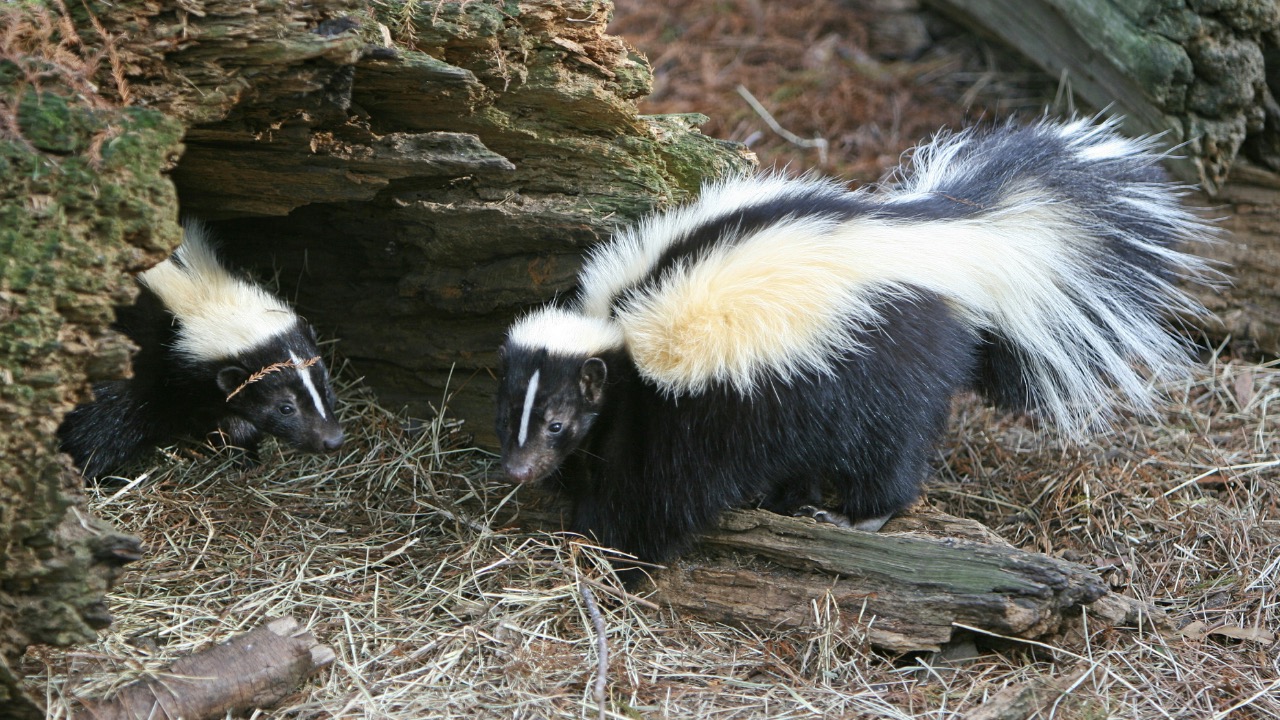
The striped skunk is the best known in North America, but it is only one of several species spread across the Americas. Small and acrobatic spotted skunks wear broken, swirling patterns instead of bold stripes and often perform handstands as a warning display. Hog-nosed skunks carry a single broad stripe and use their powerful claws to dig, while hooded skunks have a dramatic cape of fur that can flare when threatened. Together, they illustrate how varied skunk appearances and lifestyles can be.
3. Their spray is a precision chemical weapon
Skunk spray is not just a bad smell; it is a sulfur-rich mix that can cause temporary blindness and intense irritation. One analysis notes that a skunk can accurately hit a target from up to 10 feet away, and the odor can be detected at much greater distances, which explains why encounters linger long after the animal has left. The fluid comes from paired anal glands that can be aimed like tiny water pistols, and each skunk carries only a limited supply, so they use this defense sparingly.
4. They warn before they fire
Despite the horror stories, most skunks do not spray without a series of warnings. Common displays include stamping their front feet, raising and fluffing the tail, and turning their back while looking over a shoulder. Spotted skunks add a theatrical touch by standing on their forelegs and bouncing in place. These behaviors give predators and people a chance to back away, which protects the skunk’s finite supply of spray and reduces the risk of close combat.
5. Skunks are mostly gentle and solitary
Biologists describe adult skunks as largely solitary, meeting mainly to breed and then going their own way again. A state overview notes that Skunks are intelligent, which fits with reports of animals that tolerate close human presence when not threatened. In colder regions, several females sometimes share a den in winter, a rare instance of skunk communal life that helps them conserve warmth without forming permanent social groups.
6. A group has wonderfully odd names
When skunks do gather, language fans have several options for what to call them. One social media post points out that a group of skunks is called a surfeit, an array, or a stench, with the phrase “Fun fact: A group of skunks is called a surfeit, an array or a stench” appearing in a Manistee News Advocate post. The last term captures how people tend to remember these animals, even if their daily lives revolve more around foraging than fouling the air.
7. They are night shift specialists
Most skunks are active from dusk through the night and rest during the day. A regional natural history guide that profiles Skunk Behavior explains that Skunks are normally nocturnal and spend daylight hours in burrows or under porches. This schedule helps them avoid daytime predators and human activity while taking advantage of night-active insects and other prey.
8. Their diet makes them valuable pest control
Skunks are opportunistic omnivores that eat insects, grubs, small rodents, and fruit. A backyard management guide notes that one sign of their presence is small cone-shaped holes in lawns, about 3 to 4 inches across, created as they dig for beetle larvae and other invertebrates. Those same sources describe how they also raid wasp nests and even eat both adult and larval bees, which positions them as underappreciated allies in controlling certain pests. Homeowners who notice these shallow pits may be seeing evidence of a free night patrol rather than pure damage.
9. They thrive from countryside to city
Skunks live across large parts of North and South America, occupying woodlands, grasslands, deserts, and rocky areas. An educational profile explains that Skunks live all, including rural areas, suburbs, and even cities. That adaptability helps explain why they appear in urban alleys and golf courses as readily as in remote fields.
10. Winter brings a slowdown, not true hibernation
In colder climates, skunks reduce activity and spend long stretches in dens, but they do not enter full hibernation. A seasonal account from Minnesota notes that as temperatures fall, Seasonal routines shift and Skunks gather in sheltered spots to conserve energy. Body temperature and metabolism drop somewhat, yet they remain capable of waking and foraging during milder spells, which differentiates them from true hibernators like groundhogs.
11. They are surprisingly fast and agile
Skunks are often portrayed as slow, but field observations and keeper anecdotes describe them trotting at speeds that can reach around 10 miles per hour when motivated. Their agility is most obvious in smaller species that climb, scramble over logs, and in the case of spotted skunks, perform those famous handstands. The combination of speed and balance lets them escape predators when the spray is not the first line of defense.
12. Baby skunks can be unusually calm around people
Viral videos have introduced many viewers to orphaned or captive-reared kits that seem almost doglike in their comfort with humans. One clip features a handler introducing a young skunk named Levi, described as a two month old baby that trots confidently across a room and accepts gentle handling. While such scenes are not a guide to wild behavior, they highlight the species’ intelligence and capacity for social learning when raised in close contact with people.
13. Their reputation hides ecological importance
Skunks have long been cast as nuisances, yet several educational campaigns emphasize that There is more to these adorable, stinky creatures than meets the eye. By eating crop pests, carrion, and fallen fruit, they help recycle nutrients and limit outbreaks of some insects and rodents. One outreach video frames them as “more than just stink bombs” and introduces an ambassador skunk named Flower, used to show how calm and curious the animals can be in a controlled setting.
14. They can cause damage, but the signs are distinctive
When skunks move into yards, the evidence often appears in very specific patterns. A wildlife control guide explains that signs of skunk damage include small cone-shaped holes in lawns, 3 to 4 inches in diameter, as well as partially eaten garden produce and knocked over garbage cans. The same source notes that Signs of their activity can help homeowners distinguish skunks from raccoons or moles and choose humane deterrence instead of indiscriminate trapping.
15. Pop culture barely hints at their diversity
Search results for Skunks often highlight cartoon characters and simplified black and white patterns, yet real animals show a wide range of colors and markings. Conservation explainers on Striking Skunk Facts point out that Skunks Belong to a Distinct Family and that some species carry complex broken stripes or spots. That visual variety, combined with their role in ecosystems, suggests that skunks deserve attention as more than a punchline about smell, and instead as a small but significant part of North and South American wildlife.

Leo’s been tracking game and tuning gear since he could stand upright. He’s sharp, driven, and knows how to keep things running when conditions turn.