5 weather “old wives’ tales” that science says are actually true
Spend enough time outside and you start hearing the same weather sayings repeated around campfires, boat ramps, and fence lines. Some of them sound like pure folklore, the kind of thing people pass down without ever questioning whether it holds up. But the truth is, a surprising number of these sayings were built on careful observation long before radar, satellites, and weather apps existed.
Farmers, hunters, sailors, and ranchers spent their lives reading the sky. Over time they noticed patterns, and many of those patterns turned into sayings that stuck around for generations. Modern meteorology has taken a closer look at several of them, and a few turned out to be grounded in real atmospheric science.
Here are several old weather sayings that might sound like superstition but actually line up with what scientists know about how the atmosphere works.
A Ring Around the Moon Means Rain Is Coming

If you’ve spent enough nights outside, you’ve probably seen it—a pale, glowing halo around the moon. Old timers often say that ring means rain is on the way, and it turns out they’re usually right.
That halo forms when moonlight passes through high, thin cirrus clouds made of ice crystals. These clouds bend and scatter light in a way that creates the ring you see. Cirrus clouds often arrive ahead of large low-pressure systems and warm fronts. In other words, they tend to show up a day or so before widespread precipitation moves in.
Meteorologists recognize cirrus clouds as one of the early warning signs of an approaching storm system. When you notice that halo hanging in the night sky, the atmosphere is already starting to shift above you.
Cows Lying Down Means Rain Is Coming
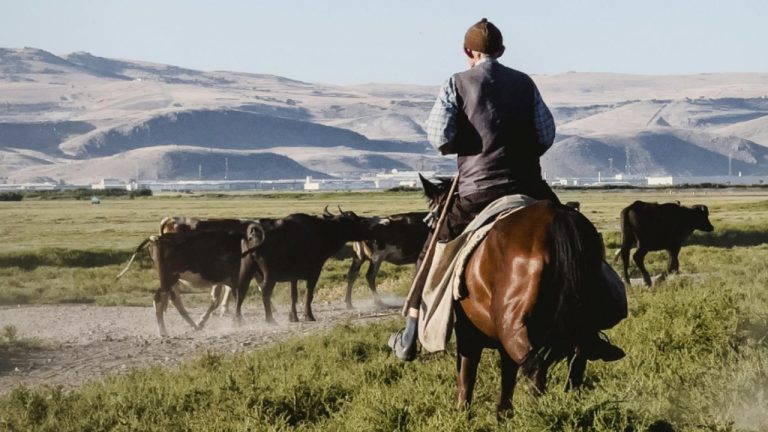
You’ll hear plenty of jokes about this one, but the idea that cows lie down before rain has some interesting science behind it. Ranchers have noticed the behavior for generations, and researchers have studied it more closely in recent years.
Cattle appear to react to changes in barometric pressure and humidity that often occur before storms. When pressure begins to fall, animals can become less active. Some researchers also believe cows lie down to keep dry grass beneath them from becoming wet once rain begins.
Studies of herd behavior have found measurable changes in movement patterns when atmospheric pressure drops. So while cows aren’t predicting storms with perfect accuracy, their behavior does tend to shift when weather systems move in.
Pine Cones Closing Means Wet Weather
Pick up a pine cone and look closely at the scales. In dry conditions they spread open, but when humidity rises they tighten up and close. That little reaction is actually tied directly to moisture in the air.
Pine cone scales are built with fibers that respond to humidity. When moisture levels increase, those fibers absorb water and expand. That movement causes the scales to fold inward, which protects the seeds inside from damp conditions that could prevent them from spreading properly.
Because humidity usually climbs ahead of rain, people noticed that closed pine cones often showed up before wet weather. It isn’t magic or superstition. It’s a plant responding to atmospheric moisture in real time.
The Smell of Rain Means a Storm Is Near
That earthy scent that shows up before or after rainfall has a scientific explanation. Scientists call the smell petrichor, and it’s linked to oils produced by plants and compounds released by soil bacteria.
During dry stretches, certain oils collect on surfaces like rocks and soil. When rain approaches, wind and rising humidity can lift some of those compounds into the air. The first drops of rain also release tiny aerosols that carry those scents upward.
Your nose is surprisingly sensitive to these compounds, which means you can sometimes smell approaching rainfall before the first drop hits the ground. That familiar scent outdoors is tied directly to chemistry happening in the soil and the atmosphere.
“Red Sky at Night, Sailor’s Delight”
You’ve probably heard this saying your whole life: red sky at night means good weather, red sky in the morning means storms ahead. It sounds like something pulled straight out of folklore, but it’s actually grounded in atmospheric physics.
Sunlight travels through more of the atmosphere at sunrise and sunset. When the sky appears red, it means shorter blue wavelengths have been scattered away, leaving longer red wavelengths behind. In mid-latitudes, weather systems usually move west to east.
A red sunset often means clear air to the west, where the setting sun is shining through stable conditions. A red sunrise, on the other hand, can indicate clear skies to the east while clouds and storms approach from the west. Sailors figured that pattern out long before weather satellites confirmed it.

Asher was raised in the woods and on the water, and it shows. He’s logged more hours behind a rifle and under a heavy pack than most men twice his age.