7 handgun calibers capable of defending against black bears — with important caveats
Handguns that can actually stop a black bear are few, and every one of them comes with serious tradeoffs in recoil, capacity, and shootability. I look at bear defense the way I do avalanche gear: the tool matters, but judgment and practice matter more. These seven handgun calibers can work on black bears, yet every one of them demands careful ammo selection, realistic expectations, and a plan that still puts avoidance and bear spray first.
1. 10mm Auto

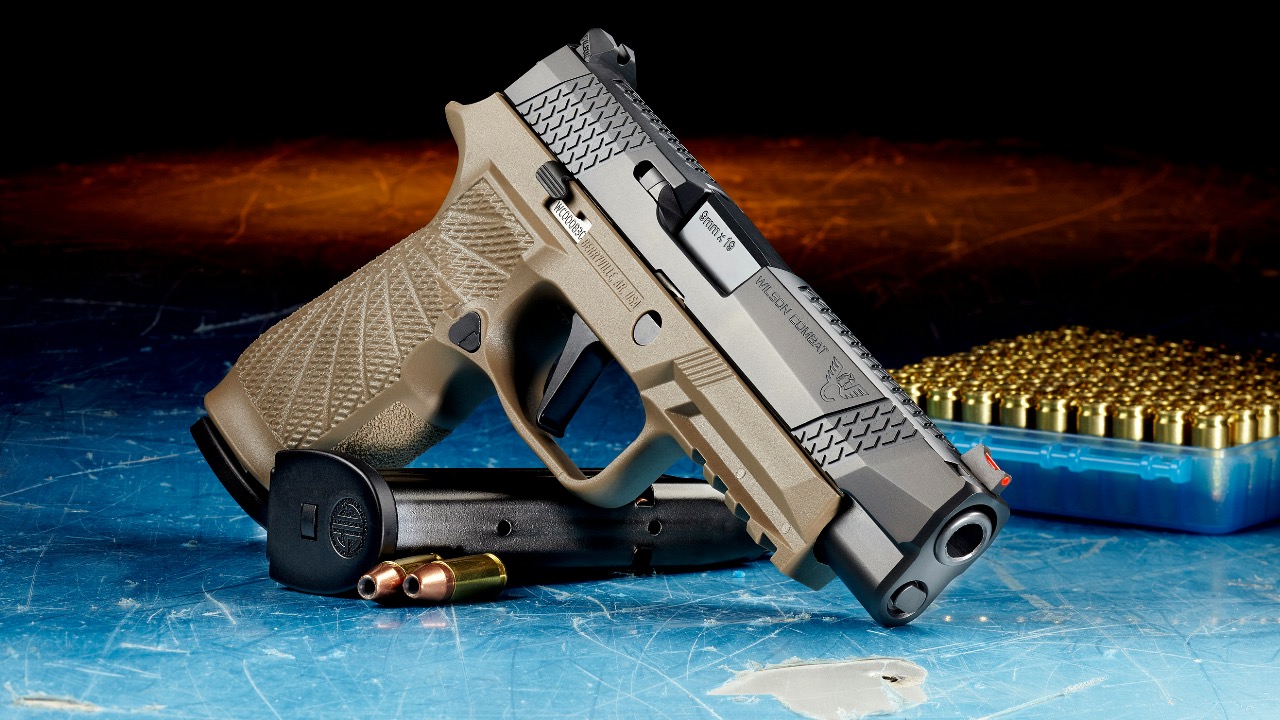
The 10mm Auto has become the default semi-auto choice for black bear defense because it balances power, capacity, and controllability. One detailed rundown of Best Bear Defense flatly states in its TLDR that “The Best Bear Defense Cartridge” is 10mm Auto “For the vast majority” of people. With hardcast or monolithic flat-nose bullets, it can penetrate a black bear skull and reach vitals from less-than-ideal angles.
Capacity is a major upside. A full-size 10mm gives you 12 to 15 rounds, which lines up with guides who say you want that many chances to fire warning shots and, if needed, fight through a charge. The caveat is recoil and blast in lighter pistols, especially for smaller shooters. If you cannot run fast follow-up shots on a timer, the theoretical power on paper will not help you when a bear is closing the distance.
2. .357 Magnum
The .357 Magnum is about as light as I am willing to go for black bears, and even then only with the right loads. Reporting on handgun bear defense notes that the 357 M remains one of the lowest-powered handgun calibers that has still proven capable when loaded correctly. That means heavy-for-caliber hardcast or solid bullets, not lightweight hollowpoints meant for two-legged threats.
Revolvers in .357 Magnum are compact and familiar, which is why many hikers reach for them. The risk is marginal penetration on raking shots or through heavy bone if you pick the wrong ammo or short barrels. I tell people that .357 Magnum is a minimum, not a goal. If you choose it, you need to be honest about distance, shot placement, and the possibility that you may need multiple solid hits to end a mauling.
3. .44 Magnum
The .44 Magnum has long been the classic “woods gun” for a reason. With heavy hardcast bullets, it delivers deep penetration and wide wound channels that have worked on black bears and even larger species. A well-built revolver like a Ruger GP100-size frame or bigger soaks up some recoil, but full-power loads are still punishing for many shooters.
The big caveat with .44 Magnum is that power encourages overconfidence. Hunters see it flatten deer and assume it will erase bad angles or poor hits on a bear. In reality, you still need bullets that hold together and a grip you can manage under stress. If you flinch or hesitate because the gun hurts, the theoretical advantage of .44 Magnum disappears the moment a black bear is on top of you.
4. .454 Casull
The .454 Casull sits in the “big hammer” category, and it is one of the most capable bear-stopping handgun rounds in common use. In a detailed discussion of BEAR CAPABLE CARTRIDGES, bullet specialist Tim Sundles singles out the .454 Casull as his preferred choice for serious bear defense. That kind of endorsement reflects its ability to drive heavy bullets deep through bone and muscle.
The problem is that most people cannot shoot .454 Casull well under pressure. Recoil is brutal, muzzle blast is disorienting, and compact revolvers in this caliber are unforgiving of poor grip. For black bears specifically, it is arguably more gun than you need, and the tradeoff in controllability is real. I view it as a specialist’s tool for those who already run heavy revolvers confidently, not a casual hiker’s first option.
5. Heavy 9mm +P
Heavy 9mm +P loads are controversial in bear circles, but they can work on black bears with strict caveats. Some backcountry guides point out that semi-autos offer higher capacity and faster reloads, and that a 9mm with 12 to 15 rounds gives room for warning shots before you “escalate to putting it down,” as one Ideally framed recommendation puts it.
For 9mm to be viable, you need heavy, flat-nose bullets designed for penetration, not rapid expansion. Even then, it is a compromise that assumes close range, calm shooting, and a focus on brain or spine shots. I tell folks who insist on 9mm that they are trading margin for shootability. If you are going this route, you must train hard, accept its limits, and keep bear spray as your primary tool.
6. .45 ACP (hardcast only)
The .45 ACP is often overrated for bear work, but with the right ammo it can still be part of the conversation for black bears. A detailed guide on Best 45 ACP for Bears, If You Still Want to Stick With It, stresses that standard defensive hollowpoints are a poor choice and that only deep-penetrating loads should be considered. The key metric there is that 45 caliber bullets must stay intact through bone and dense muscle.
Even with good ammo, .45 ACP runs at lower velocity than 10mm and can struggle on steep quartering shots. On the other hand, many shooters handle .45 ACP recoil better than 10mm, which can mean faster, more accurate hits. I see it as a “better than nothing, but not ideal” option. If .45 ACP is what you shoot best, load it smart, understand its ceiling, and avoid pushing into heavy grizzly country with it.
7. Big-bore revolver magnums (.41 and up)
Big-bore revolver magnums like .41 Magnum and .480 Ruger sit between .44 Magnum and rifle territory, and they are absolutely capable of breaking down a black bear. Veteran instructor Massad Ayoob, writing about HANDGUNS FOR BEAR in Alaska, emphasizes that bullet construction is as important as caliber, and that you are “more likely” to succeed with heavy, non-fragmenting bullets appropriate to each shot.
The downside is weight and recoil, which limit how much you practice and how often you carry the gun. A big revolver left in camp does nothing for you when a bear hits your elk quarters. I advise hunters who choose these magnums to commit to real training, including drawing from a chest holster and firing controlled pairs. In the right hands, they are devastating; in the wrong hands, they are slow, flinch-inducing anchors.

Asher was raised in the woods and on the water, and it shows. He’s logged more hours behind a rifle and under a heavy pack than most men twice his age.