7 Military weapons that changed doctrine, not just firepower
Some weapons do more than punch holes in armor. They force commanders to rip up playbooks, redraw maps, and rethink what “contact” even means. Here are seven pieces of hardware that did exactly that, reshaping doctrine and organization far beyond their raw firepower.
1. The Maxim machine gun
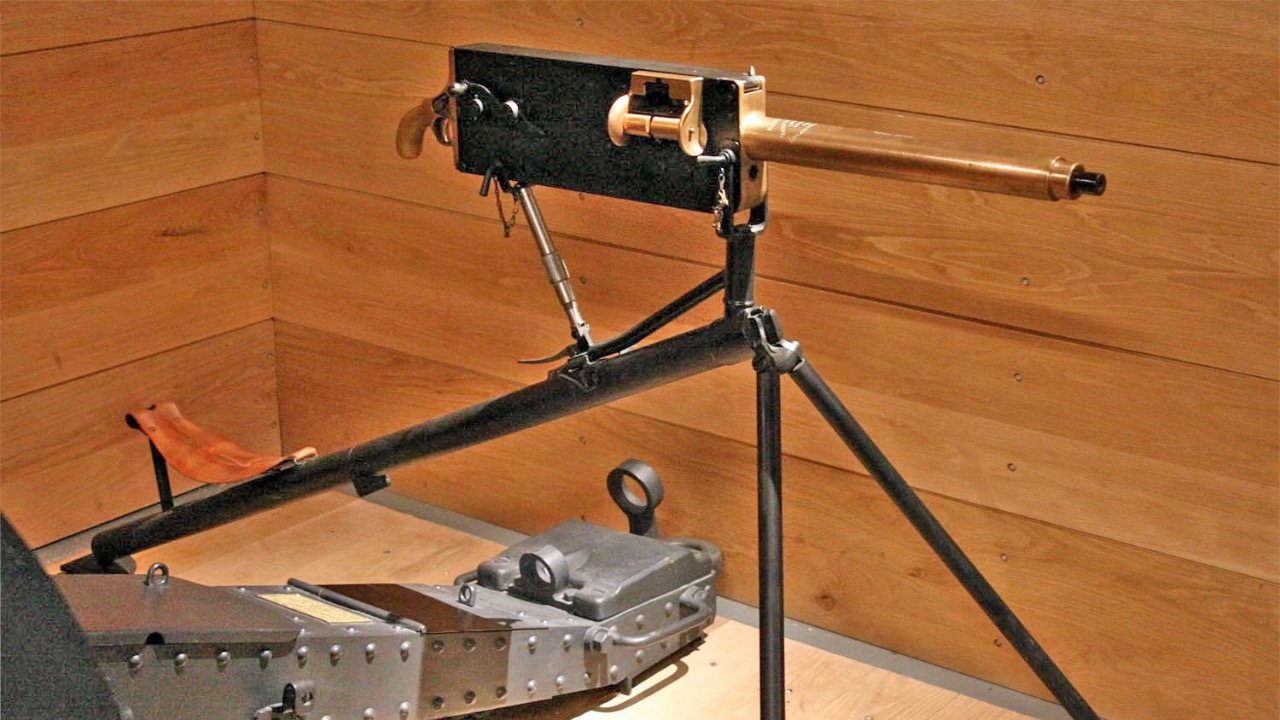
The Maxim machine gun turned World War battlefields into killing zones that old tactics could not survive. As How The Machine explains, the weapon’s sustained fire made frontal assaults suicidal, especially once armies learned to mass guns and overlap fields of fire. Lasting trench systems, barbed wire belts, and creeping barrages were all reactions to a single gun that could spit hundreds of rounds per minute without tiring.
Doctrine shifted from maneuver in the open to grinding attrition. Commanders who had grown up on cavalry charges now had to coordinate artillery, infantry, and engineers simply to cross a few hundred yards. The Maxim did not only increase lethality, it rewrote the relationship between offense and defense, forcing planners to accept that firepower, not courage, would decide who held ground.
2. German defensive machine-gun belts
By Nov, German forces had turned the machine gun into the backbone of a new defensive system. Analyses of Breaking The Deadlock show how interlocking guns, sited in depth, made “no man’s land” a permanent feature. The machine gun was possibly the most valuable weapon in defining the fighting, especially when dug into concrete bunkers and supported by mortars.
This networked firepower forced attackers to abandon straight-line advances and adopt infiltration tactics, night raids, and combined-arms storm units. The lesson was brutal but clear: survival depended on dispersal, cover, and coordination. Those defensive belts became the template for later positions in World War and beyond, where doctrine treated machine guns as area denial tools rather than simple support weapons.
3. The Lewis Gun
The Lewis Gun dragged automatic fire out of the trench and into the squad. Reporting on small arms that notes that the Lewis Gun forced armies to rethink infantry organization, altering how platoons were built and employed. Lightweight for its time and air-cooled, it could move with advancing troops instead of being chained to fixed positions.
Once every section had its own Lewis, doctrine shifted toward fire and movement. One element pinned the enemy while another maneuvered, a pattern that still defines infantry tactics. The gun’s portability also pushed air services to strap it onto early aircraft, hinting at how flexible automatic weapons would shape both ground and air doctrine in the decades that followed.
4. The French Lebel rifle
The French Lebel rifle quietly rewired expectations about range and lethality. As one survey of historic firearms notes, the Lebel introduced smokeless powder to a standard infantry weapon, giving it superior ballistics at. Suddenly, riflemen could hit targets far beyond the distances that black powder weapons had made practical, and they could do it without revealing their positions in a cloud of smoke.
That leap forced every major army to chase similar performance, reshaping training and formations. Skirmish lines spread out, marksmanship standards rose, and commanders had to account for accurate fire reaching across open ground. The Lebel did not dominate headlines like later automatics, but it set the baseline for modern rifle doctrine built around long-range, smokeless cartridges.
5. The Maxim’s industrial descendants
Weapons like the Gatling gun and the truly full-automatic Maxim became milestones in what one overview of 8 revolutions in calls the machine gun revolution. Once industry could mass-produce these guns, doctrine had to assume that any prepared position might hide a weapon capable of mowing down entire companies in seconds.
That reality drove changes far beyond tactics. Logistics systems were rebuilt around ammunition supply, and staff officers had to plan battles around belts of automatic fire rather than lines of bayonets. The Maxim’s descendants made firepower a planning factor at every echelon, from squad to corps, and they pushed militaries toward the industrial, high-consumption warfare that defined the twentieth Century.
6. The aircraft carrier
Naval doctrine pivoted hard once aircraft carriers proved they could project power far beyond gun range. Historians on AskHistorians argue that it was not artillery or range alone that dethroned the battleship, but the carrier’s flexibility. A single deck could launch scouts, strike aircraft, and fighters, turning sea control into an airpower problem instead of a gunnery duel.
Later analysis of how WWII saw the of naval task forces shows fleets reorganizing around carriers as the nucleus of combat groups. That shift still shapes strategy, from blue-water patrol patterns to how presidents think about crisis response. The carrier changed doctrine by making air wings, not big guns, the main currency of sea power.
7. Early tanks at the Somme
When tanks first rolled out at the Somme, they were crude, unreliable, and few. One detailed thread on their debut notes that, Ironically, even though tanks were introduced in 1916 at the battle of the Somme, they had little immediate impact on strategy. As Answers Sorted out the record, early commanders treated them as curiosities rather than the core of a new way of war.
Yet those lumbering machines planted the seed for the armored doctrine that would dominate WWII. Once planners realized that tracked vehicles could cross trenches, shrug off small-arms fire, and carry guns forward, they began building forces around massed armor and mechanized infantry. The Somme tanks did not win their first battles, but they forced militaries to imagine a different style of fighting in WWII and beyond.

Asher was raised in the woods and on the water, and it shows. He’s logged more hours behind a rifle and under a heavy pack than most men twice his age.