8 Calibers that still perform when distance matters
When you stretch shots past a mile, the cartridge matters as much as the rifle or the shooter. The calibers below have all proven they can still perform when distance stops being theoretical and starts being life-or-death, from combat in Iraq and Afghanistan to modern competition ranges.
1. .50 BMG in the McMillan TAC-50
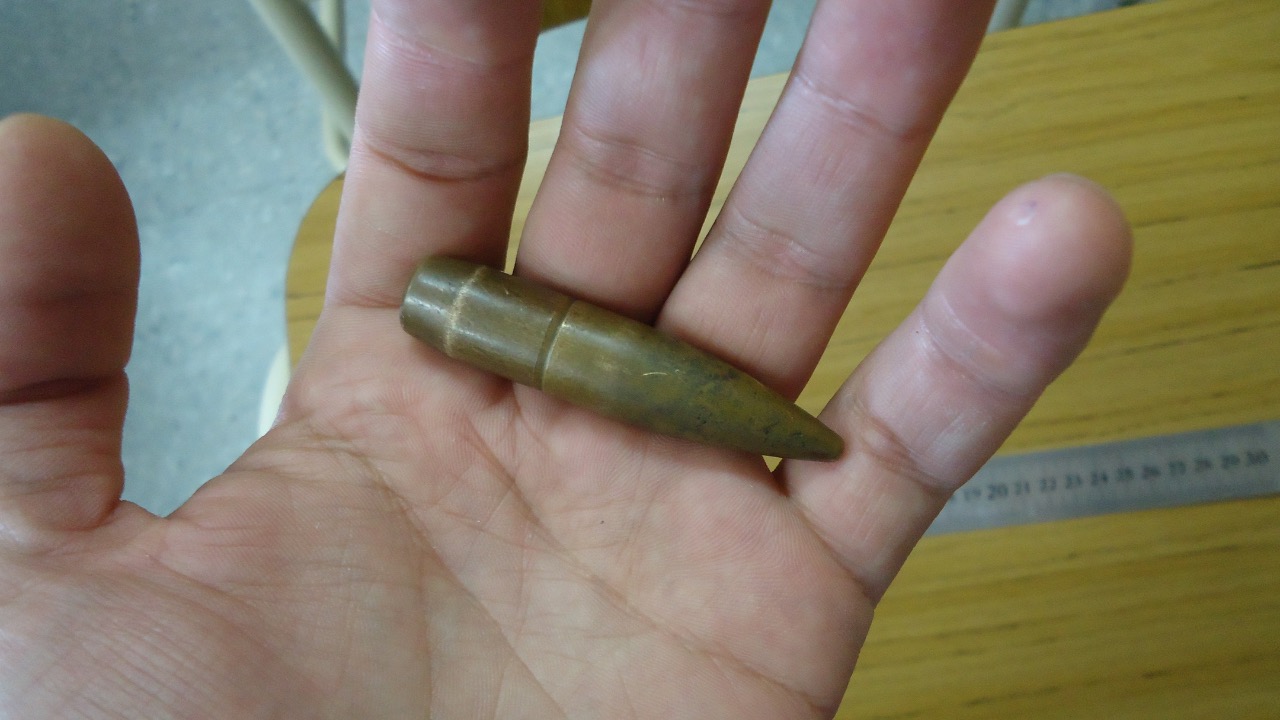
The .50 BMG in the McMillan TAC-50 earned its place in long-range history when a Canadian member of Joint Task Force 2 in Iraq made a confirmed hit at 3,540 meters using a Tac-50 rifle. That shot, using a 50 BMG cartridge, pushed sniper work into territory that used to belong only to artillery tables and computer models. It showed that, with the right rifle, ammo, and conditions, .50 BMG can still carry meaningful energy and accuracy more than two miles out.
Long before that record, the TAC-50 had already stacked up extreme-distance kills, and three of the five longest recorded sniper shots were credited to Canadian shooters running this Canadian TAC platform in 50 BMG. For military planners, that kind of reach changes how you think about overwatch, counter-sniper work, and even route security. For civilian long-range shooters, it set a benchmark that still defines what “way out there” really means.
2. .408 CheyTac in the CheyTac M200 Intervention
The .408 CheyTac was built from the ground up for extreme-range precision, and the CheyTac M200 Intervention is the rifle most people picture when they hear that name. Reporting on legendary long-distance rifles credits the M200, running .408 CheyTac, with accurate hits beyond 2,500 meters while holding sub-MOA performance. That combination of flat trajectory and high retained velocity gives shooters a little more margin for error when wind calls get tricky past a mile and a half.
Unlike older big-bore options, .408 CheyTac was designed to stay supersonic deep into those distances, which keeps stability and consistency on target. In specialized operations, that means a team can engage threats across wide valleys or open desert without changing positions. For the precision-rifle crowd, the cartridge has become a reference point for what a purpose-built extreme-range round looks like when everything, from brass to bullet shape, is tuned for distance.
3. .338 Lapua Magnum in the Accuracy International AWM

The .338 Lapua Magnum in the Accuracy International AWM proved that you do not need a .50 to play at serious distances. British snipers in Afghanistan used an AWM in .338 Lapua Magnum to make a confirmed engagement at 2,475 meters, a shot highlighted in coverage of record-setting sniper rifles. That kind of reach from a cartridge that still fits a relatively portable rifle changed how many units thought about their primary long gun.
In practical terms, .338 Lapua Magnum gives you a flatter trajectory and better wind performance than traditional .30-caliber magnums, without the bulk and recoil of 50 BMG. For deployed snipers, that balance means they can carry more ammo, move faster, and still cover long valleys or mountain passes. For hunters and competition shooters, the AWM and its 338 Lapua Magnum chambering became proof that a “mid-bore” magnum can stay lethal and precise well past 1,500 meters.
4. .50 BMG in the Barrett M82/M107
The Barrett M82 and M107 brought .50 BMG into mainstream U.S. service as a semi-auto anti-materiel rifle, and their caliber choice is the whole point. Reporting on long-range military rifles notes that these Barretts have been central to U.S. operations for hitting equipment and vehicles beyond 1,800 meters. At those distances, 50 BMG still carries enough punch to damage light armor, disable engines, or shred cover that would stop smaller rounds.
For snipers and designated marksmen, that reach means they can shape a battlefield, not just pick off exposed targets. The M82/M107 platform is not as precise as a bolt gun like the TAC-50, but the combination of semi-auto fire and 50 BMG energy gives teams options against parked aircraft, technicals, and hardened positions. It also pushed civilian shooters to explore what 50 BMG can do on steel and ELR targets when paired with better optics and match-grade ammo.
5. .338 Lapua Magnum in the Sako TRG-42
The Sako TRG-42 helped put .338 Lapua Magnum on the map as a serious long-range tool. Finnish military testing, highlighted in coverage of early long-range adopters, showed the TRG-42 delivering precise hits out to 2,000 meters. That kind of performance from a relatively manageable rifle made 338 Lapua Magnum attractive to units that needed reach but could not field heavy 50-cal systems everywhere.
Civilian shooters quickly noticed the same thing. As one look at the cost of 338 Lapua ammo shows, it is not cheap, but the payoff is a cartridge that stays stable and hard-hitting well past traditional hunting distances. For law enforcement and military snipers, the TRG-42’s performance helped normalize 338 Lapua Magnum as a standard long-gun option for urban perimeters, rural standoffs, and counter-sniper roles where 1,000 yards is the starting point, not the limit.
6. .50 BMG in the McMillan TAC-A1
The McMillan TAC-A1, chambered in .50 BMG, carried that big cartridge into a chassis-style rifle aimed squarely at precision work. Reporting on modern .50-cal platforms notes that U.S. Marine Corps snipers used the TAC-A1 in Iraq with effective engagement ranges beyond 2,000 meters. In that environment, the ability to reach across open desert or hit threats on distant rooftops gave Marine teams a serious advantage.
Compared with older 50-cal rifles, the TAC-A1’s ergonomics and adjustability help shooters manage recoil and stay consistent behind the gun. That matters when you are spotting your own trace and impacts at two kilometers or more. For long-range competitors and serious hobbyists, the TAC-A1 showed that 50 BMG does not have to be a clunky beast; paired with a modern chassis and good glass, it can be a precise tool for ELR matches and research into what big bullets do in the transonic zone.
7. .338 Lapua Magnum in the Steyr SSG 08
The Steyr SSG 08, chambered in .338 Lapua Magnum, is another rifle that proved 338’s staying power when distance matters. Austrian special forces demonstrations, cited in coverage of European sniper platforms, showed the SSG 08 delivering precise fire at 1,500 meters and beyond. That kind of performance from a relatively light rifle gives teams flexibility in mountainous or urban terrain where they may need to move fast and still shoot far.
Civilian reviews point out that for a .338 Lapua Magnum rifle, the SSG 08 is “relatively light and handy,” as one SSG 08 write-up put it. Another look at the platform notes that Four to eight bucks a shot for 338 Lapua can shorten range sessions, but the payoff is a rifle-caliber combo that keeps tight groups where many cartridges are running out of steam. For agencies and shooters who need portability and reach, that tradeoff often makes sense.
8. .338 Lapua Magnum in the Desert Tech SRS
The Desert Tech SRS, set up in .338 Lapua Magnum, brings modularity into the long-range game. Coverage of modern multi-caliber rifles notes that the SRS platform has been used in competitions where shooters push 338 Lapua Magnum past 2,000 meters. Being able to run that cartridge in a compact bullpup chassis means you get a long barrel and serious velocity without hauling a full-length conventional rifle.
For military and law-enforcement units, the SRS concept lets them train or deploy with different calibers on the same familiar trigger and stock, then swap to 338 Lapua Magnum when distance is the priority. Competitive shooters like the way that setup keeps weight centered and reduces overall length on barricades and in vehicles. When you are trying to spot tiny impacts on steel at a mile or more, that kind of ergonomic edge can matter as much as raw ballistics.

Asher was raised in the woods and on the water, and it shows. He’s logged more hours behind a rifle and under a heavy pack than most men twice his age.