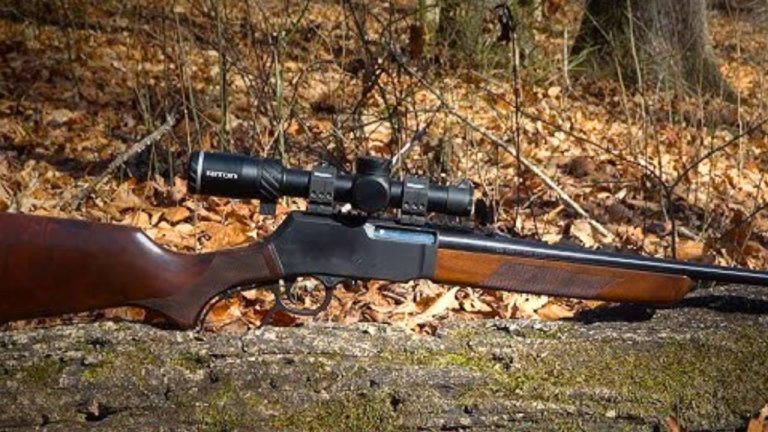
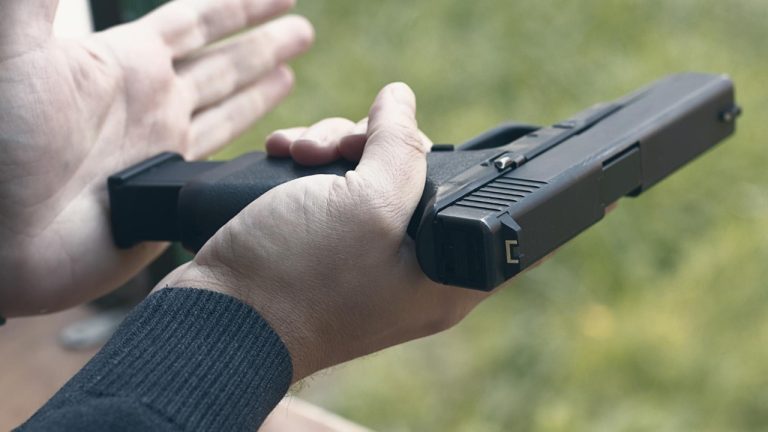
9 Calibers that work best for turtles, beavers, and other water pests
Water pests like snapping turtles and beavers can wreck a pond bank or timber stand in a hurry, but picking the right caliber matters as much as marksmanship. I focus on cartridges that give clean kills, manageable recoil, and safe performance around water, where ricochets are a real concern. With that in mind, here are nine calibers that make practical sense when you are dealing with turtles, beavers, and similar wetland troublemakers.
1. .22 Long Rifle

The .22 Long Rifle is the classic starting point for water pests, and for good reason. Small game hunters have leaned on the .22 LR for generations, and modern guidance still lists it among the best options for small game, right alongside .22 WMR and .17 HMR in several small game overviews. With standard or subsonic loads, recoil is almost nonexistent, which helps you place precise head shots on beavers or snapping turtles without flinching.
When you step up to .22 Long Rifle High Velocity, the round becomes a very capable killer on pests while keeping meat damage low, a point that small game rifle tests highlight when they describe Long Rifle High Velocity as the “world standard small game load” that expands yet leaves edible meat mostly intact in field tests. Around water, that balance of modest energy and good accuracy means you can anchor a beaver at modest ranges while limiting over-penetration and ricochet risk, which is critical if you are shooting near docks, livestock, or neighboring properties.
2. .17 HMR

The .17 HMR is a step up in flat trajectory and velocity, which makes it a strong choice for smaller water pests where you want a quick, humane kill. Small game guides that group .17 HMR with .22 LR and .22 WMR as top-tier rimfires point out how its high speed and frangible bullets help it hit hard without carrying excessive energy downrange, a trait that matters when you are shooting across a pond at a turtle’s head. On calm evenings, that laser-like trajectory lets you hold dead-on instead of guessing at holdover.
For snapping turtles that only give you a thumbnail of skull above the surface, the .17 HMR’s accuracy advantage is real. The light bullets tend to fragment on impact or when they hit water or rock, which can reduce dangerous skips compared with heavier, slower projectiles, although you still have to respect your backstop. In my experience, that makes .17 HMR a smart pick for landowners who want rimfire recoil but a little more reach and precision than the .22 LR can reliably offer on wary beavers and turtles that stay just out of shotgun range.
3. .22 WMR
The .22 WMR, or Winchester Magnum Rimfire, fills an important middle ground when you are dealing with tougher critters like big beavers. Where .22 LR can run out of steam on quartering shots, the .22 WMR’s extra velocity and energy give better penetration through wet fur and muscle, which several beaver caliber breakdowns flag as a key advantage for this cartridge. That added punch helps when you are shooting across a wide beaver pond or trying to break shoulders instead of relying on perfect head shots.
At the same time, .22 WMR still carries rimfire-level recoil and relatively modest report, so you can stay on target and spot your hits. Some beaver-focused analyses list its Pros as “Increased power,” “Good range,” and “Versatile,” while the Cons include “More” recoil and cost compared with .22 LR in beaver calibers comparisons. For a trapper or landowner who wants one rimfire that can handle muskrats, turtles, and big northern beavers, .22 WMR is hard to argue with.
4. .223 Remington
The .223 Remington comes into its own when you are shooting larger beavers at distance or working from a field edge where you might stretch shots past typical rimfire ranges. Centerfire discussions of what caliber makes sense for water pests often point to .223 as a logical step up, giving you flat trajectory, good accuracy, and enough energy to anchor a beaver cleanly with a well-placed shot. With the right soft-point or controlled-expansion bullet, you can get decisive performance without turning the animal into a mess.
One advantage of .223 is that many landowners already own a rifle in this caliber for predators, so it becomes a natural crossover tool for beaver control. When you are shooting over water, you still have to be very deliberate about backstops, but the cartridge’s precision lets you pick tight windows through brush or hit a small target like a turtle’s head when it surfaces near a dam. For folks managing larger properties, that versatility makes .223 a practical part of the water-pest toolkit.
5. .243 Winchester
The .243 Winchester is often thought of as a deer and coyote round, but its blend of power and accuracy also makes sense for the toughest water pests. Big snapping turtles can be surprisingly hard to kill cleanly, and some shooters prefer a cartridge that hits more like a light big-game round than a rimfire. In big-game caliber discussions that highlight options like 270 and .30-06, the .243 Winchester is frequently mentioned as a mild-recoiling rifle that still carries serious energy, especially with 90 to 100 grain bullets, in big game context.
Applied to water pests, that means you can take quartering or slightly off-angle shots on beavers and know you have enough penetration to reach vitals. The tradeoff is that .243 is more rifle than you truly need for most turtles and small beavers, and it demands extra caution around water because of its high velocity and long effective range. I see it as a good choice for rural properties where you are already carrying a .243 for deer and might opportunistically deal with a problem beaver or turtle while you are out.
6. .30-30 Winchester
The .30-30 Winchester is a classic woods cartridge that still has a place in close-range beaver work, especially for hunters who favor lever guns. At typical pond distances, a .30-30 with flat-nose bullets delivers immediate authority on big-bodied beavers that are already half-submerged, reducing the odds of a wounded animal making it back to a den. That kind of stopping power is why many rural shooters keep a .30-30 handy for everything from hogs in the pasture to nuisance critters in the creek.
Because .30-30 bullets are relatively slow and blunt compared with modern spitzers, they can be a bit less prone to long, skipping ricochets across water than sleeker, faster projectiles, though you still have to treat every shot with respect. For landowners who already trust a .30-30 for deer in the timber, using the same rifle for close beaver control keeps things simple and familiar. The key is to stick to controlled, high-percentage shots and avoid slinging heavy bullets across open water where you cannot see what is behind the target.
7. 9mm Luger
The 9mm Luger shows up in water-pest conversations mostly as a handgun option for opportunistic shots, not as a primary beaver rifle. When you are walking a pond bank checking traps or fences, a 9mm pistol on your hip can be handy if a turtle or small beaver presents a close, safe shot in shallow water. Centerfire handgun rounds like 9mm hit harder than rimfires at very short range, and with modern defensive-style bullets they can expand quickly and dump energy fast.
That said, 9mm is best reserved for very controlled situations, such as finishing a trapped animal or shooting into a known backstop along the bank. The relatively flat trajectory at short distances and wide ammo availability are practical advantages, but the risk of ricochet off water or rock is real. I treat 9mm as a secondary tool for water pests, useful when you are already carrying a pistol for other reasons and need to deal with a problem animal at arm’s-length distances.
8. .357 Magnum
The .357 Magnum, whether in a revolver or a carbine, offers strong terminal performance on beavers and other mid-sized water pests. In a rifle-length barrel, .357 picks up significant velocity, turning traditional handgun loads into legitimate short-range hunting rounds that can break shoulders and penetrate deep. That extra authority is valuable when you are shooting at a beaver working a dam or trying to stop a wounded animal from reaching a lodge.
Another advantage of .357 Magnum is flexibility: you can shoot mild .38 Special loads for practice or very close work, then step up to full-power .357 when you need more punch. In wetland scenarios where you might be shooting from a boat or tight bank, a compact lever gun or revolver in .357 is easier to maneuver than a long rifle. For many rural shooters, that combination of portability and power makes .357 a practical, if somewhat specialized, choice for water-pest control.
9. .45 ACP
The .45 ACP rounds out the list as a heavy, slow handgun caliber that can be effective on larger water pests at close range. Its reputation is built on big, subsonic bullets that hit with a solid thump, which translates well to finishing shots on beavers or large snapping turtles in very tight quarters. When you are working around traps, culverts, or dam breaches, a .45 on your hip can give you decisive performance without the blast of a magnum revolver.
Because .45 ACP bullets are relatively slow and heavy, they tend to penetrate well at short distances but lose steam quickly, which can be an advantage when you are worried about what lies beyond the target. Still, like any handgun round, it demands careful shot placement and a safe backstop, especially around water. I see .45 ACP as a niche but capable option for landowners who already carry a .45 and want a sidearm that can humanely dispatch problem turtles and beavers when the shot is close and controlled, a role that fits the broader caliber guidance on water pests alongside modern Airguns and Sub options.

Asher was raised in the woods and on the water, and it shows. He’s logged more hours behind a rifle and under a heavy pack than most men twice his age.