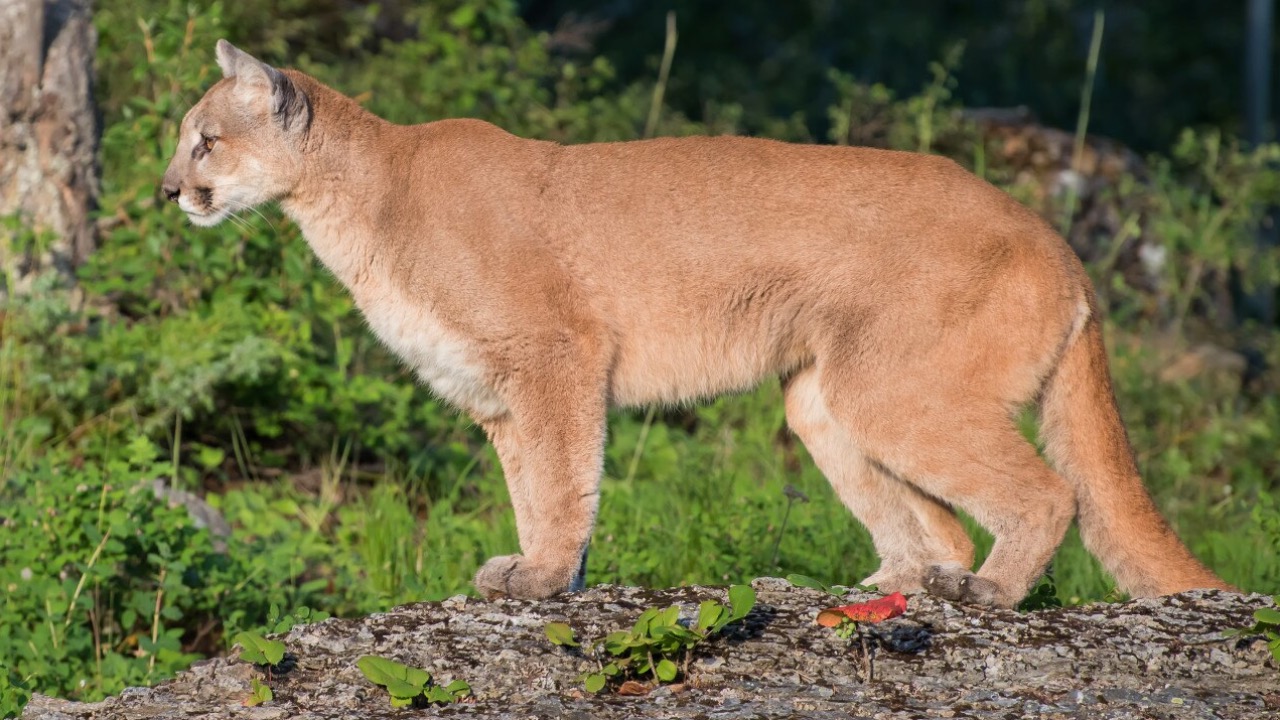
Why mountain lion sightings are being reported more often
Across the country, more people are saying they have seen a mountain lion near their home, on a trail cam, or crossing a back road. Some of those reports reflect real changes on the landscape, others are artifacts of technology and perception, and a surprising number are simply wrong. To make sense of the trend, I look at what biologists, wildlife agencies, and hard data say is actually happening with these big cats and with us.
Once you sort through the noise, a clearer picture emerges: in many places mountain lions are holding steady or slowly expanding, while humans are pushing deeper into their habitat and recording everything we see. That combination makes encounters feel more common, even where the cats themselves have not surged in number.
Big cats, big range: where mountain lions actually live

Before talking about sightings, it helps to understand the animal. Mountain lions, cougars, pumas, catamounts, panthers, whatever name you prefer, are the same species, Puma concolor, a wide ranging predator that once covered nearly all of North America. Modern distribution maps from agencies such as the Washington Department of Fish and Wildlife show that these cats still occupy large swaths of the West, with breeding populations in states like Washington, Oregon, Colorado, and much of the Rockies, plus scattered individuals in the Midwest and East. In Washington, for example, the state’s profile for puma concolor lays out how the species uses dense cover, rugged terrain, and healthy deer and elk herds to hang on in a human dominated landscape.
California tells a similar story. The state’s online wildlife incident reporting system logs complaints, sightings, and conflicts involving predators, including lions, and maps them for the public. That tool, the Wildlife Incident Reporting system, lets anyone see clusters of reports around foothill suburbs, ranch country, and popular trail networks, which reinforces the sense that lions are everywhere. But those dots represent human reports, not a census of cats. Biologists who work with the underlying data from platforms like California’s incident reports are quick to point out that the species has been on the landscape all along, mostly staying out of sight.
More people in lion country, more chances to see one
The simplest driver of increased reports is that more of us are living, hiking, and hunting in places mountain lions already use. Subdivisions keep pushing into foothills and canyon country, and trail systems now lace through habitat that used to see only loggers and ranch hands. One Colorado community warning residents to expect more winter activity framed it bluntly: people are recreating in prime hunting hours, and lions are following deer and elk into those same drainages. Local officials in Boulder have urged residents to “look out for increased mountain lion activity in winter” and to take “simple precautions” so they will not panic and run if they bump into a cat, advice laid out in a seasonal winter safety notice.
As exurban growth fills in, the line between “town” and “lion habitat” gets blurry. In Colorado mountain communities and along the Front Range, homeowners who moved in for the views now find themselves sharing space with deer, black bears, and the predators that follow them. A similar pattern shows up in the Pacific Northwest, where Washington residents are told that cougars live among them even if most people never see one, a point driven home in a widely shared video about Washington. When you put more people, more pets, and more backyard cameras into that mix, the number of reported encounters is bound to climb.
Trail cams, doorbells, and the age of recorded wildlife
Technology has changed the game. Twenty years ago, a lion slipping through a greenbelt at 2 a.m. would have gone unnoticed. Now it is likely to be caught on a Ring doorbell, a driveway camera, or a hunter’s cellular trail cam and then blasted across social media. Wildlife officers in Washington and elsewhere have noted that as cameras become more affordable and effective, the volume of “possible cougar” clips they are asked to review has spiked, a trend echoed in coverage of More frequent sightings in communities like Sudden Valley.
In northern California, a single lion filmed in the Arcata Community Forest turned into a viral moment, with tens of thousands of people watching and sharing the footage. Local biologists used that case to explain that sightings are not necessarily more common, they are simply better recorded and more widely shared than ever before. The Arcata clip became a textbook example of how one animal moving through its normal range can look like a surge in activity once it hits Facebook and neighborhood apps, a point underscored in analysis of the Arcata Community Forest case.
Where populations are actually growing
In some regions, the cats really are more numerous, and that does translate into more legitimate sightings. Oregon is a clear example. After voters restricted certain hunting methods, the state’s cougar population climbed. Wildlife officials there now estimate about 6,600 cougars, up from less than 3,000 before those laws, and they warn that sightings will be more common as the population thrives and disperses. That jump from “less than 3,000” to “about 6,600” is spelled out in reporting on Oregon cougars, and it tracks with what hunters and ranchers have been seeing on the ground.
Michigan offers another data point. There, wildlife officials have documented a slow but steady trickle of cougars moving in from the West, mostly young males. By 2025, the state logged an all time high in confirmed cougar sightings, with 34 despite 2025 being over, and even had a case where DNA testing confirmed that a Houghton County driver hit a cougar on the road. Those numbers come from The DNR, which has leaned on thousands of trail cameras across Michigan in the last decade to verify reports and build a clearer picture of how many cats are actually passing through. The agency’s explanation of the 34 confirmations, the DNA work in, and the role of trail cams shows how better monitoring can make a small number of transient cats feel like a wave.
Dispersing males and new frontiers
One of the most misunderstood pieces of the puzzle is how mountain lions recolonize new areas. Young males are the pioneers. Once they are pushed out of their mother’s range, they can travel hundreds of miles looking for open territory and a chance to breed. In the central United States, that pattern has played out in states that had not seen lions in generations. A detailed discussion of “Central US mountain lion migration patterns” notes that Brian Kontio Young males were spotted for several years on trail cameras in Tennessee before the first female with kits showed up, and that for a long time every confirmed cat was a young male passing through. That sequence, described in a post that highlights Brian Kontio Young and Tennessee, is exactly what biologists expect when a species is slowly reclaiming ground.
Missouri has lived that story in real time. For years, residents swapped rumors and grainy photos of “big cats” in the Ozarks. Then the state started confirming carcasses, trail cam images, and roadkills. A widely viewed segment on why more mountain lions are showing up in Missouri pointed out that they are wild, powerful, fast, and lately seem to be turning up more often, with five confirmed since November at the time of that report. The piece on Missouri lions walked through how those confirmations were almost all young males, likely dispersers from western populations, not evidence of a large breeding population suddenly appearing overnight.
When more reports do not mean more lions
In other places, the number of sightings has climbed without any solid sign that the population has exploded. Biologists in the Pacific Northwest have been blunt about this. After two high profile deadly cougar attacks in one summer, people in Washington started noticing and reporting every possible sign of a big cat. State experts responded that increased cougar sightings do not necessarily mean an increase in cougar numbers, and that fear and misinformation can drive a spike in calls all by themselves. That perspective is laid out in coverage that explains how, after those attacks, there was a surge of reports and a lot of misinformation about cougars, as summarized in a Sep analysis of the situation.
California has seen a similar disconnect between perception and reality. Decades ago, when a lion wandered near San Jose, some residents reacted as if the species had suddenly invaded suburbia. Experts interviewed at the time stressed that there were probably more lions in the hills than there were 50 years ago, but that the real change was the number of people living and playing in those hills. That point, captured in a piece By Lori Stuenkel about a South County sighting near San Jose, still holds up. The article, which notes that there were likely more lions than there were 50 years ago, is archived by the Mountain Lion Foundation and can be found in a piece credited By Lori Stuenkel, and it underlines how human memory and media coverage can make a steady population feel like a sudden surge.
False alarms and misidentified “lions”
Not every “lion” on a doorbell camera is a lion. In fact, a surprising share of viral clips turn out to be house cats, bobcats, dogs, or even shadows once biologists take a hard look. Conservation groups that field these reports warn that mistaken mountain lion sightings have major consequences. When every blurry video is treated as proof of a big cat in the neighborhood, it can fuel unnecessary fear, pressure agencies to kill or relocate animals, and eventually damage our fragile ecosystem by turning people against predators. One detailed explainer on this problem walks through how Amazing, You just saw a mountain lion on your security camera, Or di you, and then shows how often those “lions” are something else entirely, a point made in a piece about mistaken sightings.
Another version of that same warning focuses on how secretive lions really are. Because they are usually far away when viewed with the naked eye, and because phone cameras distort size and distance, people routinely overestimate what they saw. If the videos are grainy or shot at night, it gets even harder to tell. A companion piece notes that if the videos are not clear, experts often cannot confirm anything, and urges people to show lions respect, not fear, when they do live in the area. That reminder, which emphasizes that “if the videos are” low quality they are hard to interpret, comes from a related discussion of misidentification. The upshot is simple: more cameras mean more false alarms, and those inflate the sense that lions are everywhere.
How agencies verify reports and manage risk
Behind the scenes, wildlife agencies and nonprofits spend a lot of time sorting real lions from bad intel. When a track, scat pile, or blurry photo comes in, it often gets routed to a specialist who has spent a career reading sign. One veteran in that world is Harley Shaw, a longtime carnivore biologist who has helped organizations review public submissions. As one Mountain Lion Foundation staffer put it, “And he (Harley Shaw) ’ll look at the information, say yes, this is a cougar print, or no, it’s not,” and then help get accurate information back out to the community. That description of how Harley Shaw reviews reports shows how much work goes into turning raw sightings into reliable data.

Asher was raised in the woods and on the water, and it shows. He’s logged more hours behind a rifle and under a heavy pack than most men twice his age.