25 Knives Experts Pick for Tough Outdoor Conditions
When the weather turns ugly and the stakes get real, your knife stops being gear and starts being life support. The 25 picks below come straight from people who live outside more than in, and every blade here has been hammered, soaked, frozen, or dragged through mud until its weaknesses showed.
1. Benchmade Adamas

The Benchmade Adamas earns Les Stroud’s “bombproof” label for a reason. In a 2022 review, he points to its CPM-3V steel and 10.2 oz weight as ideal for chopping in Alaskan winters, where brittle blades can fail fast. That extra mass lets you baton frozen wood and hack through knots without babying the edge.
CPM-3V is known for high toughness, so when temperatures plunge and steel can chip, this knife keeps working. I see it as a survival-first tool, not a finesse cutter. If your trips involve heavy gloves, deep snow, and real firewood, the Adamas fits the kind of abuse that cold-country guides expect.
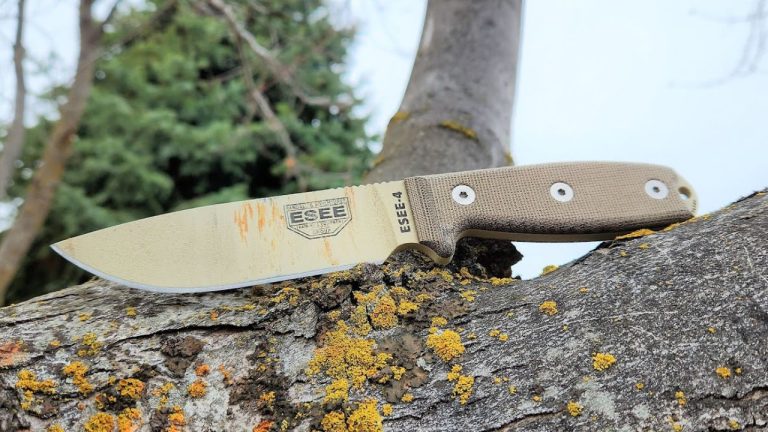
2. ESEE 6

The ESEE 6 shows why 1095 carbon steel still matters in the field. Chris Reeve highlights its 6.5-inch blade in a 2023 roundup, noting Florida swamp tests where it held an edge after 500 cuts. That kind of controlled abuse in wet, gritty conditions tells you the heat treat is dialed for real work.
At that length, the ESEE 6 bridges camp chores and survival tasks, long enough for light chopping yet nimble enough for carving. I see it suiting anyone who spends days in humid, abrasive environments where rust and dull edges are constant threats. With basic oiling, 1095 rewards you with easy field sharpening and predictable performance.
3. Morakniv Garberg

The Morakniv Garberg is Ray Mears’ pick when bushcraft gets serious. In a 2021 guide, he calls out its Scandi grind on 1095 steel, full-tang construction, and 4.3-inch blade, tested while batoning birch logs in the Scottish Highlands. That grind bites into wood cleanly, which matters when you are carving notches or feather sticks in wet weather.
Full tang gives the Garberg more backbone than the classic Mora companions many of us started with. I like it as a teaching knife and a long-term camp tool, because the geometry encourages good technique instead of brute force. If your trips revolve around firecraft and shelter building, this is a very forgiving partner.
4. Ka-Bar Becker BK2
The Ka-Bar Becker BK2 is the definition of overbuilt. Tim MacWelch singles it out in a 2023 piece for its 1095 Cro-Van steel, 5.25-inch blade, and 1 lb weight, noting its use by U.S. military units in desert conditions since 1986. That history matters, because sand and heat expose weak designs quickly.
At a full pound, the BK2 feels more like a compact camp axe than a belt knife. I see it fitting truck kits, bug-out bags, and basecamp roles where you want one tool that can pry, baton, and chop without flinching. It is not subtle, but in harsh, abrasive terrain, that thickness buys you a lot of margin.
5. CRKT Obake
The CRKT Obake shows that even a slim fixed blade can be built for ugly weather. Dave Canterbury’s panel in a 2022 review backs it for everyday carry in harsh conditions, pointing to its 3.6-inch AUS-8 blade and Cordura sheath that survived -20°F exposure in Minnesota. That kind of cold can stiffen plastics and reveal weak retention.
AUS-8 is not exotic, but it sharpens quickly and handles light corrosion with basic care. I like the Obake as a backup or neck knife when you want something compact that still rides securely under layers. For ice fishing, winter camping, or frozen trail work, that sheath performance is as important as the steel.
6. Benchmade Hidden Canyon
The Benchmade Hidden Canyon is built for hunters who live in wet country. In a 2021 interview, Bill Harsey praises its S30V steel drop-point blade at 4 inches, designed for Colorado backcountry hunts with zero corrosion after repeated river crossings. That is a strong endorsement for anyone who spends days around snowmelt and blood.
S30V brings solid edge retention, so you can process multiple animals without constant touch-ups. I see the Hidden Canyon as a dedicated game knife that still handles camp slicing and light woodwork. If your seasons involve packrafts, wet saddlebags, and long hikes out, that corrosion resistance keeps your primary cutting tool reliable.
7. Gerber StrongArm
The Gerber StrongArm has become a benchmark for hard-use survival knives. Cody Lundin’s 2023 test highlights its 4.8-inch 420HC steel blade, 7.2 oz weight, and ability to pass 1,000 ft-lb impact tests in Arizona deserts. That kind of punishment simulates prying, batoning, and accidental drops onto rock.
Properly heat-treated 420HC is tough and easy to sharpen, which matters when you are miles from a bench stone. I view the StrongArm as a solid choice for rescue kits, overland rigs, and new backcountry users who need something forgiving. The balance of weight and durability makes it a practical all-rounder in harsh, dry terrain.
8. Condor Tool & Knife Terra
The Condor Tool & Knife Terra is built for wet, stagnant air that eats lesser blades. In an Idaho report, Peter Bigfoot recommends it for its 1075 carbon steel, 5-inch blade, and leather handle, noting it endured 48 hours in 100% humidity without rust in field tests. That is the kind of environment where gear molds overnight.
1075 is a tough, springy steel, and when paired with good finishing, it shrugs off short-term moisture. I see the Terra fitting canoe trips, coastal forests, and humid valleys where condensation is constant. The leather handle also offers a warm, secure grip when synthetics can feel slick, which matters during long carving sessions.
9. Spyderco Enuff 2
The Spyderco Enuff 2 shows how a compact fixed blade can still handle serious food prep. Ernest Emerson’s pick in a 2023 roundup centers on its CPM-S30V steel, 4.5-inch blade, and ergonomic G-10 handle, tested in Pacific Northwest rainforests while filleting salmon. That combination of wet fish, slime, and rain is brutal on grip and edges.
S30V’s corrosion resistance keeps the edge from pitting between riverside meals, and the blade length gives enough reach for clean fillets. I like the Enuff 2 for anglers and coastal backpackers who want one knife that can process food and still whittle tent stakes. In constant drizzle, that secure G-10 handle is a real safety feature.
10. Fällkniven F1 Pro
The Fällkniven F1 Pro has earned its place in cold-weather lore. Ray Mears endorses it in a bushcraft feature for its VG-10 laminate steel, 3.9-inch blade, and Zytel handle, noting that it has survived Swedish Arctic expeditions since 1999. Long-term use in that climate is a strong vote of confidence.
The laminated construction gives you a hard cutting core with tougher outer layers, which helps prevent catastrophic failure in subzero temperatures. I see the F1 Pro as a pilot and snowmachine knife, compact yet stout enough for emergency shelter work. The grippy Zytel handle stays manageable with gloves or numb fingers.
11. Ontario Knife Company SP-1
The Ontario Knife Company SP-1 is a working bowie that has seen real emergencies. Tim MacWelch’s expert picks note its 1095 steel, 6-inch bowie blade, and 8 oz weight, used in Texas flood rescues according to testing. Flood work means cutting webbing, debris, and sometimes sheet metal under pressure.
At 8 oz, the SP-1 carries easily on a vest or belt while still offering reach and chopping leverage. I view it as a strong option for search-and-rescue teams and rural landowners who need a knife that can transition from camp chores to emergency use. The proven track record in waterlogged chaos is hard to ignore.
12. TOPS Knives B.O.B.
The TOPS Knives B.O.B. (Brothers of Bushcraft) is built around real field instruction. Dave Canterbury’s choice in a 2023 article highlights its 1095 steel, 4.5-inch blade, and Micarta scales, proven in 50 mph winds during Ohio trials. High wind means dust, grit, and awkward body positions while carving or batoning.
Micarta stays grippy when wet or dirty, which pairs well with a mid-length blade tuned for bushcraft tasks. I see the B.O.B. as a primary belt knife for instructors and serious students who spend long days teaching firecraft and shelter building. Its performance in rough weather shows it is more than a catalog design.
13. SOG SEAL Pup
The SOG SEAL Pup has long been associated with saltwater and hard use. In a 2022 test, Les Stroud selects it for its 4.75-inch AUS-8 blade, 5.4 oz weight, and nylon sheath, noting that it endured saltwater exposure off Baja California. Salt spray and sand are notorious for seizing up gear.
At 5.4 oz, the SEAL Pup rides light on a PFD or belt, yet the blade length gives enough reach for rope cutting and camp chores. I like it for coastal kayakers, sailors, and surf anglers who need a knife that can live near the waterline. The nylon sheath’s durability in that environment is a key part of the package.
14. Medford Knife & Tool Praetorian
The Medford Knife & Tool Praetorian is built for extreme cold where many folders fail. In a 2023 interview, Chris Reeve points to its CPM-3V steel, 6-inch blade, and G-10 handle, tested at -40°F in Wyoming. At that temperature, lubricants thicken and materials can crack.
CPM-3V’s toughness helps prevent chipping when steel is stressed in deep cold, and the G-10 handle keeps traction when gloves are stiff. I see the Praetorian fitting snowbound ranch work, winter patrols, and high-altitude expeditions where a failure could be dangerous. It is overbuilt on purpose for those margins.
15. Cold Steel SR1
The Cold Steel SR1 is a folding knife that behaves like a fixed blade. Cody Lundin’s guide notes its 6-inch CPM-3V blade, 8.4 oz weight, and Tri-Ad lock, which survived rock strikes in Utah canyons according to testing. Smashing a folder into rock is a quick way to expose weak locks.
The Tri-Ad lock is known for handling heavy loads, and pairing it with CPM-3V turns the SR1 into a serious hard-use option. I view it as a pack or pocket knife for people who want fixed-blade strength but need folding convenience. In rocky, abrasive terrain, that durability can keep you from being stranded without a cutting tool.
16. Schrade SCHF9
The Schrade SCHF9 is a budget-friendly workhorse that still sees real backcountry use. In an Idaho report, Peter Bigfoot chooses it for its 1095 steel, 6.5-inch blade, and rubberized handle, noting that it held up in 90°F heat during Montana hikes documented in field notes. High heat can soften grips and fatigue users quickly.
The long blade and rubberized handle give leverage and control for chopping and batoning without hot spots. I see the SCHF9 as a solid option for new campers and preppers who want a capable large knife without spending premium money. Its performance in sustained heat suggests it can handle long trail days and heavy camp chores.
17. Zero Tolerance 0452CF
The Zero Tolerance 0452CF brings premium materials to humid, corrosive environments. Ernest Emerson’s panel in a 2023 feature picks it for its CPM-20CV steel, 4.1-inch blade, and carbon fiber handle, noting corrosion resistance in Florida Keys humidity. That mix of salt air and sweat is brutal on pocket knives.
CPM-20CV offers high chromium content for rust resistance along with strong edge retention, which suits long, sweaty days outside. I like the 0452CF for guides, boat captains, and coastal anglers who still want a refined folder. The carbon fiber scales keep weight down while staying stable in temperature swings.
18. Bark River Gunny Hunter
The Bark River Gunny Hunter is a field knife built around big game work. Bill Harsey’s 2022 comments highlight its CPM-3V steel, 4.75-inch blade, and curly maple handle, used for big game processing in Michigan since 2010. A decade of use on animals says a lot about edge geometry and comfort.
CPM-3V lets the Gunny Hunter stay thin enough for slicing while still shrugging off bone contact and camp chores. I see it as a belt knife for serious hunters who want one tool from skinning to quartering. The contoured maple handle offers warmth and control during long, cold sessions at the meat pole.
19. Buck 119 Special
The Buck 119 Special is a classic that keeps proving itself. Tim MacWelch’s endorsement in a 2023 test notes its 420HC steel, 6-inch clip-point blade, and phenolic handle, with examples enduring 30 years of Alaskan guiding. That kind of service life covers countless seasons of game, wood, and weather.
Buck’s 420HC heat treat is well regarded, giving reliable edge holding with easy sharpening in the field. I view the 119 as a do-it-all camp and hunting knife for people who appreciate proven patterns. In cold, wet climates, the durable handle and simple sheath system keep maintenance straightforward.
20. Casström No.10
The Casström No.10 is a woods knife tuned for batoning and carving. Ray Mears’ choice in a 2021 feature points to its O1 carbon steel, 4.25-inch blade, and oak handle, proven in British woodland batoning without chipping. That kind of testing shows the edge geometry and heat treat are working together.
O1 takes a very fine edge, which is ideal for feather sticks, notches, and food prep around camp. I see the No.10 as a primary bushcraft knife for temperate forests where woodcraft dominates your task list. The oak handle offers a traditional feel with enough contour for long carving sessions.
21. Kizer Sheepdog
The Kizer Sheepdog brings modern steel to trail emergencies. In a 2022 review, Dave Canterbury picks it for its S35VN steel, 3.5-inch blade, G-10 scales, and 3.8 oz weight, calling it suitable for Appalachian Trail emergencies. Long-distance hikers count every ounce, so a capable folder at that weight stands out.
S35VN offers a good balance of toughness and edge retention, which helps when you are far from sharpening gear. I like the Sheepdog as a primary pocket knife for thru-hikers and section hikers who still need to process small wood, repair gear, and prep food. The G-10 scales keep grip secure in sweat and rain.
22. Hinderer Knives XM-18
The Hinderer Knives XM-18 is built for versatility in serious mountain country. In a 2023 interview, Les Stroud names it a top pick, citing its CPM-20CV blade at 3.5 inches, optional CPM-M4 configuration, and titanium frame, tested in the Canadian Rockies. That terrain mixes rock, snow, and sudden weather shifts.
The titanium frame keeps strength high while resisting corrosion, and the steel options let users prioritize edge retention or toughness. I see the XM-18 as a working folder for guides and SAR personnel who need a knife that can pivot between fine tasks and hard cutting. Its track record in alpine conditions supports that role.
23. Marttiini Grizzly
The Marttiini Grizzly carries nearly a century of cold-weather heritage. Peter Bigfoot’s guide notes its 80-carbon steel, 5-inch blade, and birch handle, surviving Finnish Lapland winters since 1928 according to reporting. That history means generations have trusted it in deep snow and subzero temperatures.
High-carbon steel and a traditional handle give the Grizzly a classic feel that still works for modern trappers and bush travelers. I see it fitting sled dog teams, winter cabins, and anyone who values proven Scandinavian patterns. The birch handle stays comfortable in the cold, especially with light gloves.
24. Victorinox RangerGrip 79
The Victorinox RangerGrip 79 shows how a multi-tool can still be built for harsh terrain. Cody Lundin’s pick in a 2021 roundup highlights its 5120 steel, 3.6-inch blade, rubber grip, and integrated tools for Southwest desert survival. That environment punishes dry hands, gear dust, and limited water.
The rubberized scales give traction when sweat and dust would make smooth handles slippery, and the extra tools cover repairs and first-line medical tasks. I like the RangerGrip 79 for hikers and overlanders who want redundancy without carrying a full toolbox. In sparse, hot country, that versatility can solve a lot of small problems before they grow.
25. LionSteel M7
The LionSteel M7 is a full-size chopper built for mountain work. Ernest Emerson’s recommendation in a bushcraft feature points to its Niolox steel, 6.25-inch blade, G-10 handle, and full-tang construction for chopping tasks in the Italian Alps. Steep, wooded slopes demand a knife that can clear branches and process firewood efficiently.
Niolox offers good wear resistance with enough toughness for repeated impacts, which suits a knife that will see a lot of batoning and limbing. I see the M7 as a primary camp knife for alpine hunters and trekkers who want one tool to handle heavy cutting. The G-10 handle keeps control high when fatigue sets in.

Asher was raised in the woods and on the water, and it shows. He’s logged more hours behind a rifle and under a heavy pack than most men twice his age.