Use of Dragon’s Breath rounds in South Carolina ambush raises public questions
The ambush of a Greenville police officer with so‑called Dragon’s Breath shotgun rounds has forced South Carolina residents to confront a kind of ammunition many had never heard of, let alone seen in action. Surveillance video of the attack shows a police vehicle suddenly engulfed in sparks that look more like a pyrotechnic display than a conventional gunshot, underscoring how far some shooters are willing to go to maximize shock and damage. As investigators and firearms experts unpack what happened, the incident is rapidly turning into a test case for how the state handles exotic ammunition that is legal to buy but capable of catastrophic harm.
At the center of the debate is a basic tension: South Carolina’s relatively permissive gun laws allowed the suspect to obtain incendiary shells that are restricted or banned in other parts of the country, yet the rounds’ dramatic visual impact and fire risk raise questions about whether they belong anywhere near a neighborhood street. I see the Greenville ambush as a moment when technical details about ammunition, obscure state statutes, and the lived reality of frontline policing collide in full public view.
The Greenville ambush that shocked South Carolina
State investigators in GREENVILLE COUNTY, S.C., say a South Carolina officer was sitting in a patrol vehicle when a suspect opened fire in what authorities describe as an ambush. Video released by those State investigators shows the cruiser suddenly lit by a burst of bright, cascading sparks as the first round hits, then more flashes as additional shots follow. The officer was wounded but survived, and the South Carolina Law Enforcement Division is now investigating the shootings as a targeted attack on law enforcement rather than a chaotic exchange of gunfire.
Separate footage from nearby surveillance cameras captures the suspect stepping out and firing at the marked vehicle, with each trigger pull producing a spray of incandescent particles that bounce off the car and the pavement. Investigators later said the attack happened on a Sunday, according to the coroner, and that the ammunition used was not standard buckshot or slugs. Instead, they concluded that the shells were a specialized incendiary load, a detail that immediately shifted the conversation from a single shooting to a broader reckoning with what kinds of ammunition are circulating in the state.
How Dragon’s Breath rounds work
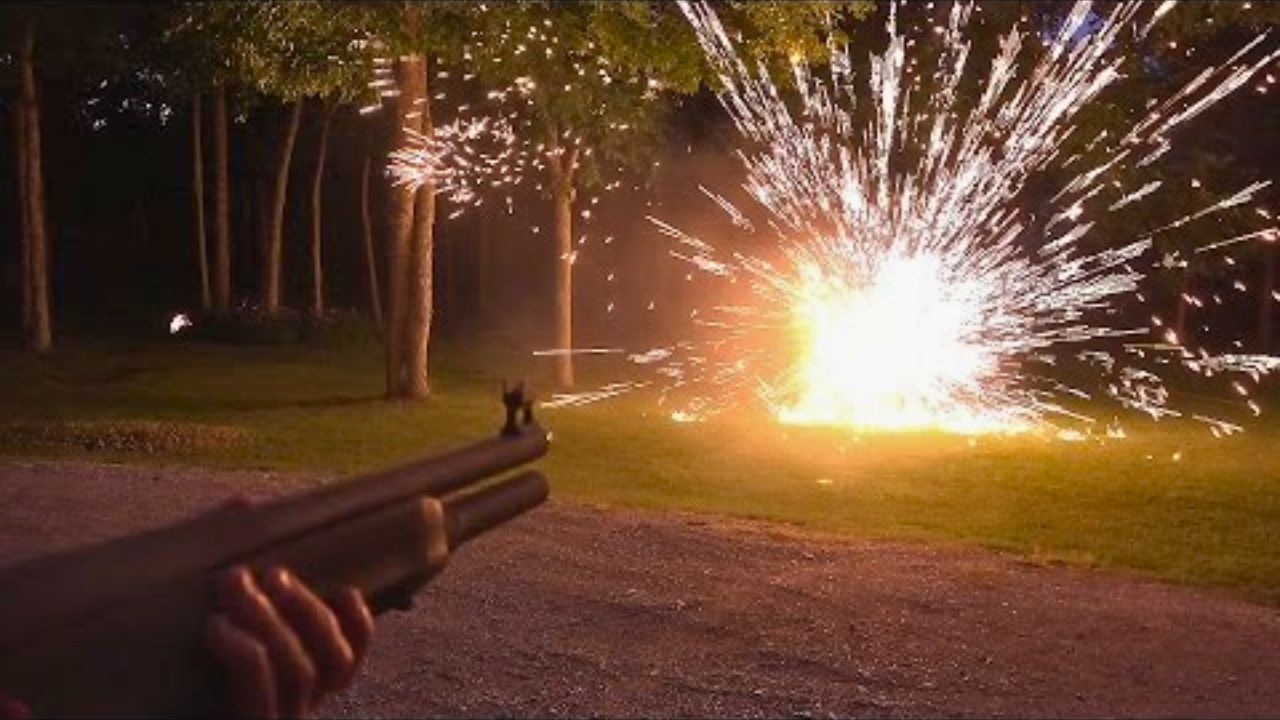
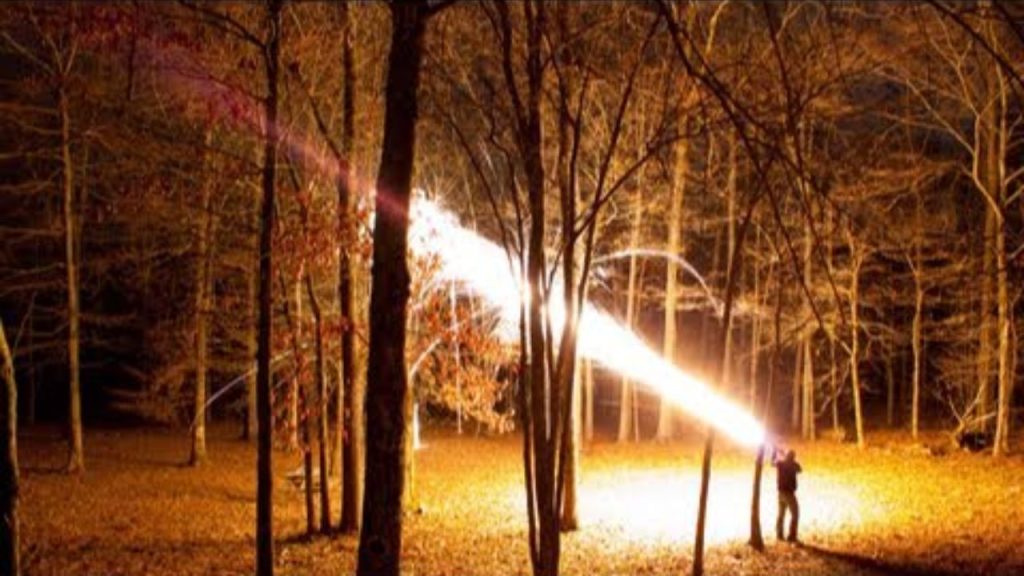
Experts quickly identified the shells as a type of incendiary shotgun ammunition commonly marketed as Dragon’s Breath, a round designed less for traditional hunting or self‑defense and more for spectacular visual effect. In a televised breakdown of the Greenville attack, a firearms specialist explained that the pellets inside these shells are replaced with burning metal fragments that ignite when fired, creating a plume of sparks that can extend several feet from the muzzle of the gun. That analysis, shared in a segment on the Greenville ambush, emphasized that the rounds are rare in typical criminal cases but extremely dangerous when used at close range or in confined spaces.
Another expert, Adam “Doc” Finley, who owns Docs Risk Management, described the construction of the shells in more detail. He said manufacturers “would take the cup and they would fill it with instead of pieces of lead balls or steel balls, they would will it with pieces” of incendiary material that ignite into a fiery spray. Finley stressed that this ammunition is not commonly used, calling it very dangerous and suggesting that choosing it for an ambush on an officer reflects a deliberate intent to cause maximum chaos and fear, not just physical injury.
What makes Dragon’s Breath different from other shells
Dragon’s Breath rounds stand apart from conventional shotgun shells because their primary effect is fire, not penetration. According to technical descriptions of Dragon’s breath ammunition, the shells are packed with pyrophoric metals that ignite into a stream of burning particles when fired, capable of starting fires in dry brush, vehicles, or structures. While a standard 12‑gauge shell sends lead or steel shot toward a target, these incendiary loads effectively turn the shotgun into a short‑range flamethrower, trading some ballistic performance for a dramatic and highly visible incendiary effect.
That distinction matters in both tactical and legal debates. In the Greenville case, video shows the officer’s vehicle showered with sparks that ricochet off the door and mirror rather than the tighter impact pattern of buckshot, a visual consistent with investigators saying the suspect fired at the officer while he was attempting a routine turn. Gun shop owner Kellet Stephens of WTP Arms explained that these rounds can scorch the side of a vehicle and damage mirrors and doors even if they do not penetrate deeply, which helps explain why the Greenville footage looks more like a shower of fireworks than a traditional shotgun blast.
Legal but controversial: South Carolina’s stance
One of the most jarring revelations for many South Carolinians was that the ammunition used in the ambush is legal to buy in the state and can even be ordered online. Coverage of the attack noted that this kind of incendiary ammo is Legal in South Carolina and that there are no state‑level limits on how much a person can purchase at one time. That reality reflects a broader pattern in which the state has relatively few restrictions on ammunition types, leaving decisions about what to stock and sell largely to private retailers and online vendors.
Nationally, the picture is more fragmented. A survey of ammunition rules notes that there is generally no statewide cap on How Much Ammo in any given State, and that There are no state limits on how much ammunition an individual can purchase. However, the same research points out that some jurisdictions, including Florida, Illinois, and Iowa, have specific restrictions on certain ammunition categories. The federal definition cited there notes that the term “Dragon’s breath” refers to incendiary shotgun shells, which places the Greenville rounds squarely in a category that some lawmakers elsewhere have already decided is too risky for civilian use.
Where Dragon’s Breath is banned and why that matters
Outside South Carolina, several states have already moved to restrict or ban the sale of Dragon’s Breath rounds, citing fire hazards and public safety concerns. Reference materials on Dragon’s breath ammunition note that the sale of these rounds is illegal in Alaska, California, Washington, Florida, Hawaii, and Illinois, as well as in Washington, D.C., and parts of New Jersey. Lawmakers in those jurisdictions have argued that shells designed to project burning metal fragments pose an unacceptable risk of wildfires and structural fires, especially in densely populated or drought‑prone areas.
The Greenville ambush has effectively imported that policy debate into a state that has so far taken a hands‑off approach. When residents see video of a police cruiser lit up by incendiary rounds that are banned in Alaska and California but fully legal on their own streets, it raises obvious questions about whether South Carolina should follow the lead of those other states. Even if legislators do not immediately move to outlaw the rounds, the incident has already prompted calls for at least tracking sales more closely or limiting their use to controlled environments like private ranges, rather than public roads where a single shot can turn a traffic stop into a fire scene.
Inside the investigation and the role of SLED
From the moment the first fiery round hit the patrol car, the case shifted from a routine shooting inquiry to a complex investigation involving specialized state resources. Agents with the South Carolina Law, known as SLED, were called in to assist local authorities and quickly identified the ammunition as incendiary shells also known as “Dragon’s Breath” ammunition. Their involvement underscores how unusual it is for frontline officers to face this kind of round in the field, and how much technical expertise is required to document and analyze the residue and damage pattern it leaves behind.
State investigators have also been careful to frame the case as part of a broader pattern of threats to law enforcement, not just a one‑off encounter. A separate briefing shared by Law enforcement officials described the Greenville attack as an example of how readily available incendiary ammunition can be turned against officers in what should be routine situations. By emphasizing that SLED is investigating per standard protocol, authorities are signaling that they see this as a test of how well existing procedures handle an emerging threat, not just a question of catching and charging a single suspect.
Expert voices: “unhinged” choices and rare ammo
Firearms professionals who reviewed the Greenville footage have been blunt about what the choice of ammunition suggests about the shooter’s mindset. In one interview, an expert described the decision to load Dragon’s Breath shells for an ambush on a police officer as “unhinged,” arguing that the rounds are so specialized and visually distinctive that using them in a crime all but guarantees intense scrutiny. That commentary appeared in coverage that examined the ammo used in the Upstate officer ambush, where analysts stressed that the shells are marketed more as novelty items than practical tools for self‑defense or hunting.
Technical specialists have also tried to demystify the rounds for a public suddenly confronted with dramatic video clips. In a detailed explanation, one analyst walked through how “They would take the cup and they would fill it with instead of pieces of lead balls or steel balls, they would will it with piece” of incendiary material, highlighting how different that is from a standard load that most gun owners might keep at home for protection. That description, shared in a segment that focused on how They are constructed, reinforces the idea that Dragon’s Breath shells occupy a niche corner of the ammunition market, one that most responsible owners never touch but that can have outsized impact when misused.
Public reaction and community fears
For residents of Greenville and the broader Upstate region, the most unsettling part of the ambush may not be the technical details but the realization that such ammunition can be fired on an ordinary street. The surveillance video, which shows sparks cascading across the roadway and bouncing off the officer’s car, has circulated widely and left many viewers wondering how close the incident came to igniting nearby homes, trees, or parked vehicles. In interviews, neighbors have described the footage as looking like fireworks exploding at ground level, a comparison that aligns with the fiery plume captured in the Sund night recording of the attack.
Community concern has been amplified by additional clips shared in a Video segment that walks viewers through what Dragon’s Breath rounds are and how they behave on impact. Seeing the same kind of ammunition used in controlled demonstrations, where it sends a sheet of sparks across a range, has only heightened fears about what could have happened if the officer’s cruiser had been parked near a gas pump or a dry patch of grass. For many, the takeaway is simple: if a single shell can turn a quiet corner into a shower of fire, then the line between novelty and catastrophe is far thinner than they had assumed.
Policy crossroads: what lawmakers and police face next
The Greenville ambush has left South Carolina policymakers at a crossroads, caught between a long tradition of permissive gun laws and a vivid example of how exotic ammunition can be turned against their own officers. Some legal analysts argue that the state could follow the lead of places like Alaska and Florida, which have already restricted Dragon’s Breath rounds, by targeting the sale of incendiary shells without touching more common forms of ammunition. Others caution that any move to ban a specific product will face stiff resistance from gun rights advocates who see such steps as a slippery slope, even when the product in question is a niche item with little practical use beyond spectacle.

Leo’s been tracking game and tuning gear since he could stand upright. He’s sharp, driven, and knows how to keep things running when conditions turn.