Where wild horses create unexpected safety concerns
Across the United States, wild and feral horses have become symbols of freedom and nostalgia, drawing visitors to beaches, deserts, forests and fast‑growing suburbs. Yet in the same places where people slow down to snap photos, these animals are quietly creating safety risks that range from car crashes to disease transmission and aggressive encounters on trails. I have found that the most serious dangers often appear not in remote backcountry, but where horses and humans are squeezed together by development, tourism and shrinking habitat.
From coastal islands to high desert valleys, the pattern repeats: people underestimate the power of a 1,000‑pound animal, and policies struggle to keep pace with crowds and cars. The result is a patchwork of speed limits, fencing rules, feeding bans and public‑education campaigns that try to preserve the romance of wild horses while confronting the very real hazards they pose.
Where wild horses meet traffic
Nowhere is the collision between myth and modern life more literal than on the roads that cut through horse country. In Nevada’s Virginia Range, herds wander across subdivisions and highways in and around Washoe County, where rapid growth has pushed pavement into long‑established migration routes. Local data shared with advocates shows just how dangerous that mix has become: From the article: There were 46 horse‑related vehicle crashes in 2020 and 42 as of late Novem in 2023, a tally that underscores how often drivers and animals are meeting at high speed on the Virginia Range roads. Those numbers sit alongside reminders that thousands of wild horses live near Reno and Sparks, often on property that is not fenced, which means a night drive home can turn deadly with a single misjudged crossing.
On the East Coast, the same dynamic plays out at lower speeds but with equally high stakes. At Maryland’s Assateague, the State Highway Administration responded to repeated collisions by cutting the speed limit to 25 miles per hour on the park entrance road across Verrazano Bridge, a rare example of traffic engineering explicitly tailored to protect both people and ponies. On nearby Assateague Island, visitors are urged to pull into designated parking areas to view wildlife instead of stopping unpredictably along the road, a small but crucial step to prevent rear‑end crashes and sudden swerves when a horse appears on the shoulder.
Tourist magnets that kick back
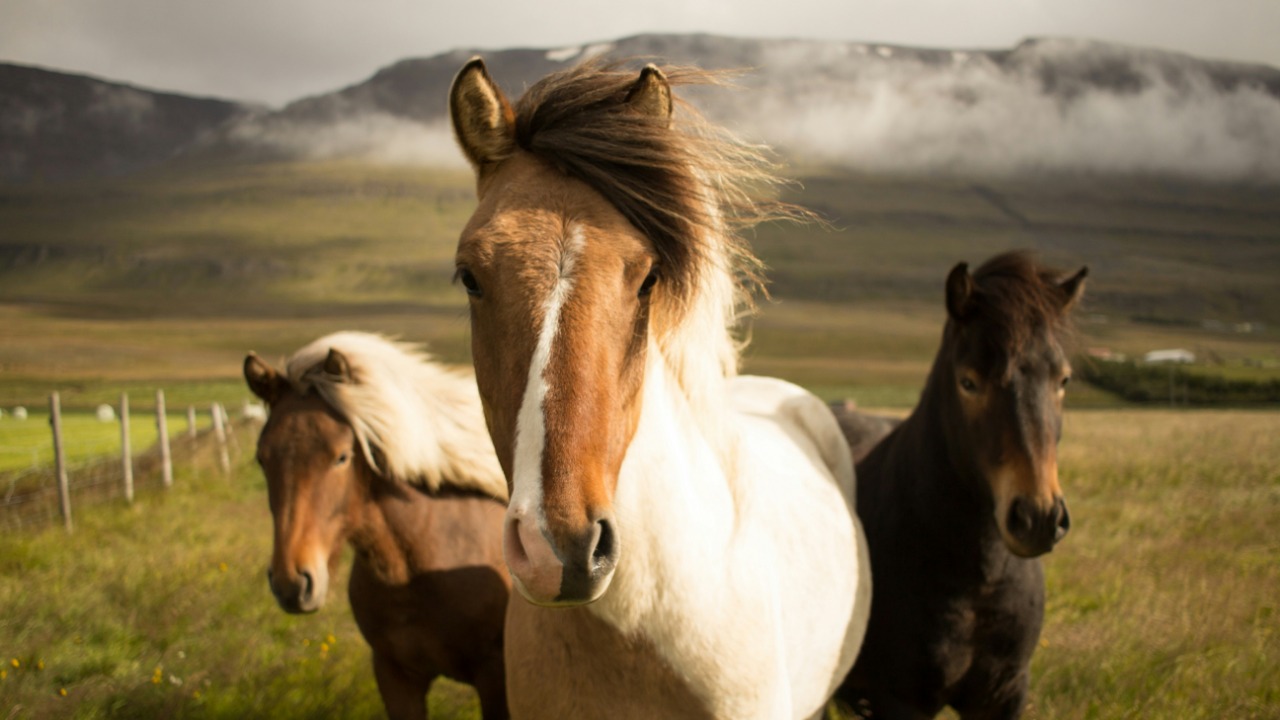
Coastal horse herds have become tourism engines, but the very familiarity that draws visitors can erode healthy fear. On North Carolina’s Outer Banks, the nonprofit that manages Corolla’s herd warns bluntly that the animals may seem docile and friendly, yet they are wild and will always be unpredictable and potentially dangerous, a message repeated in its FAQs. A companion safety video drives the point home, with a Reminder that these horses are wild and can be very unpredictable and very dangerous, and that When hormones take over they are not paying attention to anything else, so a person standing too close to sparring stallions can be knocked down or crushed before there is time to react.
Advocates describe houses shaking when two stallions slam into a wall during a fight, a visceral illustration of the force behind what might look like playful chasing from a distance. They urge drivers to stop and stay in their vehicles if horses start running or fighting nearby, and to watch from a safe place rather than stepping into the fray, advice echoed in a separate warning that They do not hesitate and that a single kick to a toddler’s head, chest or spine can be instantly fatal, with no adult on Earth able to react fast enough to stop it once a hoof is in motion. Those stark phrases, shared in an Aug social‑media post, are meant to cut through the Instagram haze and remind families that a beach vacation can turn tragic in a heartbeat if they treat wild horses like petting‑zoo attractions.
Mountain towns learning hard lessons
In the high country outside Las Vegas, the feral horses that roam around Mt. Charleston have become both beloved neighbors and persistent troublemakers. Residents describe animals foraging through unsecured trash, leaving messes across the mountain and drawing more horses into residential streets, a pattern detailed in coverage of how Mt. Charleston horses forage for trash and leave a trail of debris. In response, Residents can request a trash can with locking mechanisms at an additional cost and call customer service at 702-735-5xxx, and they are urged to fence off grass lawns to avoid turning their yards into de facto feeding stations, according to a report that highlighted how quickly human food waste reshapes horse behavior.
Local land managers have tried to get ahead of the problem with education campaigns that stress how Approaching, feeding, and petting these feral animals can make them accustomed to humans, drawing them into campgrounds, trailheads and parking lots where conflicts are more likely. A safety advisory from Go Mt. Charleston notes that animals that associate people with being fed can also become extremely aggressive, a pattern echoed in a separate warning that wild horses are unpredictable and do not respond well to humans invading their space. That Sep alert, labeled with a bold Caution, describes horses that may walk up demanding food, then bite, push or muscle visitors and sometimes outright knock them down on trails near Charleston, a reminder that the risk is not theoretical for hikers and dog walkers.
When feeding turns fatal
Across the West, managers say one behavior consistently turns manageable herds into public hazards: feeding. In Nevada, a campaign built around the phrase “A Fed Horse is a Dead Horse” spells out the legal and financial stakes, noting that Feeding wild horses is also illegal, per NRS 569.040, and that Violations can result in a citation followed by a $2,000 fine for people who ignore the rules. Advocates link that crackdown to a grim pattern in which handouts lure horses into neighborhoods and roadways, where they are more likely to be hit by cars or require removal, leading to deaths, forced relocations and permanent captivity for animals that had once survived on open range.
The same warnings echo in California’s Mono Basin, where Inyo National Forest staff have documented the toll of human‑conditioned horses around Mono Lake. In a stark field report, rangers describe arriving at a scene where When they arrived, they found a severely injured horse that had been trying to cross a busy roadway, and Sadly the horse was euthanized after suffering catastrophic trauma. The same post pleads with visitors, PLEASE DO NOT FEED THEM, tying the incident to a broader pattern in which wild horses, when found in areas that are outside their designated territories, can cause Resource and Visitor Impacts that include trampled wetlands, fouled water sources and dangerous encounters with people and pets, as detailed in an Aug bulletin on Resource and Visitor.
Hidden health and ecological risks
Even when no one is kicked or hit, unmanaged horse populations can create slower‑burn safety problems that are easy to overlook. In Montana’s Miller Creek area, county officials have flagged feral horses as a concern for nearby ranchers and veterinarians, noting that the spread of disease can increase risk to both animals and people. A Dec briefing on feral horses in Miller Creek explains that Feral horses pose limited risk to other species, but domestic horses can be affected, and that Diseases of concern include equine illnesses that can move between unmanaged bands and boarded animals, raising the stakes for biosecurity at local barns. Those worries extend into holding facilities, where Only after a quarantine period should newly captured horses join the rest of the group, in part because Equine influenza, caused by the orthomyxovirus equine influenza A, can rip through crowded pens and then follow adopted animals into communities, as outlined in a detailed review of health concerns in holding facilities.
Ecologically, the safety story stretches beyond individual animals to entire landscapes. A wildlife biologist who worked with wild horses in the southern third of Nevada for 30 years has warned that overpopulated herds are hurting sage grouse survival rates in Wyoming and elsewhere, in part because Wild horses can exclude other animals from water sources, particularly during drought, as described in an analysis that ties horse density to declining habitat quality. In northeast California, researchers and land managers report that Wild horses are also very aggressive and that There have been studies showing they will chase away deer and elk and other animals from key springs, then trample streambanks and try to get into these springs, degrading water quality for everyone. Those cascading impacts can eventually circle back to human communities, as dried‑out wetlands and eroded soils increase fire risk and reduce the resilience of the very public lands people visit for recreation.
Law, liability and the human cost
Behind every safety warning is a quieter conversation about who pays when things go wrong. Personal‑injury attorneys who specialize in catastrophic harm note that the most common causes are high‑speed car crashes, motorcycle collisions, commercial vehicle accidents, severe falls and acts of violence, but they also point out that unsafe property conditions and unmanaged hazards can lead to severe harm, a category that can include collisions with large animals on poorly signed roads. A Los Angeles firm that handles such cases lists catastrophic injuries that leave people with permanent disabilities, a sobering lens through which to view the 46 and 42 crash figures from Nevada’s Virginia Range and the repeated collisions that prompted Maryland’s speed‑limit changes. When a driver hits a horse at highway speed, the animal often dies instantly and the people inside can suffer spinal cord damage, traumatic brain injuries or worse, outcomes that ripple through families and local health systems.
Liability questions also surface when dogs or children are hurt in encounters that might have been prevented with clearer rules. Along Arizona’s Salt River, where wild horses graze along a popular recreation corridor described as a green vein through the desert, a public notice once warned that the river is a rare wet reprieve for both people and animals, yet crowding has intensified conflicts. An Aug advisory to visitors urges Dog owners to adhere to the Maricopa County leash law for their dog’s safety, noting that Some stallions have been known to attack dogs that get too close to foals or mares, and that such incidents can escalate quickly in packed picnic areas. Those realities complicate the romantic image of families picnicking and swimming along a desert river, as described in a Dec feature on Arizona’s wild horse paradox, and they raise hard questions about how much risk land managers should tolerate in the name of preserving a free‑roaming herd.
Living with danger in plain sight
For communities that share space with wild horses, the challenge is not simply to reduce risk to zero, but to decide what level of danger is acceptable in exchange for the cultural and economic benefits these animals bring. On the Outer Banks, the Corolla Wild Horse Fund’s Reminder that these horses are wild and can be very unpredictable and very dangerous is paired with practical advice: stay at least 50 feet away, never feed them, and watch from behind a barrier or from inside a vehicle when stallions start to fight. In Nevada’s horse country, local governments in places like Reno and Sparks have experimented with fencing, signage and public‑service campaigns that remind residents that Virginia Range horses are legally considered estray livestock on property that is not fenced, shifting some responsibility to landowners to secure their yards and roadsides.
At the same time, conservationists and historians point out that humans created many of these dilemmas by moving horses around the globe in the first place. As one coastal science feature notes, Article body copy In the 5,000 years since we first domesticated horses, humans have brought them to the Earth’s farthest shorelines, where new habitats transformed their histories and their bodies, a reminder that today’s “wild” herds are often the descendants of domestic animals turned loose generations ago. On Mt. Charleston, in the southern third of Nevada for example, I see that history playing out in real time as feral bands sift through trash cans and approach tourists who ignore signs. The safety concerns that result are not accidents of nature, but the predictable outcome of centuries of human choices, which means we also have the power, and the responsibility, to make different choices now.

Leo’s been tracking game and tuning gear since he could stand upright. He’s sharp, driven, and knows how to keep things running when conditions turn.