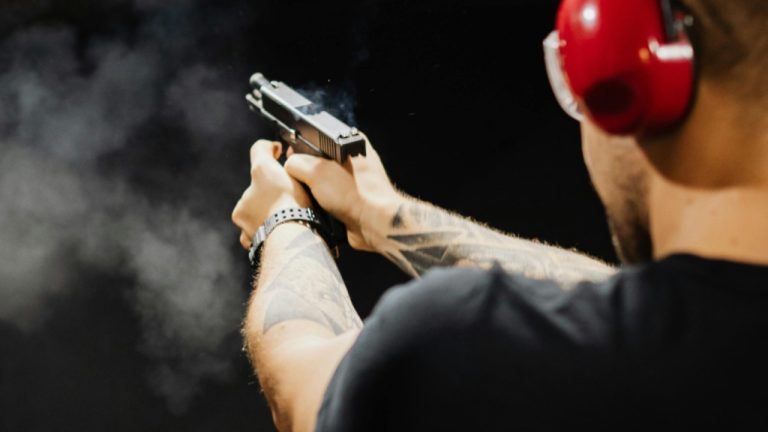
After more than a century, does the 1911 still make sense for self-defense?
The 1911 pistol has been riding on its reputation for more than a century, from muddy battlefields to bedside safes. In an era of polymer frames and double‑stack magazines, it now competes with designs that promise more rounds, less weight, and simpler controls. The question for anyone who carries a gun to protect life is whether this old warhorse still earns its place on a modern belt or nightstand, or whether nostalgia is masking real tradeoffs in safety and performance.
I see the 1911 today as a platform defined by extremes: superb ergonomics and triggers on one side, limited capacity and tighter maintenance demands on the other. Whether it still makes sense for self‑defense depends less on internet myth and more on how its specific strengths and weaknesses line up with a shooter’s skills, environment, and risk tolerance.
From John Browning’s blueprint to modern carry gun

Any honest look at the 1911’s defensive role has to start with its origin story. John Browning and his contemporaries designed the pistol for the U.S. military, and its single‑action trigger, manual safety, and .45 ACP chambering reflected early twentieth‑century thinking about stopping power and battlefield reliability. Over time, that service pedigree hardened into what some holster makers describe as Proven Reliability and, a phrase that still resonates with buyers who want a sidearm with a track record measured in wars and generations rather than product cycles.
Yet the 1911 that many people carry today is not a museum piece. Modern versions add improved sights, corrosion‑resistant finishes, and tuned triggers, and some are built specifically for concealed carry rather than trench warfare. Contemporary overviews argue that the platform remains popular not just for nostalgia but because it is, in their words, a true fighting pistol that still works as a home‑defense tool. That continuity between Browning’s blueprint and today’s defensive guns is part of the 1911’s appeal, but it also explains why some of its quirks feel dated next to newer designs.
Ergonomics, “pointability,” and why some shooters run it better
One reason the 1911 refuses to fade is that many shooters simply hit better with it. Advocates point to what they call First of all, its exceptional pointability, whether that comes from grip angle or grip shape. The slim single‑stack frame lets a wide range of hands get a deep, consistent purchase, and the straight‑to‑the‑rear single‑action trigger can make precise hits feel almost effortless compared with longer, heavier pulls on some striker‑fired guns. Modern commentators boil this down to three words, Trigger, Trigger, Trigger, arguing that the break and reset are a major reason the design still dominates certain competition circuits.
That subjective advantage shows up in user anecdotes as well as formal reviews. In one online discussion, a long‑time carrier using the handle matt1911_ wrote that They carried a 3inch 1911 for more than 15 years almost every day and found it perfectly adequate for close‑quarters defense. Another commenter joked about “Duel wield!” and having Twice the capacity of a normal 1911, a tongue‑in‑cheek way of acknowledging that some shooters are so comfortable with the platform that they would rather double up than switch to a different design. For those people, the way the gun points and recoils is not an abstract talking point, it is the core of their defensive confidence.
Capacity, size, and the Glock comparison
Where the 1911 starts to look its age is in raw capacity and bulk. Traditional Government‑size models typically carry 7 or 8 rounds in a single‑stack magazine, a figure that critics on forums summarize bluntly as “It only holds 7 rounds,” followed by the observation that this Which would be perfectly fine for compact pistols nowadays but is harder to justify in a full‑size gun. By contrast, double‑stack polymer pistols routinely offer 15 to 17 rounds in a similar footprint, and that difference becomes hard to ignore when people talk about multiple‑attacker scenarios or the need to fight to cover.
The comparison is especially stark when the 1911 is set against Glock models that have become the default choice for many agencies and civilians. One holster maker notes that 1911 VS Glock: Size and Weight are not easy to compare directly, but that the average Glock models are generally lighter and carry more ammunition, which they argue makes them more forgiving for self‑defense than a 1911. Another comparison points out that Although these two iconic pistols were designed more than 70 years apart, they now compete in an industry flooded with quality handguns, which raises the bar for what counts as “good enough” in a defensive sidearm.
Reliability, maintenance, and the “proper” 1911
Reliability is where debates about the 1911 often turn emotional, but the reality is more nuanced than “always runs” or “jam‑o‑matic.” Modern armorers argue that The fact is that you can buy a reliable, modern 1911 out of the box and you can buy a reliable anything else out of the box, but that the platform is less tolerant of neglect and out‑of‑spec parts. One gunsmith emphasizes that Proper fitting, magazines, and maintenance are critical, and warns that a poorly built 1911 can feel like swinging an unbalanced pipe wrench compared with a well‑sorted example.
That sensitivity to setup is one reason some trainers hesitate to recommend the platform to new shooters who may not recognize early warning signs of parts wear or magazine issues. At the same time, other commentators push back on the idea that the design is inherently fragile, pointing out that the 1911 pistol, despite being over a century old, remains a trusted and effective firearm for self‑defense when built and maintained correctly. One manufacturer’s Key Takeaways stress that modern metallurgy and quality control have improved durability, and that many current models are specifically tuned for defensive use rather than bullseye competition.
Safety systems and the learning curve
The 1911’s manual of arms is both a selling point and a stumbling block. Carried “cocked and locked,” with the hammer back and the safety on, it offers a visible state of readiness and multiple layers of mechanical protection, including a thumb safety and grip safety. Advocates argue that this setup, combined with the crisp single‑action trigger, allows fast, accurate shooting once the user has built the habit of sweeping off the safety on the draw. One overview of Why 1911 Is Still a Great Gun notes that these controls have not stopped the platform from thriving in high‑speed competition, where shooters routinely run them at the edge of human performance.
Critics counter that the same features can become liabilities under stress, especially for people who do not train regularly. A detailed look at everyday carry warns that Guns are not really complicated, but comparatively speaking, the 1911 has a more involved manual of arms than many striker‑fired pistols, and that Guns like a Glock 19 or a 2011 may be easier for some users to run under pressure. Another analysis of whether the design is obsolete quotes David Durden, identified as Author of more than 1.8K answers, saying that if you define obsolete as “no longer the best tool for the job,” then the 1911 may fit that label for users who want maximum simplicity and capacity with minimal training.
Concealed carry: weight, comfort, and real‑world anecdotes
For concealed carriers, the 1911’s biggest practical drawbacks are weight and thickness at the muzzle, not just capacity. A steel Government model can feel heavy on the belt all day, and even Commander and Officer variants require a quality holster and belt to stay comfortable. Holster makers who ask whether you should conceal a 1911 often start with “Let’s break it down” and then highlight its Let of advantages, including accuracy and Proven Reliability and History, before acknowledging that its size and weight demand more commitment than a micro‑compact 9 mm. They note that John Browning and his original military customers were not designing around appendix carry in gym shorts.
Despite those compromises, some carriers stick with the platform for decades. In the same online thread where matt1911_ described years with a compact 1911, others chimed in that they shoot much better with the design and “dont wanna try new things,” a sentiment captured in the Duel and Twice the jokes. For them, the tradeoff is clear: they accept extra ounces and fewer rounds in exchange for a gun that feels like an extension of their hand, and they often mitigate capacity concerns by carrying spare magazines or choosing slightly shorter, lighter variants.
Home defense: where the 1911 still shines
The calculus shifts when the 1911 is staged for home defense rather than concealed carry. Weight and grip length matter less when the gun lives in a quick‑access safe, and the platform’s ergonomics and trigger can be real assets in low‑light, high‑stress situations inside a house. One defensive writer frames this as a kind of Ballistic Philosophy, arguing that Lots of things have changed since John Browning called his family to tell them about his new design, but that the 1911 remains a viable home defense arm even today when paired with modern ammunition and lights.
Other overviews echo that view, describing the 1911 as a home‑defense tool that benefits from its controllable recoil and intuitive controls once the user is trained. A manufacturer’s Key Takeaways emphasize that the pistol is recognized for its stopping power and accuracy in defensive roles, and that many owners choose it specifically for bedside duty even if they carry something lighter outside the home. In that context, the lower capacity is still a factor, but it is weighed against the likelihood of shorter engagements and the ability to stage spare magazines nearby.
Modern critiques: capacity studies and evolving threats
Capacity is not just an internet talking point, it shows up in real‑world case studies. One analysis of law enforcement shootings describes a study in which four troopers were alive because they had the extra few shots or the faster reloading speed over their previous sidearms, and notes that the study revealed that higher capacity and quicker reloads can be the difference between life and death. While that research did not single out the 1911 by name, it is often cited in arguments that single‑stack pistols with 7 or 8 rounds are at a disadvantage in protracted fights.
At the same time, some experts caution against declaring any gun “obsolete” based solely on magazine size. In the Quora discussion where Jan contributor David Durden weighed in, he argued that if you define obsolete as “no longer capable of doing the job,” then the 1911 is not obsolete at all, but if you define it as “no longer the best tool,” then yeah, it is obsolete for some users. That distinction matters, because it reframes the debate from “Can a 1911 save your life?” to “Is it the best choice for your specific risks and willingness to train?”
Why the 1911 still attracts new buyers
Despite the critiques, the 1911 continues to draw first‑time buyers and experienced shooters alike. Modern overviews of Why 1911 Is Still a Great Gun point out that its popularity is not just about nostalgic charm or ties to major historical events, but about how it actually performs in the hand. Manufacturers highlight that the 1911 pistol, despite being over a century old, remains a trusted and effective firearm for self‑defense and concealed carry, a message repeated in their Jun marketing materials.
Holster and accessory makers also have a stake in keeping the platform relevant. One leather shop that compares 1911 VS Glock: What’s the Difference notes that many customers still choose the older design for its feel and aesthetics even when they own more modern pistols. Another concealed‑carry guide that asks whether you should carry a 1911 concludes that Still, its accuracy, proven reliability, and history make it a worthy choice for EDC, a sentiment captured in their Proven Reliability and tagline. For many buyers, that combination of heritage and performance is enough to justify choosing a 1911 as their primary defensive handgun.
So, does the 1911 still make sense for self‑defense?

Leo’s been tracking game and tuning gear since he could stand upright. He’s sharp, driven, and knows how to keep things running when conditions turn.