Rifles that perform reliably without drama
Rifles that quietly do their job without constant adjustment or troubleshooting share a few traits: simple mechanics, forgiving designs, and a track record that stretches from the range to the backcountry. When shooters talk about guns that “just run,” they are usually describing platforms that prioritize reliability and consistency over flash, and that philosophy cuts across bolt actions, lever guns, and semi‑autos alike.
In a market crowded with clever marketing and tactical styling, the real dividing line is whether a rifle cycles, feeds, and hits where it should every time you press the trigger. I look at how different actions, calibers, and design choices either support that kind of drama‑free performance or quietly undermine it once the novelty wears off.
What “reliable without drama” really means
Reliability is not just about a rifle avoiding catastrophic failure, it is about how predictably it chambers, fires, and ejects across weather, ammunition types, and user skill levels. Practical guides to semi‑auto hunting rifles stress that Reliability should sit right behind accuracy on the checklist, because a rifle that will not reliably cycle is a liability in the field. That same logic applies to any action type: the less you have to think about whether the next round will feed, the more attention you can give to wind, distance, and shot placement.
At the same time, some firearms trade on a minimalist aesthetic while hiding finicky internals. Reports on guns that look Plain, Classic, and Proven describe how You can end up constantly adjusting gas systems, polishing feed ramps, or swapping springs just to keep them running. Rifles that truly perform without drama are the opposite of that experience: they may not be glamorous, but they are engineered so that routine cleaning and quality ammunition are enough to keep them in the fight or on target.
Bolt actions: the quiet standard for dependability
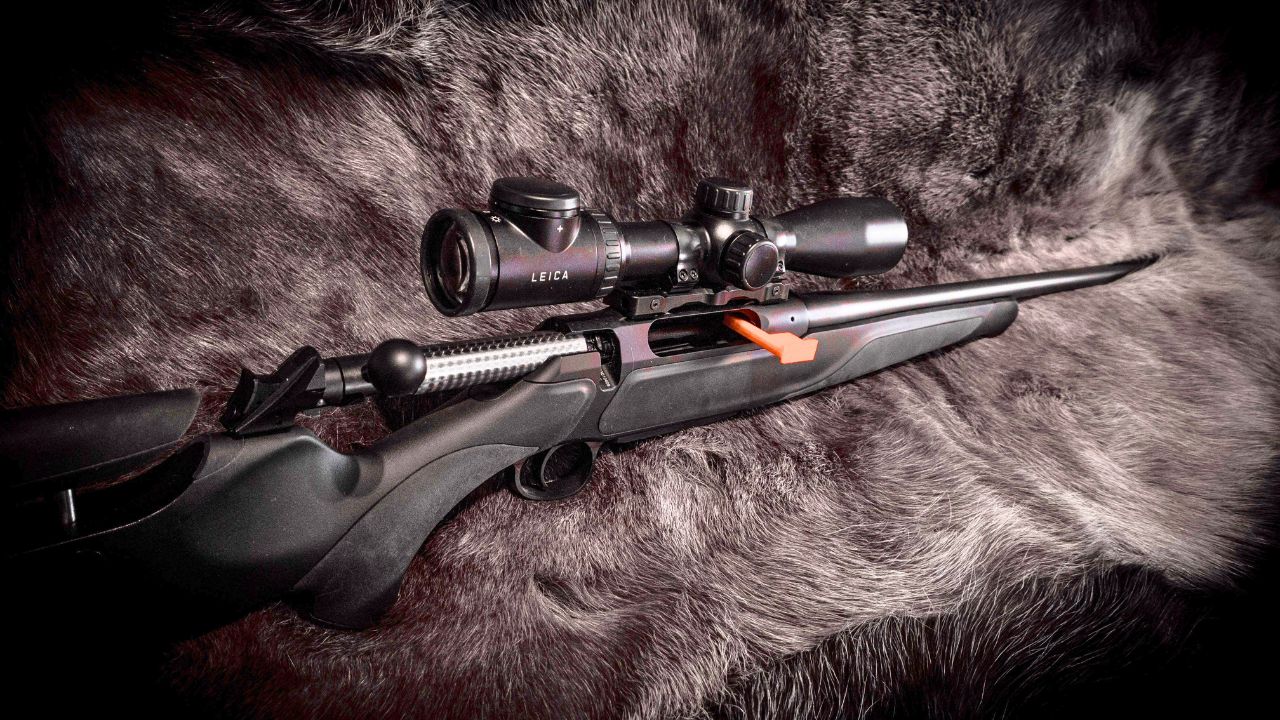
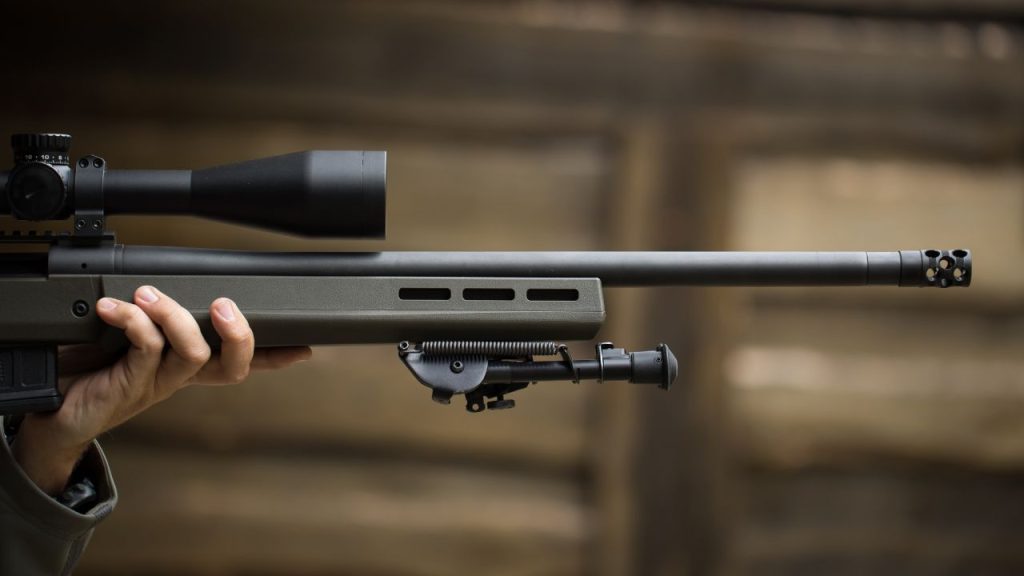
For pure mechanical certainty, modern bolt actions still set the baseline. Technical explainers on rifle actions point out that Bolt Action Best simplicity, reliability, and accuracy, largely because a human hand provides the energy to extract and chamber each round. Bolt rifles have fewer moving parts than gas‑driven semi‑autos, which lets manufacturers hold tighter tolerances and deliver more consistent lockup. That is why many long‑range and hunting platforms still default to this design when the first priority is a shot that breaks exactly where the crosshairs sit.
Retailers that specialize in precision gear describe Bolt Action Rifles For shooters as the “pinnacle” of field accuracy, durability, and dependability, and that reputation is not accidental. Evaluations of the In the simplest terms emphasize that because bolt‑action rifles have fewer moving pieces during the firing cycle, there is less to break and less to knock the barrel off its zero. That is why so many “one rifle” recommendations for new hunters or rural homeowners still start with a straightforward bolt gun chambered in a common caliber.
Lever actions: old designs, modern trust
Lever actions occupy a different cultural space, but the best of them are just as drama‑free as a good bolt. Historical accounts of the American frontier note how rifles like the Winchester Crack open a history book moment, with the Winchester Winchester 18187 and 1894 opening up remote country because they were rugged, fast, and tolerant of rough handling. That legacy still shapes how many hunters think about a saddle rifle or a brush gun that will not quit when it is wet, dusty, or riding in a truck rack.
Modern makers have updated that formula with better metallurgy and optics mounting while keeping the core mechanism simple. Current lists of top lever‑action hunting rifles highlight brands like Henry, the Henry Classic, Marlin, and the Marlin Model 1895 SBL as examples that combine nostalgia with real‑world reliability. Enthusiasts also point to the Jul video breakdown of the Henry Golden Boy .22 LR as a reminder that a simple rimfire lever gun can deliver years of low‑cost practice without constant gunsmith visits.
Caliber and configuration: matching power to purpose
Even the most reliable action can feel temperamental if it is paired with the wrong cartridge or role. Guides to lever‑gun calibers describe the .22 Long Rifle as Affordable, with Low Recoil and Perfect for Plinking most popular rimfire options, which makes it ideal for training and casual shooting. That same resource notes that the .22 Long Rifle is not a do‑everything round, but its gentle manners and low cost encourage the kind of frequent practice that reveals whether a rifle is truly dependable.
On the other end of the spectrum, dangerous‑game specialists still favor big‑bore bolt actions built on the His choice of Mauser Model 98 pattern, precisely because it feeds large cartridges smoothly and locks up securely under heavy pressure. That same logic filters into modern precision and hunting rifles, where evaluations of the There are two models B14 Ridge and B14 Hunter note that The Hunter configuration balances weight, recoil, and accuracy in a way that makes consistent performance more likely for ordinary shooters.
Semi‑autos that earn their keep
Semi‑automatic rifles introduce more moving parts and timing variables, but the best designs have matured into highly reliable tools. Overviews of AR‑15 platforms present an Comparison Chart that breaks down each Model, Caliber, and Overall Length, underscoring how standardized parts and proven gas systems can make these rifles as predictable as a bolt gun when properly set up. In the .308 and 7.62 class, the Aug rankings call out Aero Precision M5E1 as Best Overall, noting that The Aero Precision build quality supports both customization and reliability.
Military and law‑enforcement use offers another stress test. The SEAL Recon Rifle, nicknamed the Sniper M4 and Recce, is an American designated marksman rifle used by United States Navy SEALs, and its lineage shows how a carefully tuned gas system and quality components can deliver both precision and battlefield reliability. Civilian‑market semi‑auto tactical platforms echo that approach, with descriptions of SEMI AUTO TACTICAL RIFLES emphasizing how automatic loading of the next round, as soon as the trigger resets, can be both fast and dependable when the design is proven.
Precision rifles that still run in the real world
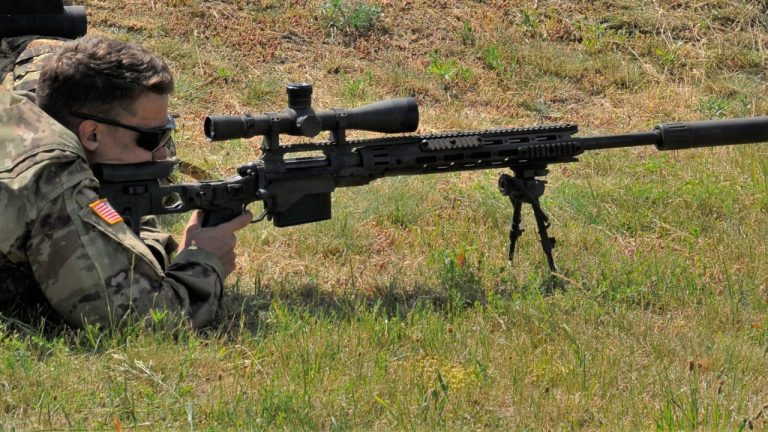
High‑end precision rifles sometimes earn a reputation for being temperamental, but the best examples show that accuracy and reliability can coexist. Roundups of the Best Rifles of recent years, framed as Reviews and Recommendations, single out the Accuracy International AT as an Editor Choice, precisely because it delivers match‑grade performance in harsh conditions. Long‑range specialists echo that view, with guides to Top Firearms for explaining that when Choosing a Long Range Rifle, the How and why of that Accuracy International AT‑X design make it a benchmark for both competition and field use.
Behind those accolades is a simple principle: a rifle that holds zero, feeds cleanly, and shrugs off dust or rain is easier to shoot well under pressure. Accessories matter too. Manufacturers of shooting rests note that in This context, especially for military weapons that must chamber ammunition from varied sources, absolute pinpoint accuracy is less important than a system that functions with different loads. That trade‑off is part of why some precision rifles are built with generous chamber dimensions and robust extractors, accepting a slight theoretical loss in ultimate group size in exchange for the confidence that every round will fire and eject.
Preppers, round counts, and real‑world testing
Reliability is not just a spec sheet claim, it is something shooters prove over time. In one widely cited discussion, a firearms owner explains that their personal strategy is to run around Dec and at least 300 rounds through a new gun before trusting it, noting that 300 rounds is often recommended as a minimum break‑in for lower‑end firearms. That kind of informal stress test reveals whether magazines, springs, or extractors will hold up, and it is a standard many experienced shooters quietly apply before a rifle earns a place in the safe as a “go‑to” tool.
Preparedness communities take a similarly pragmatic view. In one Mar thread on a versatile, low‑maintenance gun, users trade stories about rifles that sat for years and still functioned when pulled from storage, often favoring simple bolt or lever actions over more complex platforms. Another discussion of a Dec “good overall rifle” leans toward a 5.56 AR‑15 derivative, arguing that with match‑grade 77‑grain ammunition and a 1:7 twist, such a rifle can cover hunting, defense, and training without constant tinkering. Even in more politically constrained environments, like a user in Aug who is stuck in California, the advice gravitates toward platforms with long parts support and a reputation for running cleanly on common ammunition.
Simple mechanisms, fewer surprises
One recurring theme across all of these examples is that simpler mechanisms tend to cause fewer headaches. Even outside the centerfire world, guides to spring‑powered airsoft rifles note that The rifles’ simplicity translates to minimal maintenance and reliable performance shot after shot, a principle that carries over directly to real‑steel firearms. The fewer gas ports, adjustable regulators, and moving linkages a rifle has, the fewer points of failure it presents when dirt, cold, or neglect enter the picture.
That is why many experienced shooters still default to a straightforward bolt or lever gun for harsh conditions, even if they own more sophisticated semi‑autos. Evaluations of classic lever platforms point out that There remain custom gunsmiths who specialize in the Model 1895, precisely because a robust lever action can be tuned to feed smoothly and then left alone for decades. When a rifle’s core design is that forgiving, the owner spends less time diagnosing malfunctions and more time focusing on the shot, which is ultimately what “reliable without drama” is supposed to deliver.

Leo’s been tracking game and tuning gear since he could stand upright. He’s sharp, driven, and knows how to keep things running when conditions turn.