White House reiterates support for gun rights amid scrutiny following protest shooting
The White House is trying to hold two lines at once: defending Americans’ right to carry firearms while backing federal agents who shot and killed a protester in Minneapolis. That balancing act has turned a local tragedy into a national test of what gun rights really mean when they collide with aggressive immigration enforcement.
At the center is Alex Pretti, a 37-year-old ICU nurse and licensed gun owner whose death has triggered outrage from gun rights groups, legal experts, and immigration critics alike. As President Donald Trump repeats that he supports the Second Amendment even while warning that “you can’t have guns” at protests, the administration is learning how quickly a single shooting can scramble long‑held political alliances.
The Minneapolis shooting that lit the fuse
The chain reaction started in south Minneapolis when federal agents shot and killed 37-year-old Alex Jeffrey Pretti during a protest that had formed around immigration enforcement operations. Video from the scene shows another angle of the moment federal agents opened fire on the 37-year-old man in Minneapolis, capturing the chaos as shots rang out and people scrambled for cover, and underscoring how fast a tense standoff can turn deadly for anyone who chooses to carry at a demonstration, especially when federal officers are already on edge around a crowd of chanting protesters and cell phones held high to record every move by law enforcement, as seen in the circulating Video.
Federal accounts describe the incident as part of a broader immigration operation in Minneapolis, with officials stressing that the fatal encounter unfolded while agents were trying to carry out their duties during a protest in Minneapolis that had grown increasingly confrontational, a point that has been repeated in live coverage of the Fatal shooting. For people who carry, the lesson is harsh but familiar: when tempers spike and sirens close in, the presence of a firearm can change how every move is interpreted, especially by federal agents who are already keyed up by warnings about potential violence at protests.
Who Alex Pretti was, beyond the headlines
Strip away the politics for a moment and you find a profile that looks a lot like the gun owners I meet at ranges and trailheads around the country. Over the weekend, 37-year-old Alex Pretti was described as a licensed ICU nurse employed by the U.S. Department of Veterans Affairs, a detail that cuts against any quick caricature of him as a reckless agitator and instead paints a picture of someone trusted to care for the sickest patients and to serve veterans who rely on the Department of Veterans Affairs for lifesaving treatment, according to reporting that has traced his work history and ties to Minnesota’s medical community through Over the weekend coverage.
Social media videos verified by multiple news organizations show Pretti, who had a concealed carry permit, holding a cell phone as he moved near the protest, with witnesses saying he was armed but also filming the scene, a combination that many lawful carriers will recognize from their own habits at rallies or public events where they want both protection and documentation, details that have been highlighted in Social media reporting. That mix of roles, nurse, veteran caregiver, permitted carrier, and citizen journalist with a phone in hand, is part of why his death has resonated far beyond Minneapolis and into the broader gun community.
How the operation unfolded and why federal tactics are under fire
From what has been pieced together so far, the shooting did not happen in a vacuum, it was part of a larger immigration push that had already stirred anger in Minnesota. Federal agents were conducting what officials have described as an immigration enforcement surge when the confrontation with Pretti unfolded during a protest in Minneapolis, and the fatal outcome has now become a focal point in a running live account of how the operation escalated from routine arrests to a deadly clash, as detailed in coverage of the Minneapolis operation.
What to know about the Alex Pretti shooting and fallout, according to a detailed rundown from Minnesota, is that Two U.S. Customs and Border Protection agents fired their weapons during the encounter, and those agents have since been placed under scrutiny as investigators sort through body camera footage, bystander videos, and internal reports, a process that has also pulled in questions about how Customs and Border Protection trains its personnel to handle armed civilians at protests, as summarized in a live update that begins with “What to know” about What happened. For anyone who carries, the fact that Two federal shooters were involved underscores how quickly a perceived threat can trigger a coordinated response, even when the person at the center insists they are there to protest, not to fight.
Trump’s “you can’t have guns” message and the Second Amendment tightrope
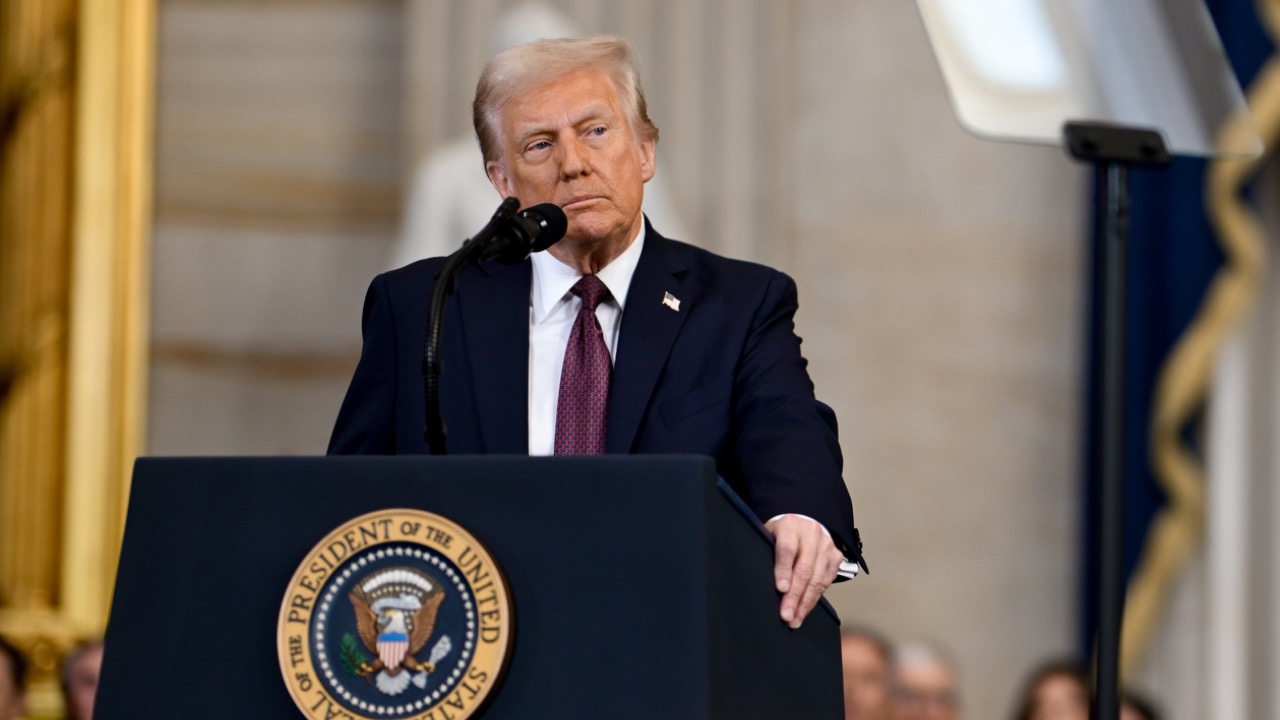
Into that storm stepped President Donald Trump, who has long styled himself as a defender of gun rights but is now trying to draw a bright line around protests. In a televised exchange, President Donald Trump said Tuesday that people “can’t walk in with guns” at protests after a second American was killed by federal agents during a protest in Minneapolis on Saturday, a pointed rebuke of armed demonstrators that still stopped short of endorsing new restrictions and instead framed the warning as common sense about not mixing firearms with volatile street confrontations, as reported in coverage of his remarks about a second American killed.
Politics Jan coverage of the same exchange captured him repeating the point in blunt language, with President Donald Trump saying Tuesday that “you can’t have guns” and “you can’t walk in with guns” when asked about the Alex Pretti killing, a sound bite that has ricocheted through gun forums and talk radio because it sounds, to many ears, like a president telling lawful carriers to leave their sidearms at home if they plan to exercise their First Amendment rights, a tension that has been highlighted in a Politics Jan 27 segment that clocked in at 1:44 PM EST and focused squarely on his comments about Alex Pretti. When a president who has campaigned on protecting the Second Amendment starts drawing situational limits in such stark terms, it sends a chill through people who have built their lives around the idea that rights do not disappear when the crowd gets loud.
White House damage control and mixed messages on gun rights
As criticism mounted, the White House tried to steady the ship without walking back the president’s words. The White House is facing mounting scrutiny after President Donald Trump publicly reaffirmed his support for Americans’ Second Ame rights even while defending the federal response in Minneapolis, a balancing act that has left both gun control advocates and gun owners parsing every phrase for signs of a shift in policy or priorities, as described in social posts that flagged how the President framed Americans and the Second Ame in the same breath.
Trump told reporters on Tuesday that he still has confidence in his top homeland security officials and will not ask them to step down, even as he urged people to “protest, protest in peace” and again warned against showing up armed, a message that came as the White House slid into damage control over the Minneapolis fallout and tried to reassure both law enforcement and civil libertarians that it was not abandoning either side, according to accounts of how Trump handled Tuesday’s questions. For gun owners, the mixed messaging feels familiar, a White House that talks up rights in broad strokes while carving out exceptions whenever the images on television get too uncomfortable.
Gun rights groups push back on the administration’s framing
Gun rights organizations, which have often been reliable allies of this White House, are not letting this one slide. In the hours and days after Pretti was shot and killed by federal immigration officers in Minneapolis Saturday, several prominent gun rights groups pushed back on comments from Trump and his top officials about Pretti having a gun, arguing that the focus on his firearm risked blaming the victim for exercising a lawful right and could set a precedent that chills armed self defense at public gatherings, a concern that has been spelled out in coverage of how those remarks sparked push back from In the gun rights community.
The Gun Owners of America also condemned Essayli’s comment about the shooting, with the organization writing that Federal agents are not above the law and pointing to bystander videos of the shooting as evidence that questions about justification remain unresolved, a rare public rebuke of an administration that has often been praised for appointing judges and signing orders seen as friendly to the Second Amendment, as detailed in reporting that quoted The Gun Owners of America and singled out Essayli by name. When a group that bills itself as “no compromise” on gun rights starts calling out Federal actions in a case like this, it signals that the usual partisan lines are blurring under the pressure of what happened in Minneapolis.
Legal experts and the Second Amendment debate after Minneapolis
Legal scholars are also weighing in, and their questions cut to the core of how the Second Amendment works in the real world. Analysts who track gun policy say the administration’s stance after the Minneapolis shooting has raised fresh doubts about whether its support for the Second Amendment extends to messy, real time encounters between armed citizens and federal agents, with one detailed report noting that Gun rights groups and legal experts are questioning whether Trump’s team is trying to throttle gun control rules in some areas while effectively endorsing situational disarmament at protests, a tension that has been laid out in coverage that explicitly ties Gun, Trump, and the Second Amendment together in the context of the Second Amendment fallout.
At the same time, a separate thread of criticism has zeroed in on how the White House has described Pretti’s decision to be armed at the protest. A video clip labeled with the description that the White House says Alex Pretti was “raising the assumption of risk” by having a gun at the protest has circulated widely, with commentators arguing that this kind of language, if it reflects official thinking, could be used to argue that any armed protester implicitly accepts a higher chance of being shot by law enforcement, a framing that many in the gun community see as incompatible with the idea that carrying is a right, not a waiver of protection, a concern that has been amplified by the way the clip of the White House and Alex Pretti has been shared from White House channels. For people who carry daily, the notion that a holstered pistol could be treated as a kind of legal consent to deadly force is a line they are not willing to cross.
Inside the federal fallout and shifting immigration tactics
Behind the scenes, the shooting has already started to reshape how immigration operations are run in Minnesota and beyond. Over the weekend, 37-year-old Alex Pretti’s death was cited by lawmakers and advocates who are now demanding that federal immigration agencies pull back from aggressive street-level tactics, with reports noting that the ICU nurse’s killing has prompted questions about Operation Metro Surge, the role of Border Patrol in interior cities, and whether the Department of Veterans Affairs employee’s death will force new oversight of immigration policy not only in Minnesota, but across the country, a debate that has been laid out in detail in coverage of how Alex Pretti has become a symbol in that fight.

Asher was raised in the woods and on the water, and it shows. He’s logged more hours behind a rifle and under a heavy pack than most men twice his age.