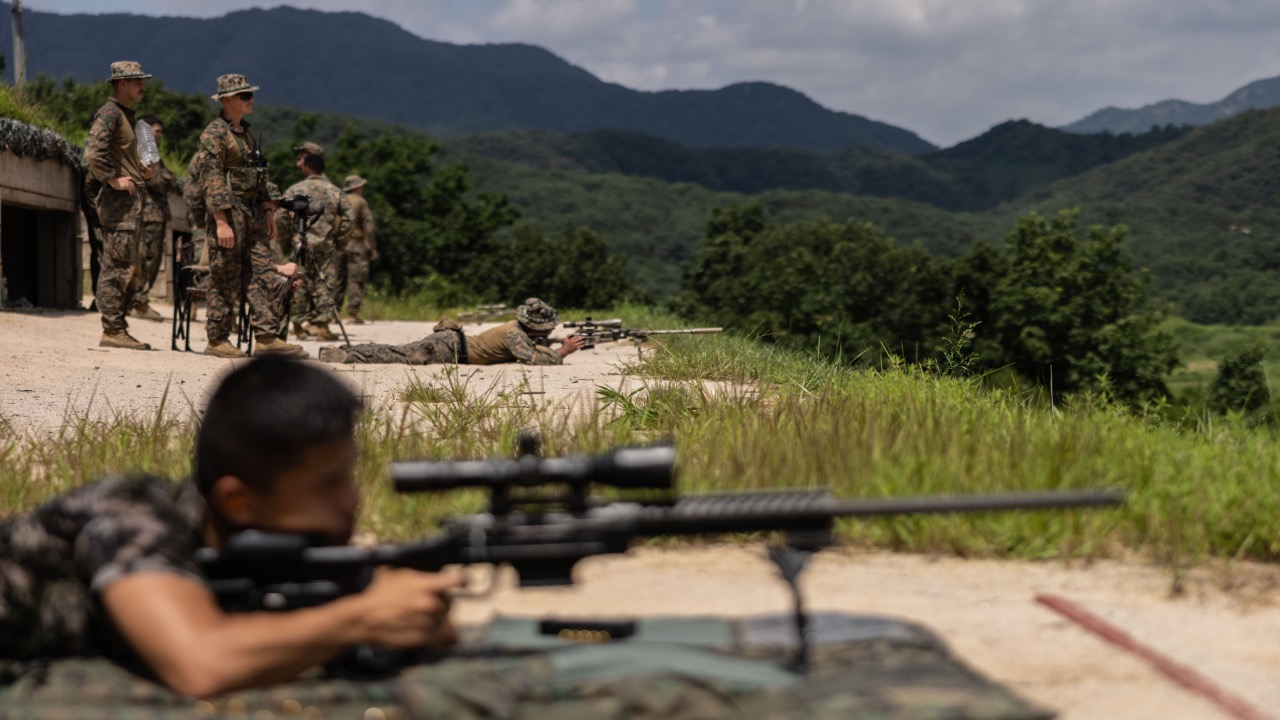
U.S. Marines travel to Norway aboard New England Patriots’ private jet amid Arctic tensions
U.S. Marines heading for Arctic training have taken an unconventional ride, boarding the New England Patriots’ private jet for a long-haul flight into Norway’s far north. The unusual pairing of an NFL-branded aircraft and combat-ready troops has become a vivid symbol of how military logistics, alliance politics, and public perception intersect at a moment of heightened tension in the High North.
The journey, which carried Marines to Norway for a major NATO exercise, highlights both the scale of the drills and the flexibility the Pentagon is willing to use to move forces quickly. It also raises fresh questions about how the United States projects power in the Arctic, and how civilian-branded assets fit into an increasingly militarized landscape.
The Patriots jet becomes a troop transport
When Marines boarded the New England Patriots’ widebody for their trip to Norway, they were stepping into a cabin better known for flying professional athletes than infantry units. Earlier this month, Marines flew on the team’s Boeing 767-300ER, a long-range twinjet that is typically configured for the comfort of an NFL roster but is also capable of hauling a full complement of troops and gear across the Atlantic. The aircraft, a customized 767, gave commanders a charter option that could be tailored to military needs while still wearing the livery of a storied football franchise.
According to aviation-focused reporting, On January 19, 2026, Marines used the New England Patriots’ Boeing 767-300ER to travel to Bardufoss in Norway as part of a larger deployment for NATO’s Cold Response drills, with the 767 operating as a private charter rather than a standard commercial flight, a detail confirmed in aviation coverage. The use of a team-branded jet for such a mission underscores how chartered civilian aircraft, including those tied to high-profile sports organizations, have become a flexible tool in the Pentagon’s global movement of forces.
Inside the Marines’ Arctic-bound journey
The Marines’ trip was not a routine hop between bases but a carefully planned movement into a demanding environment. The flight carried Marines en route to Bardufoss, a key airfield in northern Norway that serves as a gateway to Arctic training areas where units practice operating in snow, ice, and subzero temperatures. The decision to route a private Boeing 767-300ER directly into this region reflects the priority placed on getting troops as close as possible to their training grounds with minimal delay, reducing the need for multiple transfers through crowded European hubs.
Reporting on the deployment notes that On January 19, Marines boarded the New England Patriots’ Boeing 767-300ER private jet and flew to Norway specifically to participate in Cold Response 26, a large-scale NATO exercise that will bring together personnel from multiple allied countries, as detailed in the same account. The route into Bardufoss positions the Marines close to joint training with forces from Norway and Denmark, among others, reinforcing the Arctic as a shared operating space rather than a remote outpost.
Why Marines are flying on an NFL plane
Using an NFL-branded aircraft for a military deployment may look like a novelty, but it fits a broader pattern of the Pentagon leaning on chartered capacity to meet surge demands. I see the Patriots’ Boeing 767 as part of a flexible logistics toolkit, one that allows the military to move specific units on tailored schedules without overburdening its own airlift fleet. In this case, the New England Patriots’ plane, sometimes nicknamed “AirKraft,” offered a long-range, high-capacity option that could be configured quickly for troop transport while still operating under civilian registration and crew arrangements.
Analysts who track military mobility have pointed out that Marines flying on an NFL Plane into Norway reflects a pragmatic choice rather than a publicity stunt, with Why Marines Are Flying on such a platform tied to the need to get Marines into Arctic training areas efficiently, as described in coverage of AirKraft in Norway. The arrangement also illustrates how the boundaries between civilian and military aviation can blur when national security requirements intersect with the private sector’s spare capacity.
Cold Response 26 and the scale of NATO’s Arctic drills
The flight into Bardufoss is only one piece of a much larger puzzle. Cold Response 26 is set to bring together personnel from a dozen nations for extensive Arctic drills, testing everything from amphibious landings in icy fjords to air operations in limited daylight. For the Marines, participation in such an exercise is about more than symbolic presence; it is a chance to refine cold-weather tactics, integrate with allied units, and demonstrate that U.S. forces can operate effectively in the High North alongside partners who live there year-round.
According to detailed descriptions of the exercise, Marines Hitch a Ride on the New England Patriots’ jet as part of a broader deployment that will see U.S. units train alongside Norwegian, Danish, and other allied forces, with Cold Response 26 expected to involve personnel from a dozen nations across land, sea, and air domains, as outlined in analysis of the Arctic drills. The scale of the exercise helps explain why planners were willing to tap an NFL-branded 767, since moving that many troops and their equipment requires every available option.
Photos, public reaction, and the power of imagery
Images of Marines boarding a jet painted in Patriots colors quickly circulated online, turning a routine movement of forces into a viral moment. The contrast between camouflage uniforms and an NFL logo created a striking visual that resonated far beyond defense circles, prompting curiosity about how and why a professional sports team’s aircraft was ferrying combat units into an Arctic staging area. For a public that often sees military logistics as abstract, the photos offered a rare, concrete glimpse of how troops actually get from U.S. bases to distant training grounds.
Those visuals were not accidental leaks but part of standard documentation by military photographers. Photos posted by the 2nd Marine Division to the Defense Visual Information Distribution Service showed at least a dozen Marines boarding the New England Patriots’ jet, with the images later picked up and shared widely, as noted in coverage of the photo release. The Marine Division’s decision to highlight the flight through the Defense Visual Information Distribution Service underscores how the military uses official imagery both to inform the public and to shape the narrative around deployments.
Arctic tensions and why Norway matters
Behind the novelty of an NFL jet on a military mission lies a more serious backdrop of rising tension in the Arctic. Norway sits at the intersection of NATO’s northern flank and Russia’s strategic bastions in the Barents Sea, making it a critical location for monitoring submarine activity, protecting sea lanes, and reassuring allies. When Marines fly into Norway for Arctic drills, they are not just training for cold weather; they are signaling that the alliance is prepared to defend its interests in a region where climate change is opening new routes and resources.
Analysts who follow the High North have emphasized that Marines arriving in Norway for Arctic exercises are doing so at a time when threats of an imminent fight in the region are a recurring concern, even if open conflict remains unlikely, a point reflected in reporting that situates the Patriots jet flight within broader regional tensions. Norway’s role as a host for Cold Response 26, and as a close partner of Denmark and other allies, reinforces its position as a frontline state in the evolving Arctic security landscape.
Logistics, readiness, and the choice of a Boeing 767
From a purely logistical standpoint, the decision to use a Boeing 767-300ER makes straightforward sense. The 767 is a proven long-haul workhorse, with the range to cross the Atlantic without refueling and the capacity to carry a full Marine company with their personal gear. Chartering such an aircraft from a private owner, even one associated with an NFL team, allows planners to schedule flights around exercise timelines, avoid congested commercial routes, and maintain a degree of operational flexibility that would be harder to achieve with regular airline service.
In this case, the New England Patriots’ Boeing 767 provided a dedicated platform that could be configured for troop seating and cargo while still operating under civilian rules, a combination that has become increasingly attractive for time-sensitive deployments, as detailed in aviation-focused reporting on the. The choice of a 767 also aligns with a broader trend of using widebody jets for rapid reinforcement of NATO’s eastern and northern flanks, where distance and limited infrastructure make airlift capacity a decisive factor in readiness.
Blurring lines between civilian brands and military missions
Seeing Marines file past a Patriots logo on their way to an Arctic deployment highlights how civilian brands can become part of the visual language of national security. I view this as a reminder that modern defense ecosystems are deeply intertwined with private capital, from shipyards and tech firms to charter airlines and, in this case, a professional sports franchise’s aviation asset. The optics may be unusual, but the underlying reality is that the military increasingly relies on contracted services to fill gaps that its own fleets cannot always cover on short notice.
The Patriots’ involvement here is indirect, limited to the use of their branded Boeing 767 as a charter platform, yet the image of Marines boarding an NFL Plane for a mission to Norway has already become a talking point in discussions about public perception of the armed forces, as reflected in analysis of Why Marines Are Flying on such a distinctive aircraft in recent commentary. The episode raises broader questions about how far this blending of civilian branding and military missions might go, and whether future deployments will feature similarly recognizable corporate or sports imagery.
What this deployment signals for future Arctic operations
The Patriots jet flight is unlikely to be a one-off curiosity. As Arctic exercises grow in scale and complexity, I expect to see more creative use of chartered aircraft, including high-profile platforms, to move forces quickly into Norway and other northern staging areas. The Marines’ journey on a New England Patriots 767 is a small but telling indicator that the United States is willing to experiment with logistics to keep pace with the demands of Arctic operations, even if that means putting camouflage-clad troops on a plane usually reserved for NFL stars.
Cold Response 26, with Marines Hitch a Ride into the Arctic alongside personnel from a dozen nations, underscores that the High North is no longer a peripheral theater but a central arena for alliance planning, as highlighted in detailed coverage of the exercise’s scope. The image of Marines stepping off an NFL-branded jet into the snow at Bardufoss may soon feel less like an oddity and more like a preview of how allied forces will routinely flow into the Arctic as the region’s strategic importance continues to grow.

Leo’s been tracking game and tuning gear since he could stand upright. He’s sharp, driven, and knows how to keep things running when conditions turn.