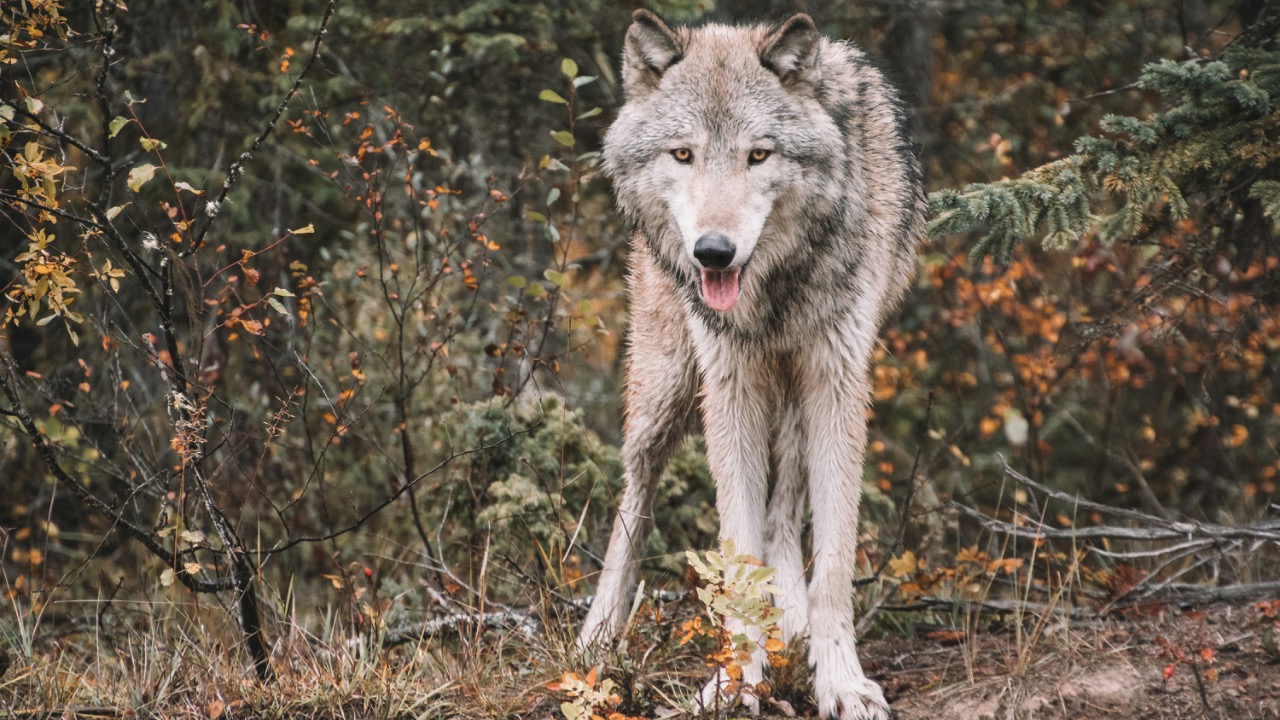
Where wolves are reclaiming historic range
Across the Northern Hemisphere, wolves are quietly returning to landscapes that once tried to erase them. From the forests of the Great Lakes to the mountains of Europe and the steppe of Central Asia, their comeback is reshaping ecosystems and reigniting old political fights over who gets to live alongside large predators. I want to trace where wolves are reclaiming historic range, and what their return reveals about conservation, conflict and the limits of coexistence.
The story is not a simple rebound. It is a patchwork of natural recolonization, deliberate reintroductions and fragile protections that can be rolled back as quickly as they were granted. In some places, wolves are now celebrated as symbols of ecological repair; in others, they are still treated as competitors to be controlled or removed. Understanding where they are gaining ground, and why, is the first step toward deciding how durable this resurgence will be.
From persecution to protection: how wolves lost and regained ground
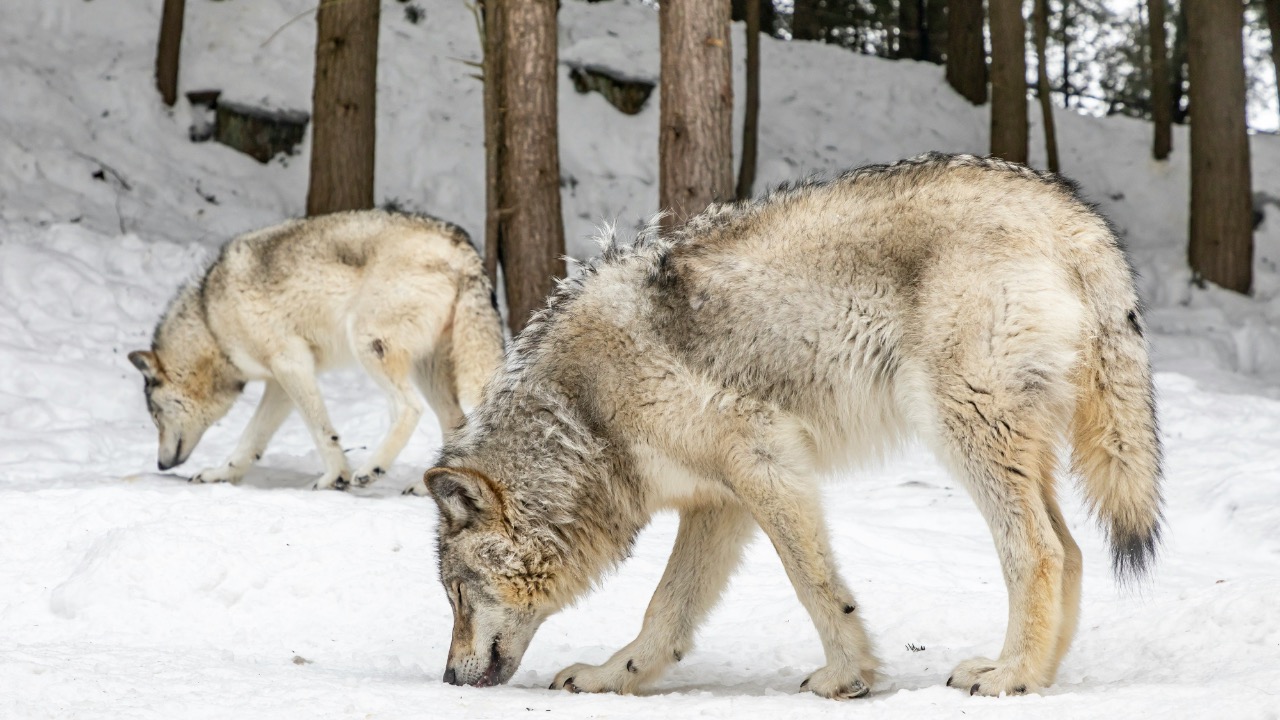
For most of the last two centuries, wolves were pushed out of huge swaths of their range through bounties, poisoning and organized eradication campaigns. In North America and much of Western Europe, the species was extirpated from settled regions as governments and ranchers treated predators as obstacles to agricultural expansion, a pattern reflected in historical accounts of the animal’s shrinking footprint across the United States, Mexico and parts of continental Europe. The result was a fragmented distribution in which viable populations survived mainly in remote mountains, northern forests and parts of continental China, while the species disappeared completely from the British Isles and most lowland farming districts.
The legal tide began to turn only when conservationists pushed for formal safeguards that recognized wolves as native wildlife rather than vermin. In the United States, federal listing and related measures such as Protection of the helped halt open persecution and set the stage for recovery in seven states, including Alaska. Similar shifts in Europe, where the species had been heavily reduced in Western Europe, created space for natural recolonization once hunting bans and habitat protections were in place. These legal pivots did not instantly restore wolves, but they stopped the free fall and opened the door to the reintroduction and recolonization projects that define the current era.
Gray Wolves in the United States: three core recovery fronts
In the modern United States, official recovery planning for Gray Wolves has centered on three broad regions that still held or could support viable packs. Federal managers describe these as the NRM in the Northern Rocky Mountains, the eastern United States and the Southwest, each with its own ecological and political challenges. The NRM, which includes strongholds in Montana, Idaho and Wyoming, has become the most visible symbol of wolf recovery, but it is only one piece of a national strategy that treats Gray Wolves as a native carnivore whose fate is tied to large, connected landscapes across the country.
These regional plans emerged from a recognition that scattered individuals could not survive without coordinated management across state lines. The Interior Department’s framework for Gray Wolves links habitat protection, conflict mitigation and, in some cases, controlled lethal control to maintain public tolerance. By defining the NRM, the eastern United States and the Southwest as distinct recovery areas, federal agencies created a roadmap for where wolves might realistically reclaim historic range and where social resistance or fragmented habitat would likely keep them out. That structure still shapes debates over delisting, hunting quotas and how far south and east wolves should be allowed to roam.
Yellowstone and the Northern Rockies: a reintroduction that changed the map
Nowhere is the modern wolf story more visible than in and around Yellowstone National Park, where reintroduction turned a theoretical recovery plan into living packs on the ground. The Yellowstone Wolf Reintroduction, described in a detailed Timeline, brought animals from Canada into Yellowstone National Park and nearby parts of Montana, Idaho and Wyoming, seeding a population that would spread across the Northern Rocky Mounta region. Over three decades, those wolves have become a fixture of the park’s identity and a driver of ecological change, influencing elk behavior, vegetation and scavenger communities.
The project’s success is now widely cited as proof that large carnivores can be restored to complex, human-influenced landscapes, but it has also remained politically charged. Conservation groups describe Recognizing the 30th Anniversary of Wolves Return as a milestone for science-based restoration, while critics in ranching communities argue that the costs to livestock and hunting opportunities are underplayed. Reporting on the Yellowstone program has noted that, But because wolves are one of the most controversial animals on the planet, the recovery remains fiercely contested, a tension captured in accounts of individual animals such as Wolf No 9 and her descendants. The Northern Rockies show how quickly wolves can reclaim suitable habitat once reintroduced, and how enduring the social backlash can be when they do.
Great Lakes and the Midwest: natural recolonization and a stable core
While Yellowstone relied on translocation, the upper Midwest illustrates what happens when wolves are simply allowed to walk back into former range. From remnant populations in Minnesota and natural migration from Canada, packs expanded into Wisconsin and Michigan, gradually filling in forested areas around the western Great Lakes. Conservation advocates describe this as a COMEBACK that unfolded as Their populations grew and spread through Wisconsin and Michigan, a process that depended on both habitat and a political decision to stop killing every wolf that crossed the border from Canada and the northern forests.
Today, the region’s wolves form one of the most stable populations in the lower 48 states. According to federal summaries of the Great Lakes population, these three states are estimated to have a stable population of 4,400 wolves, a figure that underpins repeated debates over whether and how to allow state-managed hunting seasons. The Midwestern experience shows that when persecution stops and prey remains abundant, wolves can reclaim large portions of their historic range without formal reintroduction, but it also highlights how quickly political pressure can build once numbers reach the thousands and conflicts with deer hunters and livestock owners become more visible.
Southwestern and red wolf experiments: fragile footholds at the edge of range
In the Southwest, recovery has taken the form of carefully managed releases rather than broad natural recolonization. Federal and state agencies have used structured programs in Arizona and New Mexico to rebuild a small population of Mexican wolves, with detailed monitoring of 1.1, 1.2 and 1.3 in official planning documents that track Distribution and population, Colorado proposals and Northern Rocky Mounta precedents. These efforts, summarized in overviews of United States wolf reintroduction, show how much more intensive management becomes when wolves occupy fragmented habitats near dense human settlement.
On the Atlantic side of the country, the attempt to restore red wolves has been even more precarious. Conservation educators note that, However, despite a captive breeding program and protected status under the 1973 Endangered Species Act, red wolves were declared effectively extinct in the wild after decades of conflict and hybridization. The Endangered Species Act listing did not prevent local hostility, and at one point landowners were allowed to kill any wolf they encountered, undermining years of captive breeding. These southern experiments underline that legal protection alone is not enough; without durable local support, wolves at the edge of their range remain one policy change away from disappearing again.
Europe’s quiet resurgence: from strongholds to Western Europe
Across Europe, the Eurasian wolf, Canis lupus, has staged one of the continent’s most striking wildlife recoveries. Once confined mainly to rugged strongholds in the east and south, the species has expanded as hunting bans, rural depopulation and the expansion of wild herbivore populations created new opportunities. Conservation groups describe how Europe now supports growing numbers of The Eurasian wolf, with recolonization driven less by translocation and more by natural dispersal across borders that mean little to a wide-ranging carnivore.
The comeback of wolves in Western Europe has been particularly striking because it has unfolded in densely populated, highly managed landscapes that once seemed permanently closed to large predators. Analysts of Wolves, Reintroductions and note that the comeback of wolves in Western Europe has occurred even in countries such as Belgium, Denmark and The Netherlands, where agricultural land and infrastructure dominate the map. This westward spread has reignited debates over livestock protection, hunting traditions and the role of apex predators in rewilding projects, but it has also demonstrated that wolves can adapt to fragmented forests, mixed-use farmland and even peri-urban green belts when persecution is limited.
Central and Eastern Europe, Austria and beyond: numbers behind the trend
Behind the headlines about wolves returning to Western Europe lies a broader demographic shift across Central and Eastern Europe. Countries that retained remnant populations through the twentieth century have become sources for dispersing animals that now recolonize neighboring states, creating a patchwork of expanding ranges. Data compiled on the Number of gray show how national populations have grown, with Austria highlighted as an example where the wolf population is increasing and is the home of 7 packs as of 2022, a figure that would have been unthinkable a generation ago.
These numbers matter because they reveal how quickly wolves can move once a critical mass is reached in one part of the continent. As packs establish in Austria and other Central European states, they create stepping stones that allow young dispersers to reach new territories in Germany, France and Italy, accelerating the recolonization of historic range. The pattern also underscores the importance of cross-border coordination, since wolves that are strictly protected in one jurisdiction may cross into areas where lethal control is more readily authorized. For policymakers, the emerging map of wolf distribution in Central and Eastern Europe is less a static snapshot than a moving front line that will continue to shift as long as prey and habitat remain available.
Europe and Central Asia: new conflicts on old frontiers
As wolves reclaim former ranges in parts of Europe and Central Asia, the ecological story is increasingly intertwined with the livelihoods of people who share those landscapes. In pastoral regions where horses, sheep and goats underpin local economies, the return of a large predator can feel less like a conservation success and more like a direct threat to survival. Reports from equine science groups describe how, as wolves reclaim former ranges in Europe and Central, interactions with horses are becoming an issue for animal welfare and to the local nomadic economies, highlighting a tension between predator conservation and traditional herding practices.
These conflicts are not limited to direct livestock losses. The presence of wolves can change grazing patterns, force herders to invest in new fencing or guarding dogs and increase stress on animals that are already coping with climate variability and market pressures. In some Central Asian rangelands, nomadic communities see wolves as competitors for limited forage and as symbols of state policies that prioritize biodiversity over human needs. The challenge for conservationists is to move beyond abstract arguments about ecosystem health and engage with the specific economic and cultural realities of people whose daily routines are reshaped when wolves return to valleys and steppe where they had been absent for decades.
What recovery really means: contested success and the road ahead
Looking across these regions, it is tempting to declare the wolf story a straightforward comeback, but the reality is more conditional. In the Great Lakes and Northern Rockies, population numbers such as the 4,400 wolves in the western Great Lakes and the robust packs in Yellowstone suggest biological success, yet legal protections remain contested and can be weakened by shifting political priorities. In Europe, the spread of The Eurasian wolf into Western Europe and countries like Austria shows that the species can thrive in human-dominated landscapes, but it also exposes fault lines between urban publics that often support predators and rural communities that bear the costs.

Leo’s been tracking game and tuning gear since he could stand upright. He’s sharp, driven, and knows how to keep things running when conditions turn.



![Best Damn EDC [Taylor Martin]/YouTube](https://wildernessmarksman.com/wp-content/uploads/2026/01/crop-1037-768x432.jpg)