8 Firearms outdoor guides avoid carrying as backup guns
Backup guns are supposed to save your hide when everything else goes sideways, not add new ways to fail. Guides who live in mud, rain, brush, and salt spray have strong opinions about what stays in camp. Here are eight handguns many experienced outdoor pros avoid carrying as backups.
1. Kel-Tec P-32 .380 ACP
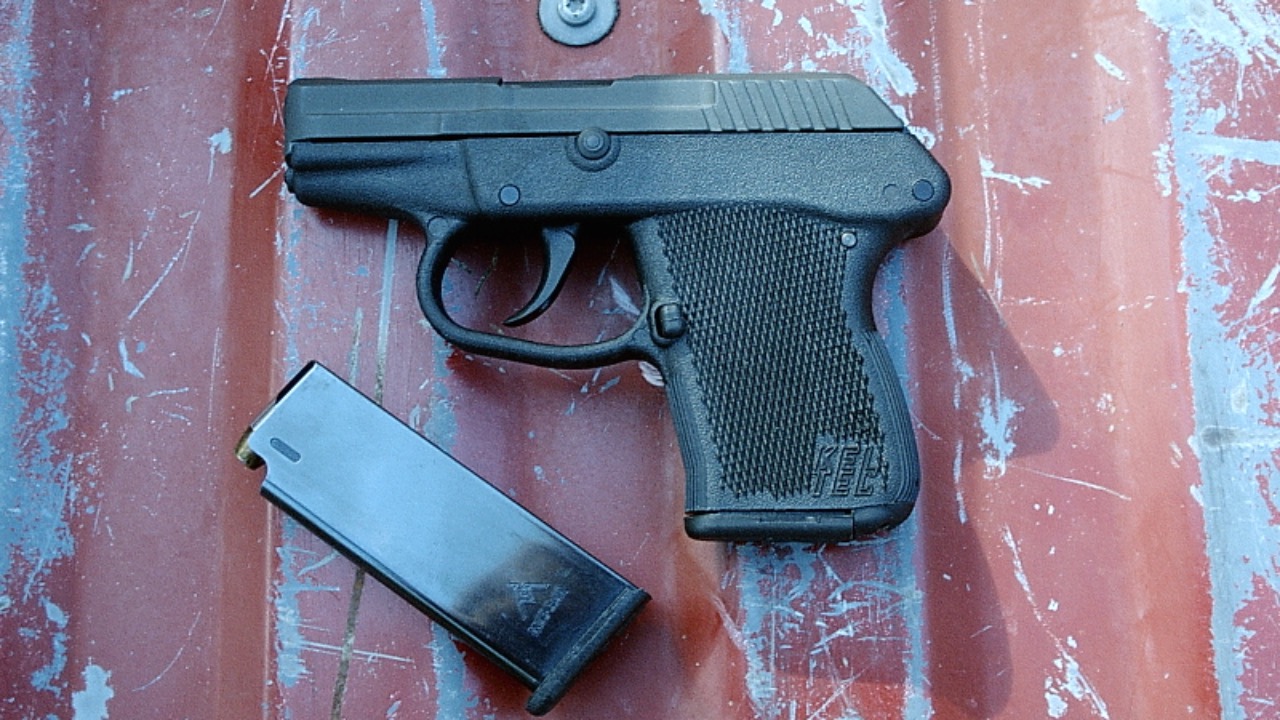
The Kel-Tec P-32 .380 ACP shows why tiny autos can be a liability when conditions turn ugly. In Alaska bear guide tests, it was reported for frequent jamming in muddy conditions, with one guide saying it “failed to cycle after a single exposure to river silt” in guide trials.
For a backup gun that might be drawn with wet, bloody, or gloved hands, that kind of sensitivity is a dealbreaker. If a single dunk in river muck can shut the slide down, a guide facing a charging bear or wounded moose is gambling on luck instead of a reliable last line of defense.
2. Hi-Point C9 9mm
The Hi-Point C9 9mm earns a spot here for the opposite reason, it is too heavy and clumsy for real backcountry carry. A detailed review notes the pistol’s 29-ounce weight and plastic sights, with Idaho hunting guides calling it “impractical for extended hikes.”
Those guides also reported the bulk causing holster snags on brush, which is exactly what you do not want when scrambling through deadfall or alder tangles. A backup gun that drags on your belt, catches on limbs, and slows your draw is more burden than insurance policy.
3. Ruger LCP .22 LR
The Ruger LCP in .22 LR highlights the hard limit of rimfire for serious animal defense. An in-depth analysis concluded that .22 LR handguns like this provide “insufficient stopping power against large game,” quoting a Montana outfitter who said, “A .22 barely stings a grizzly.”
That same outfitter described seeing .22 rounds bounce off a grizzly’s hide at 10 yards, which should make any guide rethink pocket-sized rimfires as true backup guns. For big bears, wounded elk, or even aggressive wolves, the cartridge simply does not deliver the penetration or disruption needed when seconds count.
4. Bond Arms Cowboy Defender .45-70 Derringer
The Bond Arms Cowboy Defender .45-70 derringer looks like a powerhouse on paper, but capacity and reload speed kill its usefulness. A focused report notes Wyoming guides avoiding it because of the two-shot limit, despite the heavy chambering.
One tester warned that “reloading under stress in timber is a death sentence, takes over 20 seconds.” In a close-range bear or lion encounter, that means you get two tries and then you are holding an awkward chunk of steel instead of a working firearm, which is not a trade most guides accept.
5. Ruger Vaquero .45 Colt Single-Action Revolver
The Ruger Vaquero .45 Colt is a classic single-action, but its old-school operation works against it as a backup gun. A detailed field piece highlighted slow reload times, especially when every second matters on a wet mountainside.
A Colorado elk guide recalled “hammer-down extraction in rain” leaving him exposed and said he ditched the revolver after a soaked 2016 hunt. When you have to half-cock, punch empties, and thumb in fresh rounds while your hands are numb and slick, the romance of the design fades fast.
6. Taurus Judge Revolver
The Taurus Judge promises versatility with .410 shotshells and .45 LC, but mixed performance in humidity has turned off many working guides. A thorough evaluation warned that birdshot spread from the short barrel “fails at 15 feet on boar,” undermining its defensive role.
A Florida swamp expert also pointed out that the revolver’s cylinder gap leaks moisture in steamy conditions, which can affect ignition and long-term reliability. For guides who spend days in cypress sloughs or palmetto thickets, a gun that struggles with both pattern and weather control is a poor backup choice.
7. Smith & Wesson Model 60 .38 Special
The Smith & Wesson Model 60 .38 Special is compact and familiar, yet its safety setup has raised real concerns in rough country. A detailed account flagged the lack of a manual safety after accidental discharges in holsters during New Mexico mountain lion tracks.
One guide reported that “no thumb safety means brush triggers it, happened twice in one season,” which is terrifying when dogs, clients, and horses are nearby. In thick juniper or oak brush, a backup gun that can fire from a twig snag is a liability, no matter how handy it feels on the belt.
8. Glock 42 .380
The Glock 42 .380 usually has a strong reliability reputation, but coastal guides have seen a different side of it. A focused summary documented corrosion problems in saltwater exposure for Oregon outfits working near Pacific spray and tidal flats.
One clamming outfitter reported the finish pitting after two weeks near the ocean, saying backup reliability “dropped to zero” in tests. For anyone running boats, crab pots, or surf hunts, a backup that rusts that quickly can seize up when you finally need it, which is why many guides look elsewhere.

Asher was raised in the woods and on the water, and it shows. He’s logged more hours behind a rifle and under a heavy pack than most men twice his age.