The mountain lion that crossed the U.S. and set a distance record
A young male mountain lion that died on a highway in Connecticut turned out to be one of the most wide‑ranging wild cats ever documented in North America. Biologists later pieced together that this cat had walked across a huge swath of the United States, setting a distance record that still makes wildlife folks shake their heads.
His trek was not a feel‑good story, because it ended with an SUV and a broken body on the pavement. But when you look at what he did, where he came from, and what his journey says about wild predators trying to reclaim old ground, you start to see a much bigger story about how Mountain Lions move, survive, and bump into people in the twenty‑first century.
The cat on Route 15 that no one expected
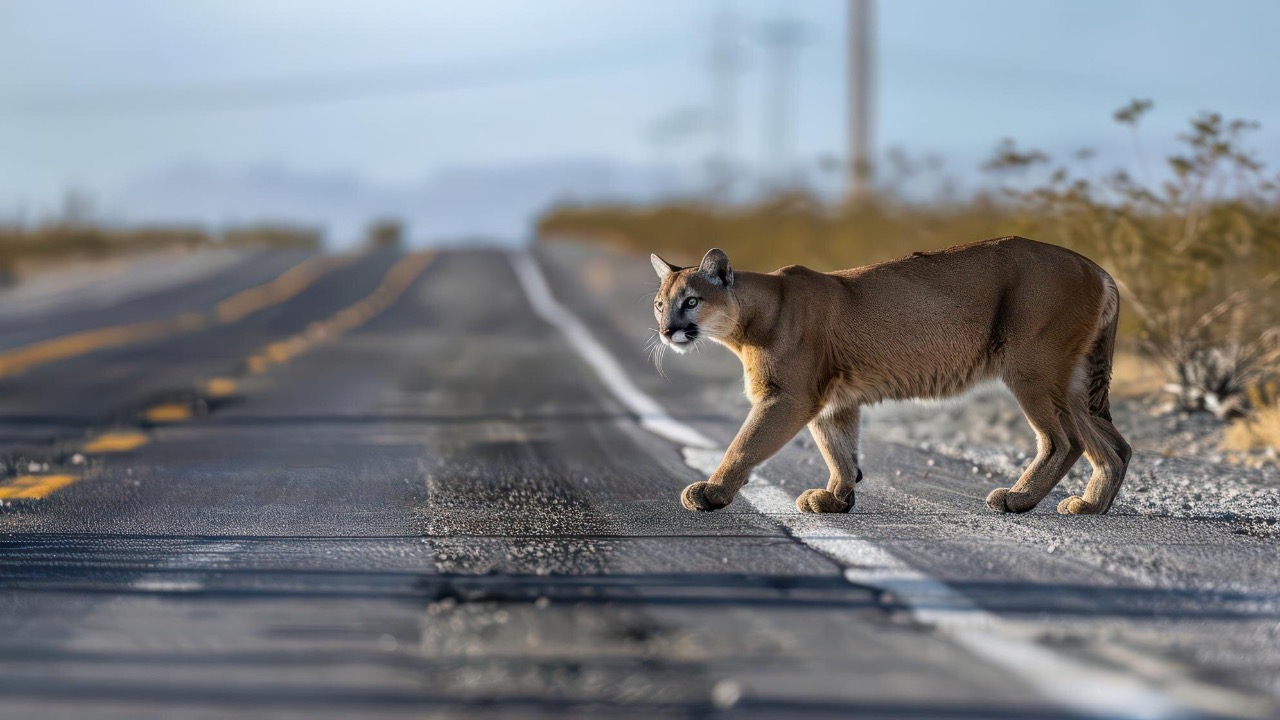
Drivers on Connecticut’s Route 15 near the town of MILFORD were not expecting to see a big cat on the shoulder, let alone a dead one. When a vehicle hit the animal, officers first treated it like a one‑off curiosity, because state officials had long said there were no wild Mountain Lions living in that part of the country. The carcass was collected, and the first surprise was how clearly wild it looked: lean, muscled, no collar, and no signs of having been declawed or kept as a pet, which immediately raised questions about where it had come from and how it ended up on that busy stretch of road in Connecticut.
Investigators soon confirmed that the animal killed on that highway was a Mountain Lion, also known as a cougar, a cat native to the Americas that most people in the Northeast only knew from field guides and old stories. Wildlife staff in Connecticut described how the cat had been struck by an SUV on a state highway and then taken for analysis. Early on, some locals speculated about an escaped captive animal, but the condition of the body and the lack of any microchip or ownership records pushed biologists to look harder at a wild origin.
From the Black Hills to New England
Once tissue samples were in hand, the mystery started to clear up. Genetic work showed that this cat was not a local oddball at all, but a young male that had started life in the Black Hills of South Dakota, part of a core western population that still holds its own. That meant the animal had already crossed much of the country before anyone in the East even knew it existed. The same DNA work tied it to a known group of western cougars, which ruled out the idea that it was some remnant Eastern strain hiding out in the woods.
Researchers then matched that genetic fingerprint to earlier evidence from the Midwest, including hair and scat samples that had been collected in states like Wisconsin as people reported a big cat moving through farm country and forest edges. Those earlier reports had been treated cautiously, but the DNA trail showed that the same individual that once prowled in Wisconsin was later identified in Connecticut, tying the whole cross‑country route together in a way that field biologists rarely get to see.
How far he really walked
Once the origin was nailed down, the next question was distance. Depending on which checkpoints you count, estimates of his trek range from about 1,500 miles to roughly 1,800 miles, and some biologists have suggested that the total path on the ground could have been closer to 2,000 miles when you factor in all the twists and turns. However you slice it, no other wild cougar in the scientific record has been documented covering that kind of ground in the modern era. For a three‑year‑old cat, that is a staggering amount of country to cross, especially when you consider the roads, towns, and rivers that stand in the way.
To put that in context, experts estimate there are about 100,000 Mountain Lions in North America, mostly in western regions where big blocks of habitat still exist. Out of all those animals, this one male managed to set a distance mark that caught the attention of every carnivore biologist who follows dispersal. His route took him from the Black Hills, across the upper Midwest, and eventually into the New Haven suburb of Milford, where his luck finally ran out on Route 15.
The science that proved his identity
What really made this story more than a roadside oddity was the forensic work that followed. Wildlife Officials used DNA to genetically fingerprint the cat, comparing its profile to samples from known western populations. That work showed a clear match to animals in South Dakota, and it also linked the Connecticut carcass to earlier genetic samples collected in the Midwest. Without that lab work, the story would likely have ended with a shrug and a few blurry photos.
Investigators in Connecticut described how they leaned on DNA work that had already been done on samples from Wisconsin and other states, which let them connect the dots between scattered sightings and physical evidence. A separate report from Shelton and Derbyfor communities echoed that same point, noting that the genetic profile was exactly what biologists expect from a dispersing Mountain Lion that has left a western population and is roaming in search of new territory.
Why a young male heads east
Anyone who has watched big predators knows that young males are the wanderers. In the Black Hills and other western strongholds, adult toms hold large territories, and when a male kitten grows into a three‑year‑old, he gets pushed out to find his own space. One analysis of this cat’s life described him as a three‑year‑old that likely left his natal area when he was old enough to travel on his own, a pattern that fits what biologists see across Mountain Lion range. As one account put it, left probably when, then kept going.
That same reporting noted that Mountain Lions have been considered extinct in the Eastern United States, which means a dispersing male that heads that way is rolling the dice. There are no resident females waiting for him, and the habitat is chopped up by cities and highways. Still, the biological drive to find open territory and potential mates is strong enough that some males push far beyond the edges of known populations, and this cat simply took that instinct farther than any of his peers that we know about.
Piecing together the route
Once the DNA work tied everything together, biologists could sketch out a rough map of the journey. Earlier in the year, people in the upper Midwest had started reporting a big cat moving through their areas, and some of those sightings were backed up by tracks, scat, and trail camera photos. A detailed account described how, earlier that year, residents in states like Wisconsin began to see signs of a cougar, and those reports eventually lined up with the same individual that died in Connecticut. That is why some researchers started referring to him as the St. Croix Cougar, after one of the key locations where he was documented.
One summary of the case laid out how the male cat was first identified in the Black Hills, then later confirmed in Wisconsin, and finally tracked to the New Haven area, a sequence that matched the genetic trail. Another report described how, on June 11, the male was struck and killed on a Connecticut highway after traveling roughly 1,700 kilometers (about 1,066 km had already been documented through earlier evidence), with the full route likely much longer. When you lay that path over a map, you see a cat that threaded his way through farm fields, river corridors, and suburban edges, staying out of sight enough to survive for years in country where most people assume big predators are gone.
Why this cat mattered so much in the East
For people in Connecticut and neighboring states, the discovery hit hard because it challenged a long‑held belief that wild cougars were gone from the region. State agencies had been telling residents that any reported Mountain Lion was either a misidentified bobcat or, at most, an escaped captive. Then a wild male from South Dakota turned up dead on Route 15, and the lab work proved it. One detailed account from Connecticut described how the state’s Department of Energy and Environmental Protection had to explain that this was a wild animal that had walked across the country, not a pet, and that it was the first confirmed wild Mountain Lion in the state in more than a century.
That same reporting emphasized that Mountain Lions were still considered absent as a breeding population in the Northeast, even though this individual had made it there on his own. Another account from Connecticut highlighted how wildlife staff who focus on fish, wildlife and habitats had to walk a fine line between acknowledging the cat’s incredible journey and reminding the public that one male does not equal a restored population. For hunters, hikers, and landowners in the region, it was a wake‑up call that big predators can still show up, even if the odds are low.
What the journey says about Mountain Lions and people
Looking at this story as a hunter and outdoorsman, I see a cat that did exactly what his species has always done: he went looking for room. The difference now is that his path ran through a landscape carved up by interstates, suburbs, and row crops. One detailed account of the case described how the cat’s trek was part of a larger pattern of cougars slowly expanding out of their western strongholds, with young males probing into new territory whenever they can. That same analysis noted that the Connecticut cougar lived a full life in its two to five years, which is a polite way of saying he pushed his luck as far as it would go.
Another report from Jul framed the animal as part of a broader conversation about how a cat native to the Americas is trying to reclaim parts of its historic range. For people who spend time in the woods, that raises real questions about how we handle livestock, pets, and human safety if more of these cats make similar journeys. It also forces us to think about habitat corridors, road crossings, and the kind of landscape that lets a wide‑ranging predator move without ending up under the wheels of a car.
Why this record still matters
Years later, biologists still point to this cat when they talk about dispersal and long‑distance movement in large carnivores. The numbers alone, from 1,500 miles to 1,800 miles and possibly more, are a reminder that a single animal can connect ecosystems that we usually think of as separate. When you combine that with the estimate of about 100,000 Mountain Lions in North America, mostly in the West, you start to see how even a small number of long‑range dispersers could eventually seed new populations if the habitat and social tolerance are there.
For those of us who care about wild country, the story of this cat is both inspiring and sobering. It shows what a young male can do when he follows his instincts, threading his way from the Black Hills to a leafy Connecticut suburb, but it also ends with a broken body on the pavement. As agencies like the Connecticut Department of Energy and Environmental Protection and their counterparts across the country keep tracking these animals, the lessons from this one Mountain Lion’s record‑setting trek will keep shaping how we think about predators, people, and the long, hard miles in between.

Asher was raised in the woods and on the water, and it shows. He’s logged more hours behind a rifle and under a heavy pack than most men twice his age.